Understanding sequencing Numbers Worksheets for Ages 6-9
4 filtered results
-
From - To
Discover the exciting world of sequencing numbers with our engaging worksheets tailored for children aged 6-9. This resource helps young learners grasp the concept of arranging numbers in a logical order, enhancing their foundational math skills. Our worksheets feature a variety of fun activities, including fill-in-the-blanks, number lines, and pattern recognition exercises. By using these interactive tools, children will boost their critical thinking and problem-solving abilities while building confidence in their numerical understanding. Ideal for classroom use or at-home practice, our sequencing numbers worksheets make learning math enjoyable and accessible. Explore our collection and watch your child thrive in their mathematical journey!
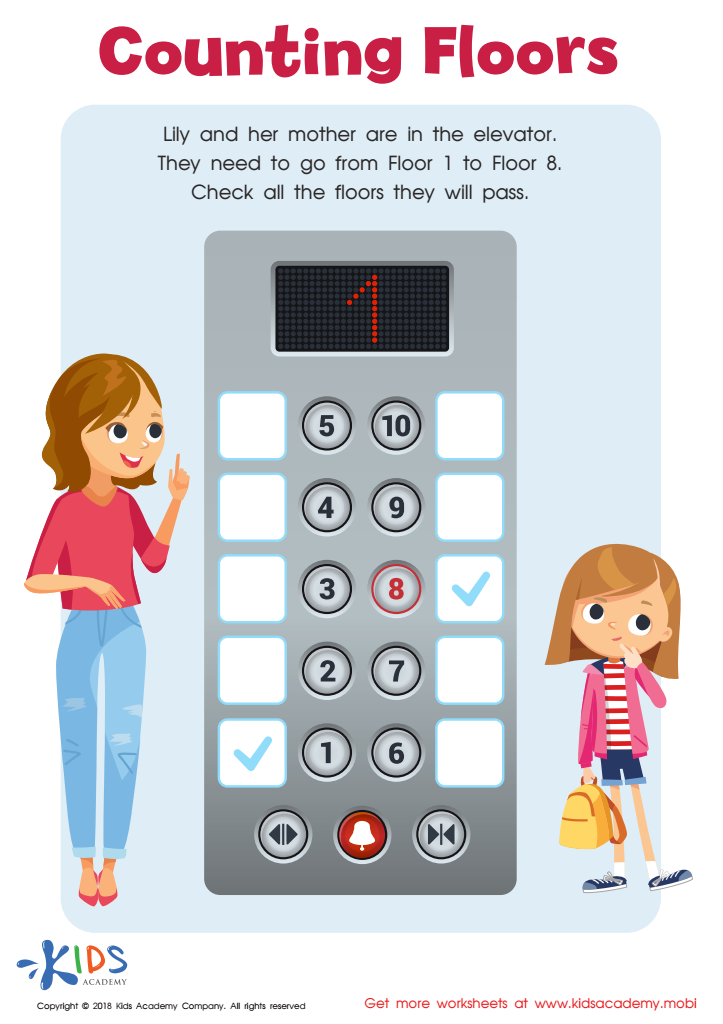
Counting Floors Worksheet
 Assign to My Students

One More Jumps In Worksheet
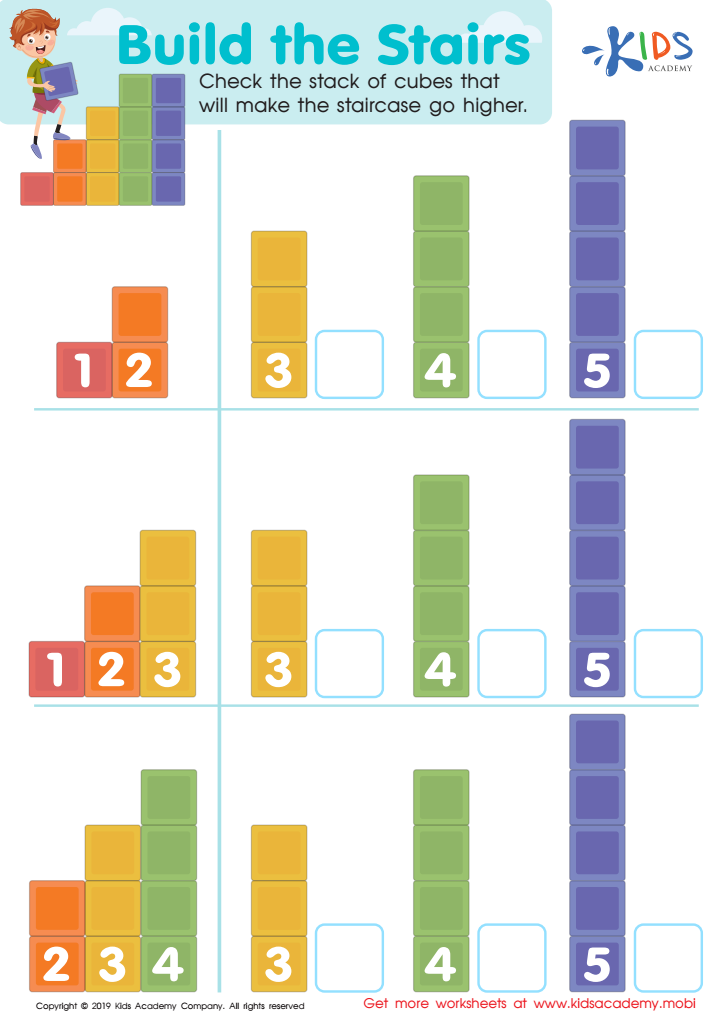
Build the Stairs Worksheet
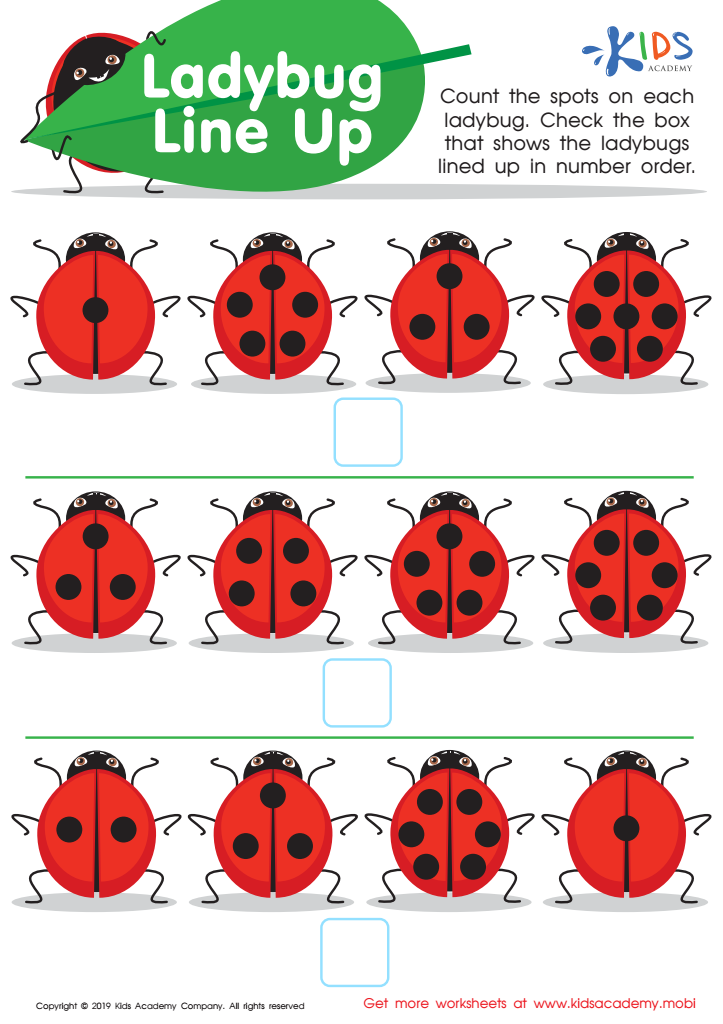
Ladybug Line Up Worksheet








Understanding sequencing numbers is crucial for children aged 6-9 as it forms the foundation for their mathematical development. This skill is not only fundamental for basic arithmetic but also essential for problem-solving and logical thinking. When children learn to sequence numbers, they develop a stronger grasp of number relationships, which helps them handle addition and subtraction more effectively.
For parents and teachers, recognizing the importance of sequencing numbers means fostering an environment where children can explore patterns and make connections between abstract concepts and real-world applications. Activities that involve sequencing, such as counting in order, identifying patterns, or arranging numbers, engage young learners and enhance their cognitive abilities.
Furthermore, sequencing numbers supports skills in reading, as it aligns with narrative structures, like understanding order in storytelling. Encouraging children to sequence helps build their confidence in dealing with numerical information, which is crucial for future academic success.
Overall, teachers and parents play a vital role in nurturing a child's ability to sequence numbers, ultimately promoting their overall development and empowering them to tackle more complex mathematical concepts as they progress in their education.








