Addition skills Math Worksheets for Ages 6-9 - Page 3
58 filtered results
-
From - To
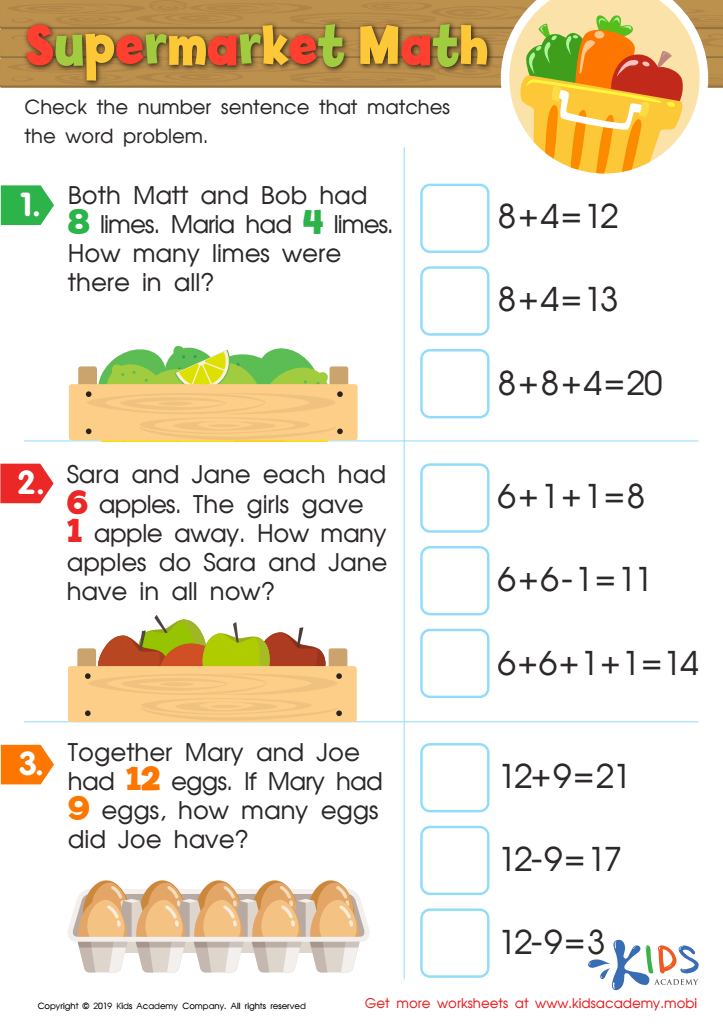
Supermarket Math Worksheet
 Assign to My Students
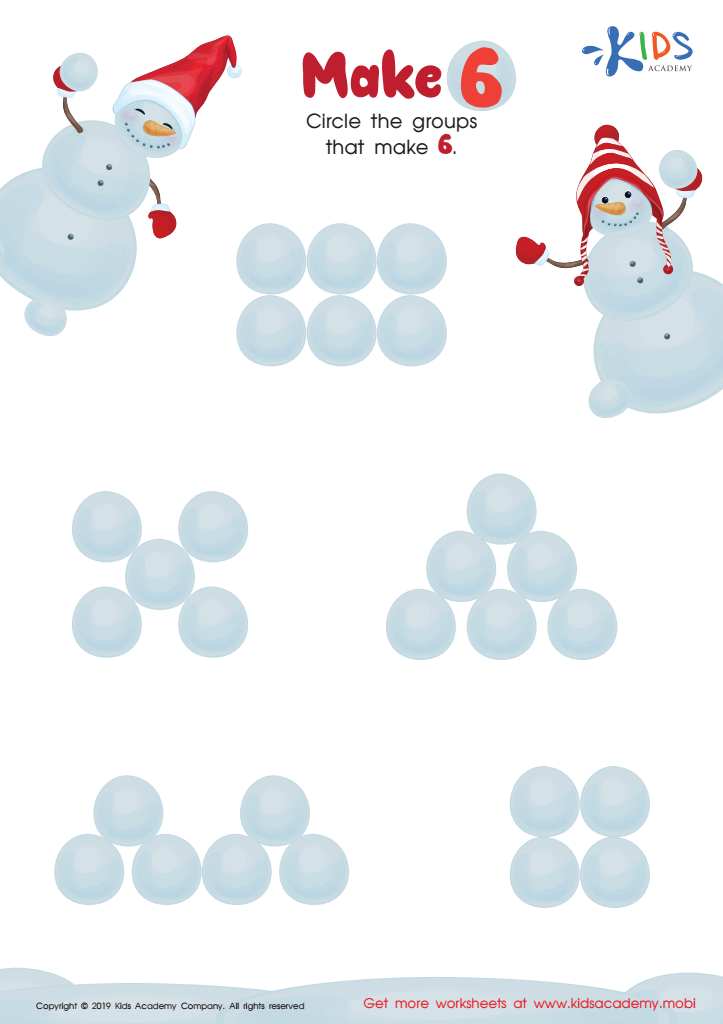
Make 6 Worksheet
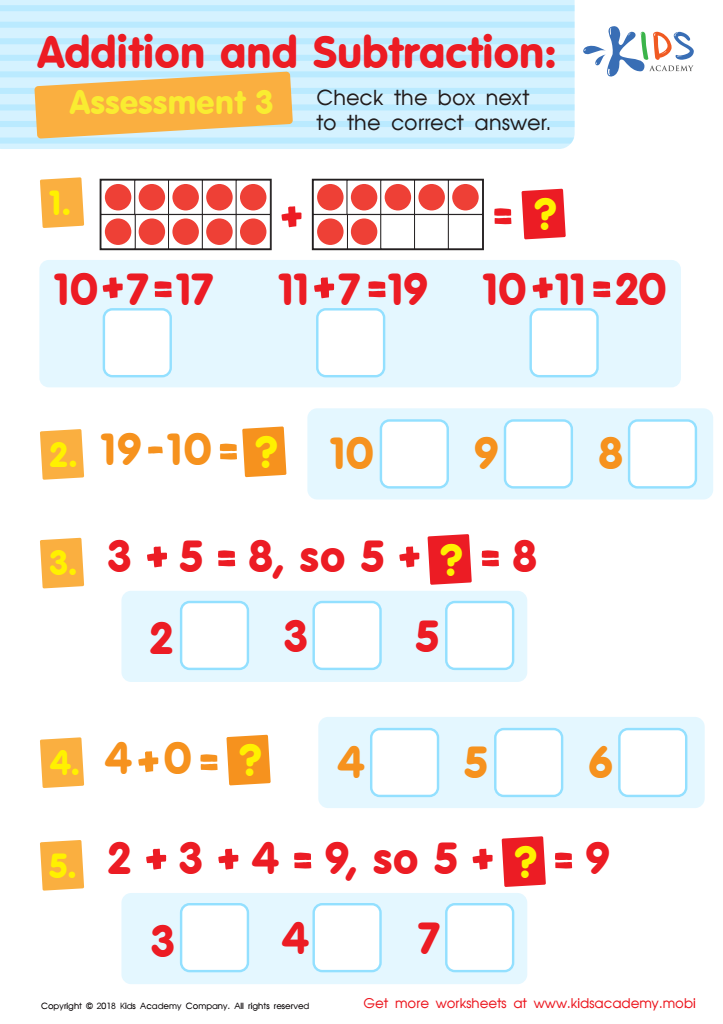
Addition and Subtraction Assessment 3 Worksheet
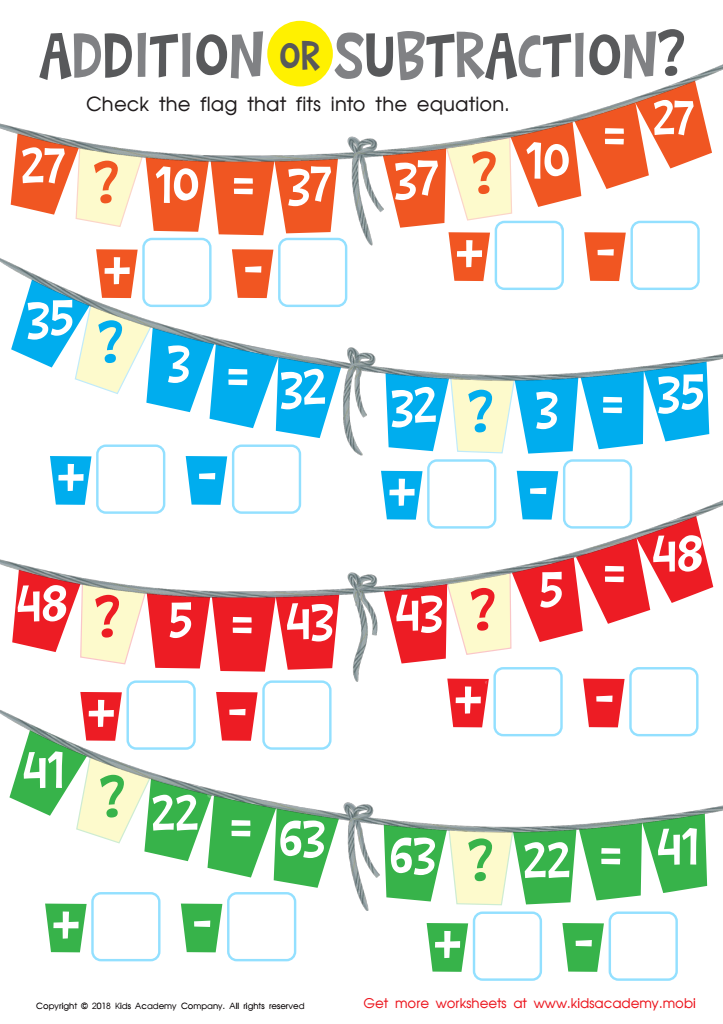
Addition or Subtraction? Worksheet
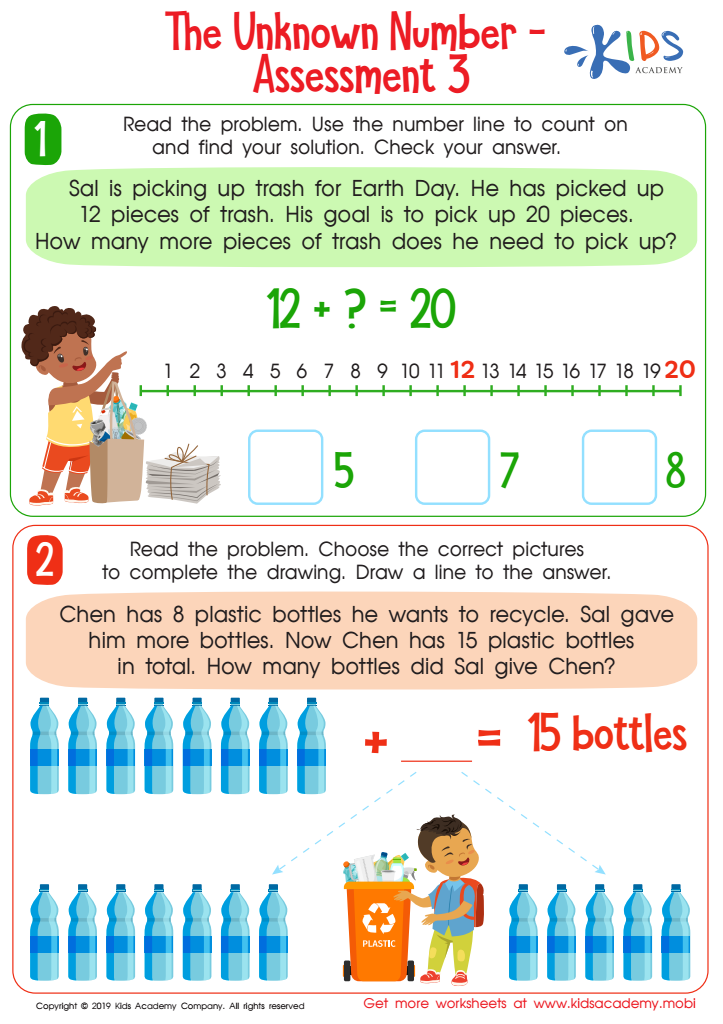
The Unknown Number - Assessment 3 Worksheet
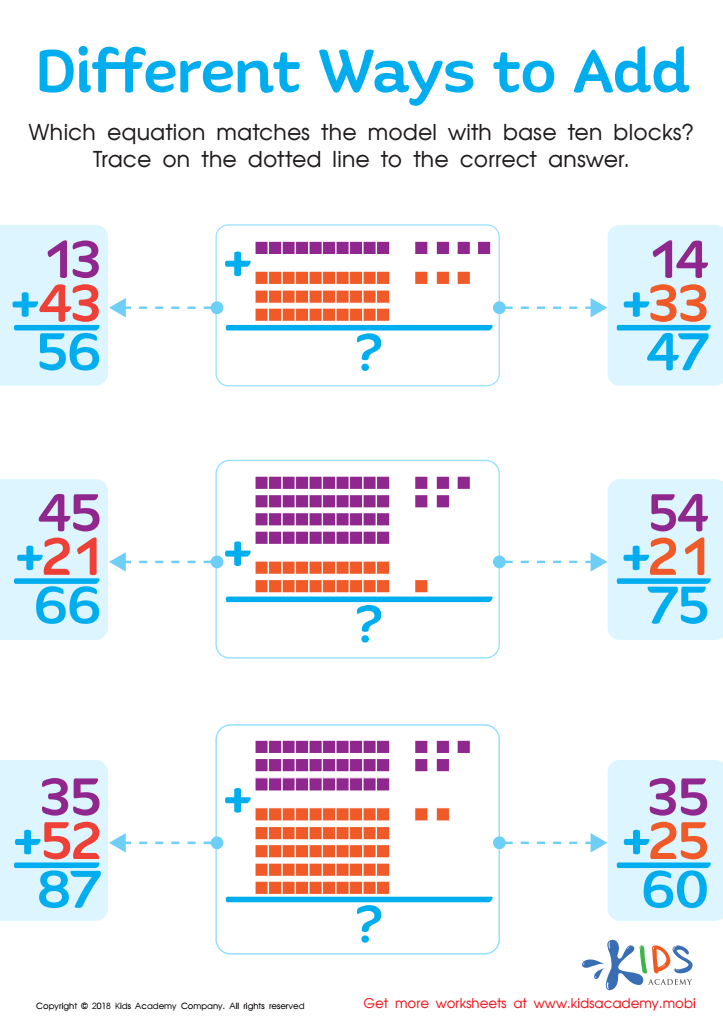
Different Ways to Add Worksheet
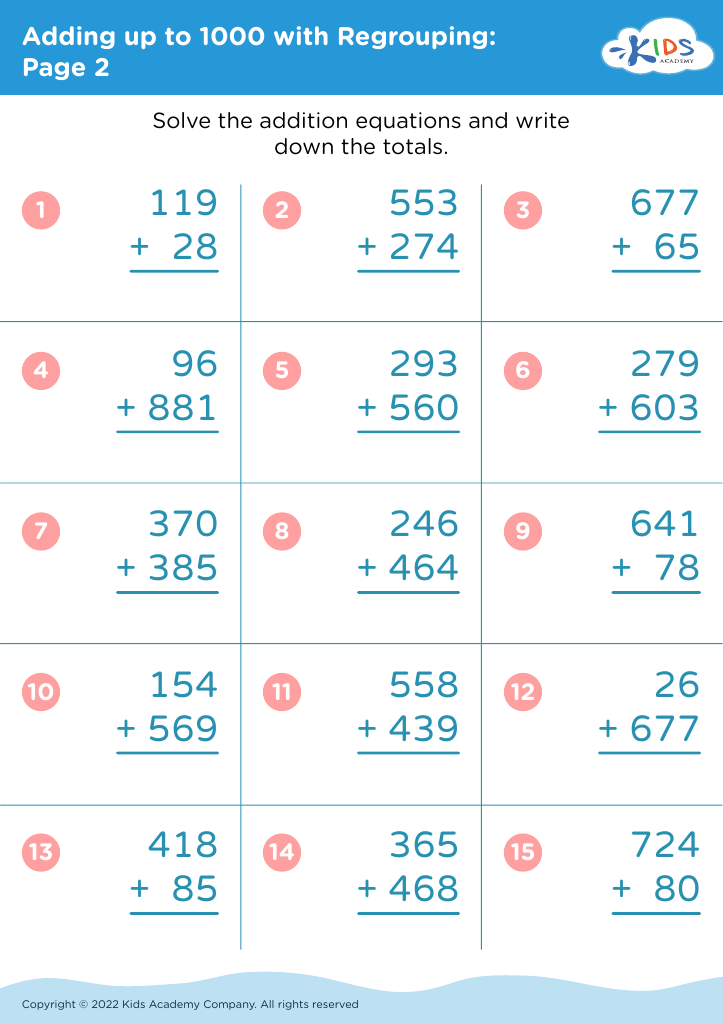
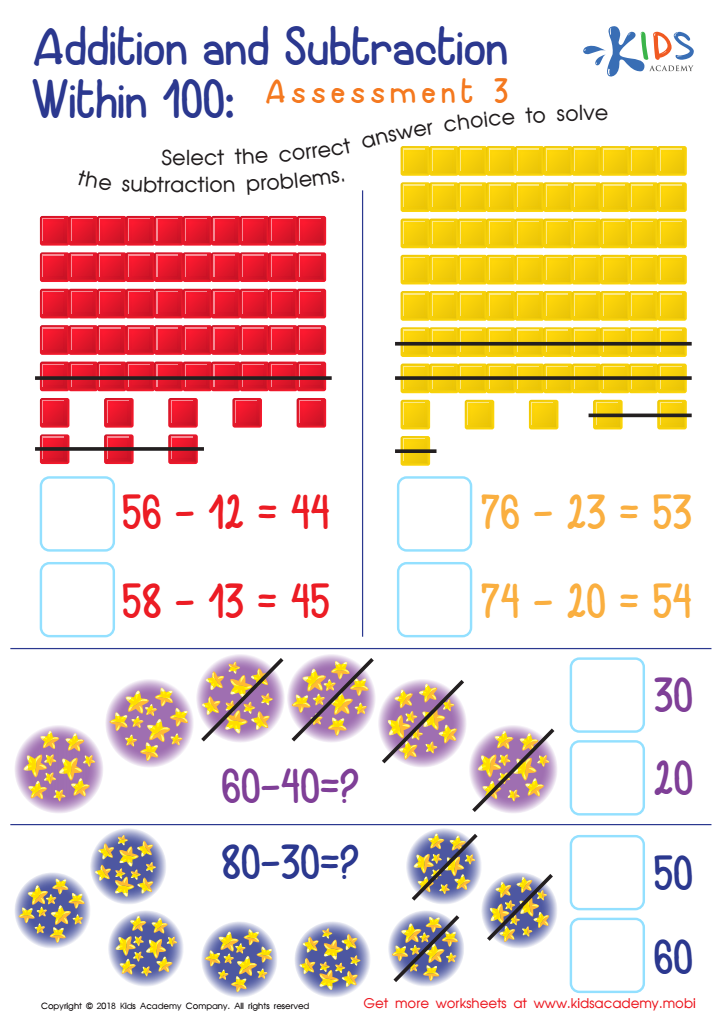
Addition and Subtraction Within 1: Assessment 3 Worksheet
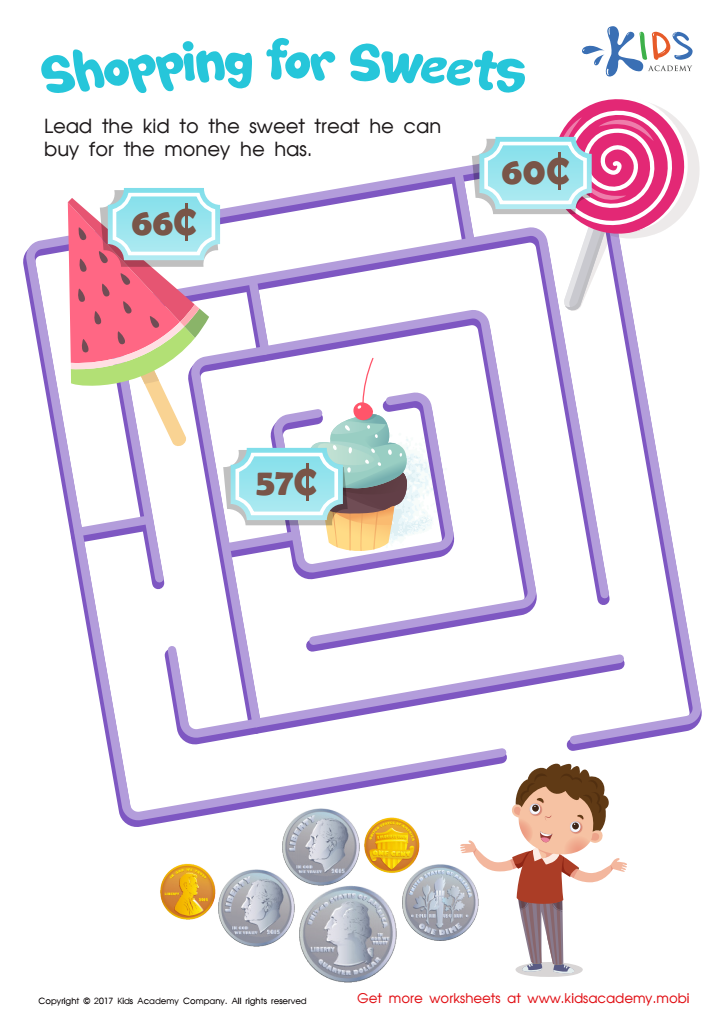
Shopping for Sweets Worksheet
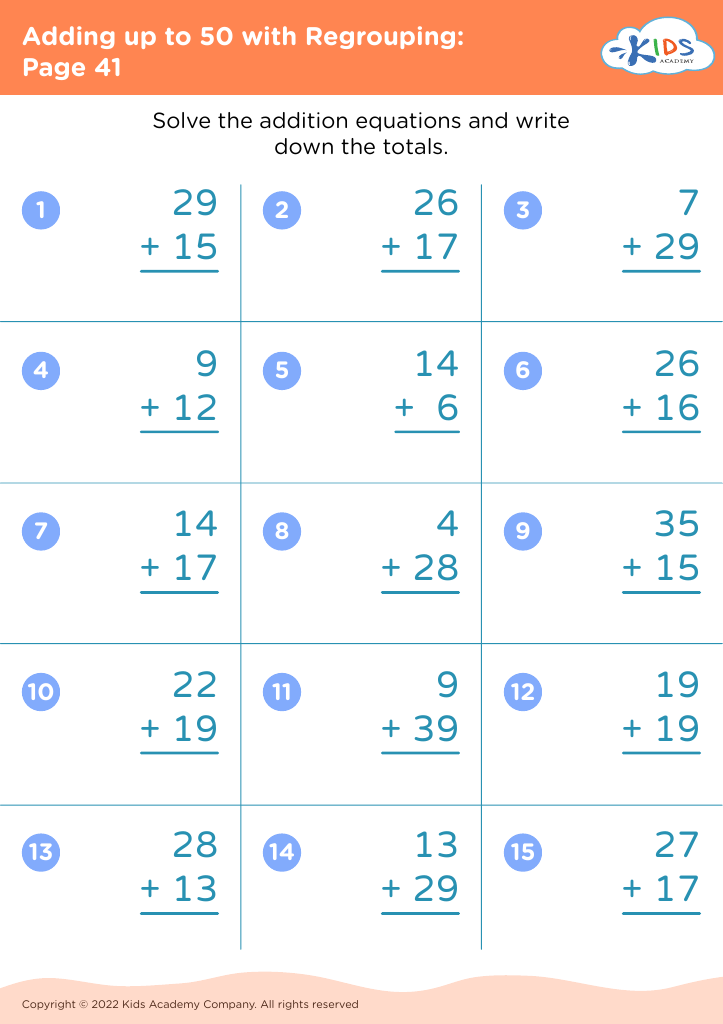








Parents and teachers should care deeply about developing addition skills in children aged 6-9, as this foundational math skill is critical for their future academic success and everyday life. At this age, children are highly receptive to learning, and grasping basic arithmetic early can boost their confidence and enjoyment in math. Mastery of addition forms the basis for more complex math topics, such as multiplication, division, fractions, and problem-solving skills which are essential in higher education and many careers.
Beyond academics, addition skills are practical and necessary for daily tasks like handling money, telling time, and measuring ingredients in a recipe. Developing these skills early helps children make sense of their world and encourages logical thinking. Including addition in playful activities like games and stories can also foster a positive attitude towards learning math.
Furthermore, enhancing math skills contributes to key cognitive development. As children practice addition, they improve their memory, attention, and analytical abilities. When parents and teachers invest time and resources in building these skills, they're not only preparing children for academically rigorous demands of higher grades but also equipping them with essential tools for successful adult life. Effective math education fosters resilience, problem-solving capabilities, and a growth mindset, all of which are crucial for lifelong learning and success.








