Analog Clock Understanding Math Worksheets for Ages 6-9
3 filtered results
-
From - To
Enhance your child's understanding of time with our "Analog Clock Understanding Math Worksheets" designed specifically for ages 6-9. These engaging worksheets introduce young learners to reading, telling, and interpreting analog clocks. Each activity is thoughtfully crafted to develop essential skills, making math fun and interactive. Children will learn to identify hour and minute hands, solve time-related problems, and comprehend the concept of elapsed time. Our resources align with early education standards, ensuring a solid foundation in time-telling skills. Perfect for in-class activities or at-home practice, these worksheets inspire confidence and foster a love for math in early learners. Explore today!
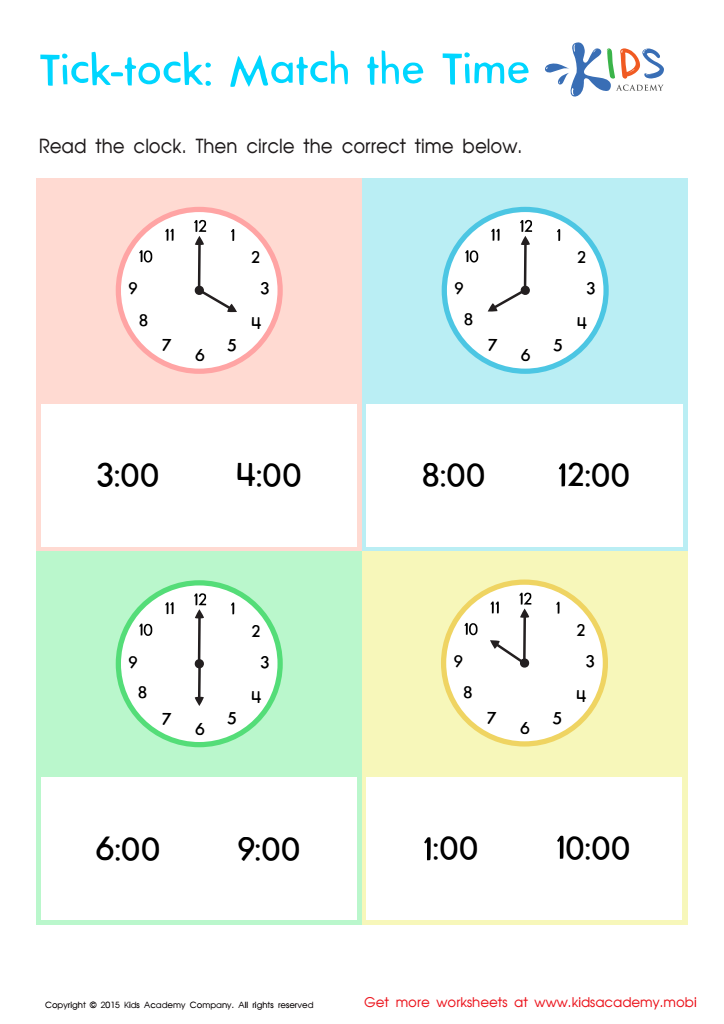
Telling The Time Worksheet: Part 4
 Assign to My Students
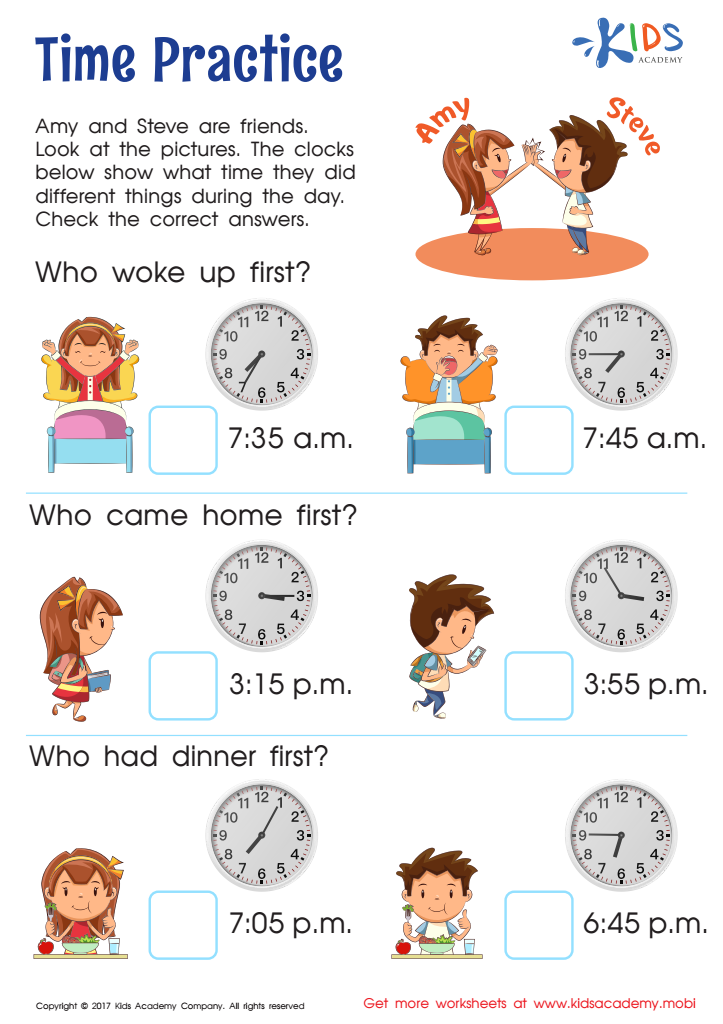
Time Practice Worksheet
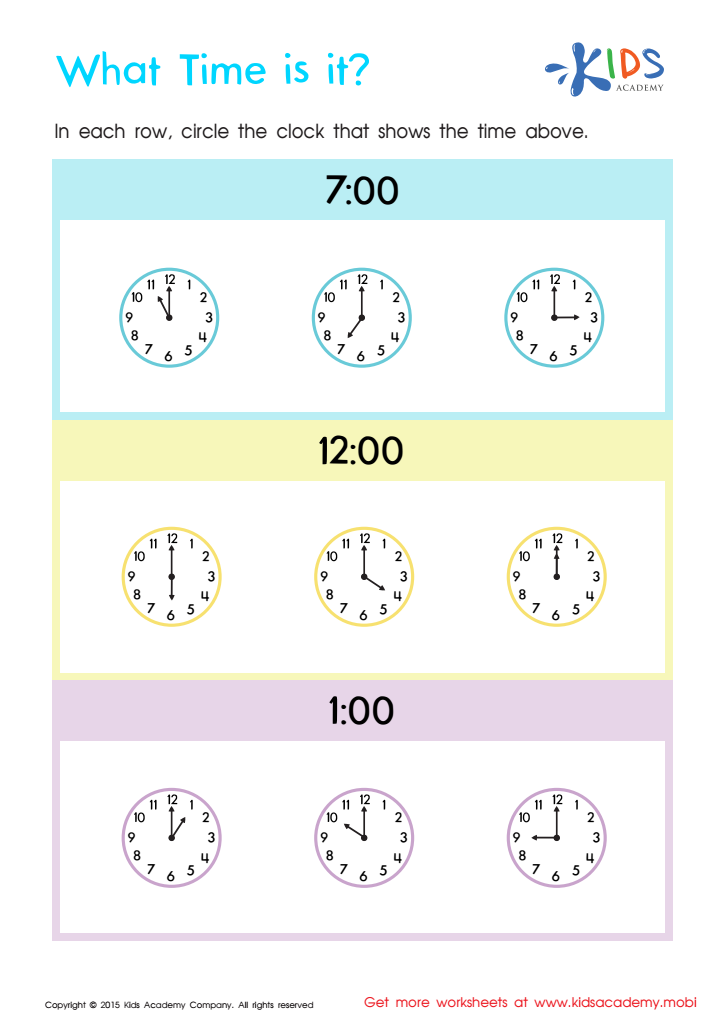
Telling The Time Worksheet: Part 3







Analog clock understanding is a vital mathematical skill for children aged 6-9, warranting the attention of both parents and teachers. Learning to read an analog clock develops critical cognitive abilities, such as problem-solving, number sense, and spatial awareness. Unlike digital clocks, which display time in straightforward numeric format, analog clocks require children to interpret hour and minute hands, fostering a deeper understanding of time.
Furthermore, digital literacy should not eclipse analog skills—they coexist. Knowing how to read an analog clock enriches a child’s comprehension of the world. For instance, this skill fosters responsibility, as children can manage their time for school, chores, and play. An understanding of time concepts also ties into more complex mathematical concepts, such as fractions and ratios, as students learn to divide the clock face into sections (e.g., halves, quarters).
Lastly, parents and teachers play a crucial role in creating engaging learning experiences. Incorporating analog time-telling activities—through games, worksheets, or real-life applications—can make learning captivating and relevant, reinforcing the value of this essential life skill. Investing time in teaching analog clock skills paves the way for holistic math understanding in children, contributing to their overall development.








