Comparative analysis Math Worksheets for Ages 6-9
6 filtered results
-
From - To
Explore our engaging Comparative Analysis Math Worksheets designed specifically for children aged 6-9. These worksheets provide a fun and interactive way for young learners to develop essential math skills, encouraging them to compare, contrast, and analyze various sets of numbers and objects. With colorful visuals and age-appropriate challenges, children will enhance their understanding of greater than, less than, and equal concepts while building a strong foundation in mathematical reasoning. Perfect for classroom use or home practice, our worksheets seamlessly integrate learning with play, fostering a love for math in early learners. Download and ignite your child's math journey today!
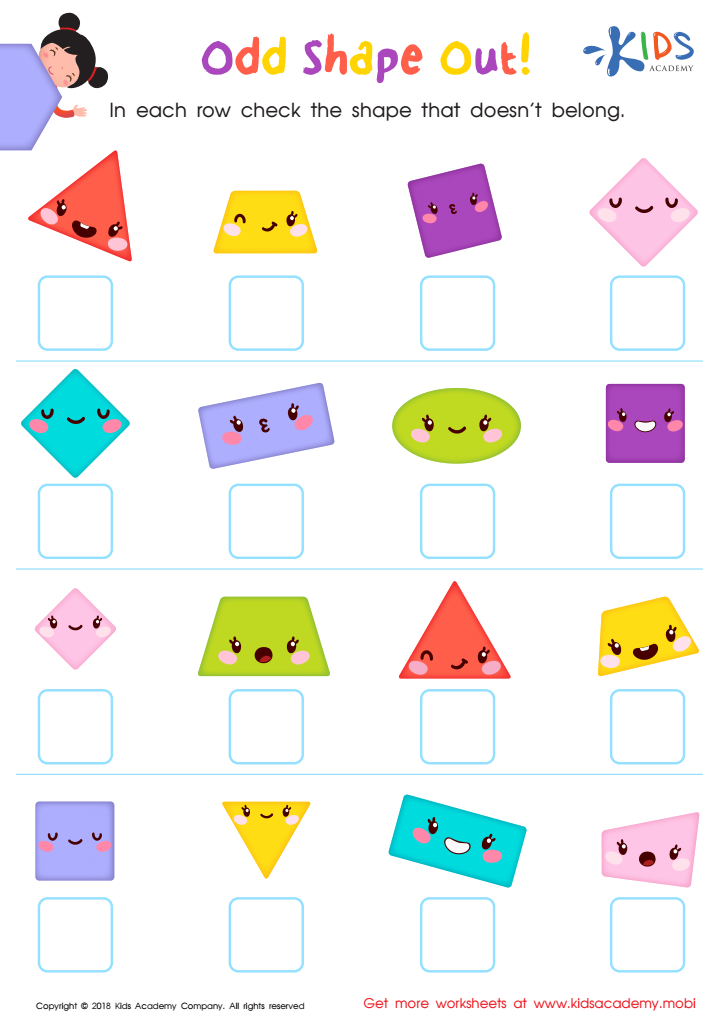
Odd Shape Out Worksheet for Grade 3
 Assign to My Students
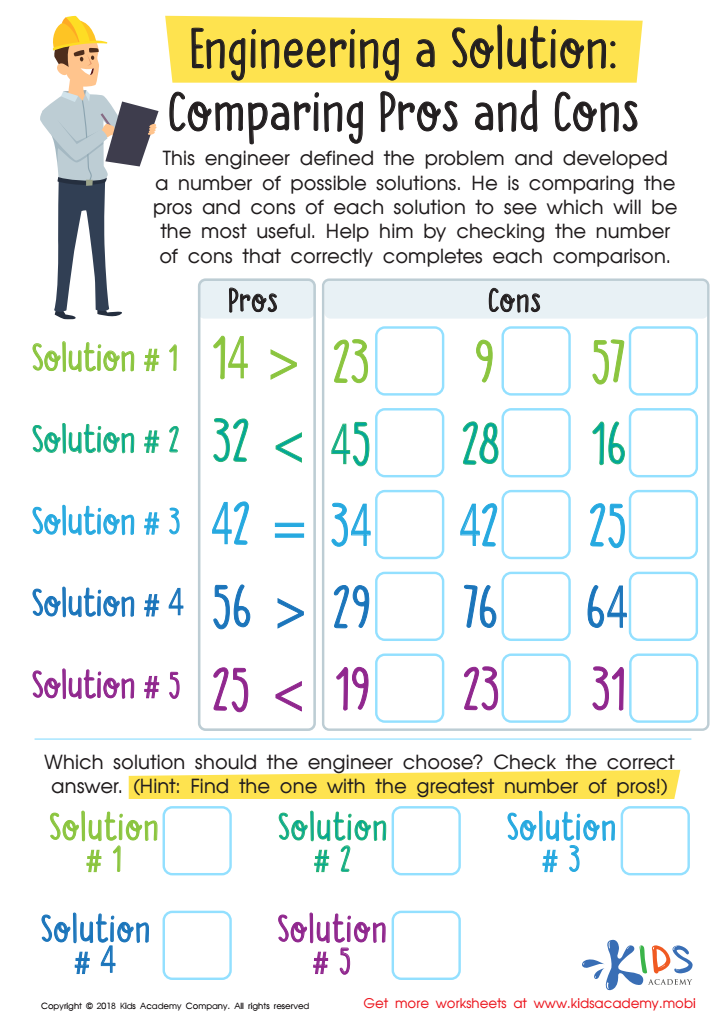
Engineering a Solution: Comparing Pros and Cons Worksheet
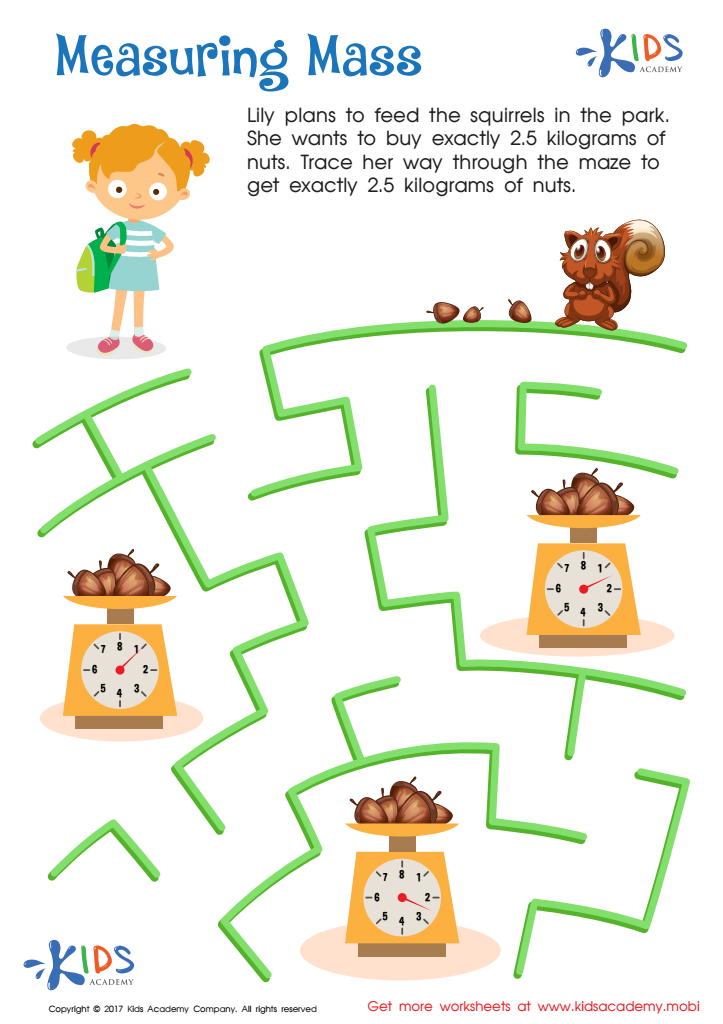
Measuring Mass Worksheet
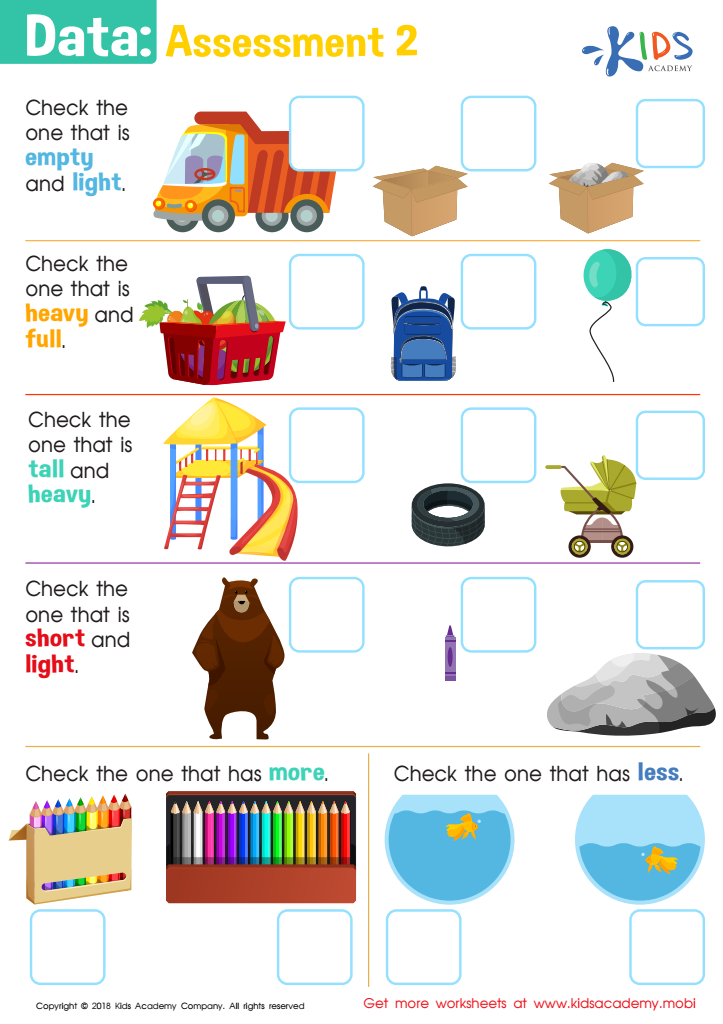
Data: Assessment 2 Worksheet
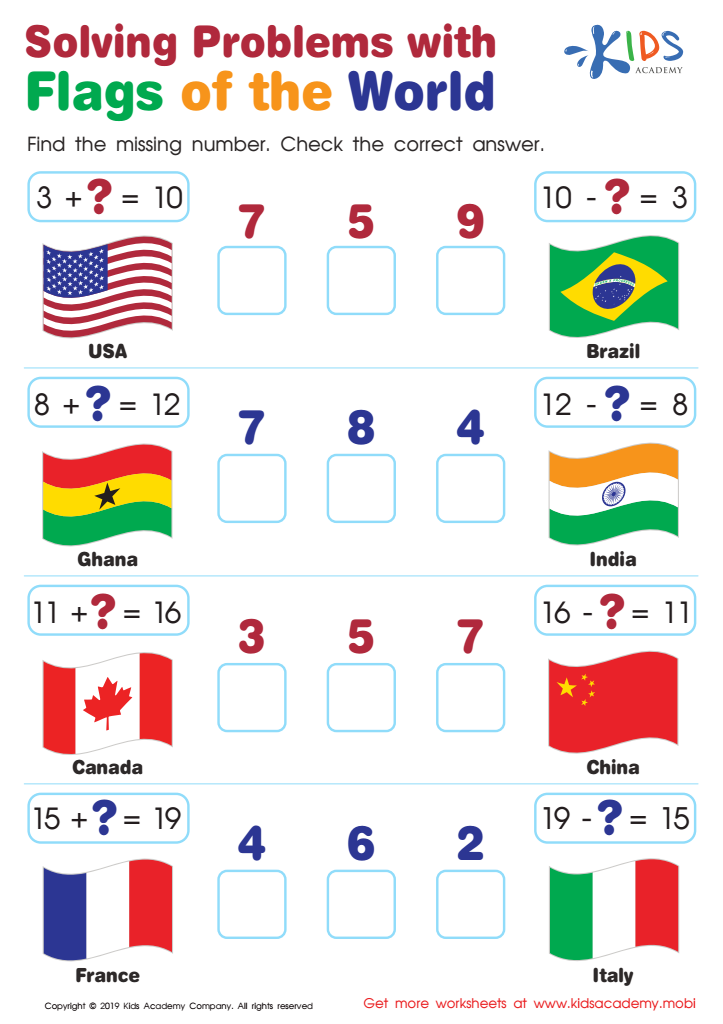
Solving Problems with Flags of the World Worksheet
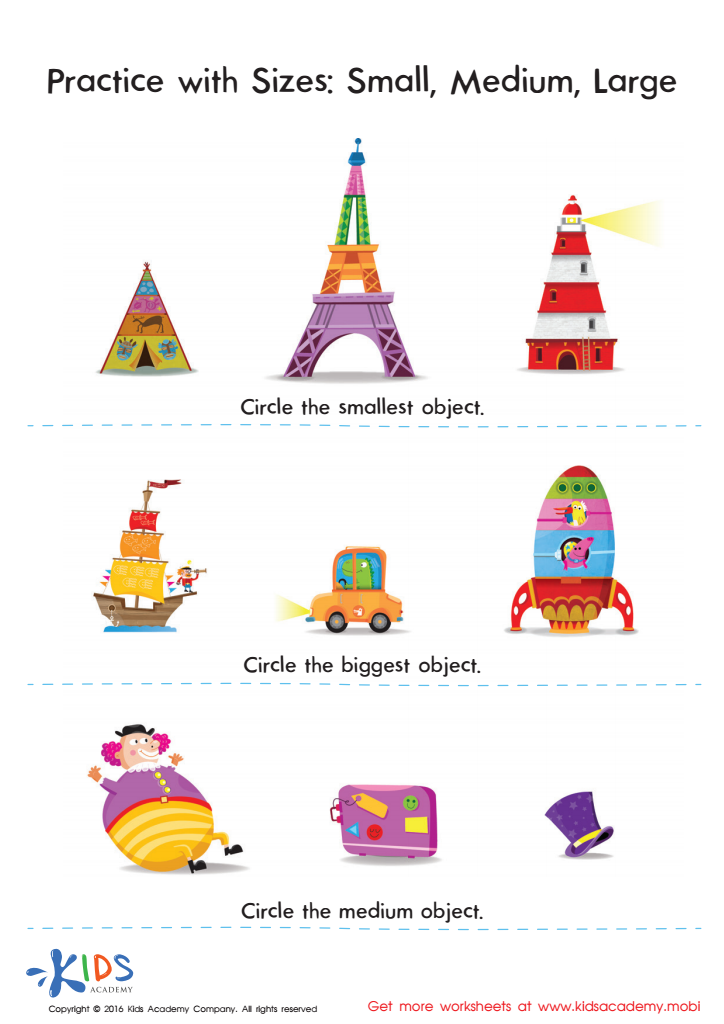








Comparative analysis in math for children aged 6-9 is crucial for their cognitive development and problem-solving skills. During these formative years, children develop foundational math concepts that are essential for their future learning. Engaging with comparative analysis helps young learners understand relationships between numbers, quantities, and simple mathematical operations. It encourages critical thinking as students compare different sets, such as groups of objects or numerical values, fostering a deeper comprehension of concepts like more vs. less, greater vs. smaller, and equality.
Parents and teachers should care about this approach because it cultivates essential skills that align with broader educational goals. By encouraging students to examine and make comparisons, they enhance abilities in reasoning and analytical thinking, which are indispensable in everyday life and advanced academic pursuits. Additionally, mastering these skills early lays the groundwork for more complex math topics later, such as algebra and statistics.
Moreover, integrating comparative analysis can support collaborative learning environments, as children articulate their thought processes and learn from one another. This not only makes learning more engaging but also builds social skills. Overall, by emphasizing comparative analysis in early math education, educators and parents can nurture well-rounded, confident learners ready for future challenges.








