Comparison Skills Math Worksheets for Ages 6-9
9 filtered results
-
From - To
Nurture your child's math abilities with our "Comparison Skills Math Worksheets" designed for ages 6-9. Our engaging worksheets help young learners develop vital comparison skills through entertaining and educational activities. From comparing numbers and identifying greater or smaller values to understanding basic measurement concepts, these worksheets provide the perfect blend of fun and learning. Ideal for both classroom use and home practice, each worksheet is crafted to support a child's math journey, ensuring they build a strong foundation for future math success. Discover a world where learning math is an adventure at Kids Academy!
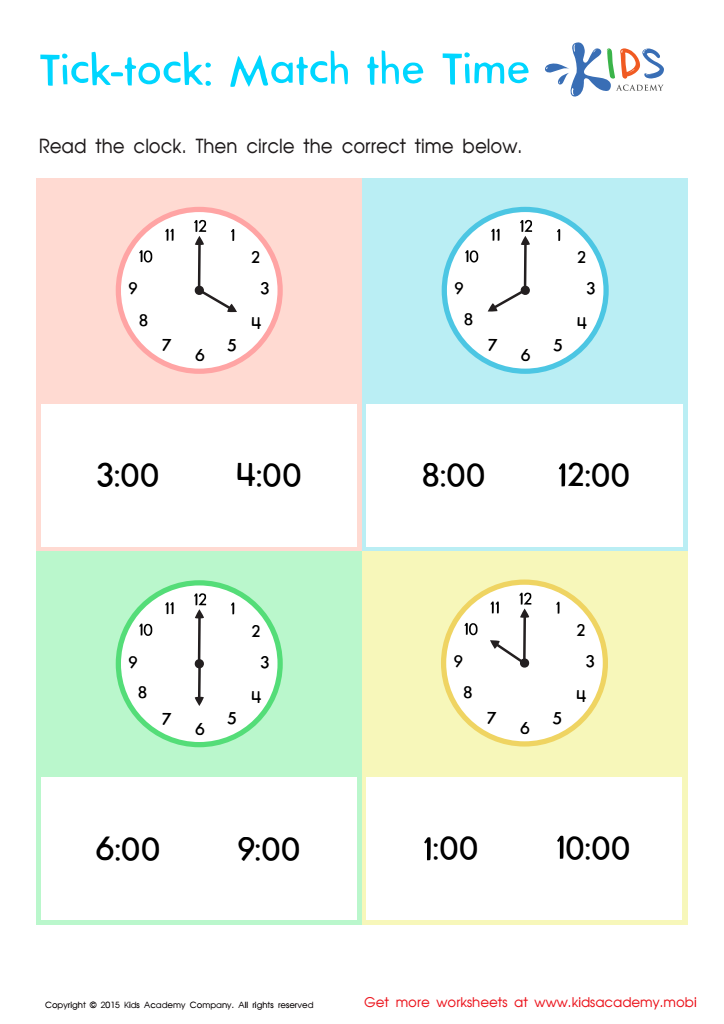
Telling The Time Worksheet: Part 4
 Assign to My Students
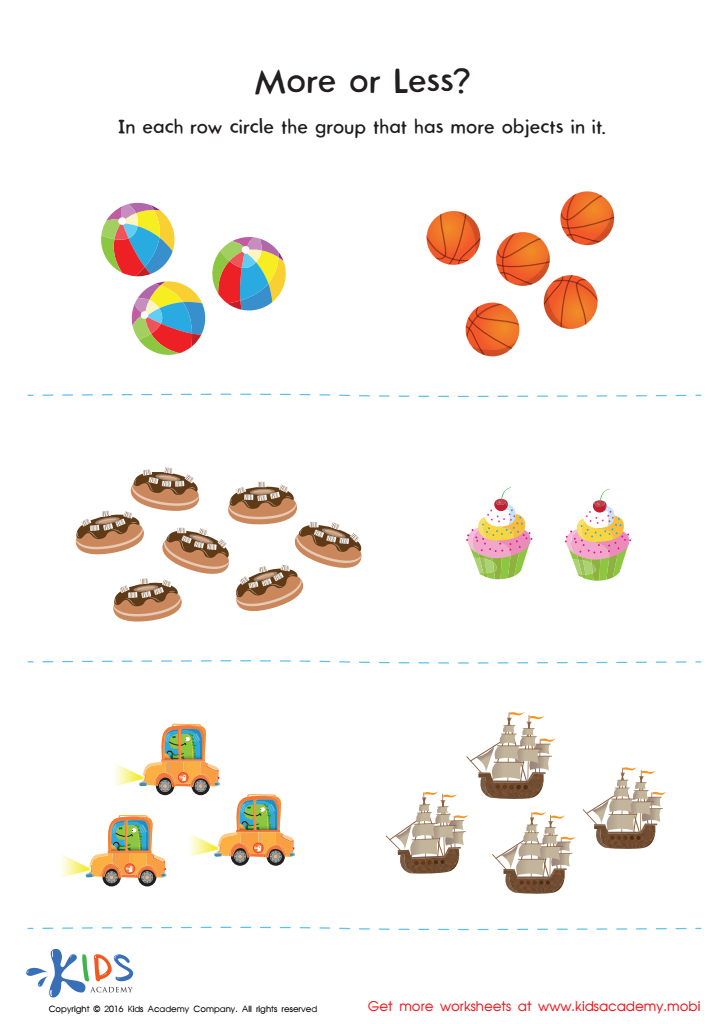
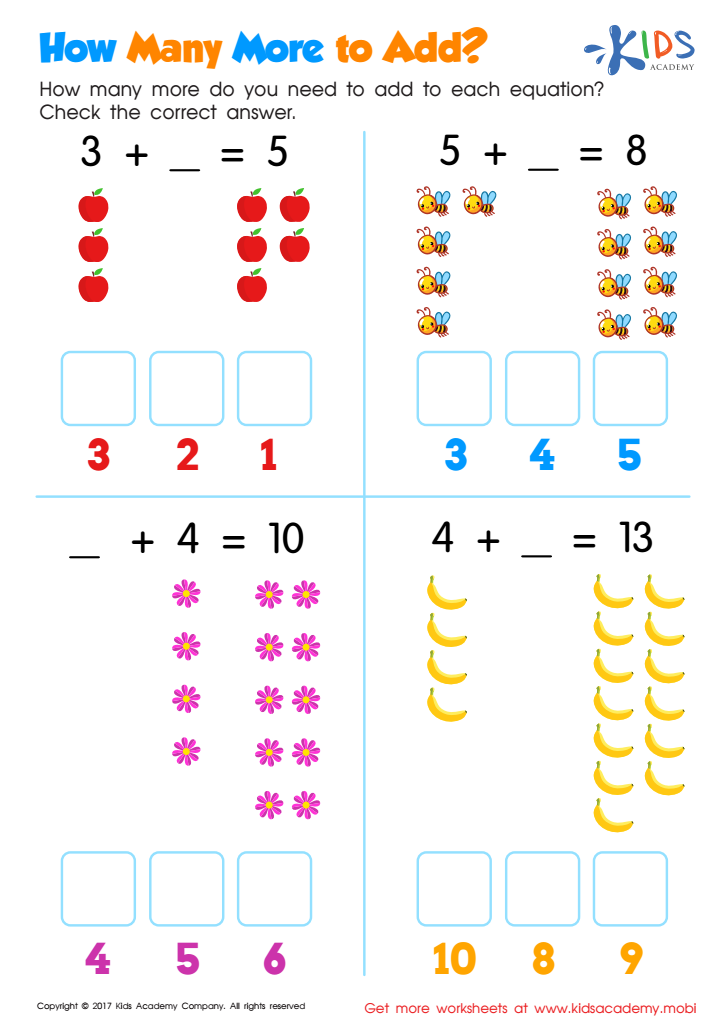
How Many More to Add Worksheet
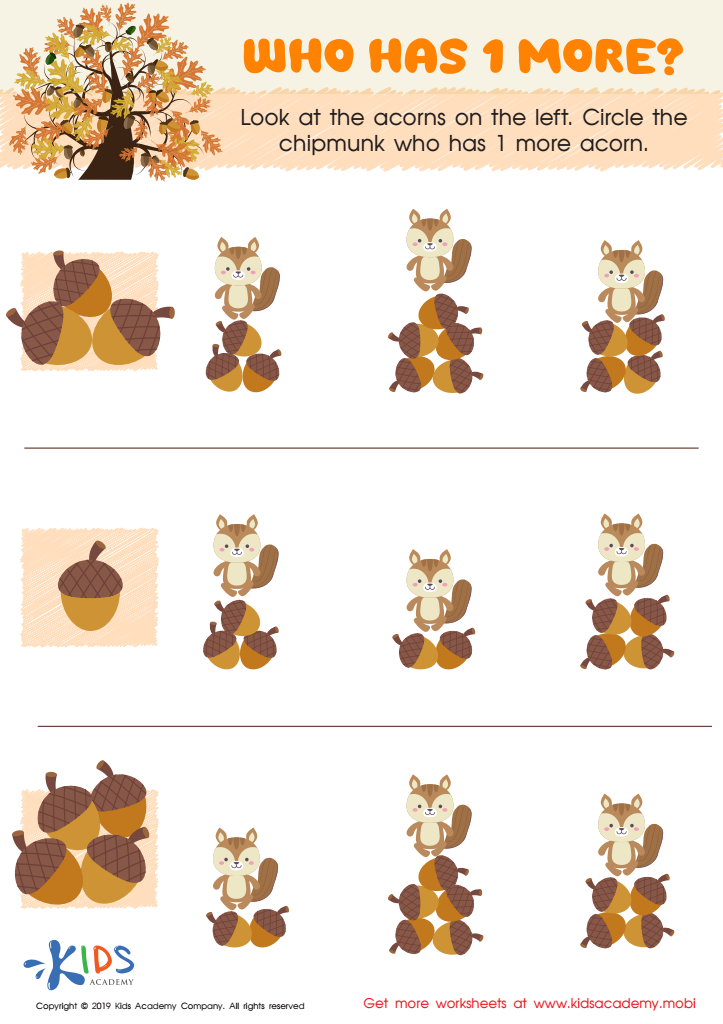
Who Has 1 More? Worksheet
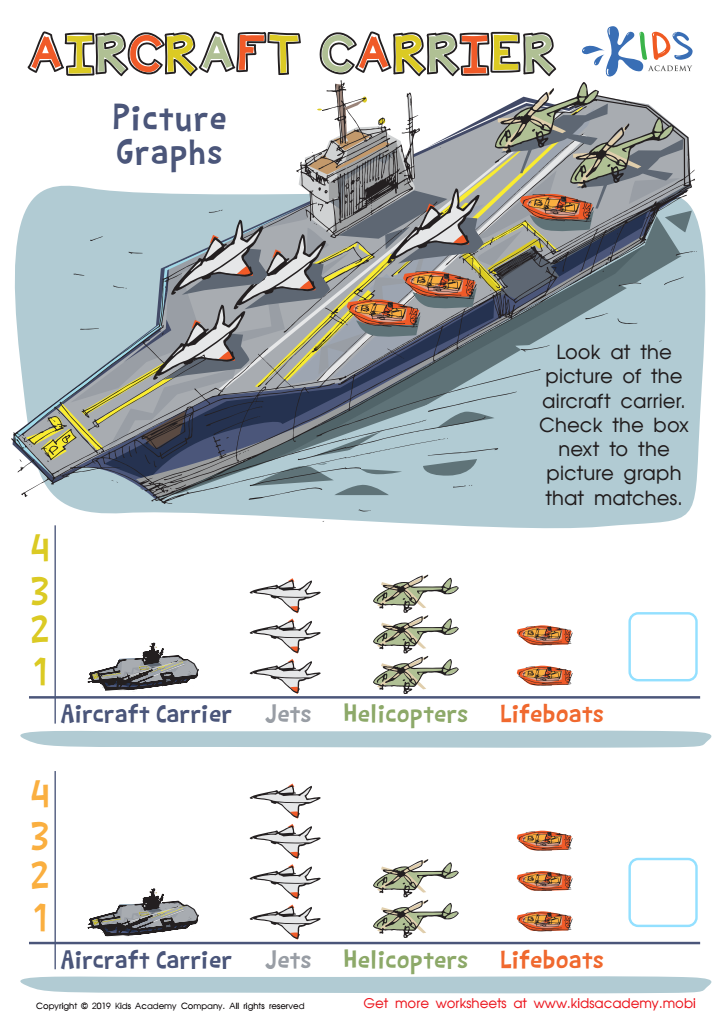
Aircraft Carrier Picture Graphs Worksheet
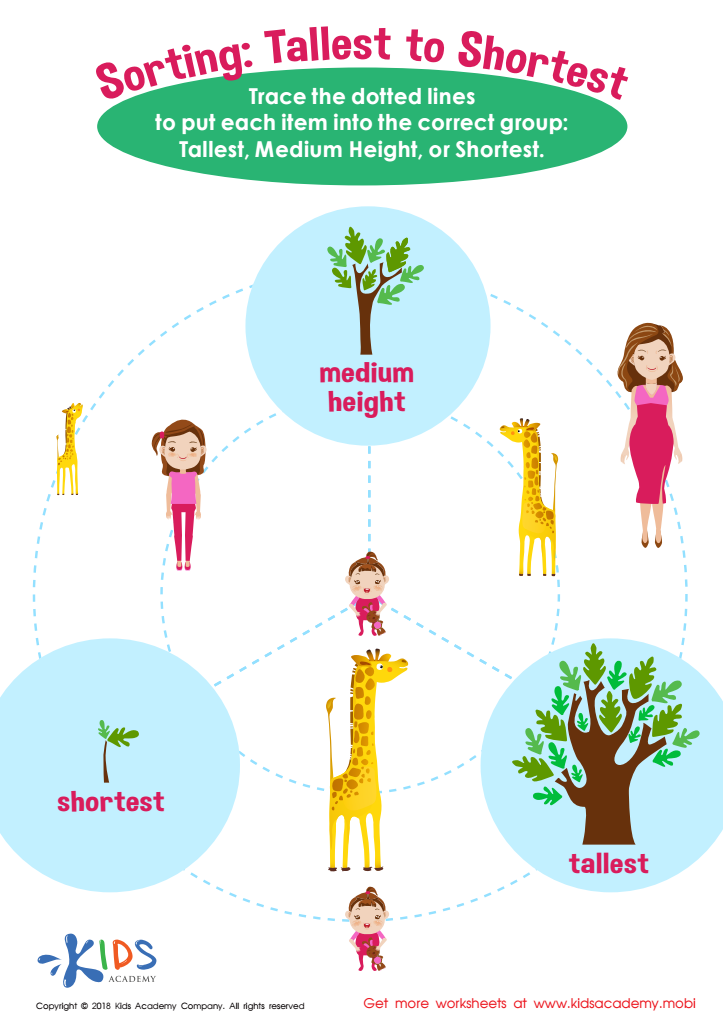
Sorting: Tallest to Shortest Worksheet







Comparison skills in math are crucial for children ages 6-9 as they form the foundation of a child’s numeracy and analytical abilities. Developing these skills helps young learners comprehend differences in quantities, sizes, and values, critical concepts for progressing to more advanced mathematical operations.
For parents and teachers, fostering comparison skills involves teaching children how to use comparative language such as "more than," "less than," "equal to," and identifying patterns. Mastering these concepts aids children in problem-solving and decision-making, making them essential both academically and in real-life situations, such as comparing prices and understanding time.
At this developmental stage, children are transitioning from simple counting to more complex mathematical ideas. Strengthening comparison skills promotes logical reasoning and spatial understanding, which are necessary for tackling subjects like geometry and fractions. Moreover, children with strong comparison skills tend to perform better on standardized tests and in mathematical tasks.
Importantly, early mastery of mathematical comparison encourages confidence and a positive attitude toward math as children progress through school. When parents and teachers prioritize these skills, they’re not just preparing children for higher-level math but also enhancing their overall critical thinking abilities, which are vital for lifelong learning and everyday problem-solving.








