Enhancing number recognition Math Worksheets for Ages 6-9
3 filtered results
-
From - To
Boost your child's math skills with our engaging "Enhancing Number Recognition Math Worksheets for Ages 6-9". Designed for young learners, these worksheets provide strategic exercises that make learning fun and interactive. Children will develop essential number recognition abilities, which lay the foundation for advanced math concepts. Featuring colorful illustrations and age-appropriate challenges, each worksheet aims to reinforce counting skills, numerical order, and basic arithmetic. Ideal for both classroom use and home practice, our resources help foster a lifelong love for mathematics in your child. Discover how our expertly crafted worksheets can transform your child's learning experience today!
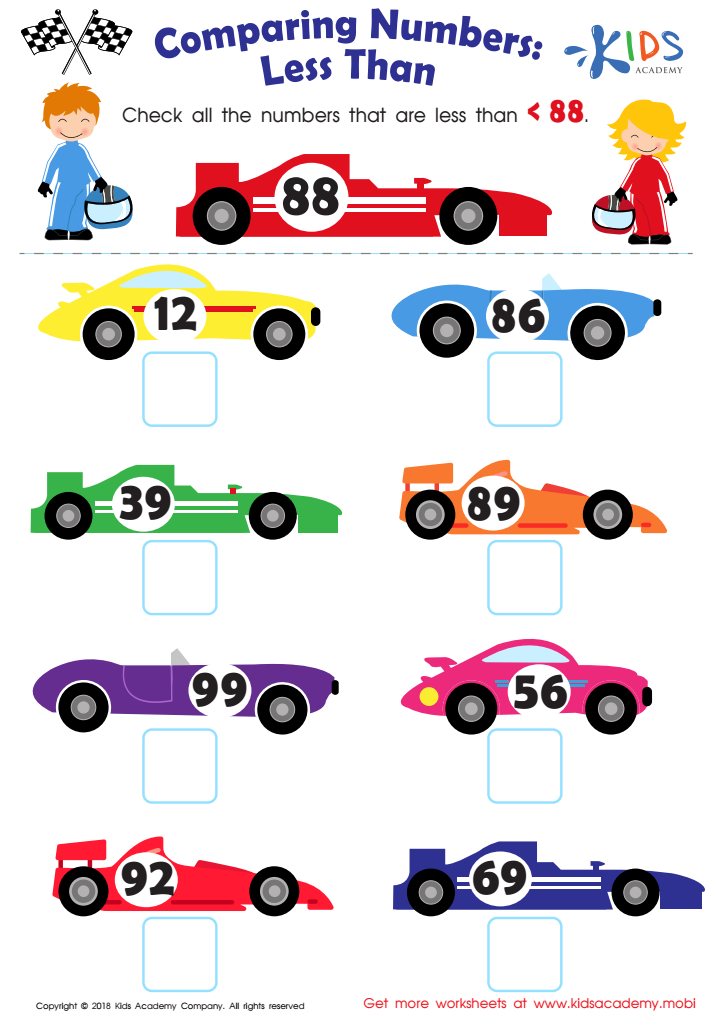
Less Than Worksheet
 Assign to My Students
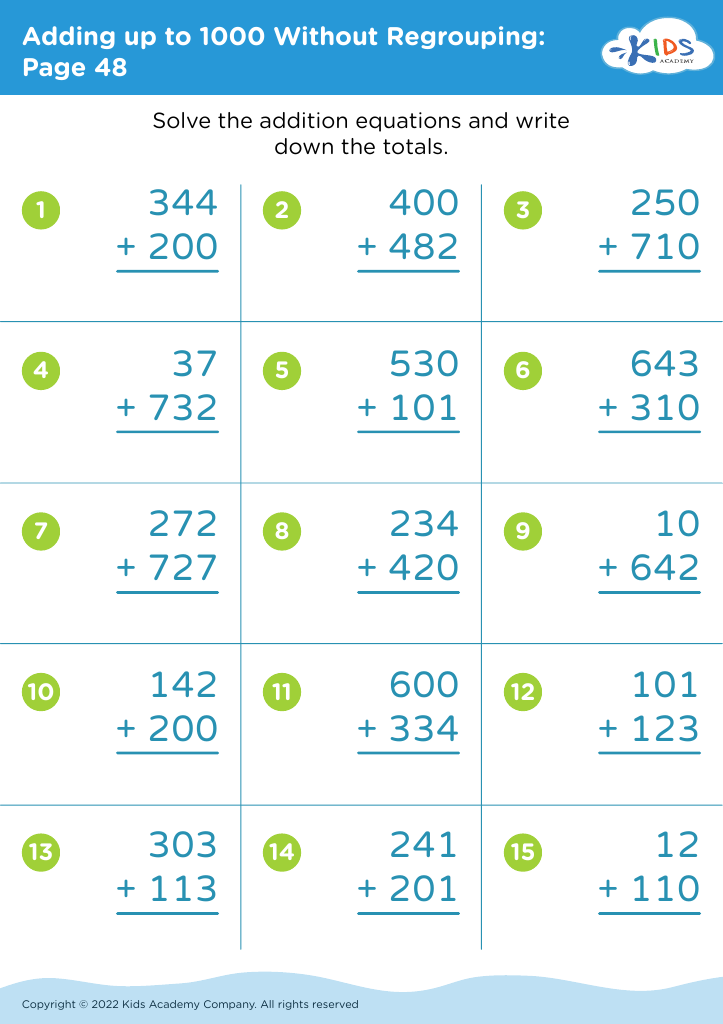
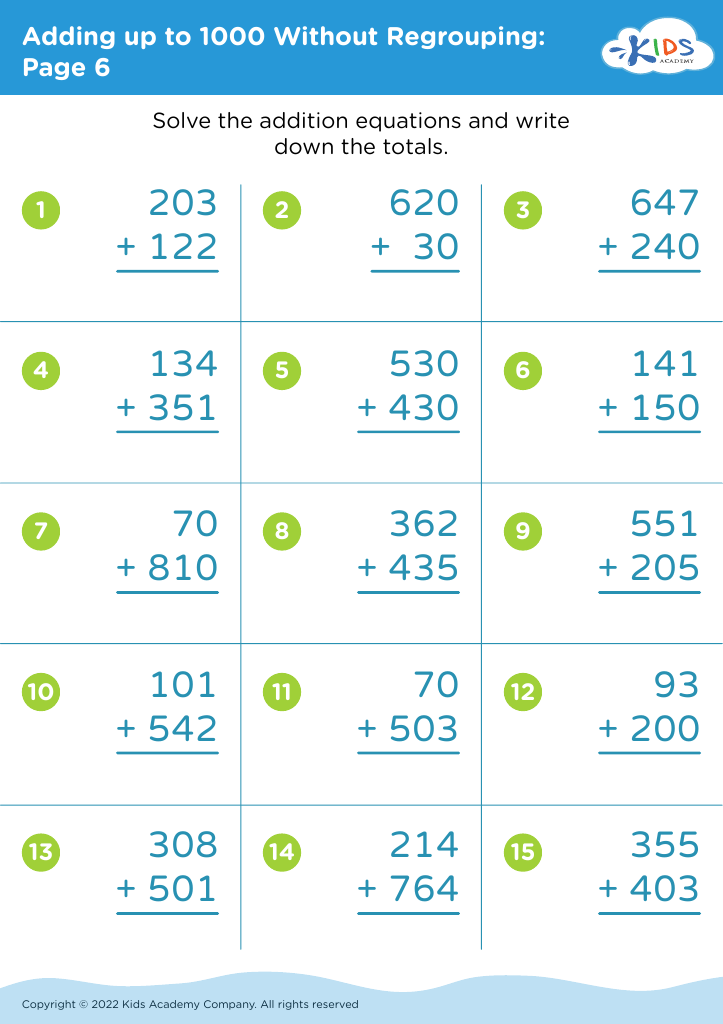








Parents and teachers play a crucial role in the early development of children's foundational math skills, and enhancing number recognition from ages 6-9 is vital for several reasons.
Firstly, number recognition is the cornerstone of mathematical learning. Children who can accurately identify and understand numbers are better equipped to progress to more complex mathematical concepts such as addition, subtraction, multiplication, and division. This foundational skill is essential for their success in both school and real-life situations, such as understanding money, telling time, and measuring ingredients for a recipe.
Secondly, early math skills, including number recognition, significantly impact a child's cognitive development and problem-solving abilities. Engaging children in activities that strengthen these skills can enhance their memory, attention span, and critical thinking. This early groundwork builds their confidence and fosters a positive attitude towards math, which is crucial during these formative years.
Moreover, research has shown that early math competency is a strong predictor of future academic achievement across various subjects. By prioritizing number recognition, parents and teachers are not only helping children excel in math but also setting the stage for overall academic and lifelong success.
Lastly, improvement in number recognition can also support children emotionally and socially. Children who understand their schoolwork are more likely to participate in classroom activities, collaborate with peers, and enjoy learning, thereby fostering a healthy, positive school experience.








