Enhancing number sense Math Worksheets for Ages 6-9
4 filtered results
-
From - To
Boost your child's mathematical foundation with our specially designed "Enhancing Number Sense Math Worksheets" for ages 6-9. Our engaging activities help young learners understand the value and relationship between numbers. With a variety of exercises focusing on counting, sequencing, comparing, and basic operations, your child will develop essential skills in a fun, interactive way. Perfect for home or classroom use, these worksheets are tailored to support the development of critical thinking and problem-solving abilities. Encourage a love for math from an early age with resources crafted to make learning enjoyable and effective.
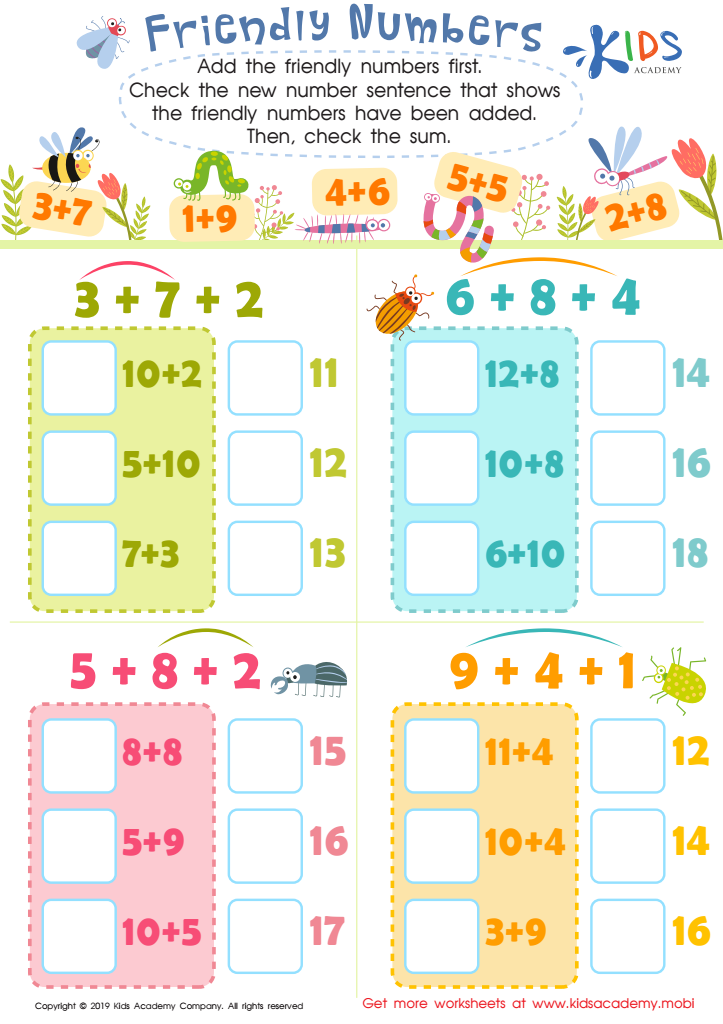
Friendly Numbers Worksheet
 Assign to My Students
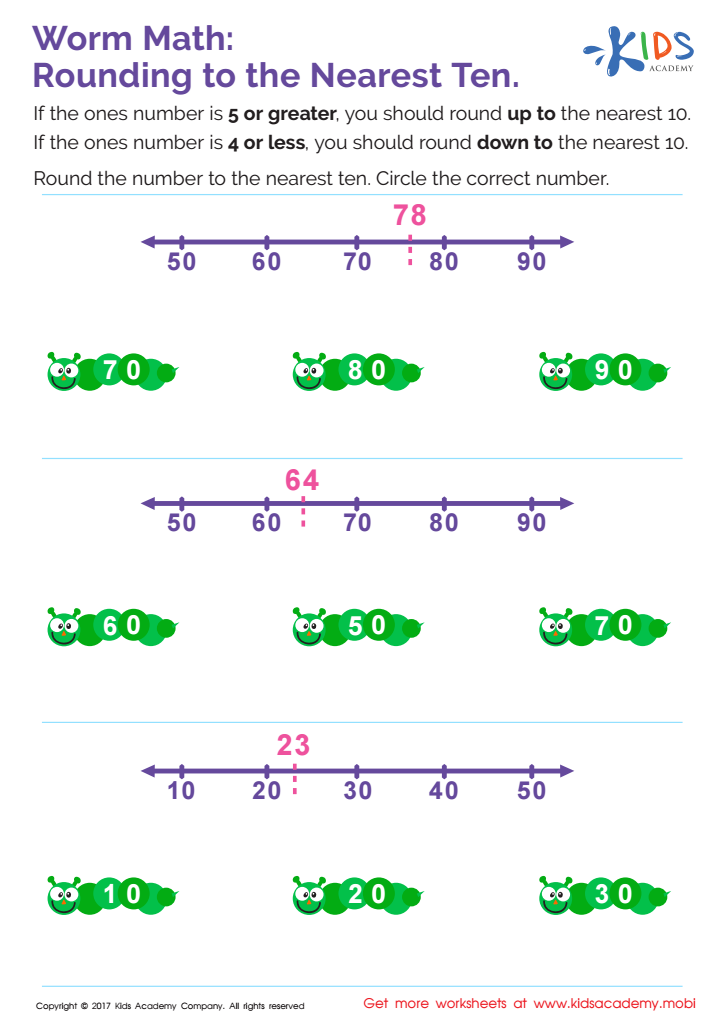
Rounding to the Nearest Ten Worksheet
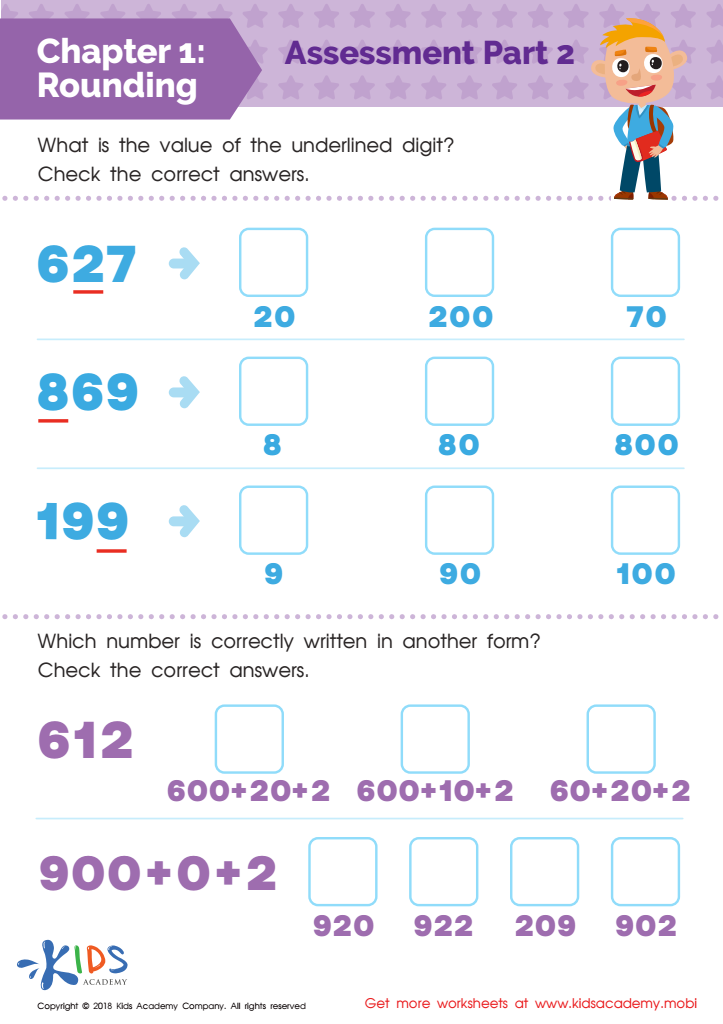
Rounding 3 Digit Numbers Worksheet







Enhancing number sense in children aged 6-9 is crucial as it lays the foundational skills necessary for future mathematical learning and everyday problem-solving. During this formative period, children transition from concrete to more abstract mathematical thinking, making it an ideal time to solidify core concepts. Number sense involves understanding numbers, their relationships, and how to manipulate them effectively, which is important for arithmetic operations and more advanced math topics.
Parents and teachers play pivotal roles in nurturing this development. By fostering a positive attitude toward math through engaging and hands-on activities, children are more likely to develop confidence and enthusiasm for the subject. This early familiarity with numbers promotes better academic performance, not just in math but across all subjects where analytical and critical thinking is essential.
Practical applications of number sense are abundant in daily life— from managing money to understanding time and measuring ingredients. Children with strong number sense are more equipped to make informed decisions, solve everyday problems efficiently, and successfully navigate life’s quantitative demands.
Paying attention to enhancing number sense for ages 6-9 can prevent math anxiety, build strong conceptual understanding, and provide a robust foundation for more complex mathematical learning in later years. Thus, both parents and teachers should prioritize this aspect of education to foster well-rounded, confident learners.








