
Fraction Addition Math Worksheets for Ages 6-9
17 filtered results
Difficulty Level
Grade
Age
-
From - To
Subject
Activity
Standards
Discover our Fraction Addition Math Worksheets designed for kids ages 6-9, perfect for enhancing their fraction skills. Engage your young learners with fun, colorful activities that make adding fractions simple and enjoyable. Our worksheets are tailored to build confidence through step-by-step exercises, fundamental concepts, and practical examples. Complement classroom learning or use as extra practice at home. With clear instructions and engaging problems, kids will build a solid foundation in math while developing critical thinking. Help your child excel in their math journey with our expertly crafted Fraction Addition Math Worksheets. Download and print today!
Favorites
With answer key
Interactive
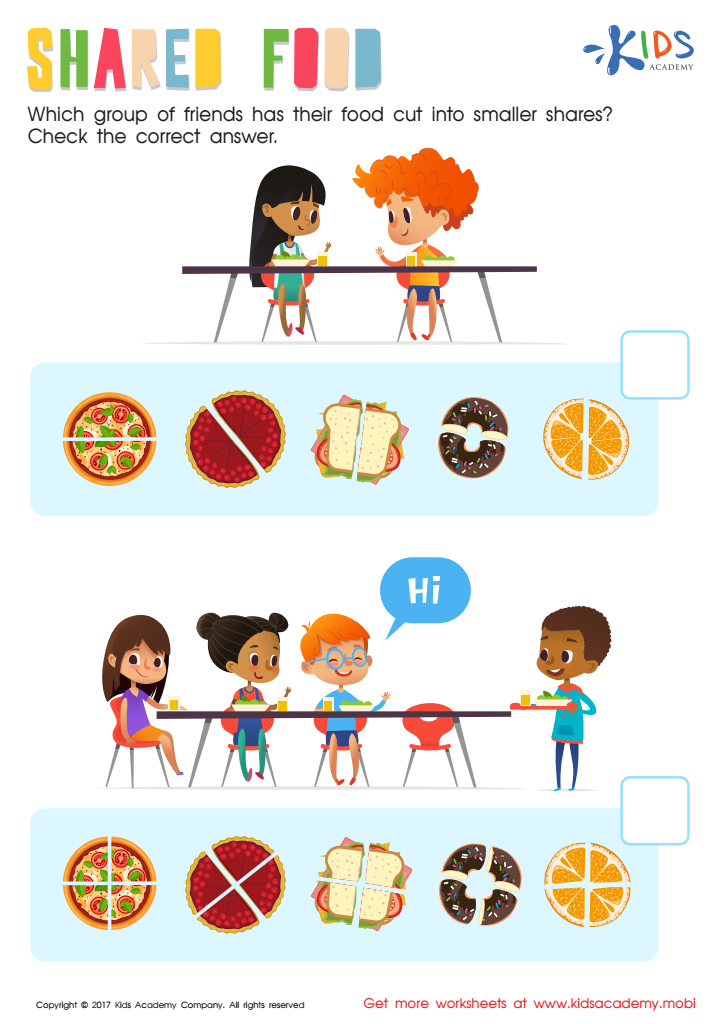
Shared Food Worksheet
In this worksheet, kids learn about sharing and cutting shapes into equal parts. There are two groups of friends: one with two, the other with four. Ask your child which group has their food cut into smaller shares, and help them find the right answer.
 Assign to My Students
Shared Food Worksheet
Worksheet
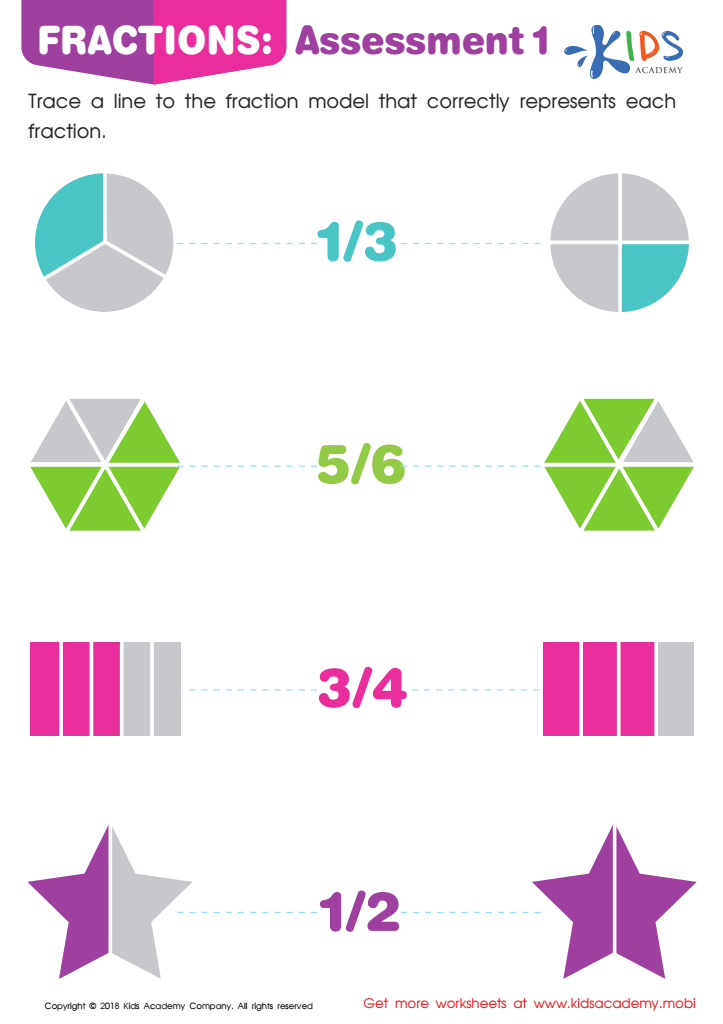
Fractions: Assessment 1 Worksheet
Master fractions easily with this worksheet! It has four sets of fraction models and fraction equations with two models each. Guide your kids to trace a line to the correct fraction model for each equation.
Fractions: Assessment 1 Worksheet
Worksheet
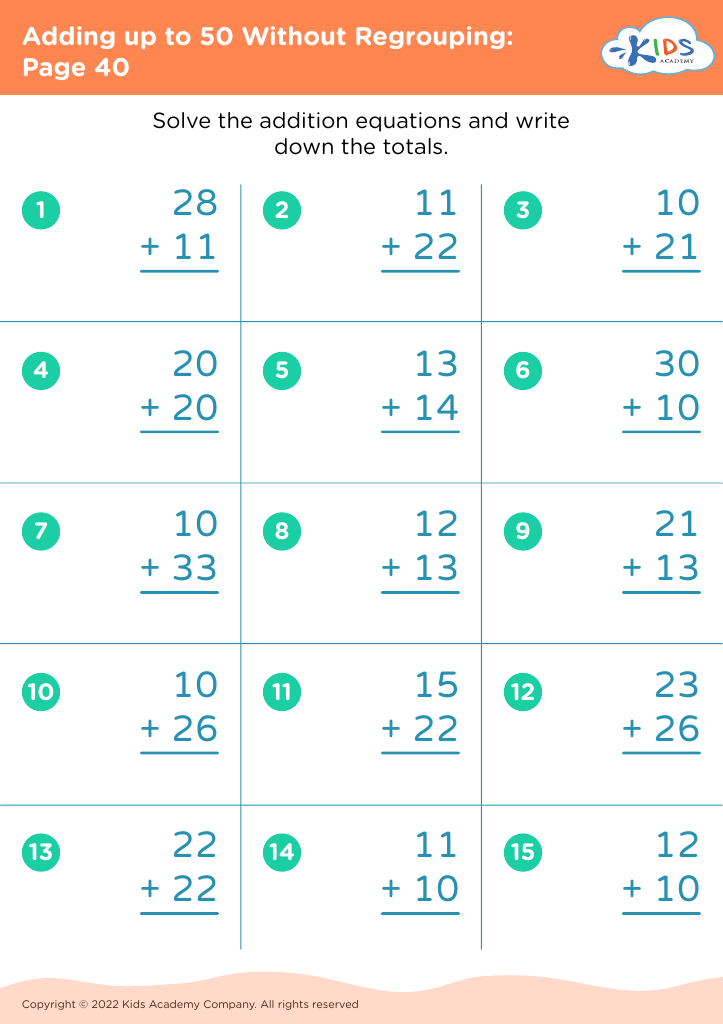
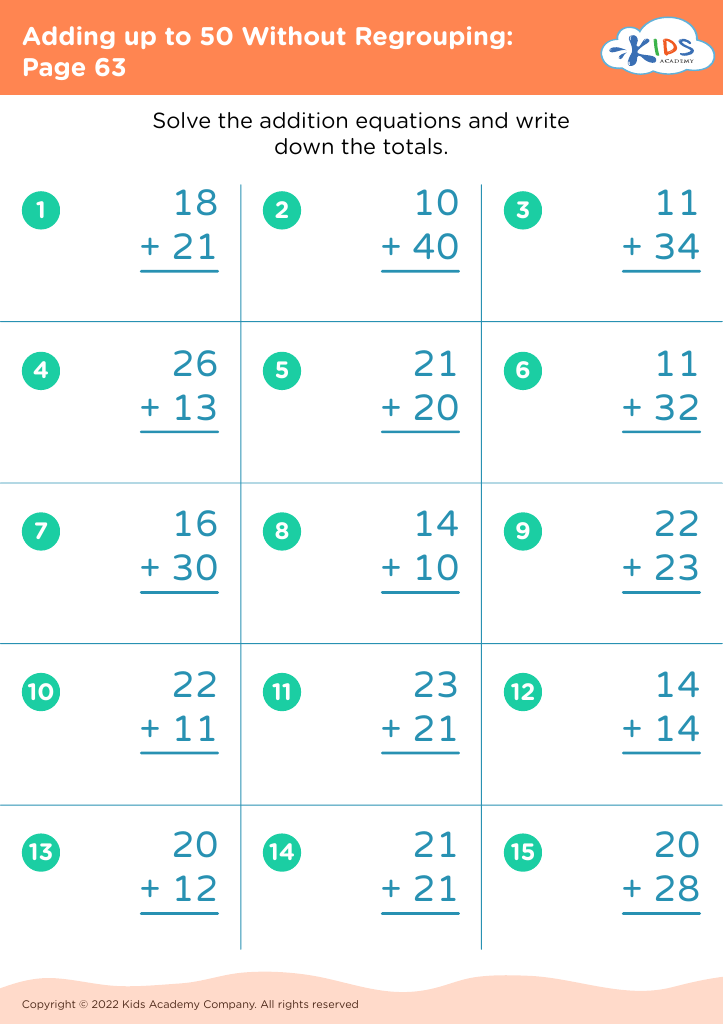
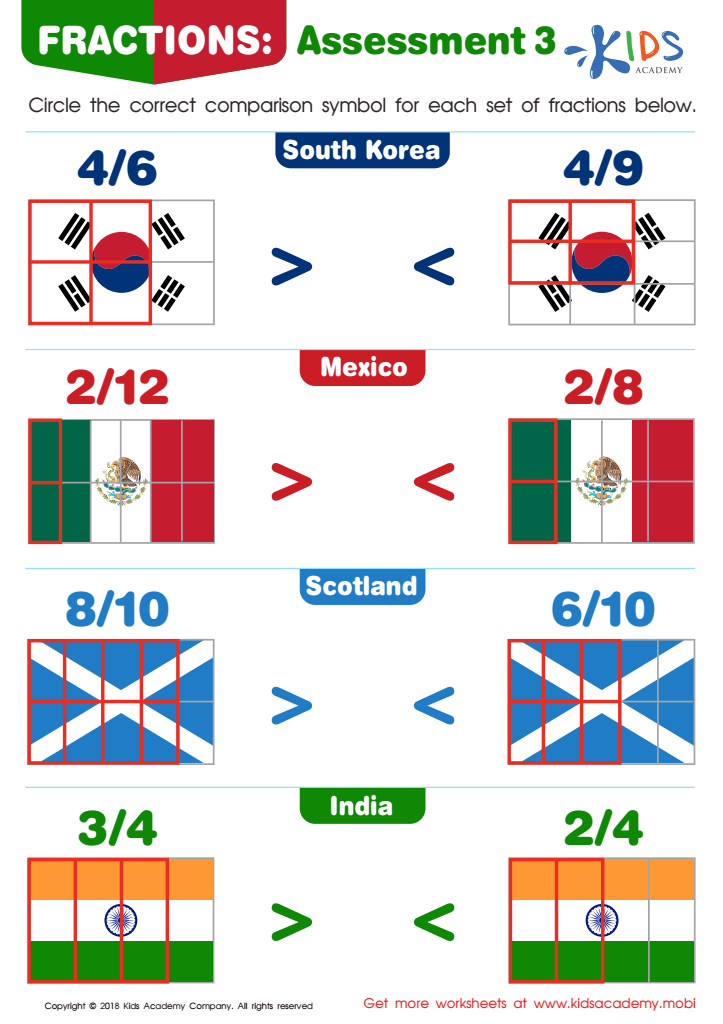
Fractions: Assessment 3 Worksheet
This worksheet helps teach kids about fractions and introduces them to countries and their flags. Have them read the country names and point to the flags. Then help them assess the fractions, and ask them to circle the symbol that shows their values.
Fractions: Assessment 3 Worksheet
Worksheet
Join Kids Academy for Free
Who is primarily going to use this learning content?








Understanding fraction addition is a foundational mathematical skill that parents and teachers should prioritize for children aged 6-9. At this developmental stage, children are acquiring crucial thinking and problem-solving skills; mastering fraction addition can significantly enhance their cognitive development. Early exposure demystifies the often-intimidating concept of fractions, making future learning in mathematics less daunting. Moreover, fraction addition lays the groundwork for more complex math topics such as ratios, percentages, and algebra, thereby ensuring a smoother academic progression.
Beyond academics, fraction knowledge has profound real-world applications. It's vital for everyday tasks such as cooking, sewing, and budgeting, helping children develop practical life skills. Integration of fractions in these day-to-day activities supports experiential learning, making math relevant and engaging.
Furthermore, developing competence in fraction addition promotes confidence and self-efficacy in young learners. When children feel successful in math, they are likely to show better overall academic performance and harbor positive attitudes towards learning.
In summary, an early focus on fraction addition equips children with essential skills, builds a robust academic foundation, enhances everyday practical abilities, and fosters a positive self-concept in their educational journey. As such, parents and teachers play crucial roles in guiding and supporting this essential aspect of early math education.








