
Fraction comparison Math Worksheets for Ages 6-9
33 filtered results
Difficulty Level
Grade
Age
-
From - To
Subject
Activity
Standards
Discover our engaging Fraction Comparison Math Worksheets designed specifically for children aged 6 to 9. This resource offers a fun and interactive way for young learners to master the concept of comparing fractions. With colorful visuals and age-appropriate activities, these worksheets help reinforce essential skills in a playful manner. Students will practice identifying larger or smaller fractions, understanding equal values, and applying their knowledge to solve engaging problems. Perfect for classroom use or at-home learning, our worksheets make understanding fractions enjoyable and accessible. Encourage your child's mathematical confidence and excitement as they embark on their fraction comparison journey!
Favorites
With answer key
Interactive
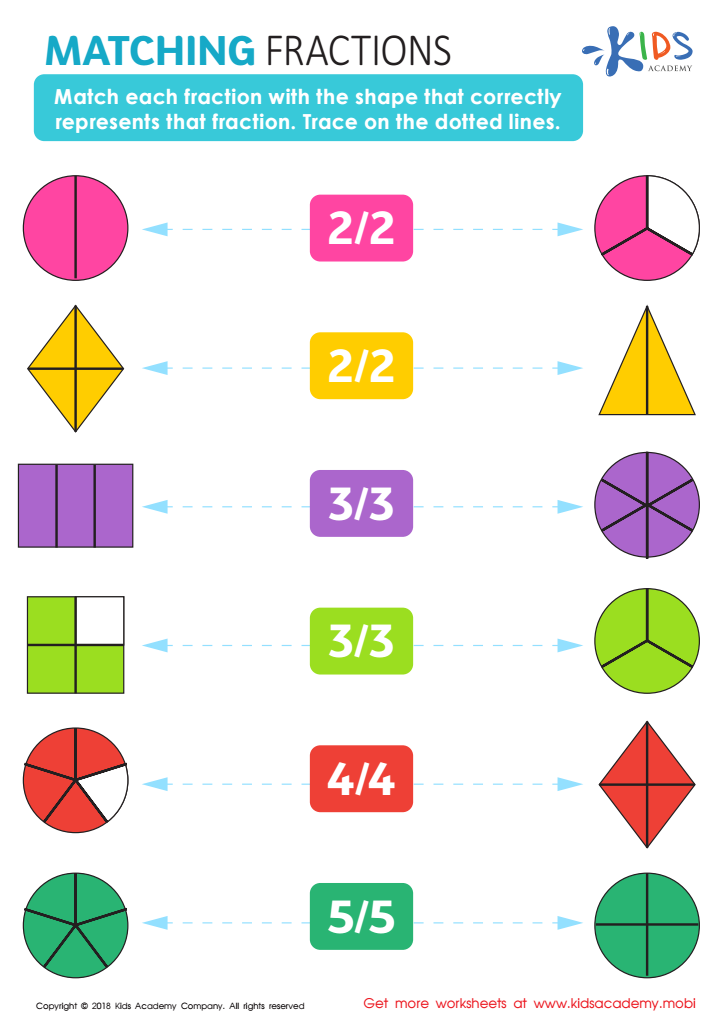
Matching Fractions Worksheet
This worksheet uses colorful images to engage students. On the left are six shapes, mirrored on the right, with fractions in the middle. Students must match up the fraction with the right shape. It's a fun way to sharpen fractions skills!
 Assign to My Students
Matching Fractions Worksheet
Worksheet
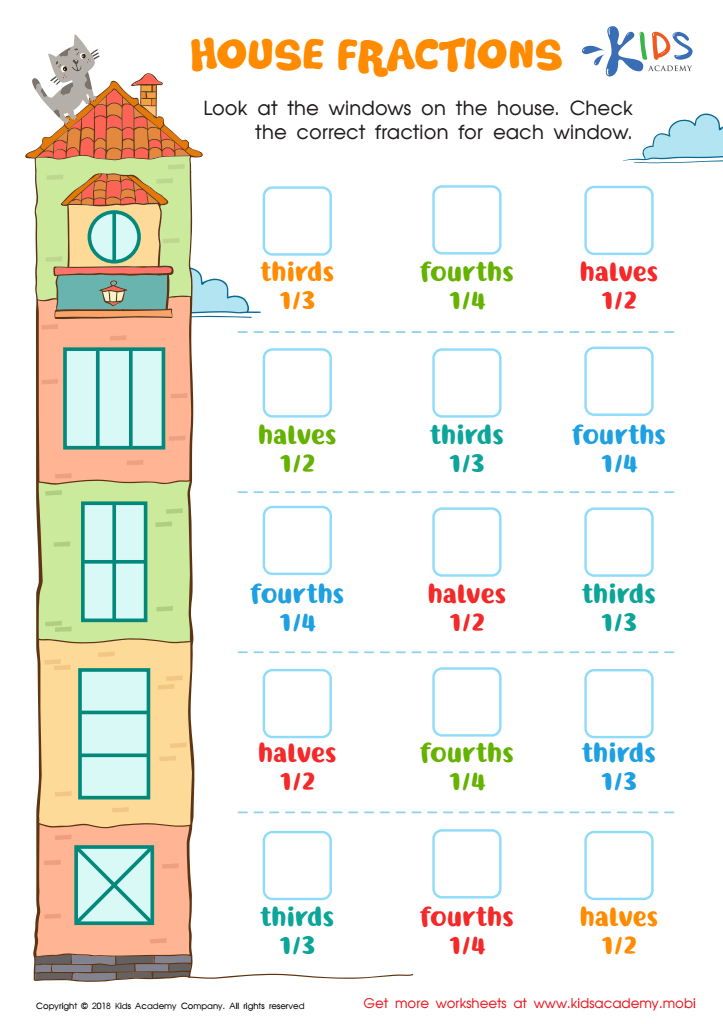
House Fractions Worksheet
Test your child's knowledge of fractions with this worksheet! Have them examine the windows of a house and select the correct fraction from the options given. This is a great way to see how much they understand about wholes, fractions, halves, one thirds, and one fourths.
House Fractions Worksheet
Worksheet
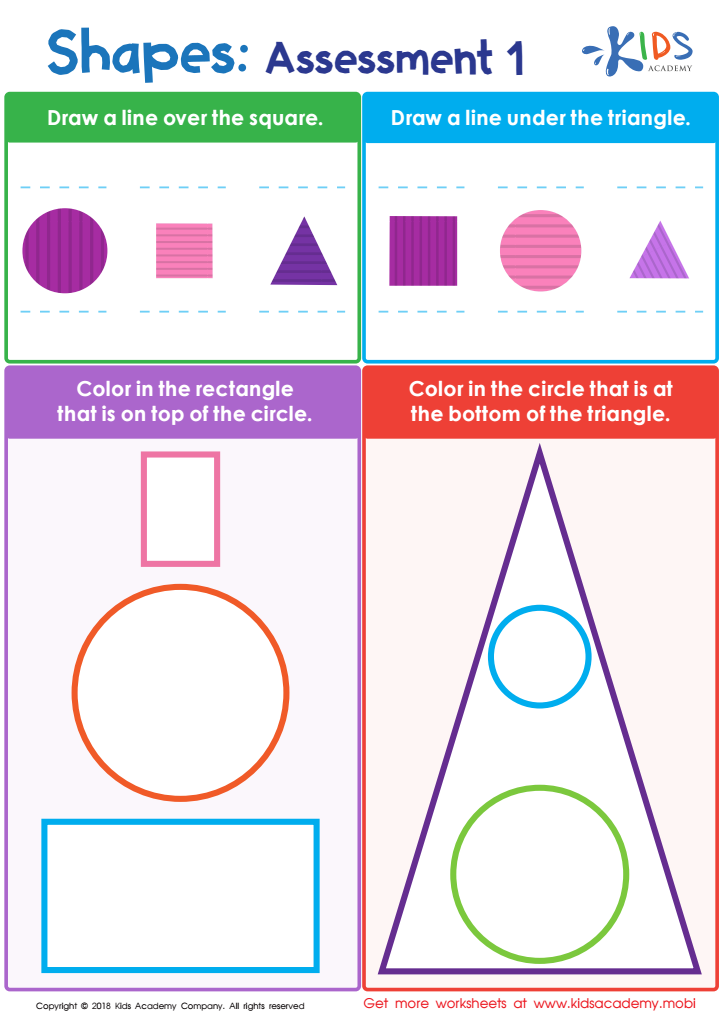
Shapes: Assessment 1 Worksheet
Test your students' understanding of the four basic shapes - circle, square, triangle and rectangle - with this assessment worksheet. Get them to draw a line over or under the shape indicated in the directions to show they can identify it correctly.
Shapes: Assessment 1 Worksheet
Worksheet
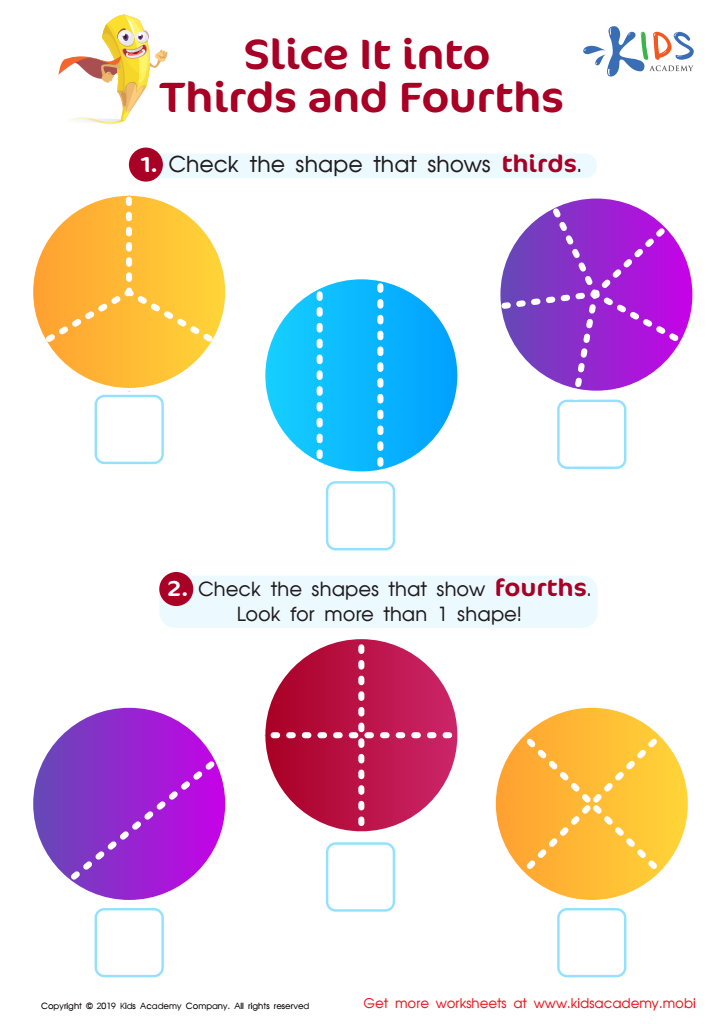
Slice in Thirds Fourths Worksheet
This worksheet helps kids learn fractions visually by dividing circles into thirds and fourths. They will learn that fractions must be equal parts, not just sets, by choosing the right colorful circles. It's an easy way to master fractions and have fun doing it!
Slice in Thirds Fourths Worksheet
Worksheet
Join Kids Academy for Free
Who is primarily going to use this learning content?







Understanding fraction comparison is crucial for children aged 6-9 because it lays the foundation for their future math skills and problem-solving abilities. At this age, children develop essential cognitive skills, and mastering fractions helps them grasp more complex mathematical concepts later on.
Firstly, fractions are integral to everyday life, from cooking to budgeting. When parents or teachers emphasize fraction comparison, they equip children with practical skills that foster independence. Kids learn to compare sizes, understand fairness, and make informed decisions, which enhances critical thinking.
Additionally, fraction comparison aids in developing spatial reasoning and logical thinking. These competencies are vital not only in math but also in science and engineering fields. In today's technology-driven world, proficiency in these subjects is increasingly important, and it all begins with foundational knowledge in fractions.
Moreover, engaging with fractions can make math more relatable and fun for children. When they see the practical application in games, sports, and arts, they become more motivated learners. In nurturing their understanding of fractions, parents and teachers help foster a positive attitude towards math, encouraging lifelong learning and confidence in their abilities.








