Improve problem-solving skills Math Worksheets for Ages 6-9
6 filtered results
-
From - To
Enhance your child's critical thinking and problem-solving skills with our engaging Math Worksheets designed for ages 6-9. Our collection focuses on developing essential math concepts through fun, interactive activities that capture young minds. From basic arithmetic to more complex challenges, these worksheets encourage logical reasoning and boost confidence in tackling problems. With a variety of exercises tailored to different skill levels, your child will enjoy hands-on learning while mastering important math skills. Perfect for both classroom and home use, these worksheets promote independent learning and increase readiness for future math challenges. Start cultivating your child's problem-solving abilities today!
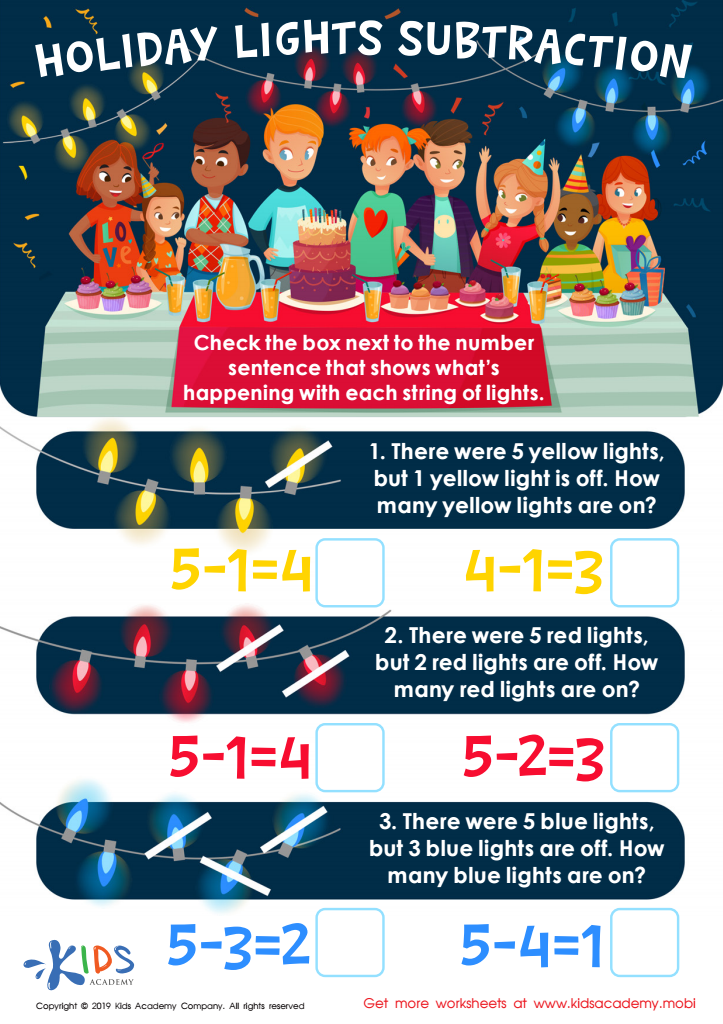
Holiday Lights Subtraction Worksheet
 Assign to My Students
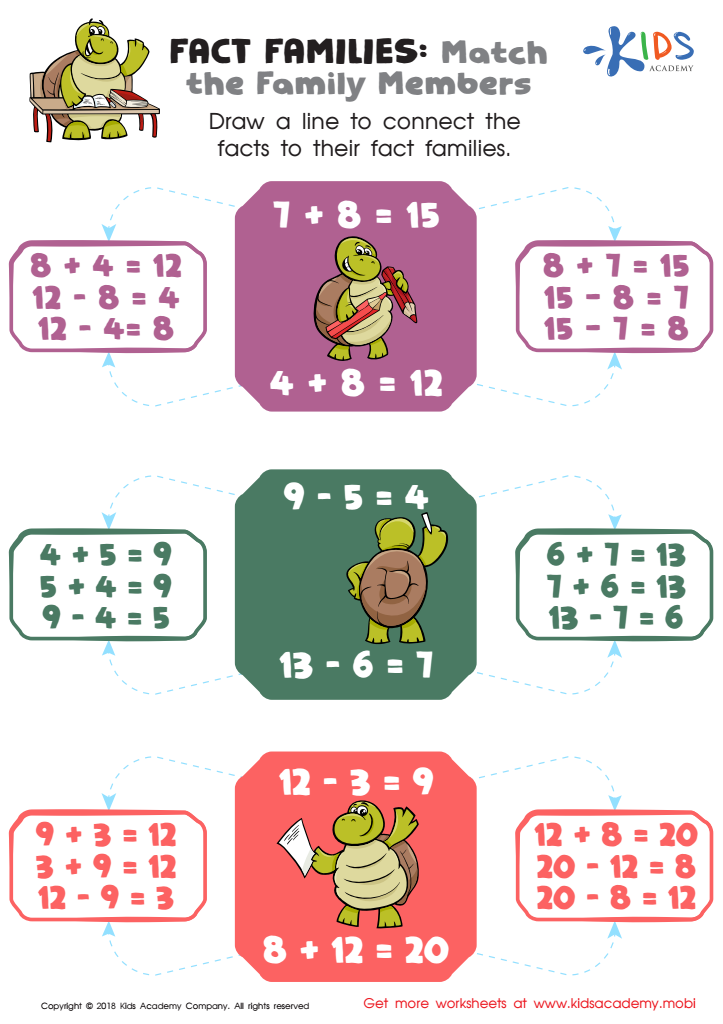
Fact Families: Match Family Members Worksheet
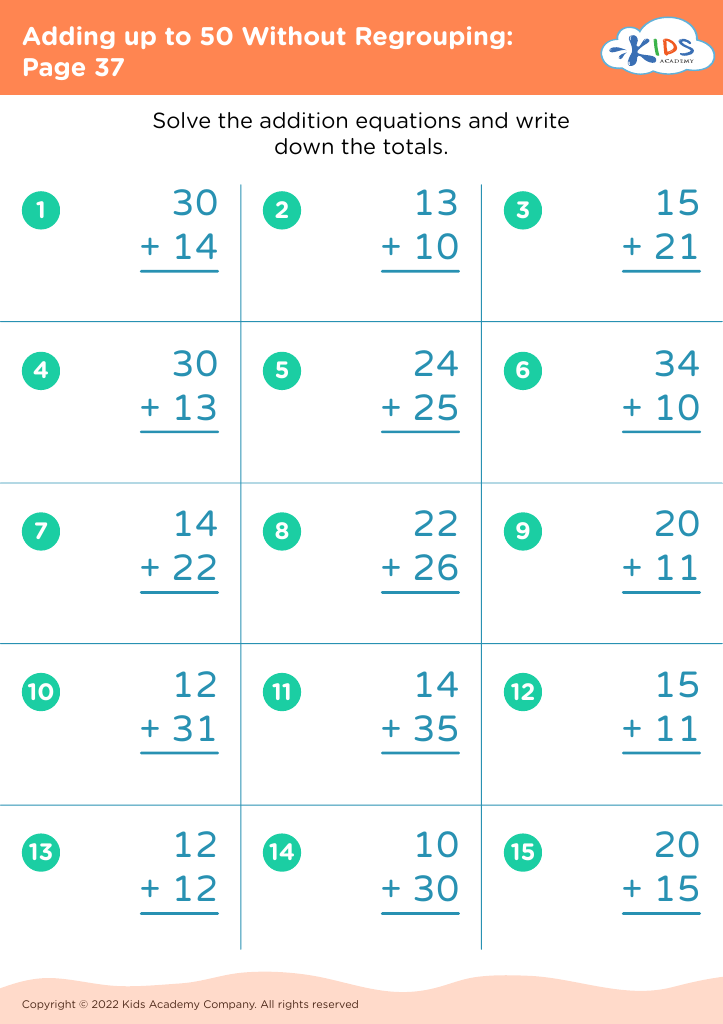
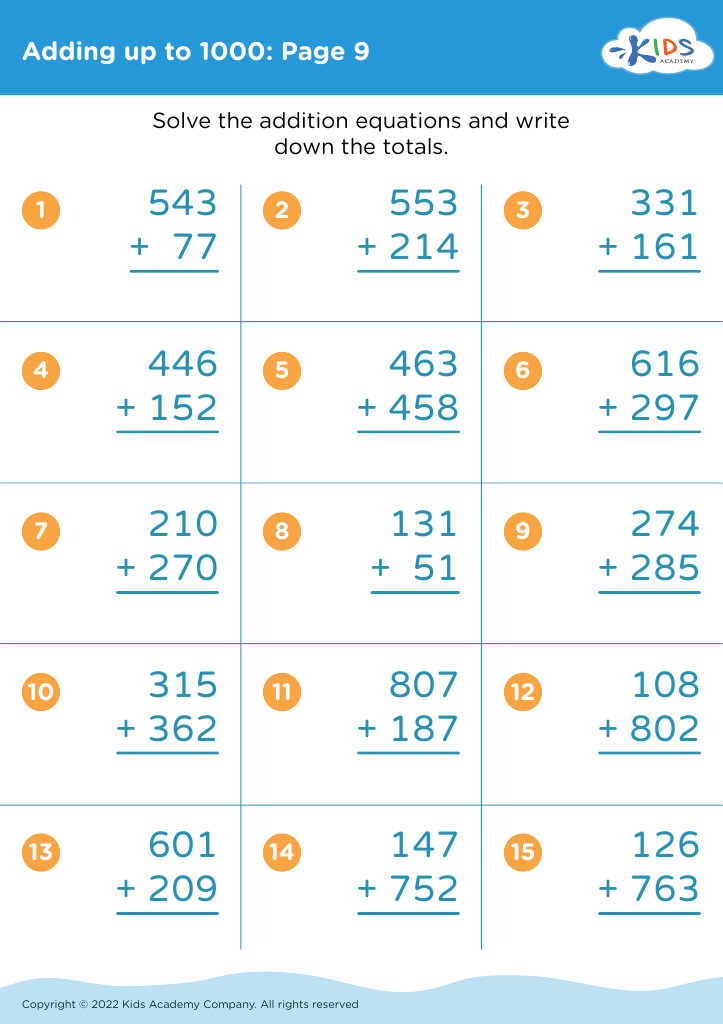








Improving problem-solving skills in mathematics for children aged 6-9 is crucial for several reasons. First, this age range is a key developmental stage where foundational concepts are established, influencing a child's future academic success. Mastering problem-solving skills enhances critical thinking, enabling children to analyze situations and develop logical reasoning abilities, both academically and in everyday life.
Furthermore, developing problem-solving skills in math promotes resilience. When children face challenges, learning to tackle problems encourages them not to give up and builds a growth mindset. This perseverance translates into confidence, making them more willing to engage with complex tasks.
Additionally, mathematics is not just about numbers; it fosters creativity as children learn to approach issues from various angles. An understanding of math nurtures interdisciplinary skills, like communication and collaboration, as students often explain their reasoning and solutions to peers and teachers.
Finally, instilling these skills reinforces a lifelong appreciation for learning. Encouraging curiosity and exploration in math can ultimately give children the tools they need to succeed in future studies and solve real-world problems. Therefore, parents and teachers should prioritize enhancing problem-solving skills in young learners to equip them for ongoing challenges in life.








