
Mathematical problem-solving Math Worksheets for Ages 6-9
6 filtered results
Difficulty Level
Grade
Age
-
From - To
Subject
Activity
Standards
Discover an engaging collection of mathematical problem-solving worksheets designed specifically for children aged 6 to 9. Our carefully crafted resources help young learners develop critical thinking and analytical skills while tackling fun, age-appropriate challenges. Each worksheet encourages students to apply their math knowledge to real-world scenarios, promoting a deeper understanding of concepts such as addition, subtraction, and basic multiplication. With vibrant illustrations and interactive exercises, these worksheets keep children motivated and excited about math. Perfect for classroom or home use, our problem-solving worksheets are an essential tool to nurture a love for mathematics and enhance your child's cognitive growth.
Favorites
With answer key
Interactive
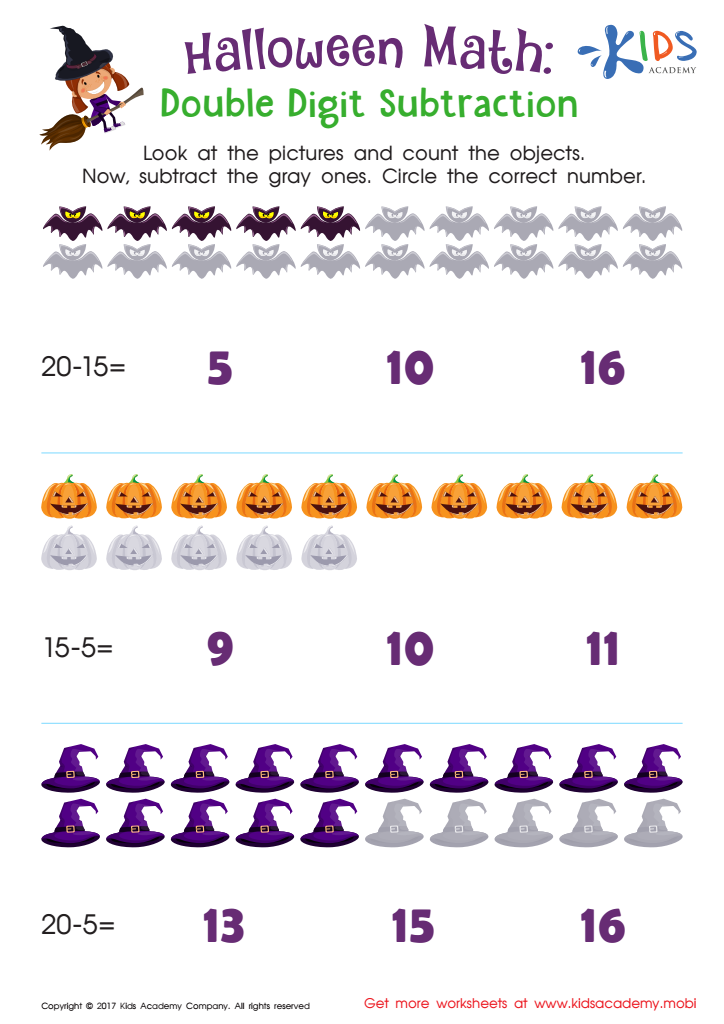
Halloween Math Subtraction Worksheet
Kids can easily understand subtraction by using the visuals provided in this worksheet. Get ready for some fun math!
This Halloween math worksheet uses spooky images to help kids understand subtraction. With it, they can count and solve double digit problems more easily. Get ready for some fun and engaging math practice!
 Assign to My Students
Halloween Math Subtraction Worksheet
Worksheet
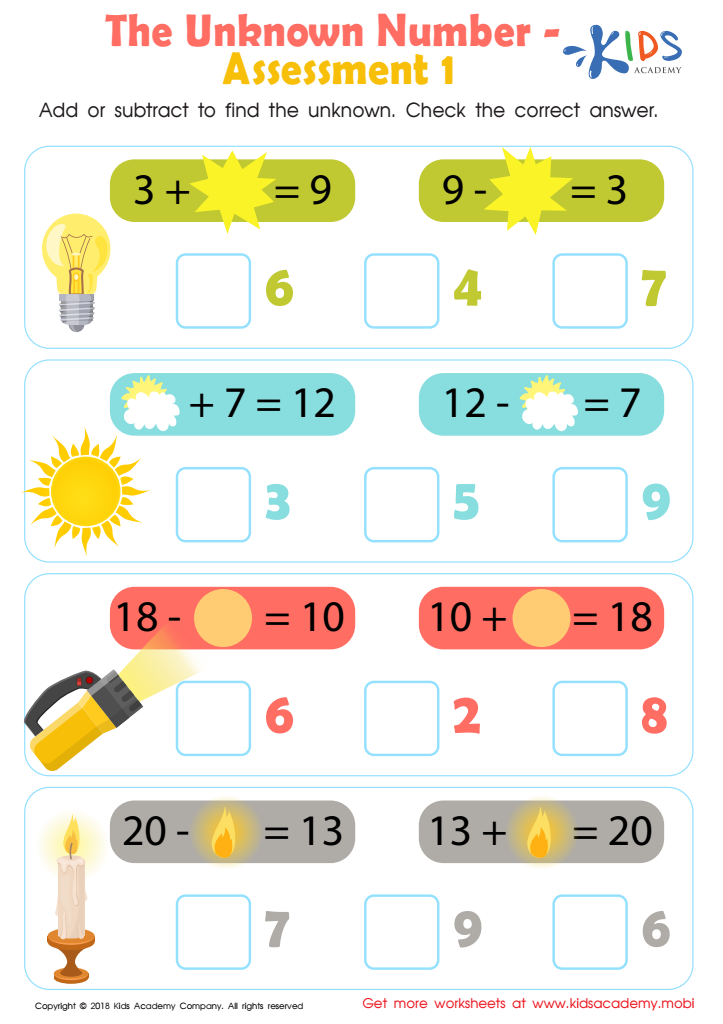
The Unknown Number: Assessment 1 Worksheet
Engage your child's mind with this simple worksheet. Help them overcome math stress and practice their skills! Add or subtract to find the unknown and help them circle the correct answer. Make learning fun and help your kids excel in math - all with this one printout.
The Unknown Number: Assessment 1 Worksheet
Worksheet
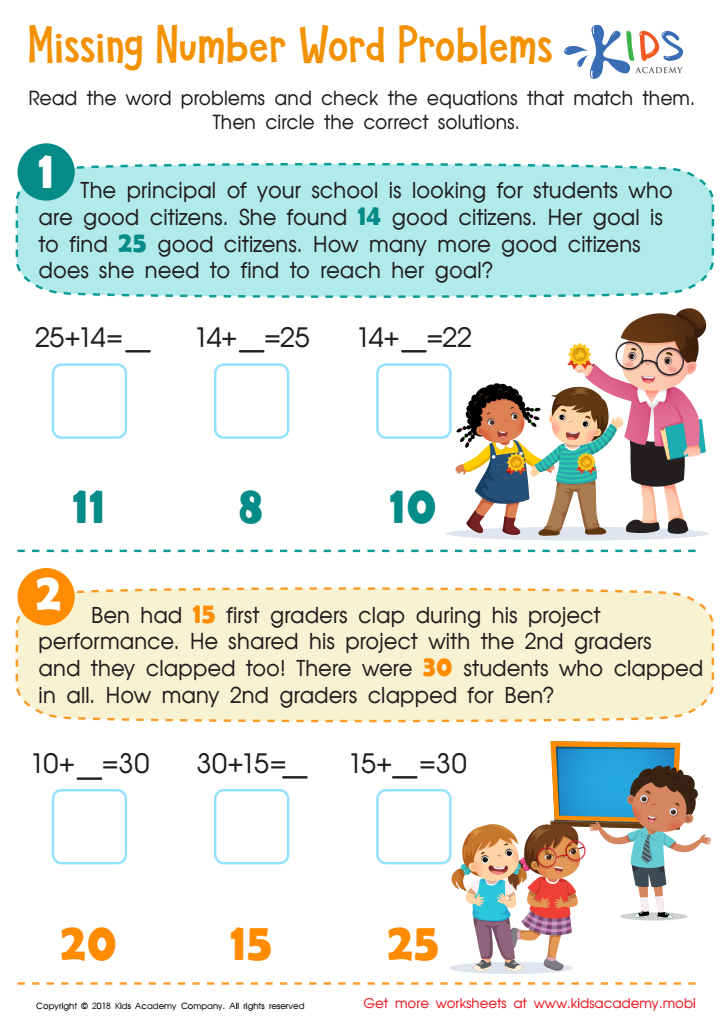
Missing Number Word Problems Worksheet
Read the word problems in this worksheet to your students. Help them understand the meaning, then translate the text into equations. Check the equations for accuracy, circle the correct solutions, and support your child as they learn to solve word problems.
Missing Number Word Problems Worksheet
Worksheet
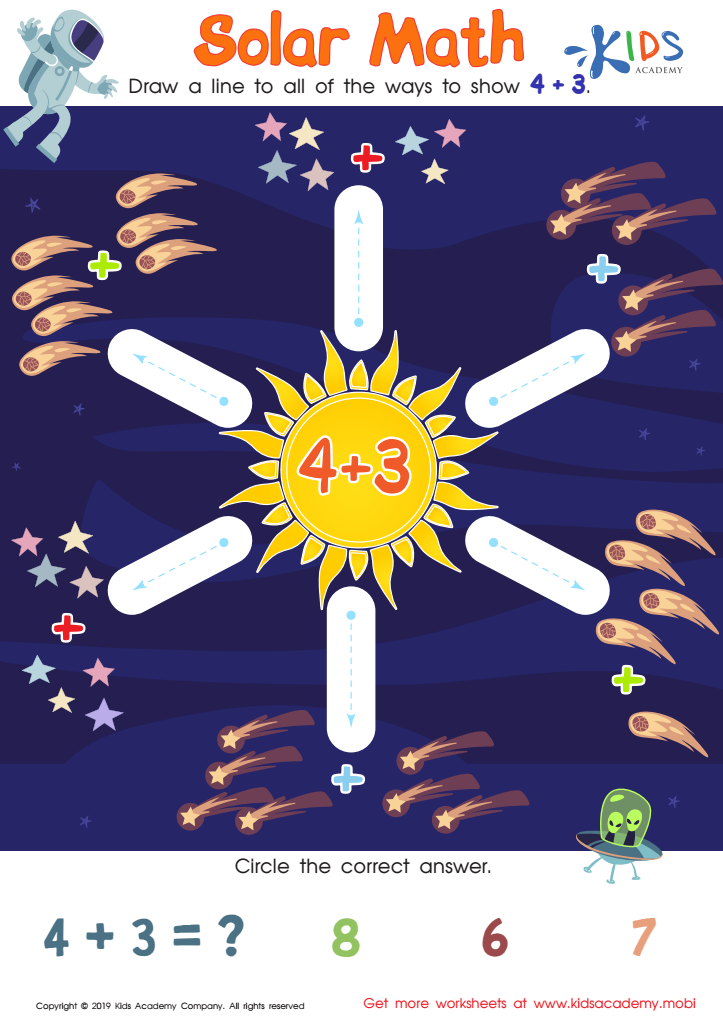
Solar Math Worksheet
Do your students need a lesson on the solar system? Use this colorful worksheet to make learning fun. Math is a must-know for kindergartners; make it enjoyable with this printout. Ask them to draw a line to all the ways to show 4+3.
Solar Math Worksheet
Worksheet
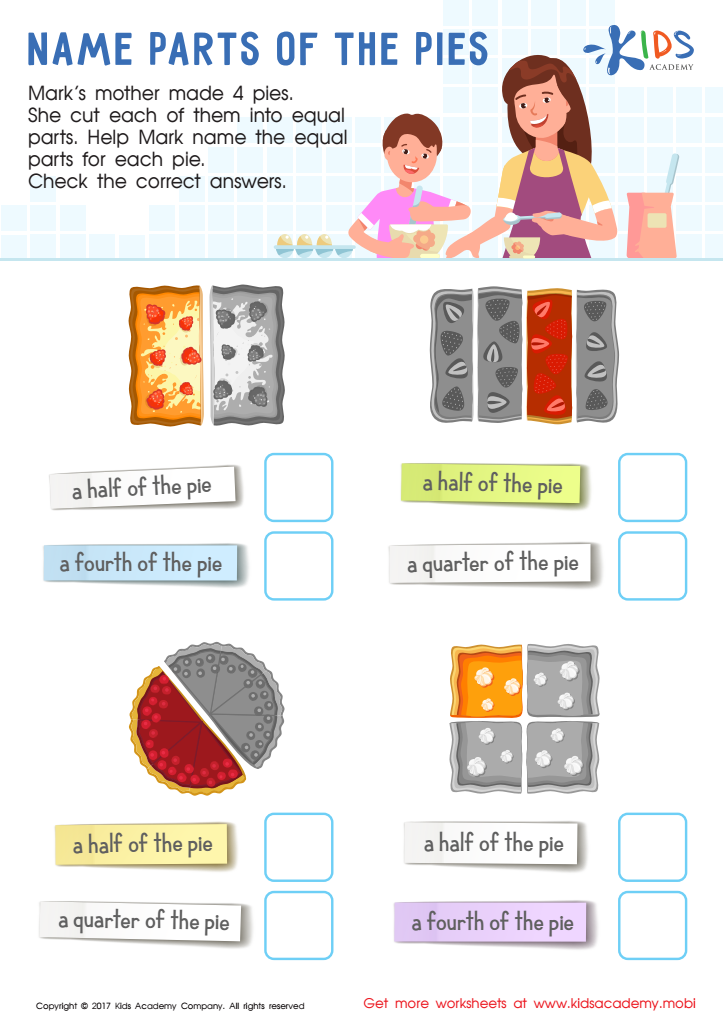
Name Parts of the Pies Worksheet
Mark and his mom are making pies. He's dividing them into equal parts and needs help to name them. Let your students aid him by checking the correct answer for each picture. Have them think of their own roles in the kitchen when they're done. How do they help their moms?
Name Parts of the Pies Worksheet
Worksheet
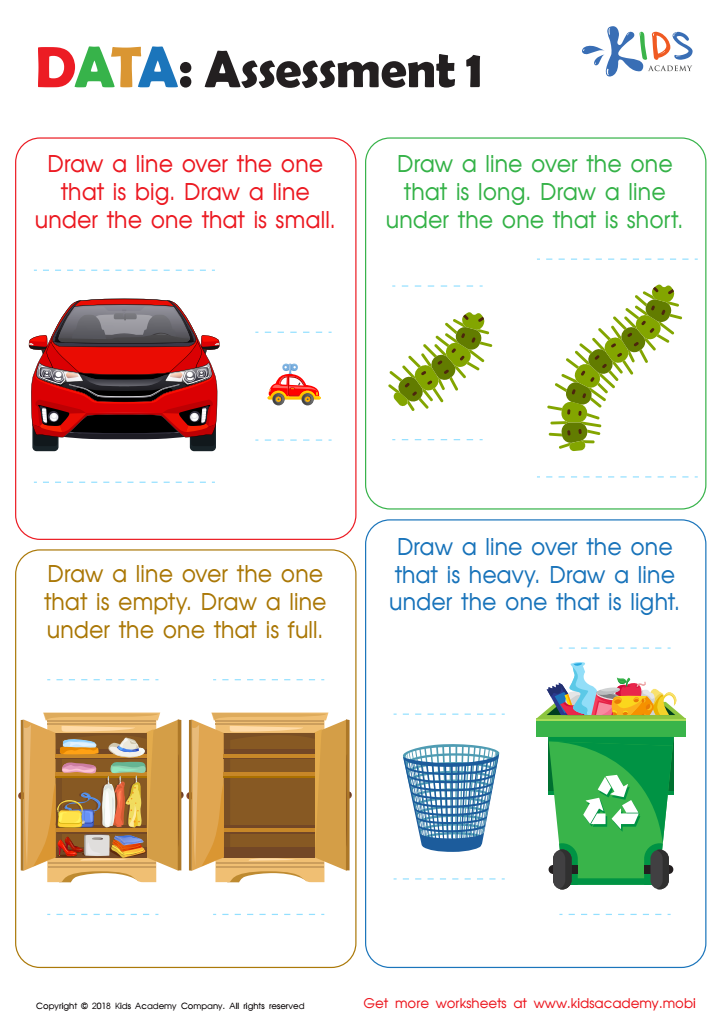
Data: Assessment 1 Worksheet
Assess your students' knowledge of measurement words with this worksheet. Have them compare and describe objects/quantities using words like "big", "small", "long", "short", "empty", "full", "heavy" and "light". Encourage further learning by asking students to provide examples of each word meaning.
Data: Assessment 1 Worksheet
Worksheet
Join Kids Academy for Free
Who is primarily going to use this learning content?








Mathematical problem-solving is a critical skill for children aged 6 to 9, as it lays the foundation for their future academic success and lifelong learning. At this age, children are naturally curious and develop the ability to think critically and solve problems independently. Engaging in mathematical problem-solving nurtures their analytical skills, enhances their logical thinking, and encourages perseverance when faced with challenges.
Parents and teachers should emphasize problem-solving because it promotes a positive attitude toward mathematics, helping to dispel anxiety often associated with the subject. When children learn to enjoy the process of finding solutions, they become more motivated and confident in their abilities. This age also entails significant cognitive development, making it an ideal time for introducing complex concepts like addition, subtraction, and basic geometry through relatable, real-world problems.
Additionally, mathematical problem-solving fosters collaboration and communication skills. By working together on problems, children learn to share their thoughts and solutions, appreciating different perspectives and approaches. Ultimately, these skills prepare them for everyday situations, requiring mathematical reasoning and critical thinking in areas like budgeting, planning, and decision-making. In conclusion, supporting children in mathematical problem-solving is vital for their holistic development and future endeavors.








