Number sequence learning Math Worksheets for Ages 6-9
3 filtered results
-
From - To
Explore our engaging Number Sequence Learning Math Worksheets designed specifically for children ages 6-9! These worksheets provide vibrant and interactive activities that promote essential math skills, helping young learners develop their understanding of number patterns and sequences. From filling in missing numbers to arranging sequences in order, each worksheet encourages critical thinking and problem-solving abilities. Ideal for both classroom settings and home practice, our resources cater to varying skill levels, ensuring children remain challenged yet supported. Enhance your child’s mathematical foundation and make learning fun with our thoughtfully crafted worksheets that inspire a love for math from an early age!
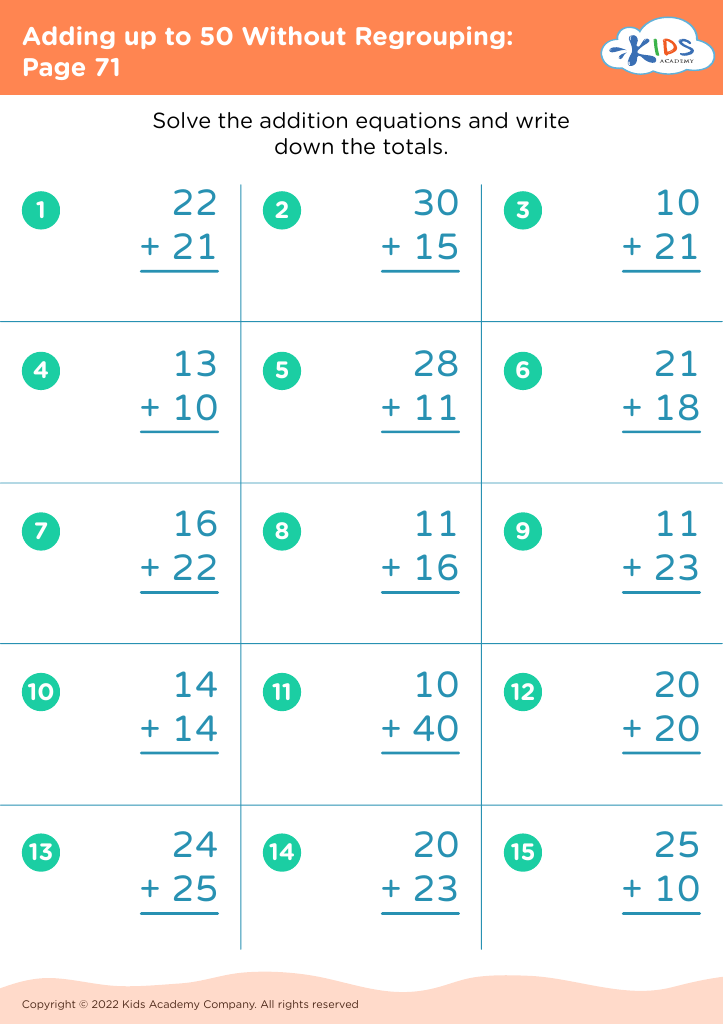
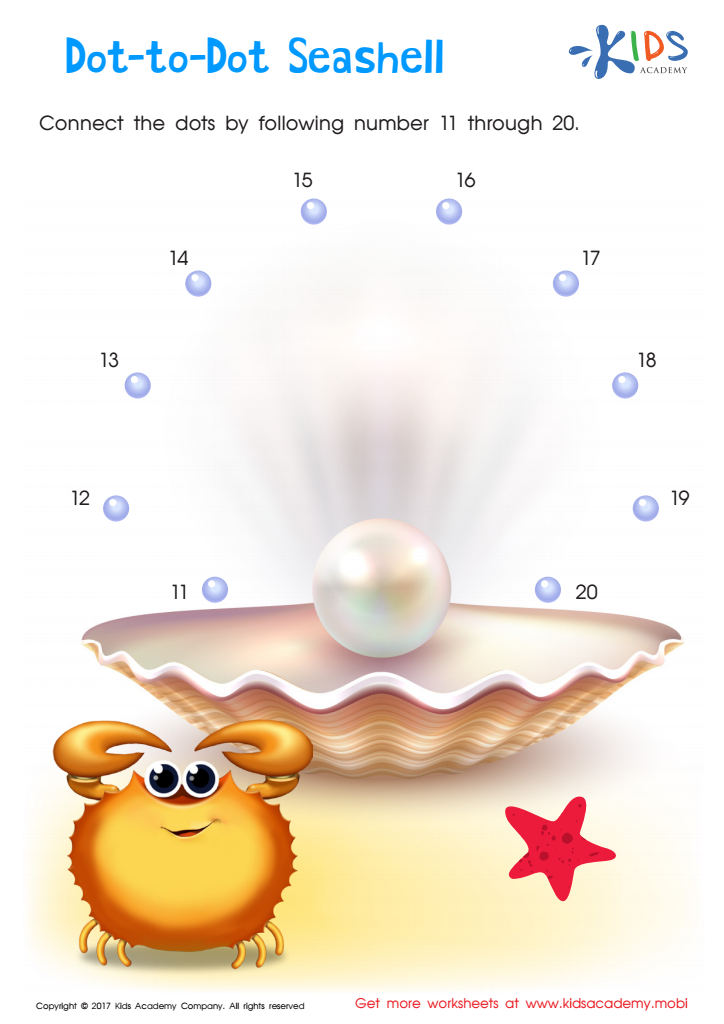
Ordering 11–20: Dot–to–dot Seashell Printable
 Assign to My Students

Counting on the City Skyline: Dot-to-Dot Worksheet







Number sequence learning is a fundamental aspect of early math education for children aged 6 to 9. At this stage, children are developing critical foundational skills that will support their future mathematical understanding and problem-solving abilities. Parents and teachers should emphasize this learning for several reasons.
Firstly, number sequences help children grasp the concept of order and patterns, which are essential for both arithmetic operations and higher-level math concepts. Understanding sequences aids in developing skills such as counting, addition, and subtraction, fostering number sense and fluidity in math.
Additionally, learning number sequences enhances cognitive skills, such as memory and attention, allowing children to recognize numerical patterns and relationships more easily. These skills translate into better reasoning and analytical thinking, both crucial for academic success.
Moreover, mastering number sequences can boost children's confidence in math. As they become proficient in this area, they will likely find additional math topics less intimidating, laying the groundwork for future learning.
Lastly, strong early math skills correlate with long-term academic success. By prioritizing number sequence learning, parents and teachers empower children to navigate their educational journeys with greater ease and enthusiasm. In sum, fostering number sequence fluency is a vital investment in children's future learning and confidence.








