Understanding measurements Math Worksheets for Ages 6-9 - Page 2
26 filtered results
-
From - To
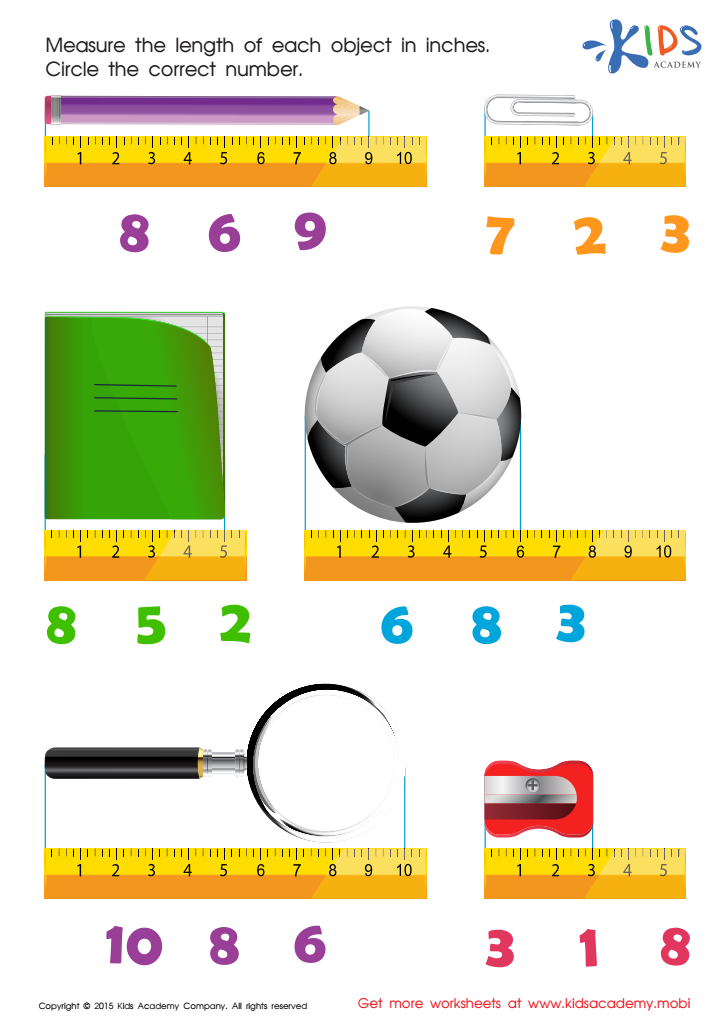
Learning measuring objects in inches Worksheet
 Assign to My Students
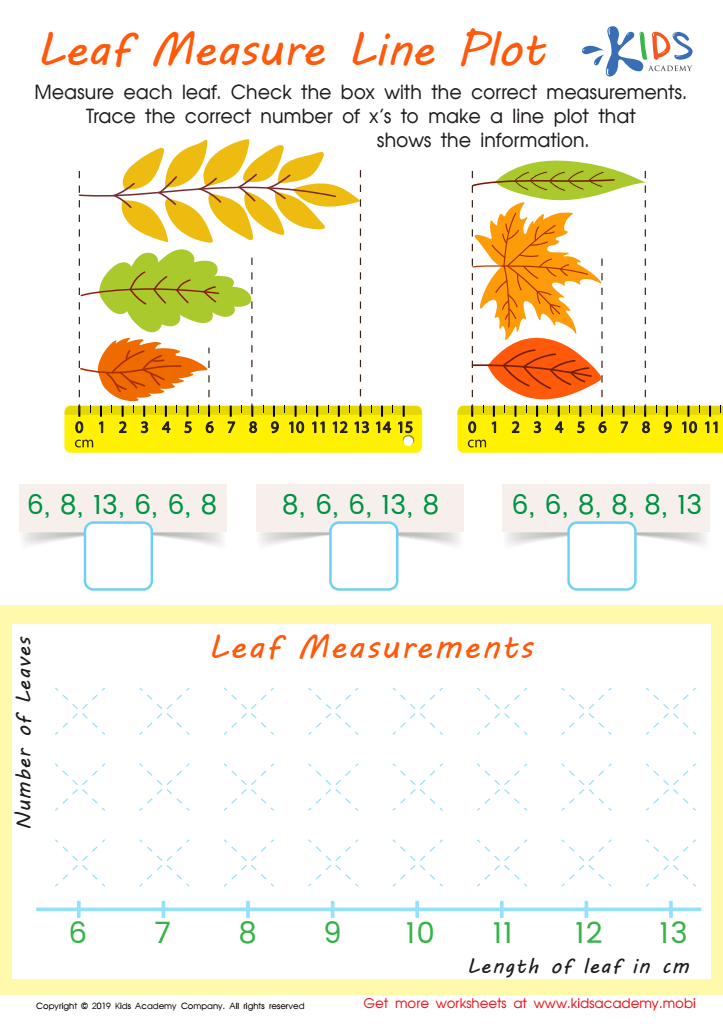
Leaf Measure Line Plot Worksheet


.jpg)




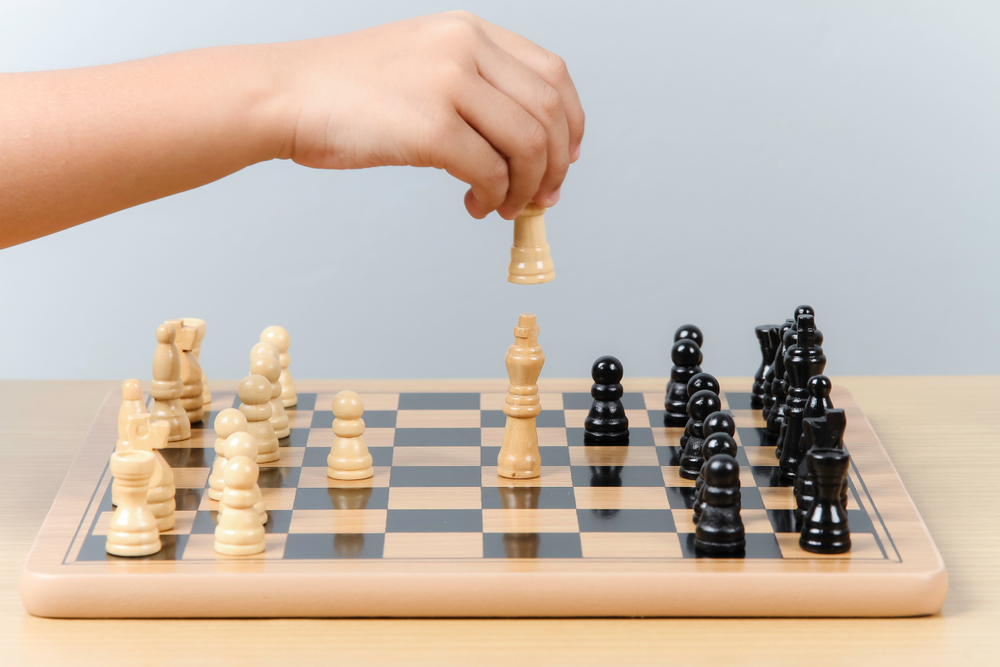
Understanding measurements is crucial for children aged 6-9 as it lays the foundation for their mathematical comprehension and everyday problem-solving skills. At this stage, children are developing critical thinking and reasoning abilities, and measurement concepts help them make sense of the world around them. Familiarizing students with measurements, such as length, weight, and volume, helps them grasp abstract concepts in a concrete manner.
Parents and teachers should care about this foundational skill because it enhances a child's ability to perform daily tasks, from cooking to shopping. Engaging with measurements fosters spatial awareness, encouraging children to visualize sizes, quantities, and distances. Additionally, measurement activities can boost enthusiasm for math by involving hands-on learning experiences, thereby supporting retention.
Moreover, as students grow, measurement skills become essential in more advanced math topics, science experiments, and even financial literacy. Understanding measurements encourages collaboration and communication as children discuss their findings and engage in group activities. By cultivating these skills early on, parents and teachers are not only enhancing academic performances but also helping children develop essential life skills, fostering confidence and encouraging a positive attitude toward learning.








