Understanding skip-counting Math Worksheets for Ages 6-9
3 filtered results
-
From - To
Unlock your child's mathematical potential with our engaging Skip-Counting Math Worksheets for ages 6-9! Tailored to foster numerical fluency, these worksheets guide young learners through fun exercises, helping them effortlessly master counting by 2s, 5s, 10s, and beyond. Each carefully designed activity strengthens foundational math skills, promoting confidence and competence in arithmetic operations. Perfect for classroom use or at-home practice, our worksheets make learning dynamic and enjoyable. Watch your child's math abilities thrive as they develop essential skills for future success, building the groundwork for more advanced concepts. Start their skip-counting journey today with Kids Academy educational resources!
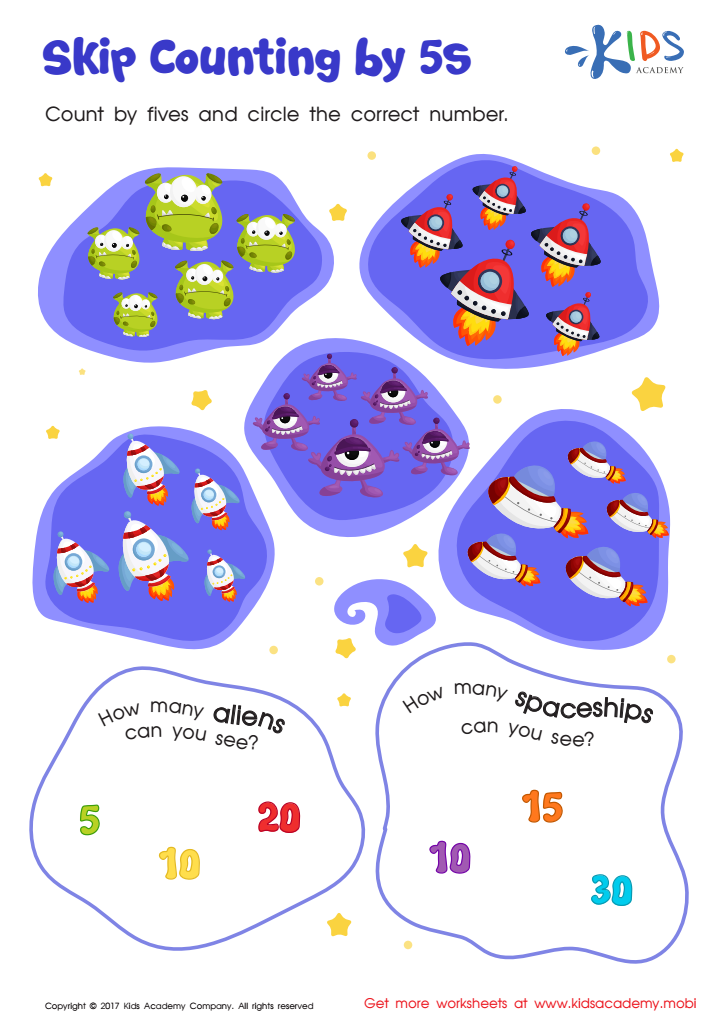
Skip Counting by 5s: Aliens and Spaceships Printable
 Assign to My Students
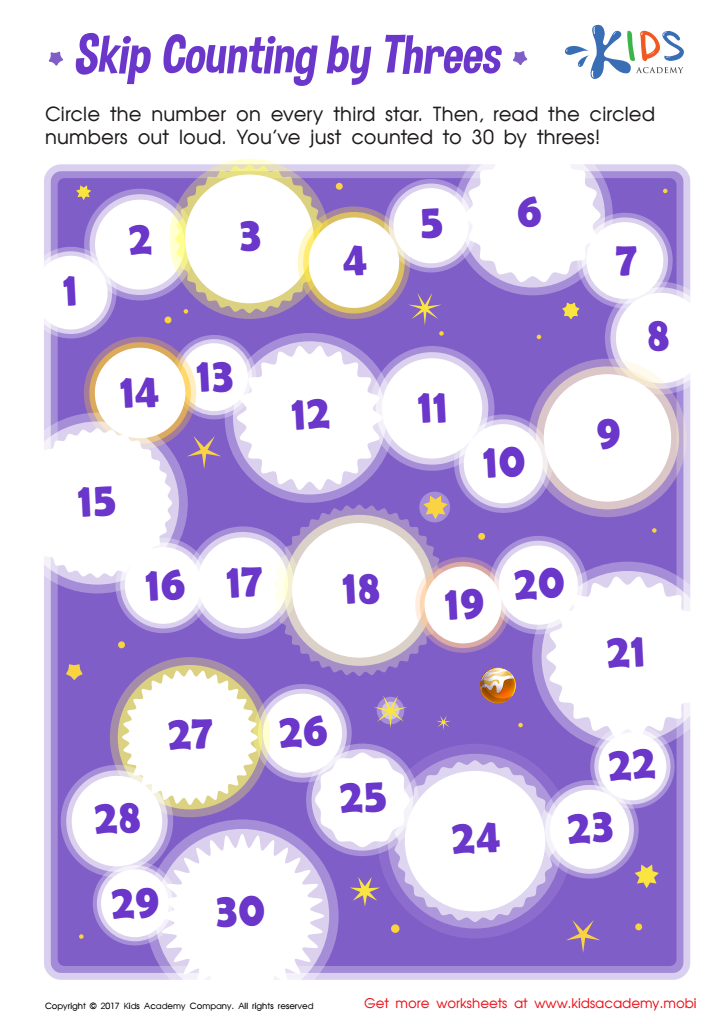
Skip Counting By Three Printable
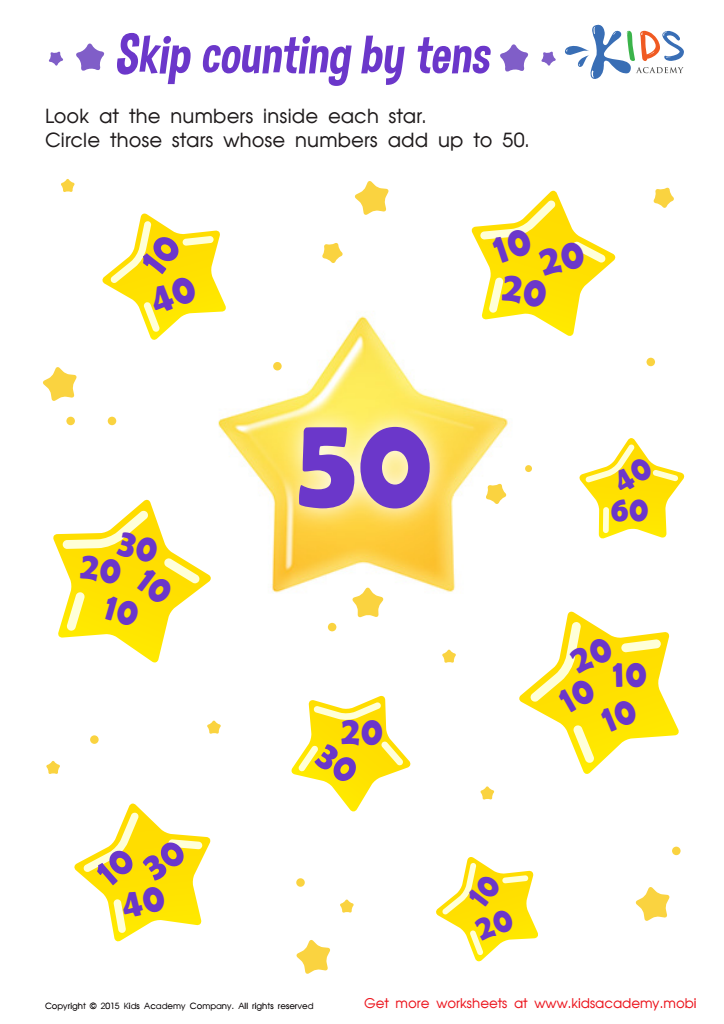
Learn Dozens: Skip Counting by Tens Printable








Skip counting is a critical foundational math skill for children aged 6-9, as it directly supports their understanding of number patterns, arithmetic, and problem-solving. Parents and teachers should emphasize skip counting for several reasons:
Firstly, skip counting helps with learning multiplication tables. By mastering sequences such as counting by 2s, 5s, or 10s, children form the building blocks for understanding and memorizing multiplication facts. This will make more complex operations like multiplying and dividing much less intimidating.
Secondly, skip counting enhances number sense, which is the ability to understand numbers and their relationships. For example, recognizing that counting by 5s means consistently adding 5 fosters an intuitive grasp of addition and subtraction, vital for mental math skills.
Additionally, skip counting lays the groundwork for more advanced math concepts like fractions, patterns, and algebra. When children understand sequences and intervals, they can more easily grasp the concept of a mathematical function or the notion of divisibility.
Furthermore, mastering skip counting can boost a child's confidence in math. Early success in recognizing patterns and solving problems encourages a positive attitude toward the subject, reducing math anxiety and promoting further engagement.
Therefore, parents and teachers should prioritize skip counting to provide children with essential tools for their ongoing math education, setting a strong and encouraging foundation for future learning.








