Color recognition Matching Worksheets for Ages 6-9
3 filtered results
-
From - To
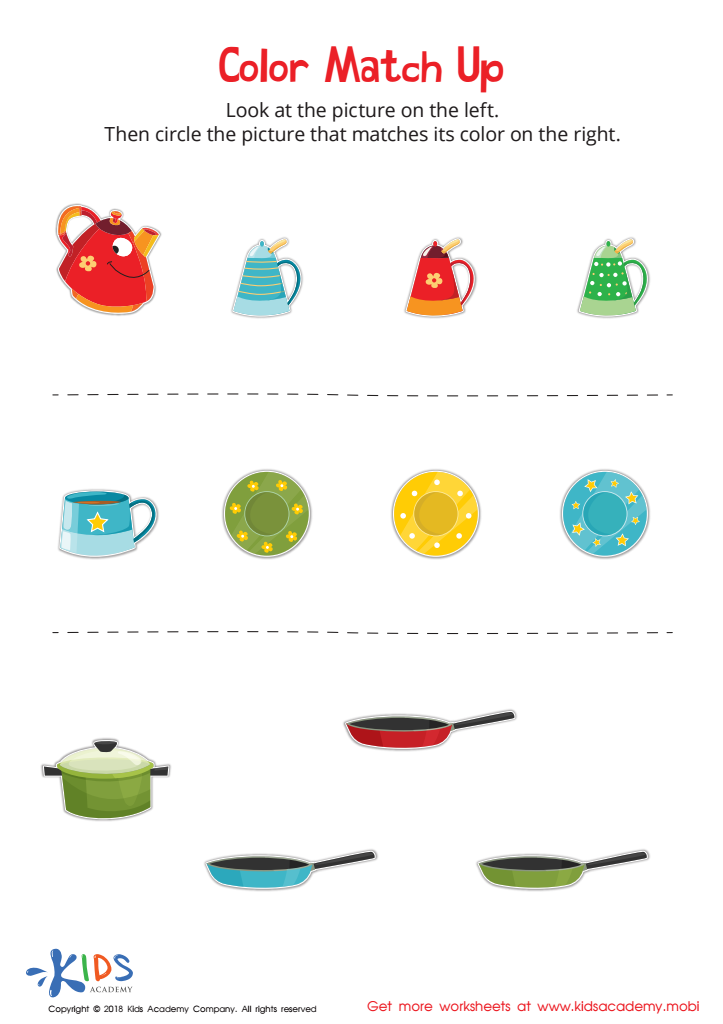
Enhance your child's learning journey with our engaging Color Recognition Matching Worksheets, designed specifically for ages 6-9. These worksheets provide fun and interactive ways for children to identify and associate colors with objects, fostering their cognitive development while sharpening their observational skills. Each activity encourages creativity and critical thinking as kids match vibrant colors to pictures, enhancing their visual memory. Perfect for home or classroom use, our worksheets support early childhood education in a playful manner. Discover the joy of learning about colors with these printable resources, making education enjoyable and effective in your child's growth. Start matching today!
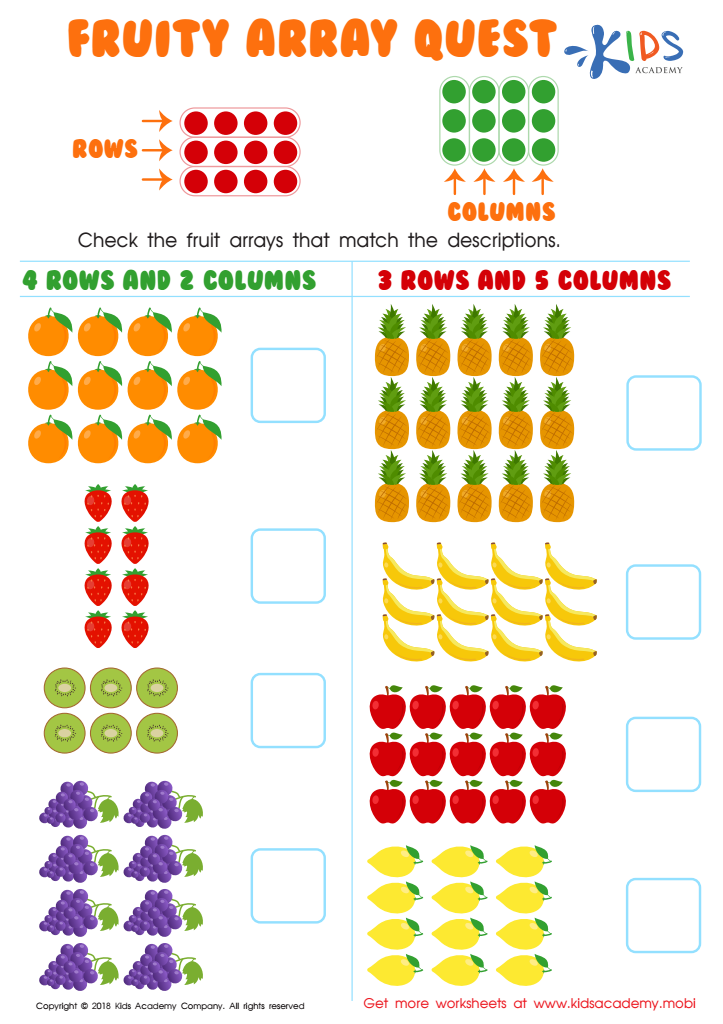
Fruity Array Quest Worksheet
 Assign to My Students
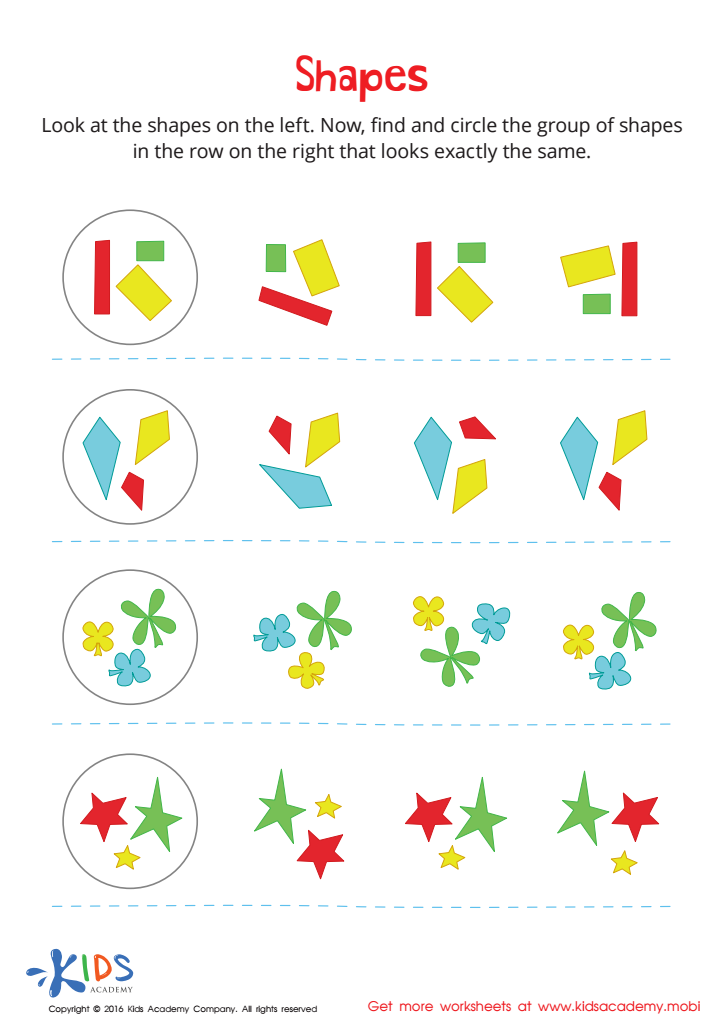
Shapes Worksheet








Color recognition is a fundamental skill for children aged 6-9 that lays the foundation for more advanced cognitive, social, and emotional development. Understanding colors creates critical connections that enhance a child’s ability to classify and categorize objects, promoting cognitive organization and analytical thinking. When children can recognize and match colors, they also develop their observation skills, which are crucial for scientific inquiry and problem-solving in later education.
Furthermore, color recognition and matching activities can boost fine motor skills through hands-on experiences, enhancing hand-eye coordination as children sort and manipulate colored objects.
Socially, engaging in color-matching tasks offers opportunities for cooperative play, encouraging teamwork and communication while fostering social skills.
Essentially, these activities provide a dual benefit: they enhance various areas of development while also offering a fun avenue for learning. Ultimately, parents and teachers should incorporate color recognition and matching into education not only to support academic growth but also to facilitate life skills that are essential as children grow and face increasingly complex social and academic environments. Recognizing and valuing the importance of such foundational skills helps children build confidence and enthusiasm for learning, setting them on a path for success.








