
Visual perception Matching Worksheets for Ages 6-9
5 filtered results
Difficulty Level
Grade
Age
-
From - To
Subject
Activity
Standards
Enhance your child's cognitive development with our Visual Perception Matching Worksheets for ages 6-9. Carefully designed to support early learners, these printable activities improve visual discrimination and attention to detail. Through engaging and interactive tasks, children build essential skills like pattern recognition, shape matching, and spatial reasoning. Ideal for homes or classrooms, these worksheets make learning fun, fostering confidence and academic growth in young minds. Access our quality worksheets at Kids Academy and watch your child excel in visual perception, a foundational skill for future math and reading success. Download now for free!
Favorites
With answer key
Interactive
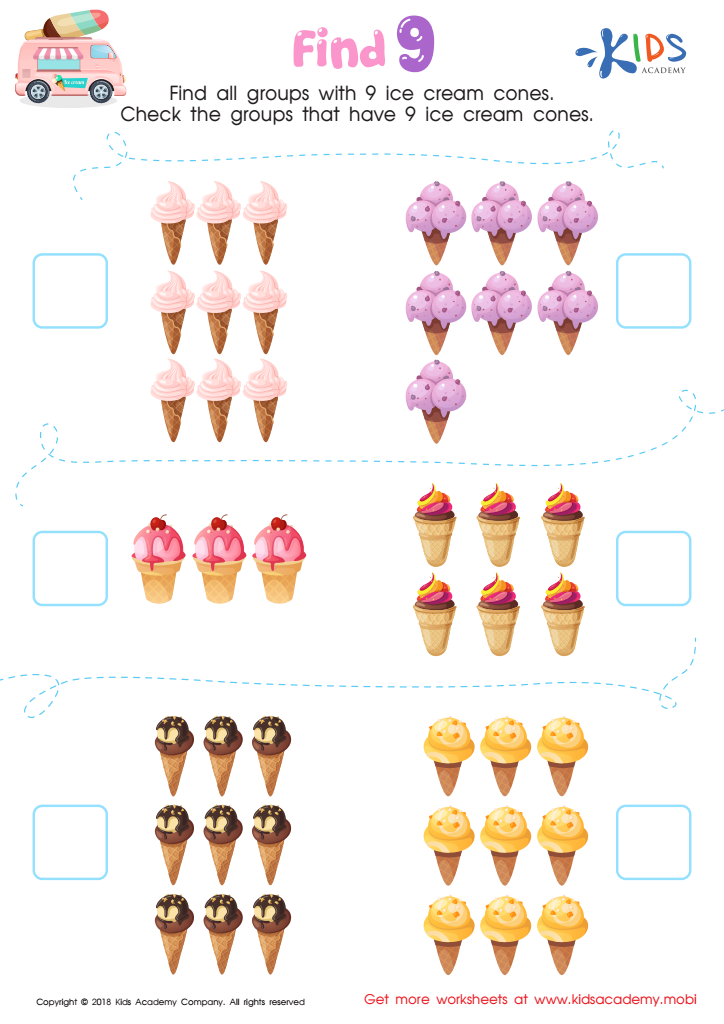
Find 9 Worksheet
Let your kids practice grouping numbers with this fun downloadable worksheet! It's full of ice cream colors and will help them improve their accuracy in addition and multiplication. Tracing the lines will also boost their fine motor skills.
 Assign to My Students
Find 9 Worksheet
Worksheet
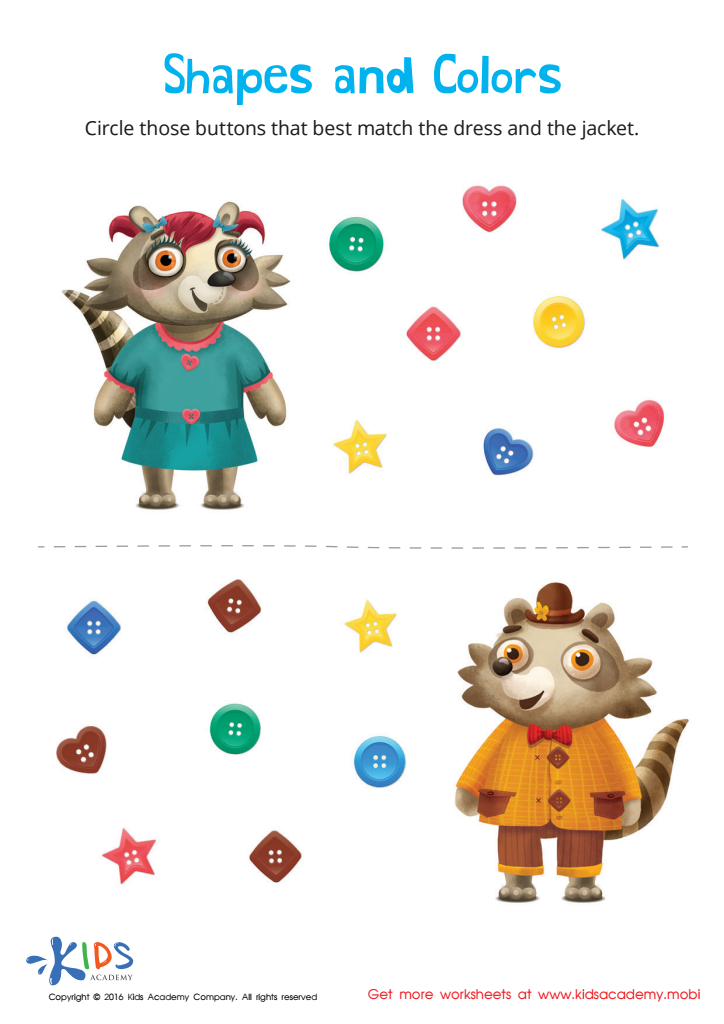
Matching: Shapes and Colors Worksheet
Help Mr. and Mrs. Raccoon find the right buttons to match their shirts! Kids will identify shapes and colors and learn to match them correctly.
Matching: Shapes and Colors Worksheet
Worksheet
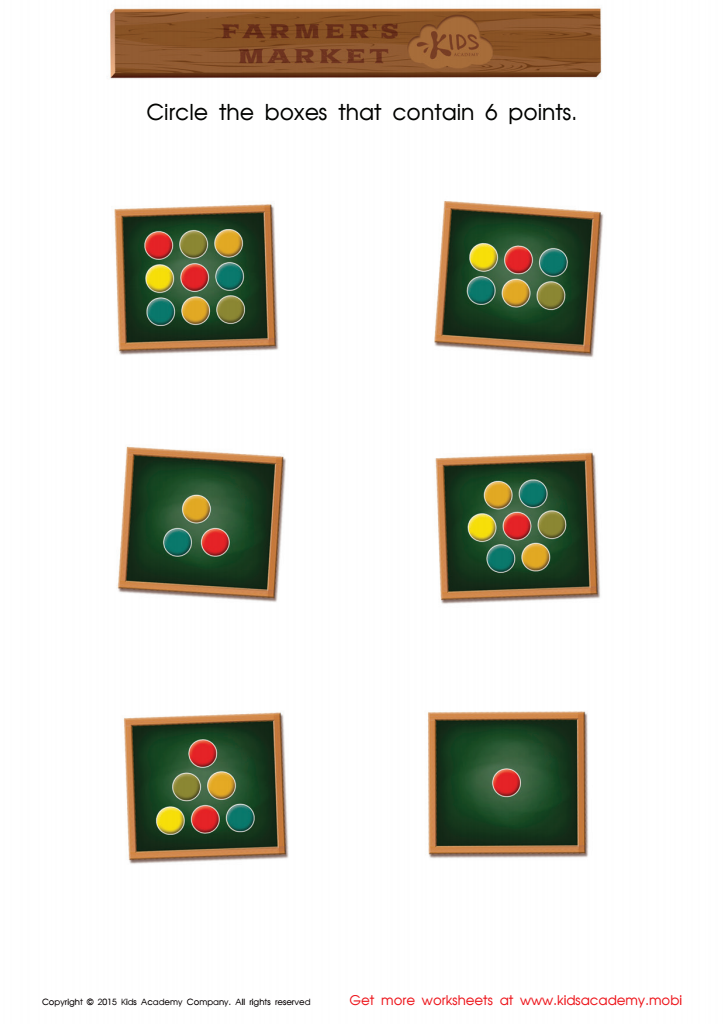
Count and Match Points 6 Math Worksheet
Help your child with mathematics by guiding them with this fun printable worksheet. They will practice counting numbers by looking at all the boxes and circling the ones containing 6 dots. Together you will gain a better understanding of mathematics.
Count and Match Points 6 Math Worksheet
Worksheet
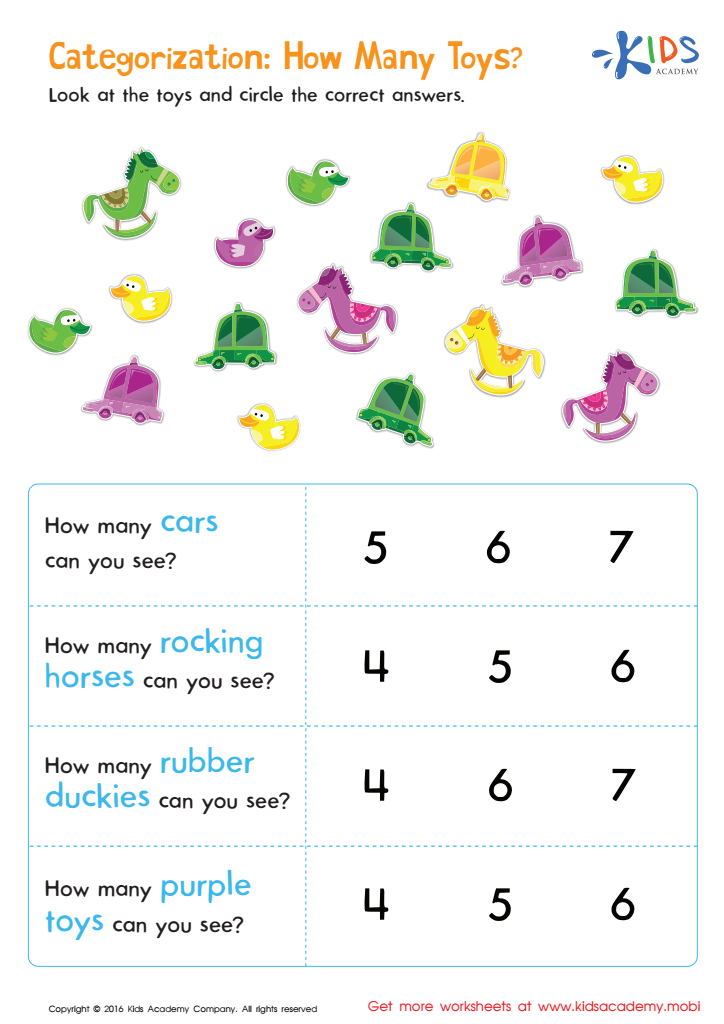
Classifying Toys by Type and Color Sorting Worksheet
Kids Academy offers free math worksheets to help practice counting, categorization & recognition skills. Kids will enjoy counting by color & type while strengthening problem-solving & literacy skills.
Classifying Toys by Type and Color Sorting Worksheet
Worksheet
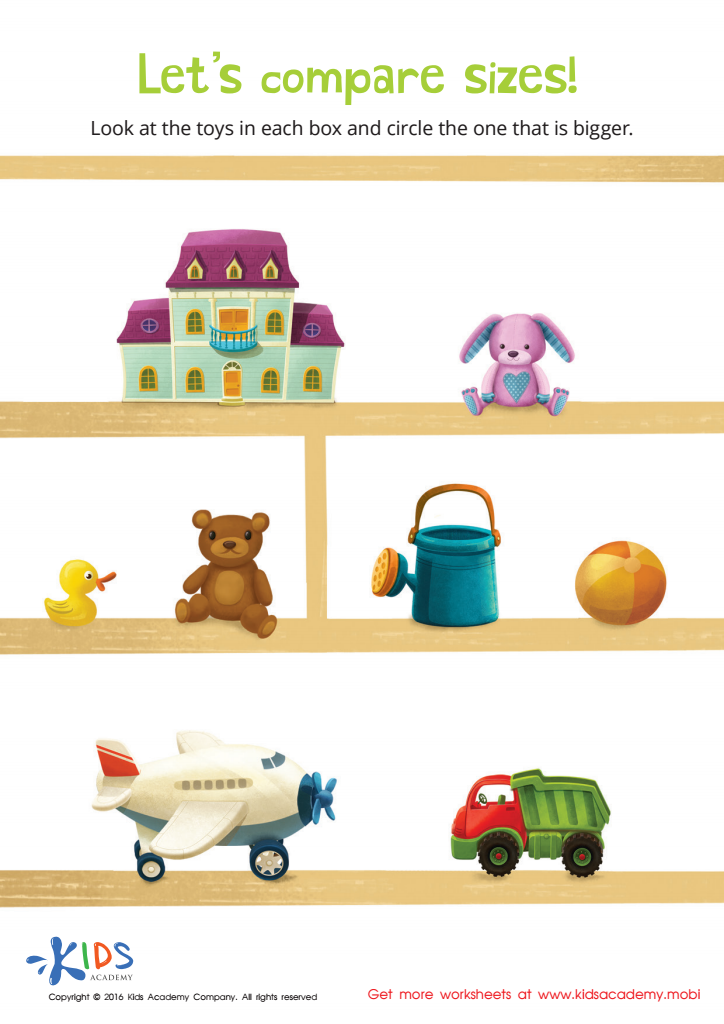
Classifying by Size Sorting Worksheet
Help your preschooler recognize differences in size using this fun worksheet! Your child will engage in important spatial recognition and problem-solving skills while talking with you about objects that can be small or large. Enjoy the vibrant pictures together!
Classifying by Size Sorting Worksheet
Worksheet
Join Kids Academy for Free
Who is primarily going to use this learning content?








Visual perception matching is an integral part of cognitive development for young children aged 6-9. For parents and teachers, understanding the significance of this skill is crucial, as it lays the foundation for more complex educational and daily life tasks. Visual perception matching involves the ability to identify similarities and differences in shapes, patterns, colors, and spatial properties among objects. This ability enhances a child's readiness for reading, writing, and arithmetic—three cornerstones of early education.
Improved visual matching skills aid in distinguishing letters and numbers, a critical aspect of developing literacy and numeracy. When children can easily recognize and differentiate between letters like 'b' and 'd' or numerals such as '6' and '9', they are less likely to experience reading or math difficulties. Additionally, these skills boost a child's ability to follow instructions, stay organized, and complete puzzles or other educational games that build problem-solving capabilities.
Moreover, strong visual perception matching is tied to better hand-eye coordination, which benefits activities ranging from sports to handwriting. Consequently, paying attention to and fostering this ability can dramatically affect a child's educational progress and self-confidence. Teachers and parents should, therefore, prioritize activities that hone visual perception matching, ensuring children are well-prepared for future academic success.








