Comparing sizes Measurement Worksheets for Ages 6-9
9 filtered results
-
From - To
Explore our engaging "Comparing Sizes Measurement Worksheets" tailored for ages 6-9! These worksheets are designed to help young learners understand the concept of size comparison through fun activities and colorful illustrations. Students will develop essential measurement skills as they practice identifying, comparing, and contrasting various objects in terms of size. Activities include hands-on measuring tasks, visual comparisons, and interactive questions, fostering a deeper understanding of measurement in everyday life. Perfect for classroom or home use, these worksheets ensure an enriching learning experience that builds confidence in mathematical thinking. Make learning measurements easy and enjoyable with our thoughtfully crafted resources!
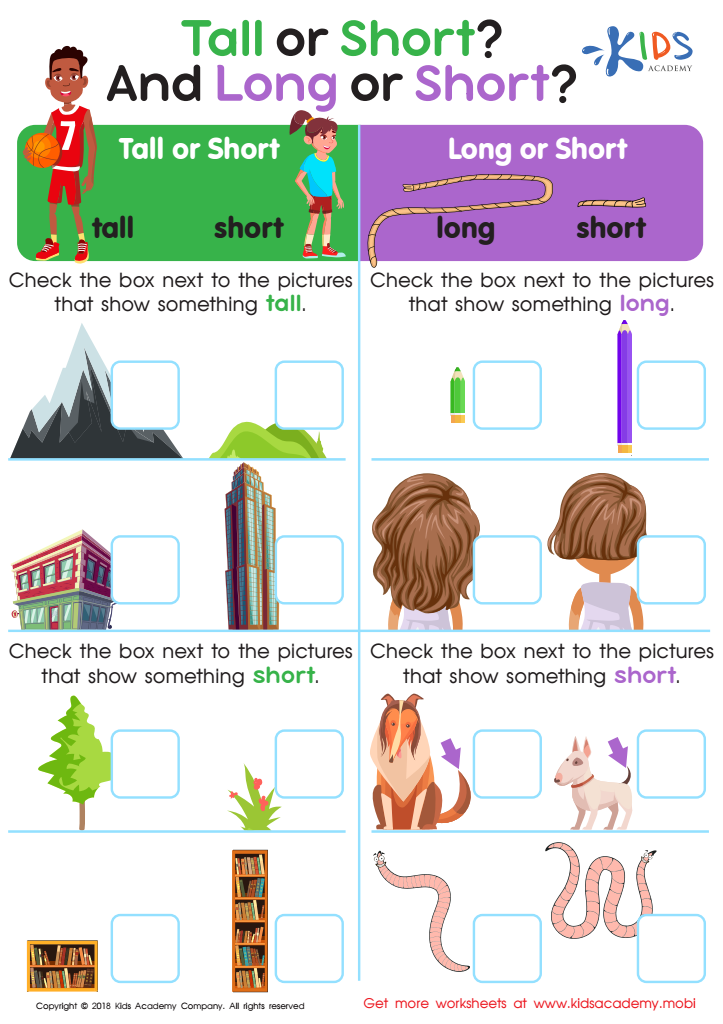
Tall or Short and Long or Short? Worksheet
 Assign to My Students
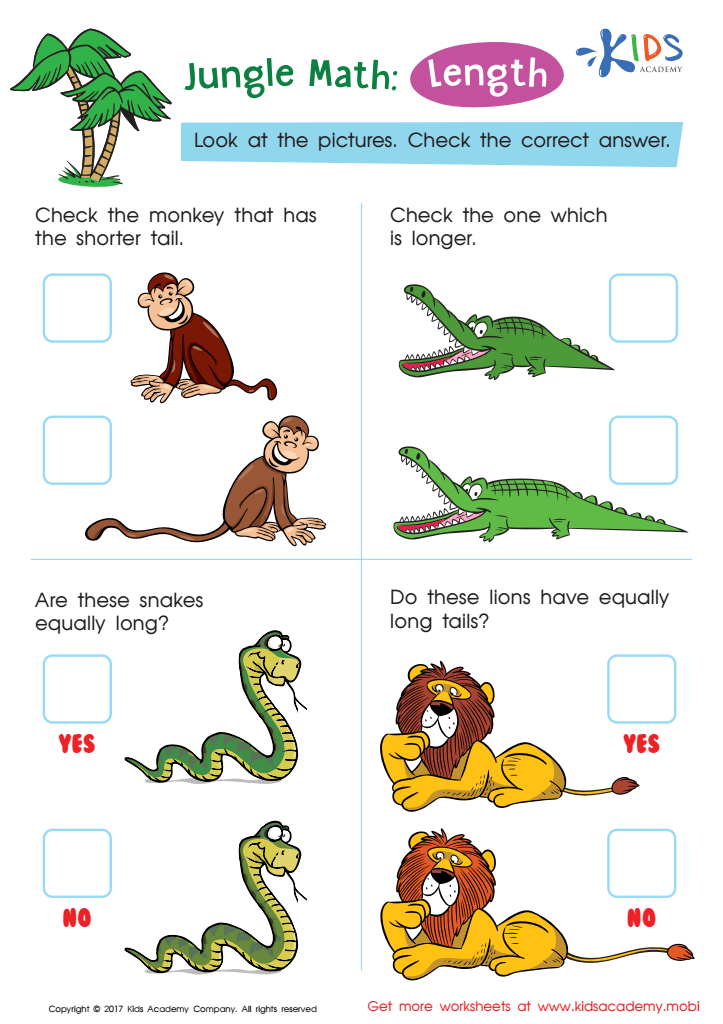
Which One Is Longer - Length Worksheet
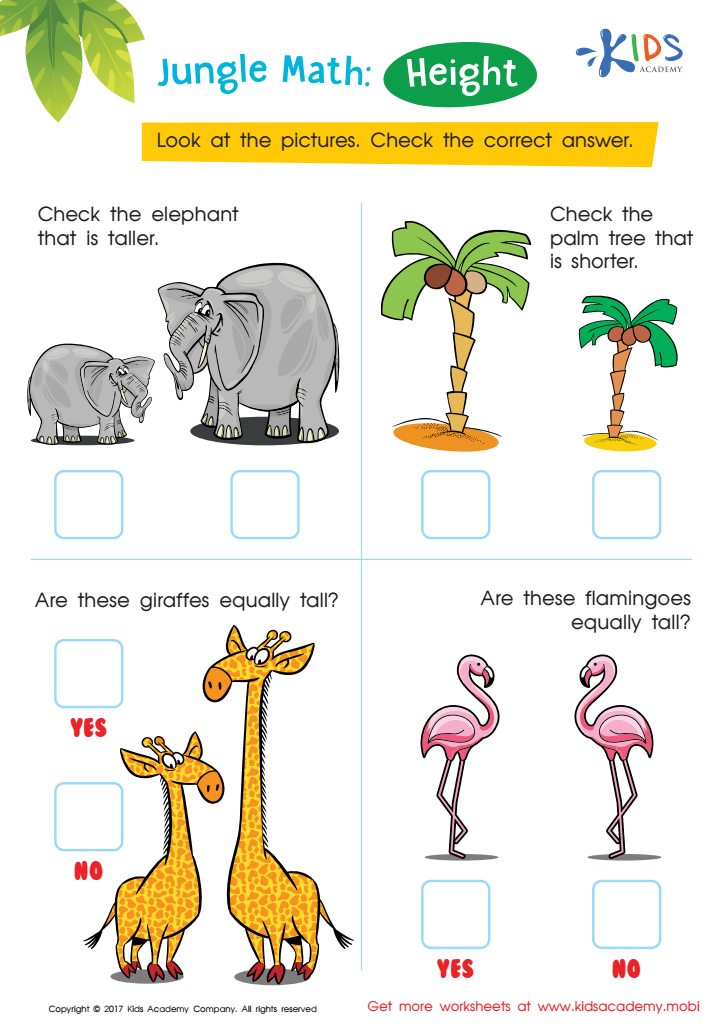
Which Is Taller Worksheet
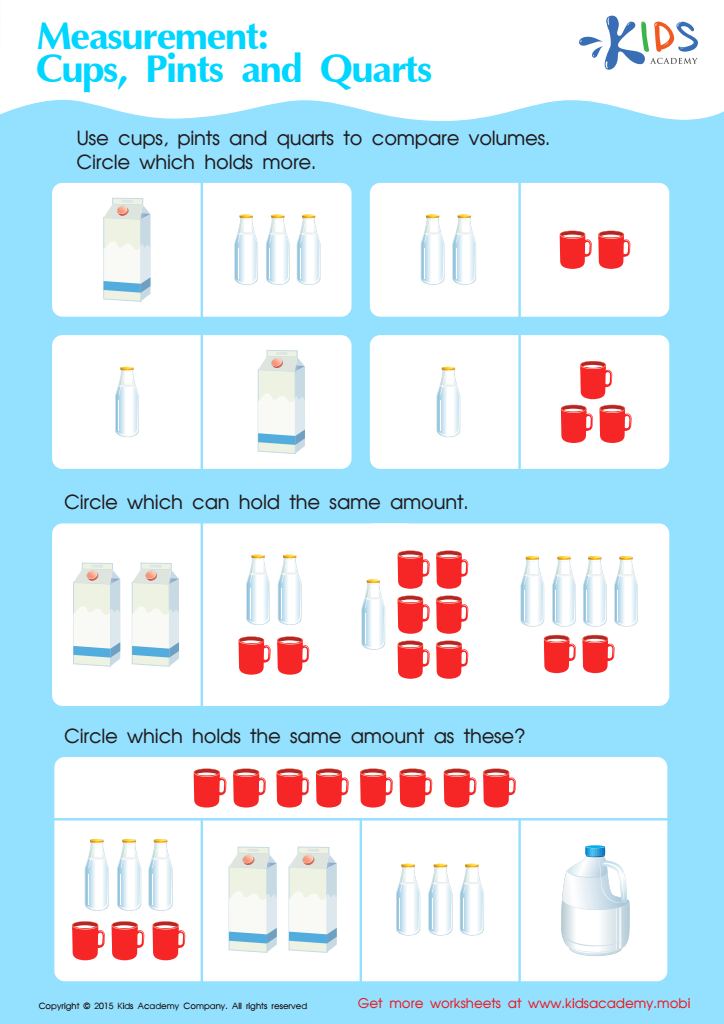
Measurement: Compare Volumes Worksheet
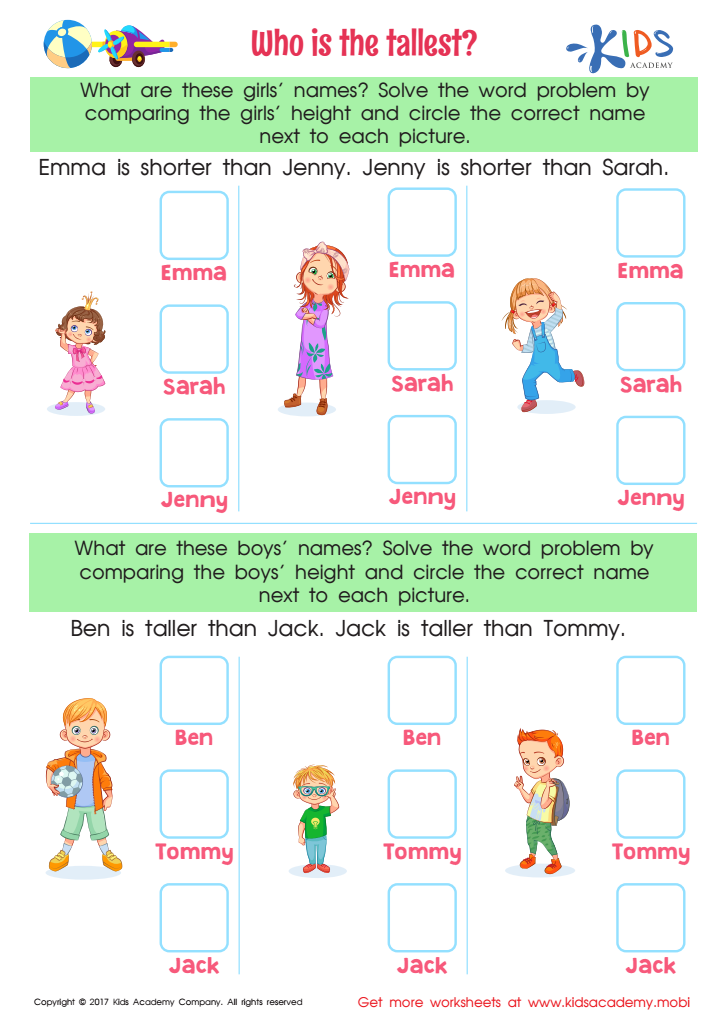
Who Tallest Printable
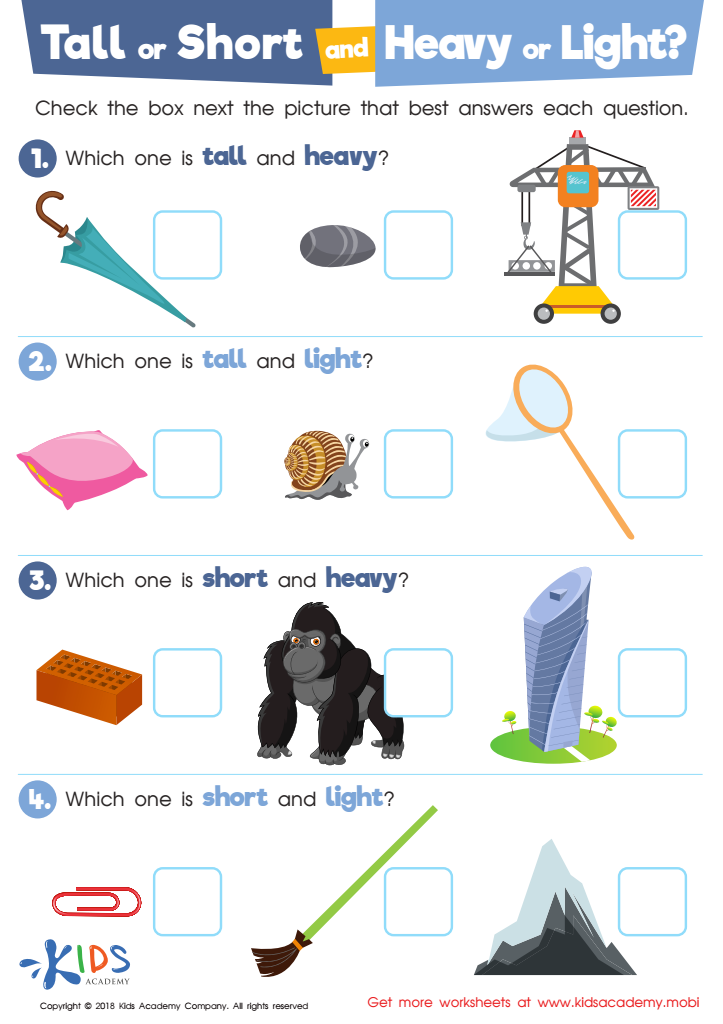
Tall or Short and Heavy or Light? Worksheet
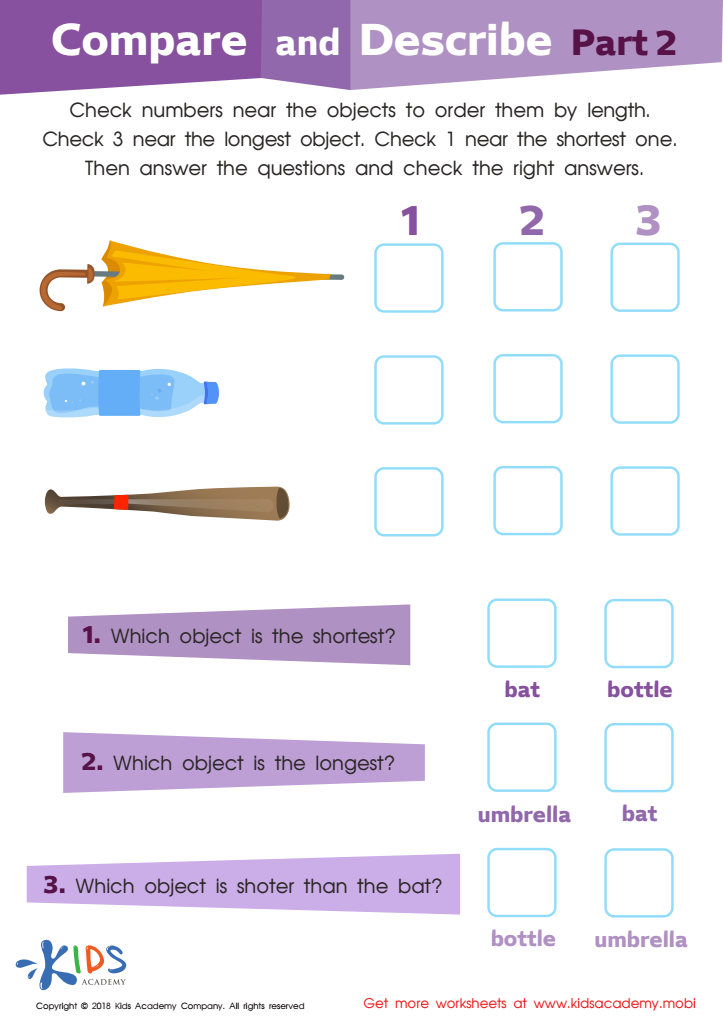
Compare and Describe: Part 2 Worksheet
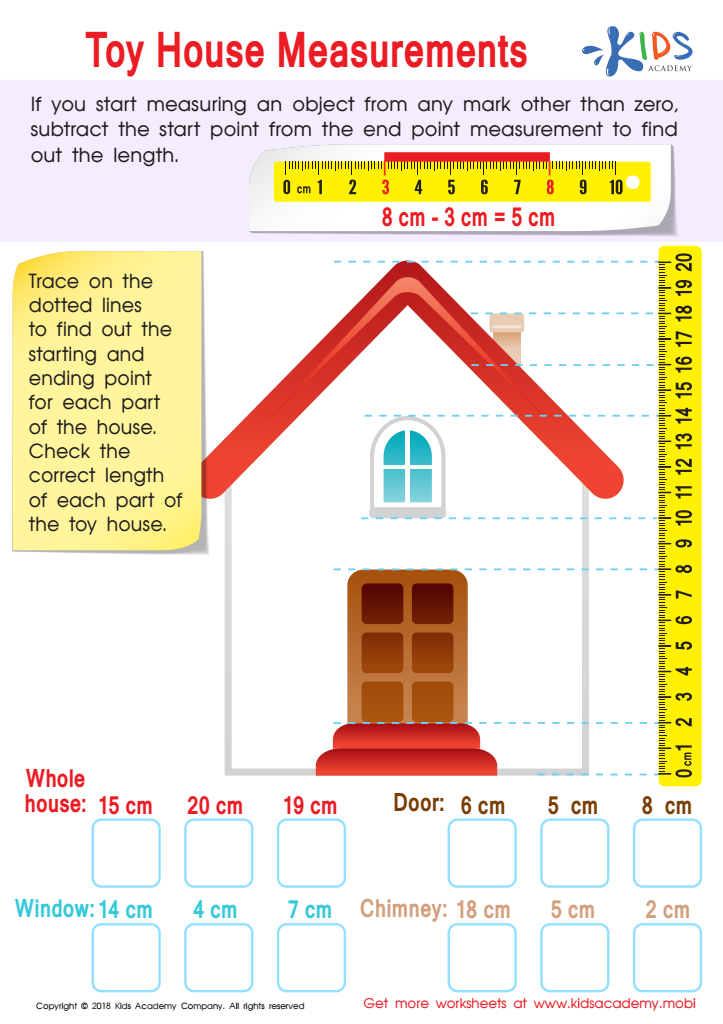
Toy House Measurements Worksheet
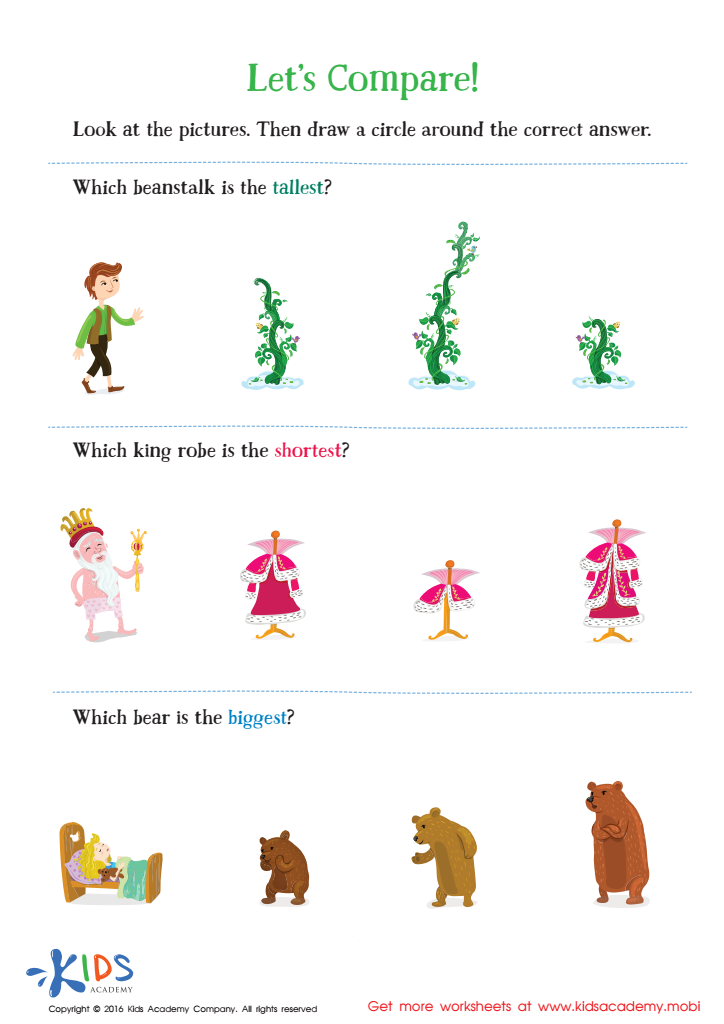
Fairy Tale Worksheet: Let's Compare








Comparing sizes and understanding measurements are foundational skills for children aged 6-9, and both parents and teachers should care deeply about fostering these abilities. At this age, children are naturally curious and increasingly capable of grasping abstract concepts. Engaging them in activities that involve comparing sizes—such as sorting objects by height or length—helps reinforce their observational skills and spatial awareness.
Additionally, these skills lay the groundwork for more advanced mathematical concepts they will encounter later. By learning to measure objects, children begin to understand units of measurement, data interpretation, and reasoning, all of which foster critical thinking. These activities can also spark interest in science, engineering, and other STEM fields, where measurement plays a vital role.
Moreover, comparing sizes can enhance children's everyday life skills. Whether they are cooking with a parent, building with blocks, or participating in sports, understanding measurement helps them navigate their environments and make informed decisions. Encouraging these skills supports cognitive development and nurtures a positive attitude toward learning. Ultimately, it helps create a solid foundation for problem-solving and analytical thinking in academic and real-world contexts, making it essential for parents and teachers to prioritize this area of early education.








