Conversion skills Measurement Worksheets for Ages 6-9
5 filtered results
-
From - To
Boost your child's math proficiency with our Conversion Skills Measurement Worksheets, designed for ages 6-9. These engaging and educational worksheets help young learners master essential conversion skills. From transforming inches to centimeters and pounds to kilograms, each worksheet offers fun, hands-on practice to solidify understanding. With vibrant illustrations and relatable scenarios, kids stay motivated while developing critical thinking and problem-solving abilities. Perfect for classroom use or at-home enrichment, our expertly crafted worksheets align with curriculum standards and cater to various learning styles. Equip your child with the tools they need for math success and confidence in everyday measurements!
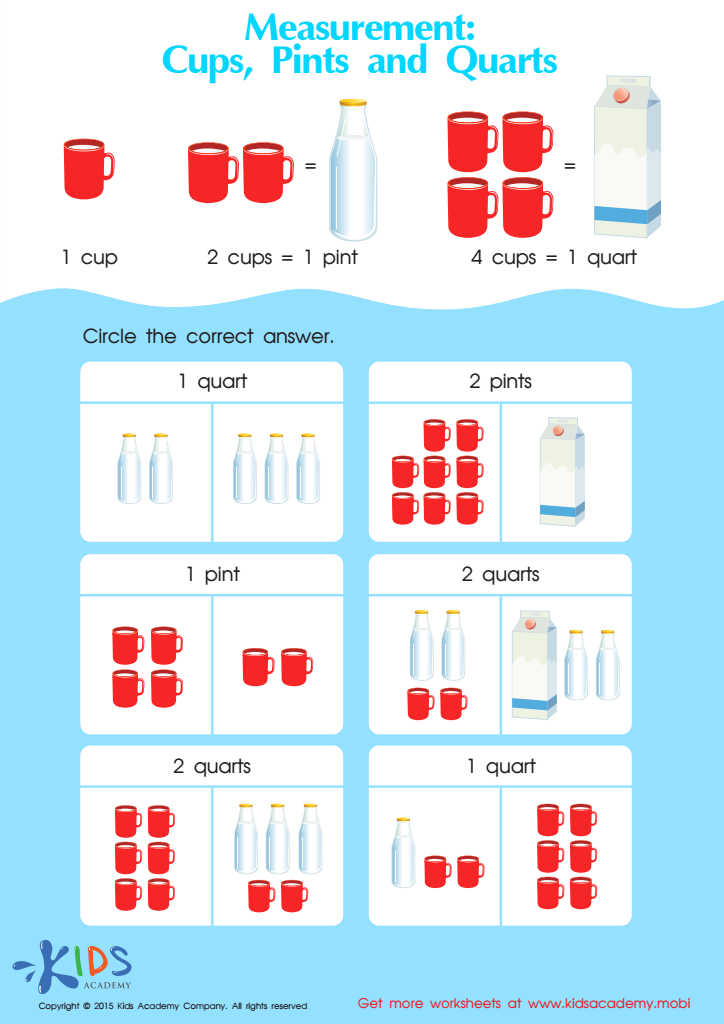
Cups, Pints and Quarts Worksheet
 Assign to My Students
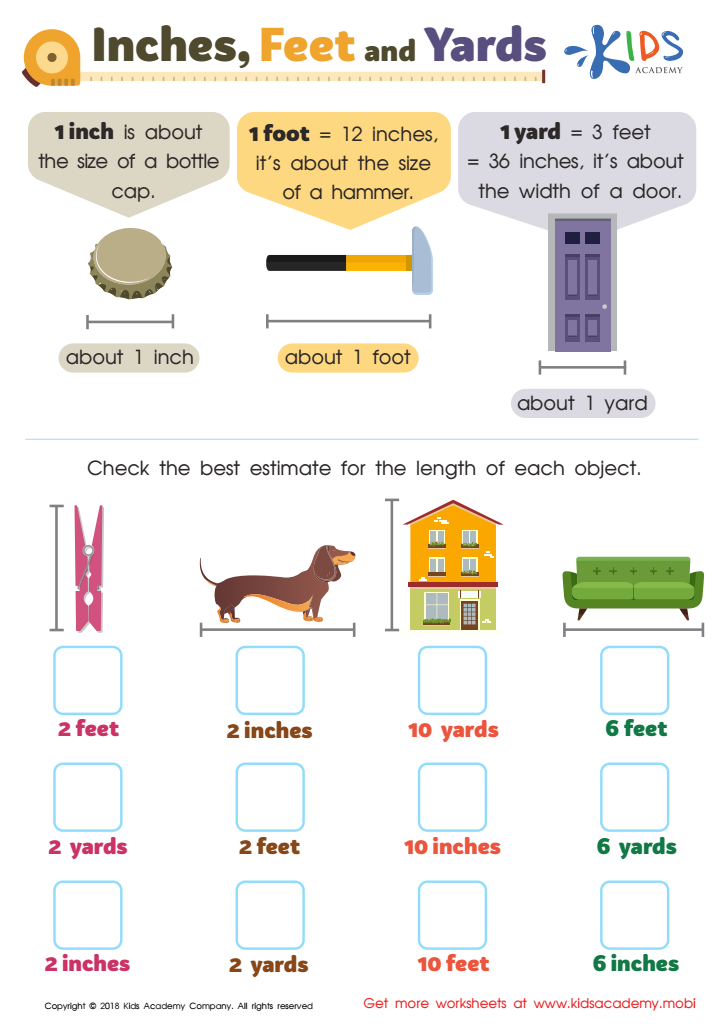
Inches, Feet and Yards Worksheet
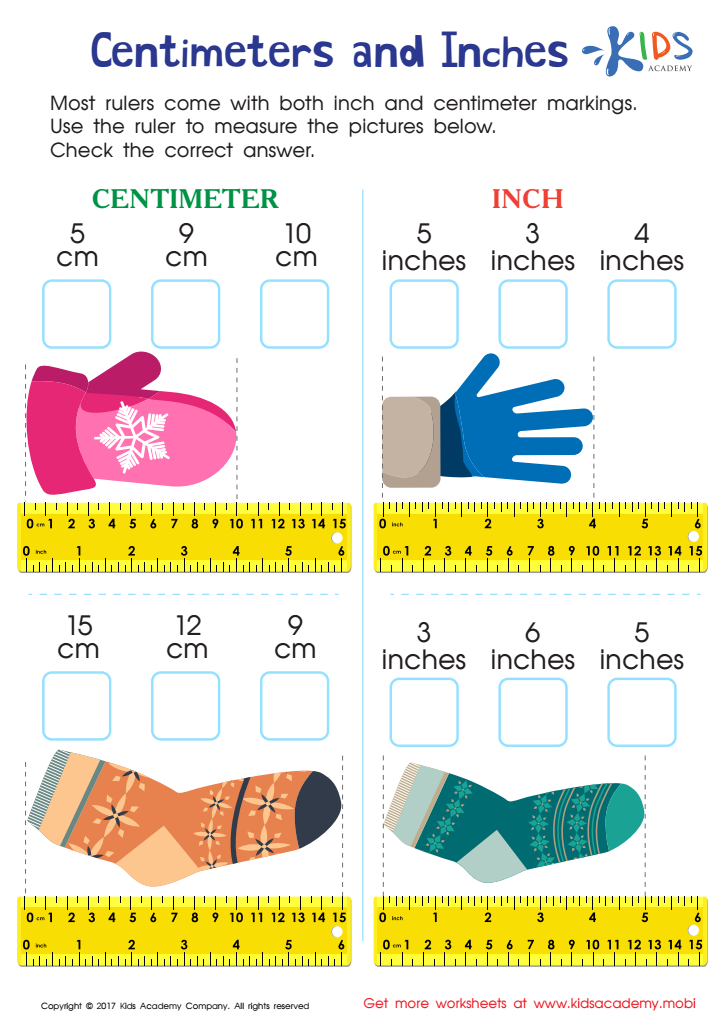
Centimeters and Inches Worksheet
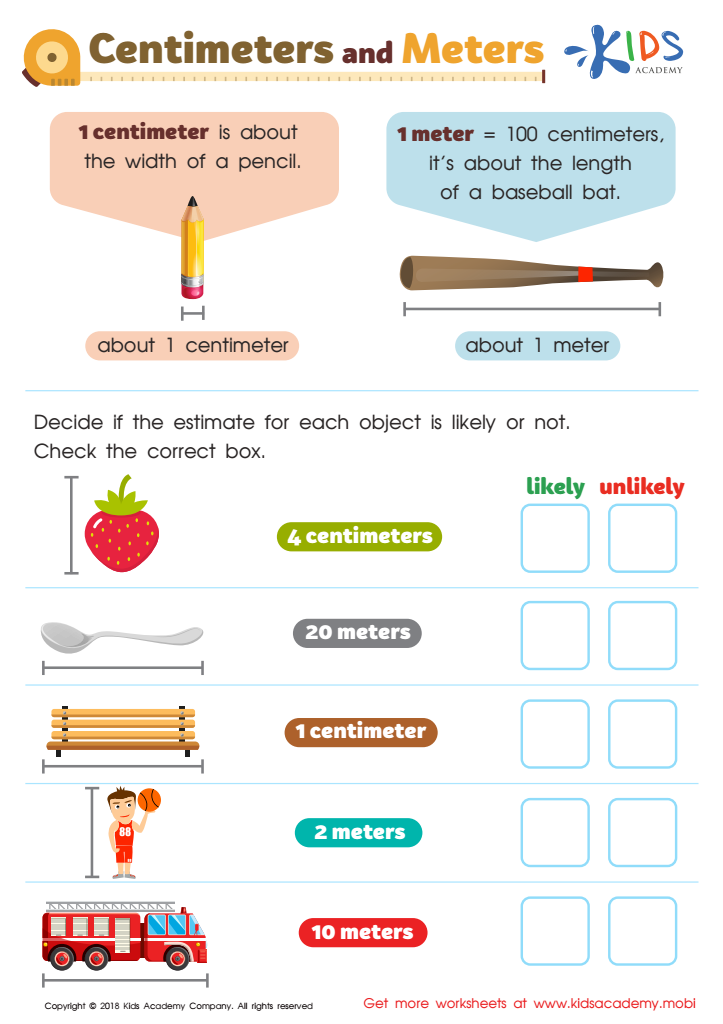
Centimeters and Meters Worksheet
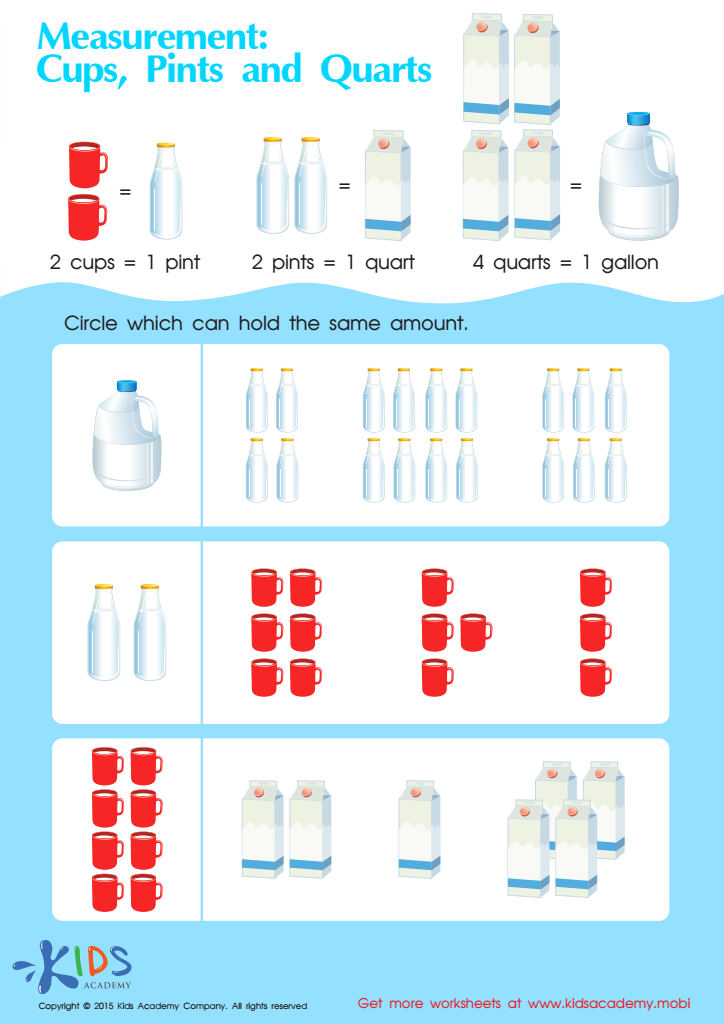
Cups, Pints and Quarts 2 Worksheet







Developing conversion skills in children aged 6 to 9, typically in early elementary grades, is fundamental for their overall mathematical understanding. For parents and teachers, these skills are crucial for several reasons:
Firstly, conversion skills – such as converting units of measurement (inches to centimeters, minutes to hours) – lay the groundwork for more complex mathematical concepts. Mastery here enhances a child's ability to grasp ratios, proportions, and algebra in later years.
Secondly, nurturing these skills fosters critical thinking and problem-solving abilities. Young children learn to approach problems methodically, considering various units and applying appropriate conversions, promoting logical reasoning.
Additionally, competence in measurement and conversion assists children in real-world applications, creating tangible connections to everyday life. Simple tasks like following a recipe, telling time, or understanding distances become more manageable and intuitive when children can confidently convert units.
Furthermore, early measurement and conversion skills boost self-esteem and academic confidence. Children who achieve proficiency in these areas tend to participate more actively in class, show curiosity, and take on new challenges eagerly, contributing positively to their overall educational journey.
In sum, by focusing on conversion skills from ages 6 to 9, parents and teachers can ensure children develop a robust foundational math proficiency, establishing building blocks for future academic and real-world success.








