Interpreting data Measurement Worksheets for Ages 6-9
5 filtered results
-
From - To
Unlock the fascinating world of interpreting data for your child with our engaging Measurement Worksheets designed for ages 6-9. Kids Academy offers interactive and educational resources that help young learners grasp essential math skills while having fun. These age-appropriate worksheets enhance critical thinking and problem-solving abilities by introducing concepts like reading graphs, comparing data, and understanding measurements. Perfect for both classroom and home use, our worksheets are tailored to align with educational standards, ensuring your child builds a strong foundation in math. Empower your little mathematician with the tools they need to excel and enjoy their learning journey!
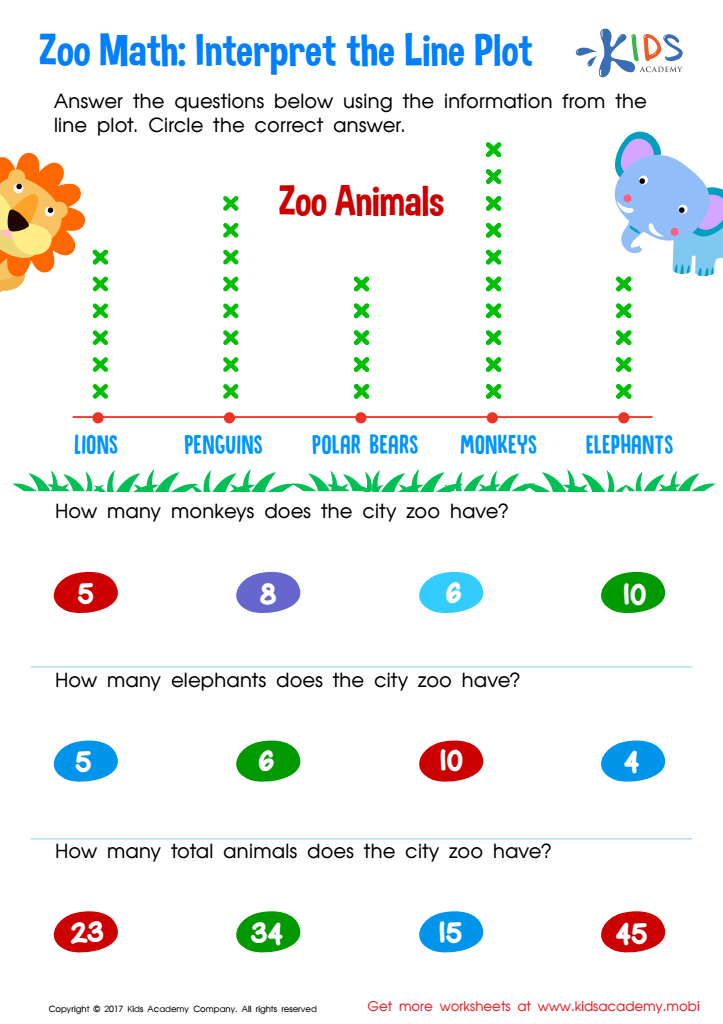
Interpret Line Plot Worksheet
 Assign to My Students
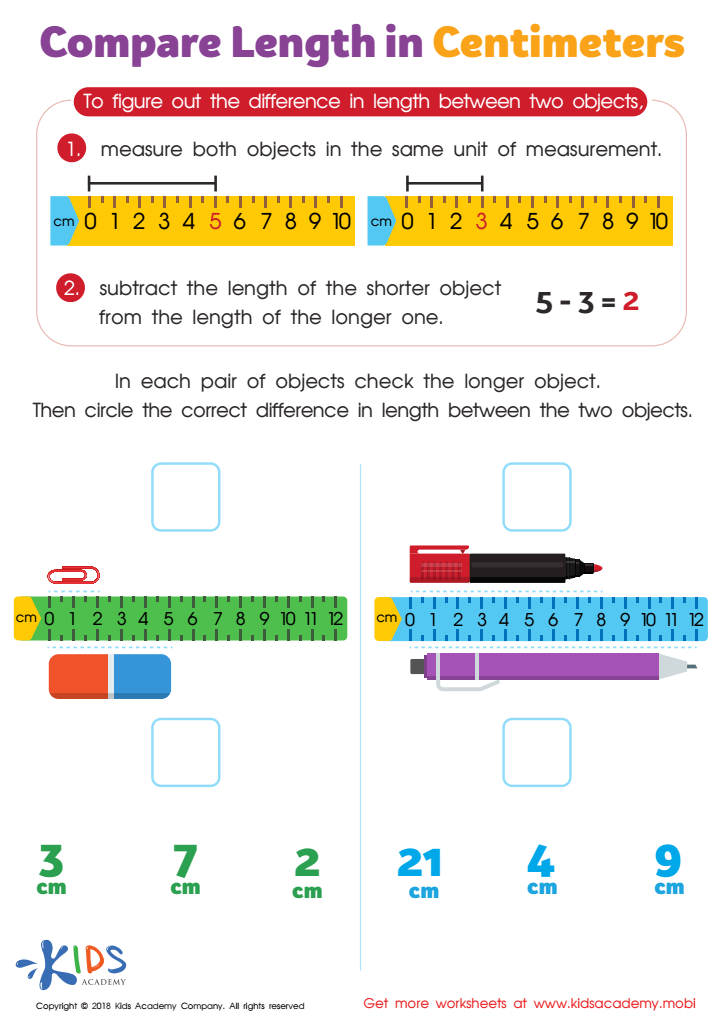
Compare Length in Centimeters Worksheet
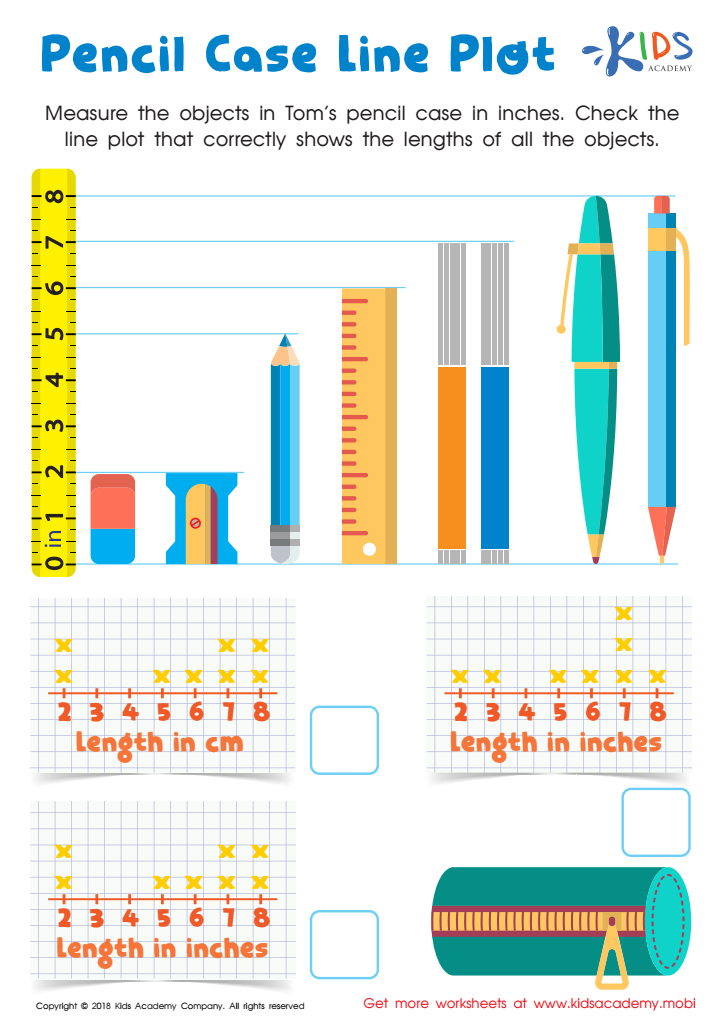
Pencil Case Line Plot Worksheet
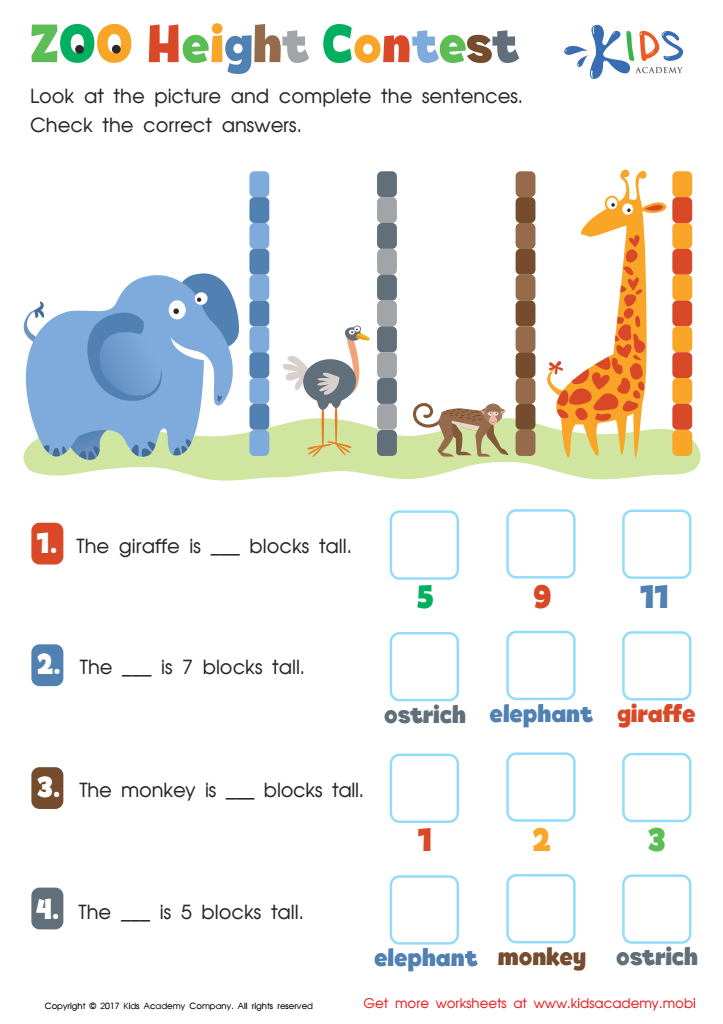
Zoo Height Contest Worksheet
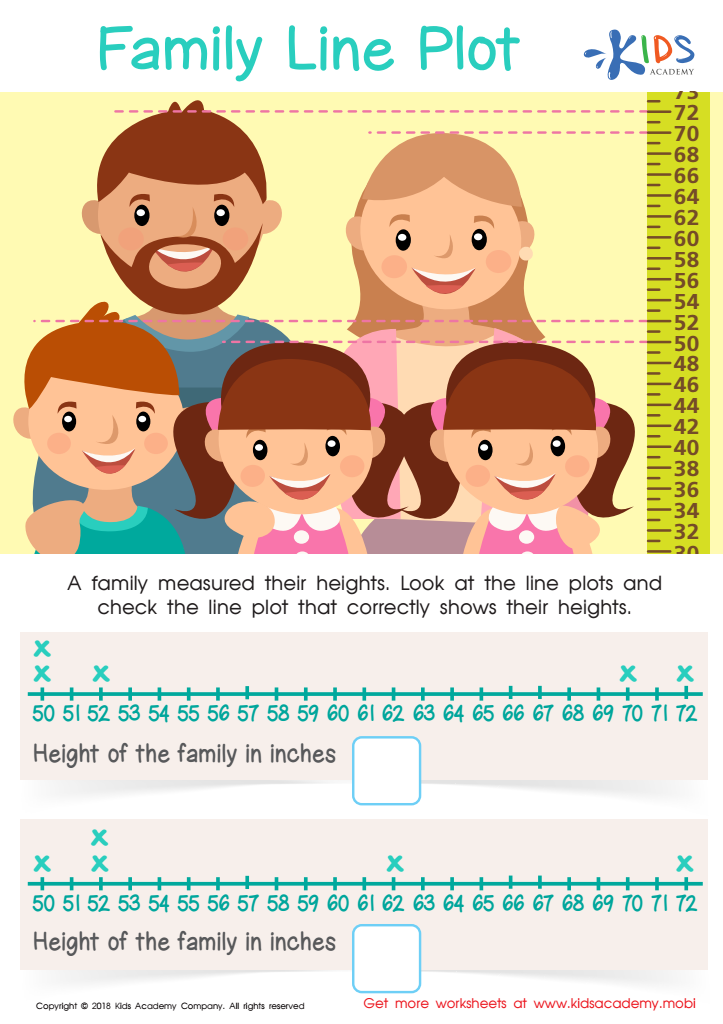
Family Line Plot Worksheet








Interpreting data and understanding measurement are foundational skills that play a critical role in a child's educational development, particularly for ages 6-9. These skills empower children to make sense of the world around them in a structured and logical way.
Firstly, interpreting data enhances critical thinking. Children learn to collect, organize, and draw meaningful conclusions from information, whether it involves counting objects, measuring distances, or comparing quantities. For instance, through simple activities like measuring the height of plants or tracking daily weather, children observe patterns and learn to predict outcomes. This nurtures their curiosity and analytical skills.
Secondly, measurement introduces precision and accuracy in their observations. Learning units of measure—like inches, centimeters, or ounces—helps children grasp the importance of exactness in everyday situations. Understanding measurements strengthens their abilities in subjects like math and science and develops practical life skills essential for problem-solving.
Moreover, these skills are interconnected with other academic areas. For example, analyzing a bar graph can bolster comprehension skills, while measuring ingredients for a recipe can enhance mathematical understanding. Integrating these skills into learning activities fosters a multi-disciplinary approach, making education both enjoyable and comprehensive.
Overall, by prioritizing data interpretation and measurement, parents and teachers lay the groundwork for a child's future academic success and everyday competence, supporting their development into critical thinkers and effective problem solvers.








