Reading comprehension Multiplication Worksheets for Ages 6-9
8 filtered results
-
From - To
Enhance reading comprehension and multiplication skills with our engaging worksheets designed for kids ages 6-9! Our carefully curated collection encourages students to read fun, age-appropriate stories and answer questions that strengthen their understanding of multiplication concepts. Each worksheet combines literacy and math, fostering critical thinking as children interpret problems through engaging narratives. Ideal for classroom use or at-home learning, these worksheets promote active learning and make mastering multiplication exciting! With vibrant illustrations and interactive content, your young learners will develop confidence in both reading and math. Explore our worksheets today and set your children on the path to academic success!
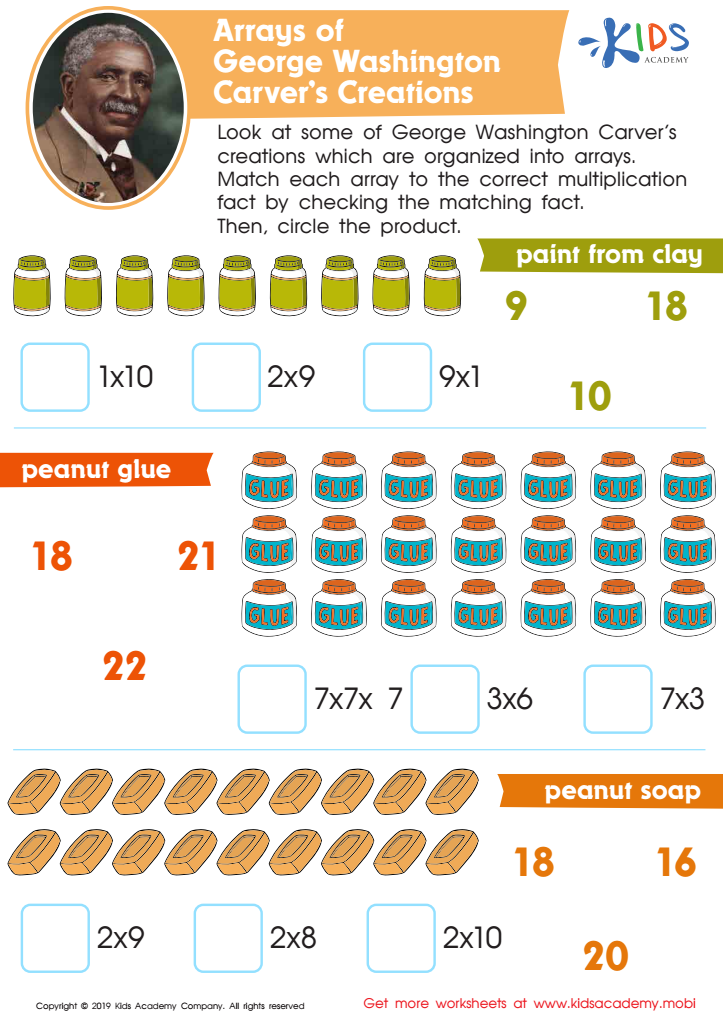
Arrays of George Washington Carver’s Creations Worksheet
 Assign to My Students
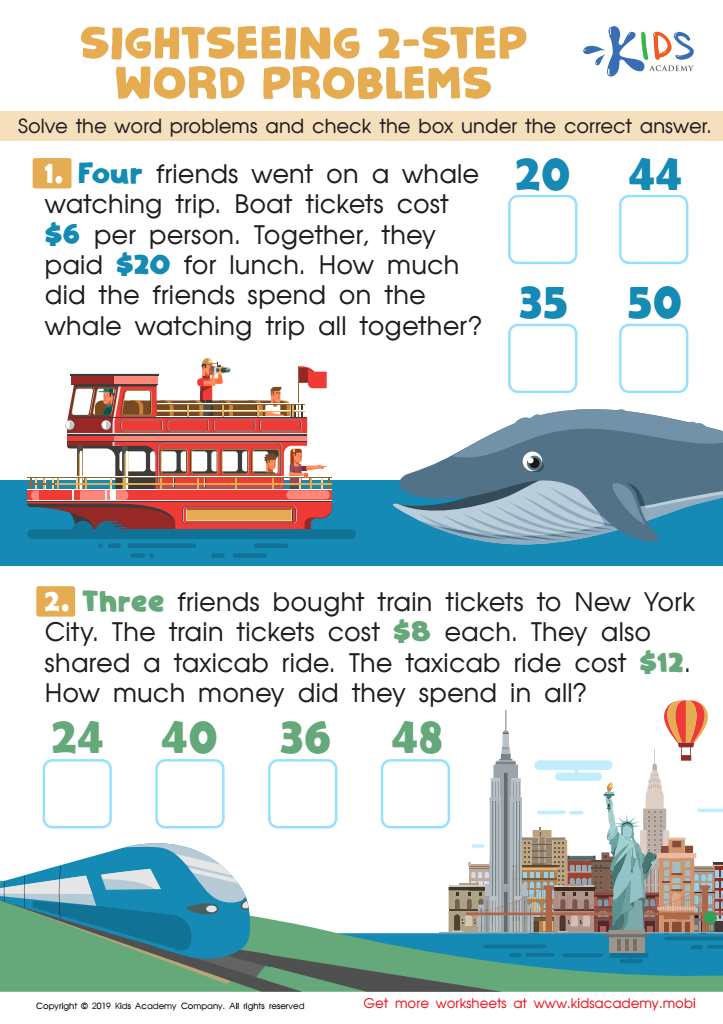
Sightseeing 2-Step Word Problems Worksheet
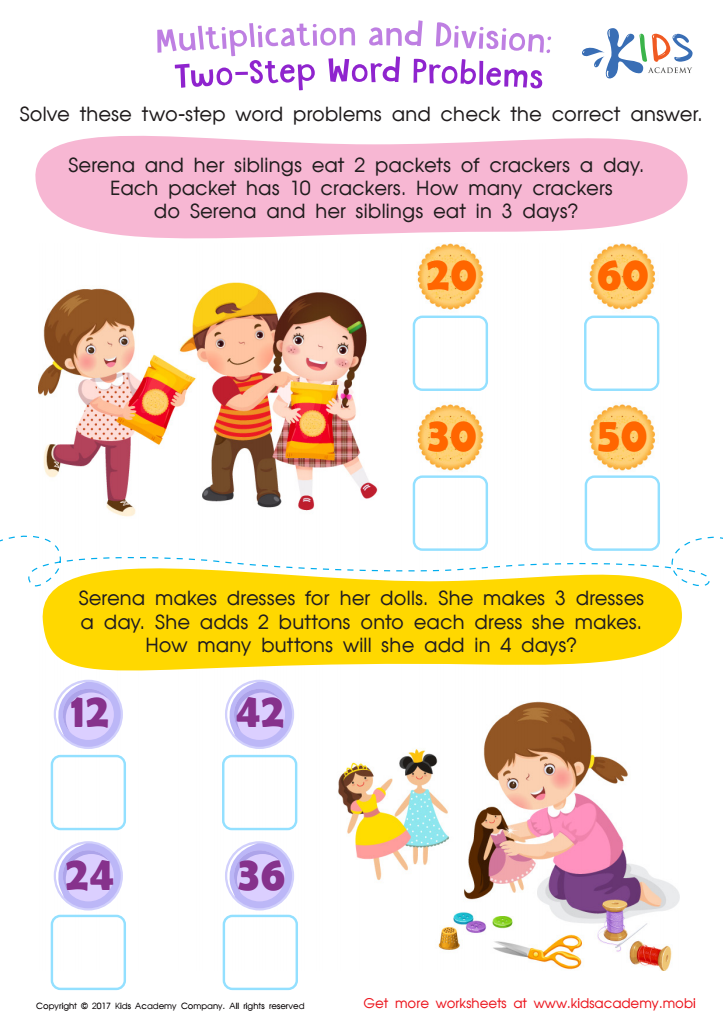
Two Step Word Problems Worksheet
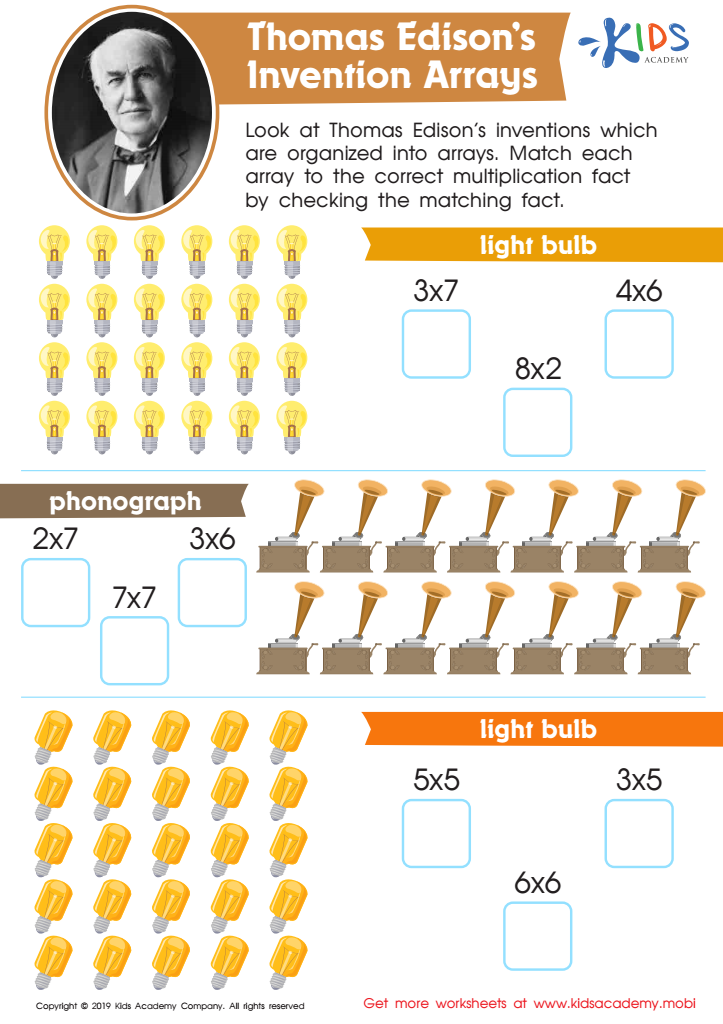
Thomas Edison’s Invention Arrays Worksheet
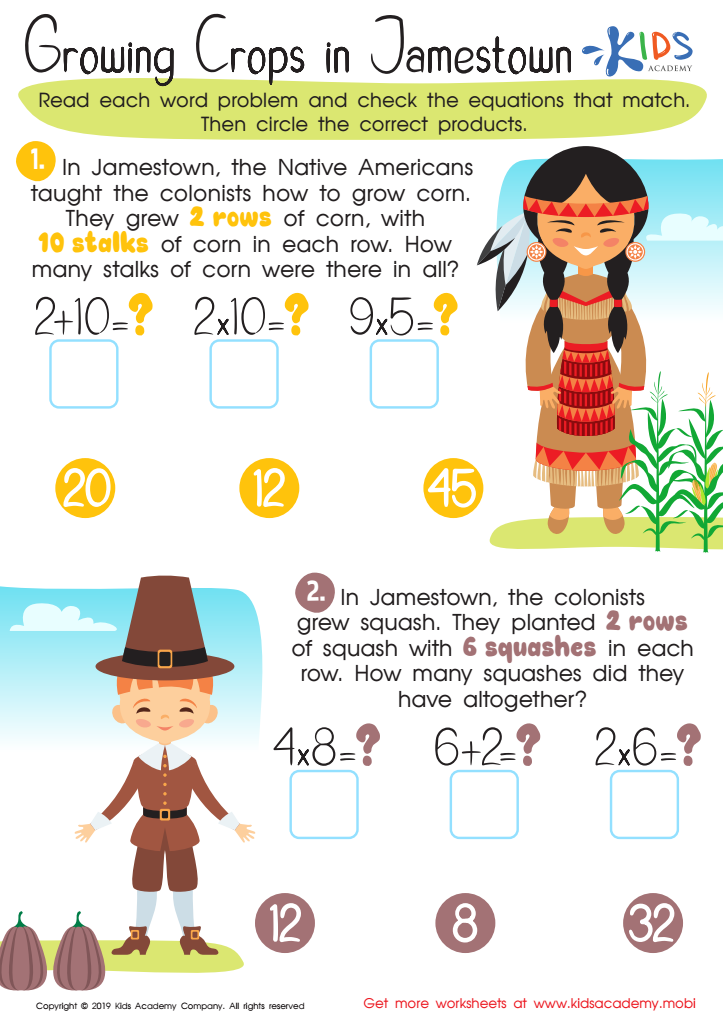
Growing Jamestown Worksheet
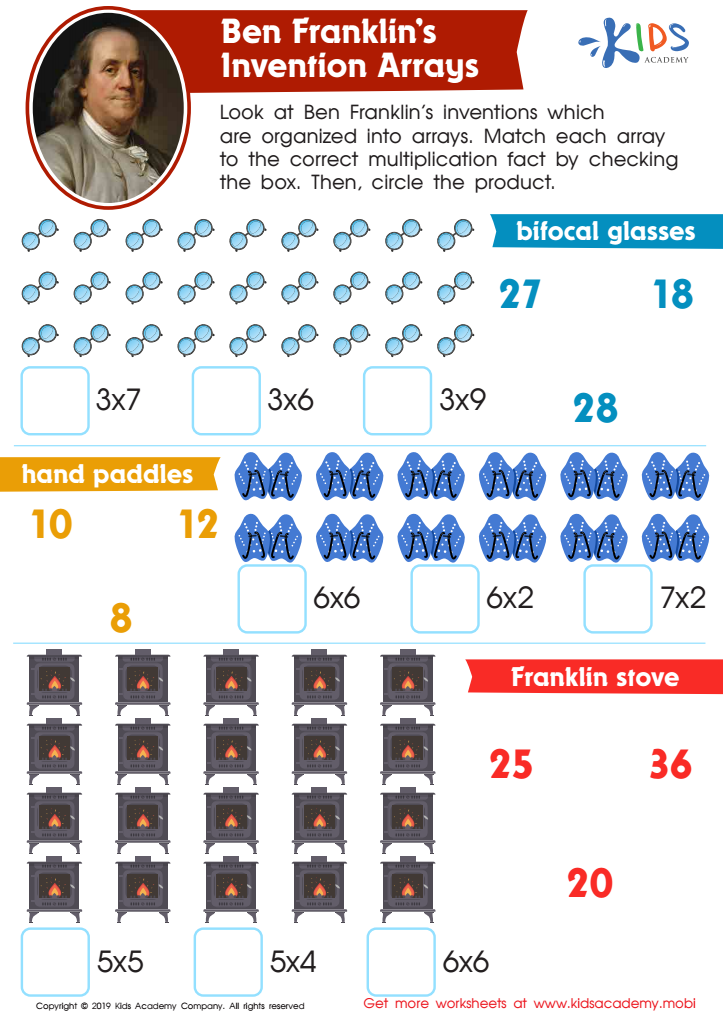
Ben Franklin’s Invention Arrays Worksheet
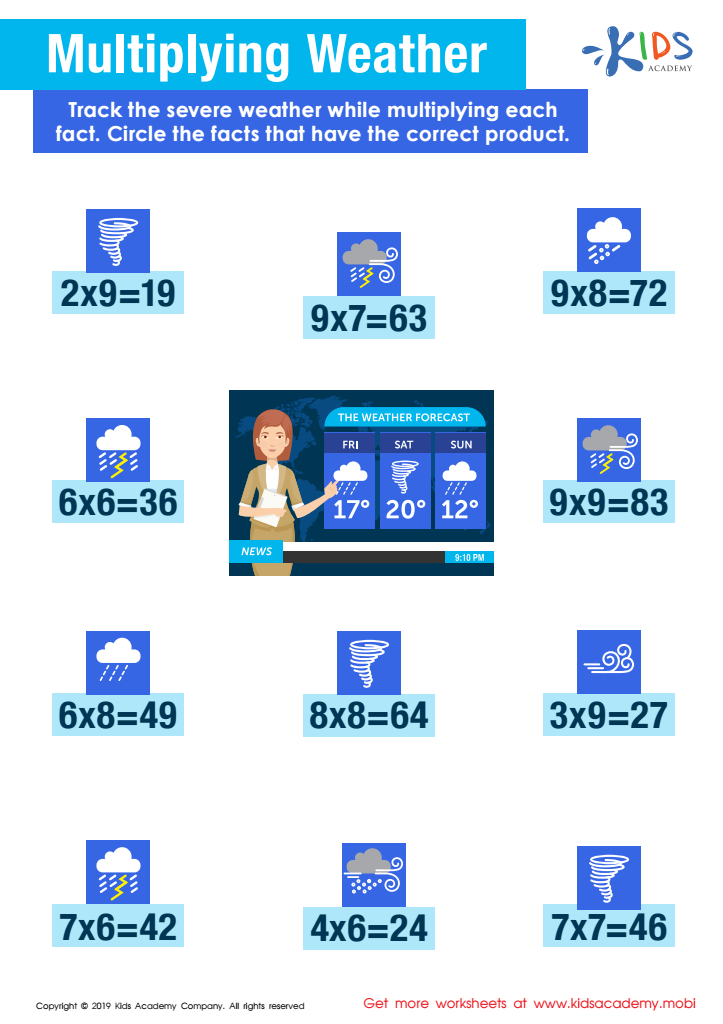
Multiplying Weather Worksheet
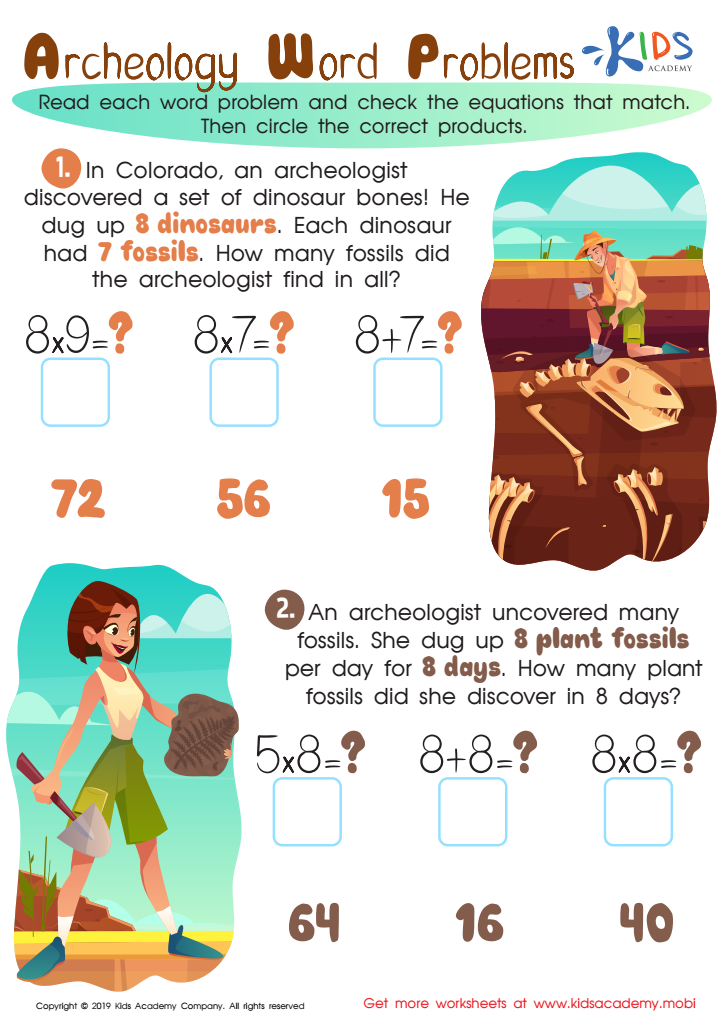
Archeology Word Problems Worksheet








Reading comprehension and multiplication are essential skills for children aged 6-9. Understanding how to read actively empowers young learners to decode texts, grasp concepts, and develop critical thinking skills. At this stage, children encounter diverse materials in school, from narratives to informational texts, making proficient comprehension vital. It sets the foundation for future academic success and promotes a love for reading, which is crucial for ongoing learning.
Multiplication, on the other hand, is a core mathematical concept that children need to master for several reasons. At ages 6-9, students begin to explore multiplication as repeated addition and learn to solve problems involving groups of objects. This skill not only forms the basis for more advanced mathematics learned later on, such as fractions and division but also fosters logical reasoning and problem-solving abilities.
Together, reading comprehension and multiplication are interconnected, as children often need to read problem scenarios in math to solve them effectively. When parents and teachers prioritize these skills, they help create confident, well-rounded learners capable of tackling complex challenges in school and everyday life—setting them on a path to lifelong academic success. Moreover, supporting these skills encourages teamwork, communication, and collaboration between home and school, contributing positively to children's overall development.








