Cognitive Development Subtraction Worksheets for Ages 6-9
5 filtered results
-
From - To
Discover our exclusive "Cognitive Development Subtraction Worksheets for Ages 6-9," designed to enhance young learners' problem-solving and critical thinking skills. Our expertly crafted worksheets provide a blend of engaging subtraction problems and activities tailored to boost cognitive abilities in a fun, interactive way. Each sheet reinforces key math concepts, strengthens mental arithmetic, and supports overall educational development. Perfect for both classroom and home use, these worksheets help children master subtraction while fostering a love for learning. Equip your child with the tools they need for academic success by integrating our thoughtfully designed subtraction exercises into their daily routine.
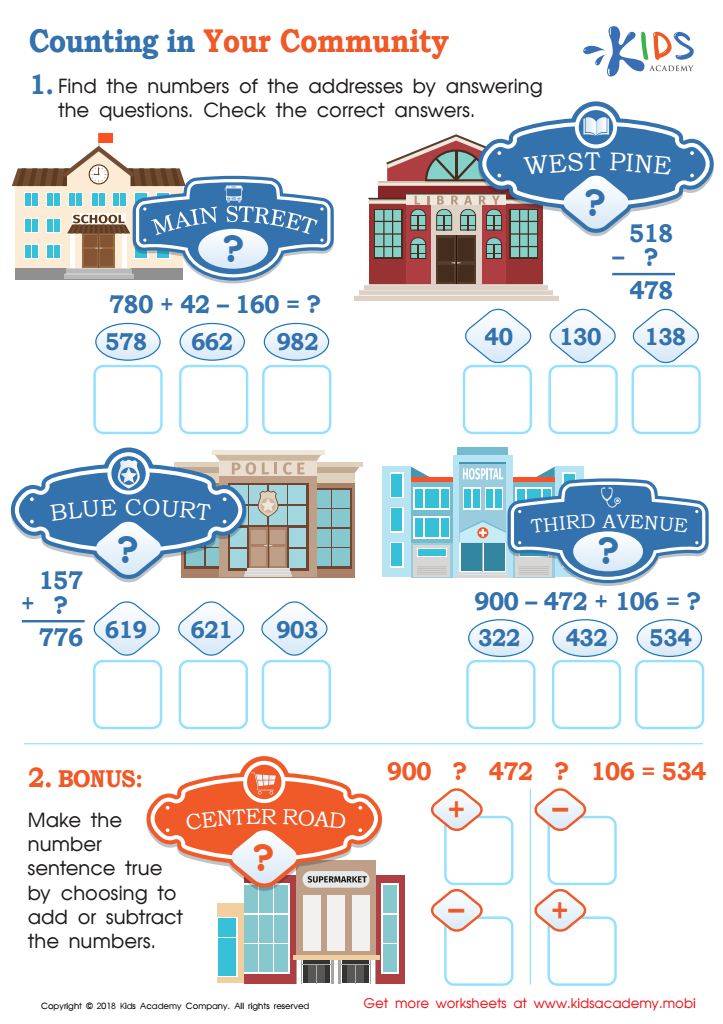
Counting in Your Community Worksheet
 Assign to My Students
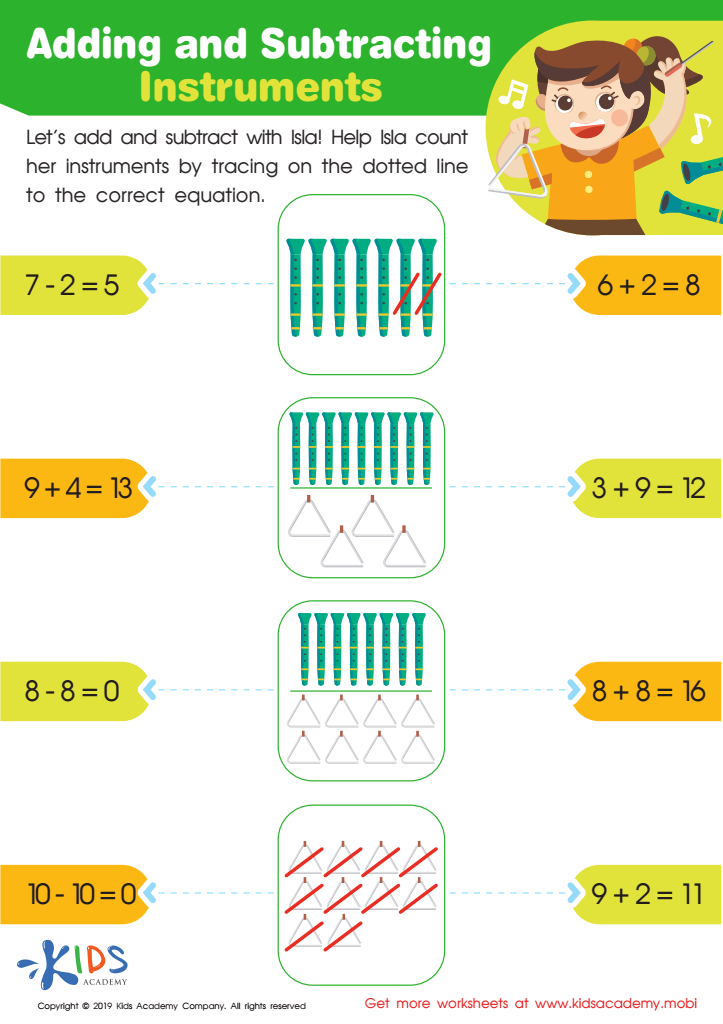
Adding and Subtracting: Instruments Worksheet
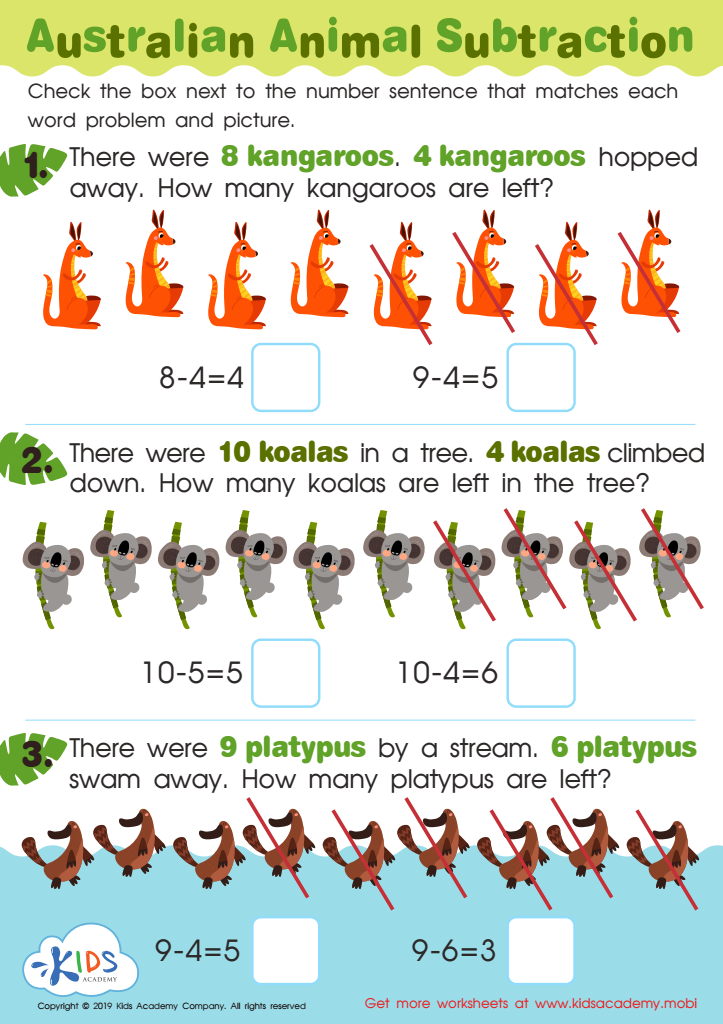
Australian Animal Subtraction Worksheet
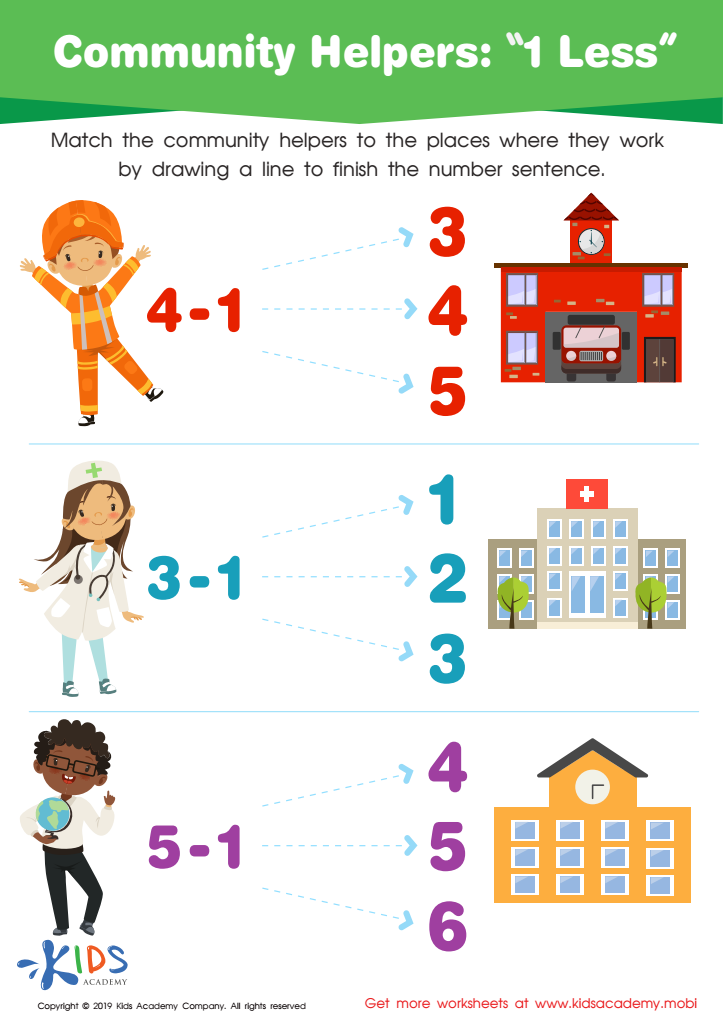
Community Helpers: 1 less Worksheet
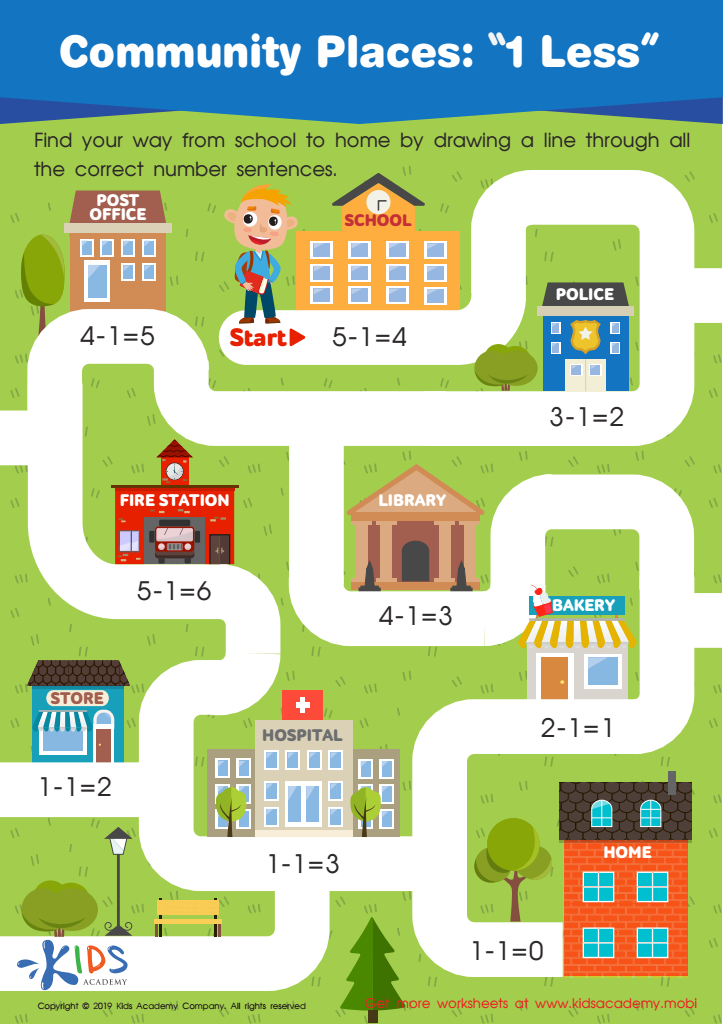
Community Places: 1 Less Worksheet








Cognitive development, particularly in arithmetic skills like subtraction, is crucial for children aged 6-9 due to its foundational role in their overall academic and mental growth. During this stage, children learn to think logically and solve problems, skills that are pivotal in everyday life and future learning.
Subtraction isn’t merely about learning to count backward; it demands an understanding of concepts such as removal, difference, and reverse operations. Mastering subtraction helps children to make sense of more complex arithmetic operations later on, such as multiplication and division. Moreover, skills like recognizing patterns, estimating results, and understanding number sense are enhanced through subtraction activities.
From an educational perspective, engaging in subtraction exercises improves concentration, memory, and executive functioning. It helps in developing perseverance as children learn to tackle progressively challenging problems. These cognitive skills transfer beyond math class, aiding in subjects like science and reading where logical reasoning and problem-solving are essential.
For parents and teachers, nurturing subtraction skills means providing children with the tools needed to succeed academically and practically—in handling money, measuring objects, and even in social situations where logical decision-making is required. Investing time and effort into this aspect of cognitive development ensures that children build a strong mathematical foundation and overall cognitive resilience.








