
Reading analog clocks Time Worksheets for Ages 6-9
3 filtered results
Difficulty Level
Grade
Age
-
From - To
Subject
Activity
Standards
Unlock the magic of time with our engaging Reading Analog Clocks Time Worksheets for Ages 6-9! Perfect for young learners, these worksheets transform clock-reading into a fun and educational adventure. Designed to enhance crucial time-telling skills, our worksheets feature colorful clocks and simple exercises. Kids will learn to identify hour and minute hands, distinguish between AM and PM, and practice setting clocks themselves. Ideal for classrooms and at-home learning, our worksheets ensure kids gain confidence and accuracy in reading analog clocks, laying a strong foundation for future math success. Dive into the wonderful world of time-telling today!
Favorites
With answer key
Interactive
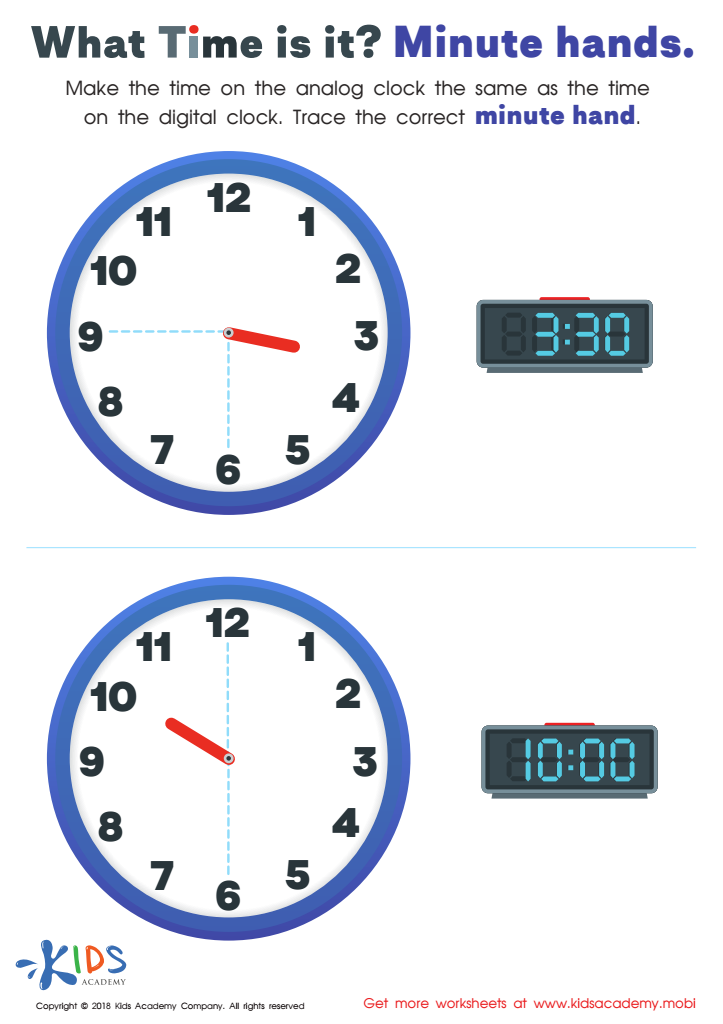
What Time Is it? Minute Hands Worksheet
Help your kids telling time with the minute hand correctly with this tracing sheet. Trace the correct minute hand to make the time on the analog clock the same as the time on the digital clock. Give them a pictured demonstration of how to do it and you'll be all set!
 Assign to My Students
What Time Is it? Minute Hands Worksheet
Worksheet
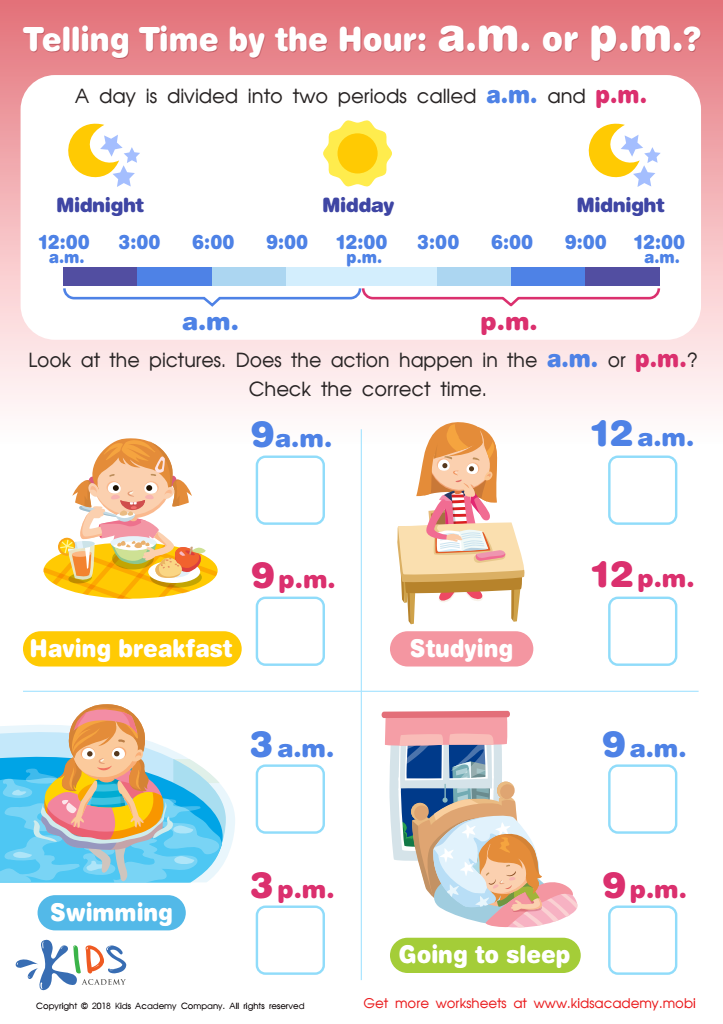
Tilling Time by the Hour: a.m. or p.m.? Worksheet
Can your child tell the time? This worksheet will help them learn. Explain a.m and p.m. and look at the pictures together. Ask your child if the activities happen in the a.m or p.m and help them check the correct time.
Tilling Time by the Hour: a.m. or p.m.? Worksheet
Worksheet
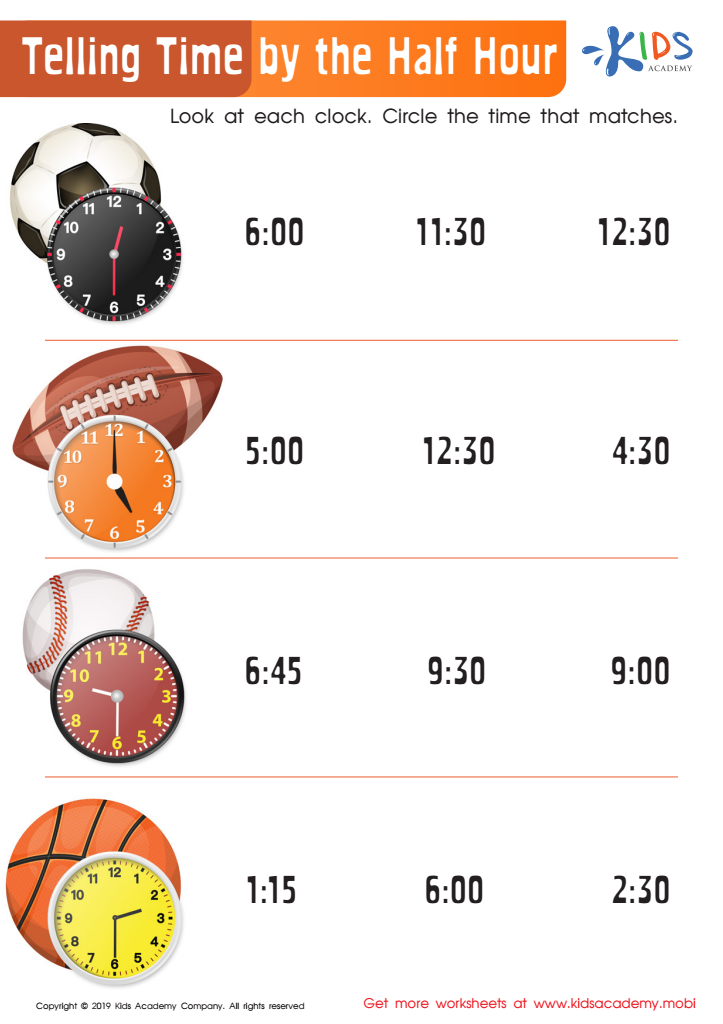
Telling Time by the Half Hour Worksheet
Teach kids to tell time with this worksheet! Four clocks are labeled with different times; help your child circle the right one. It's a great way to teach them to read analog and digital clocks, watches, and written times. Easy and fun learning!
Telling Time by the Half Hour Worksheet
Worksheet
Join Kids Academy for Free
Who is primarily going to use this learning content?








Learning to read analog clocks is an essential skill for children aged 6-9 and it offers numerous developmental benefits. At this age, children are primarily motivated by curiosity and the early sense of independence. Reading analog clocks helps them gain control over their daily routines and time management skills, a fundamental aspect of their growing autonomy. It enables them to understand the passing of time and develop the ability to adhere to schedules, such as knowing when it’s time for their favorite activities, homework, or bedtime.
Analog clocks provide a visual representation of time, offering a tangible link to abstract concepts like "quarter past," "half past," and fractions, which are crucial for later math skills. The process of learning to tell time reinforces counting by fives and enhances the ability to recognize numerical patterns. Additionally, it sharpens cognitive skills such as attention to detail, precision, and problem-solving, as they practice deciphering the position of the hour and minute hands.
For teachers and parents, fostering this skill nurtures a child's confidence and encourages their enthusiasm for learning. Engaging with analog clocks also serves as an excellent opportunity for family activities or classroom interaction, providing memorable, hands-on learning experiences that help solidify these essential timekeeping skills.








