
Phonics recognition Building Vocabulary Worksheets for Ages 6-9
5 filtered results
Difficulty Level
Grade
Age
-
From - To
Subject
Activity
Standards
Boost your child's reading ability with our Phonics Recognition Building Vocabulary Worksheets, designed for ages 6-9. These engaging, printable resources help young learners master phonics, improve word recognition, and expand their vocabulary. Each worksheet features interactive exercises that make learning fun, encouraging kids to connect sounds with letters and words. Our user-friendly format is perfect for homeschooling, additional practice at school, or enriching learning at home. Watch your child's confidence grow as they navigate through these thoughtfully crafted activities. Explore our collection today and lay the foundation for a lifetime love of reading! Start building essential literacy skills together!
Favorites
With answer key
Interactive
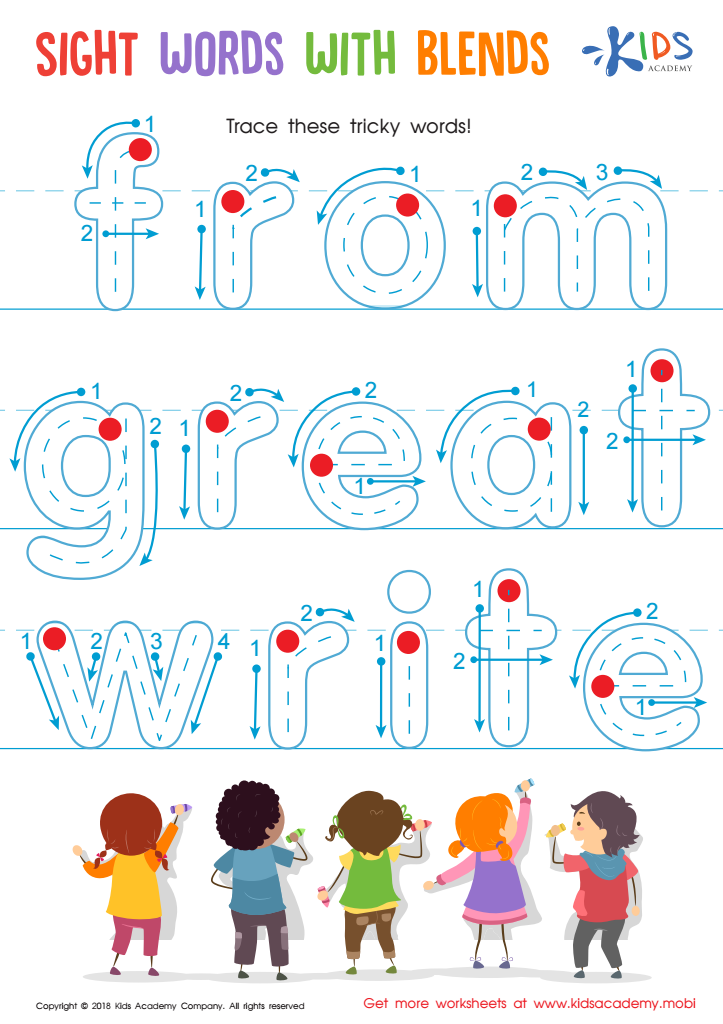
Sight Words with Blends Worksheet
This free PDF lets your children trace and write sight words with tricky blends. The guide numbers help them start from the top, building fine motor skills and enhancing sight word vocab. It's a great way to give your kids a solid foundation for reading!
 Assign to My Students
Sight Words with Blends Worksheet
Worksheet











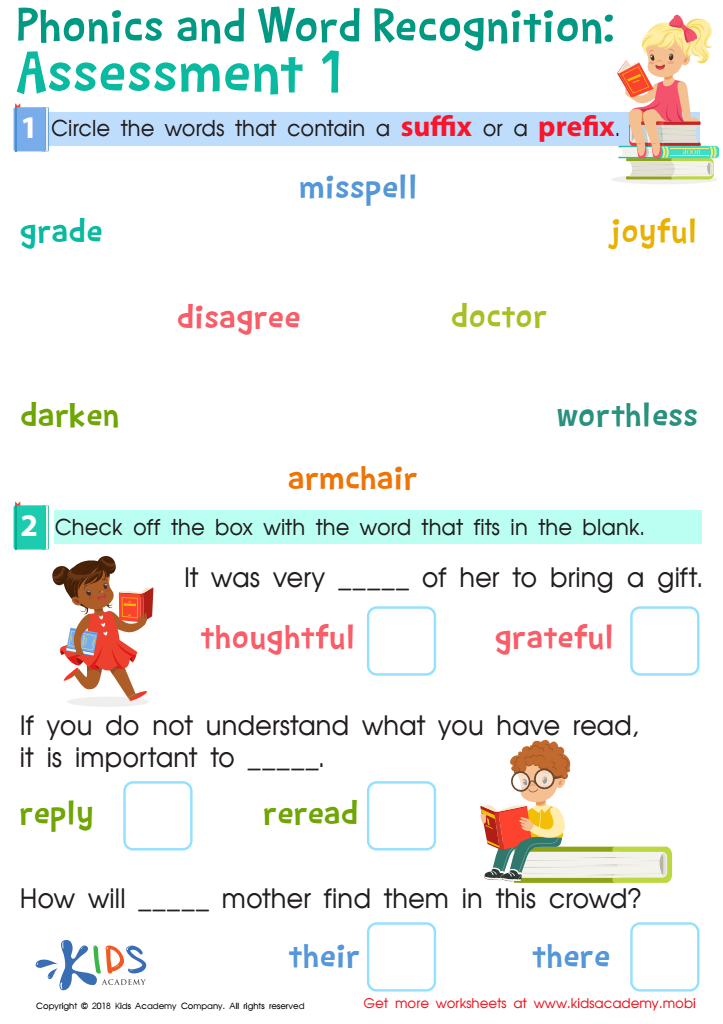
Phonics and Word Recognition: Assessment 1 Worksheet
Explain prefixes (words added to start of another word to give it a new meaning) and suffixes (added to end of word to change its meaning) to your kids with examples like 'unhappy' (prefix) and 'forgetful' (suffix). Now, help your child complete this worksheet, including circling words and checking boxes.
Phonics and Word Recognition: Assessment 1 Worksheet
Worksheet
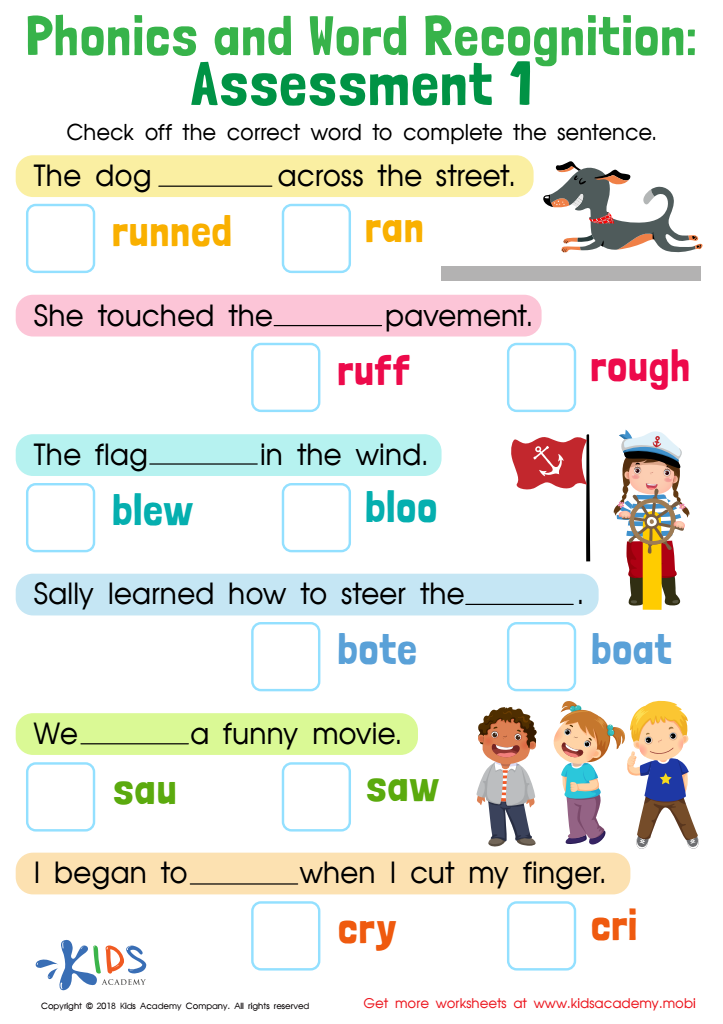
Phonics and Word Recognition: Assessment 1 Worksheet
This worksheet tests phonetics and word recognition. Students should be familiar with past tense verbs. Read incomplete sentences, then read multiple options and help students select the correct one.
Phonics and Word Recognition: Assessment 1 Worksheet
Worksheet
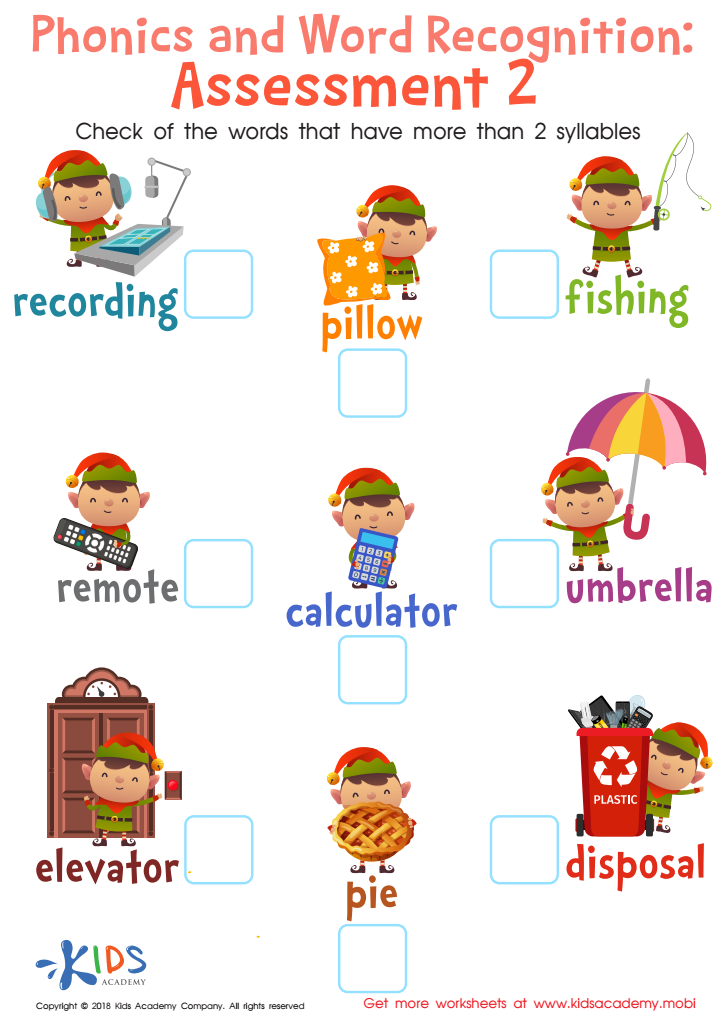
Phonics and Word Recognition: Assessment 2 Worksheet
Help your kids learn proper pronunciation by counting syllables. Most words they'll encounter have 1-3 syllables, making them simple to say. Have them repeat the words in your worksheet after you. Focus on longer words with more than two syllables.
Phonics and Word Recognition: Assessment 2 Worksheet
Worksheet
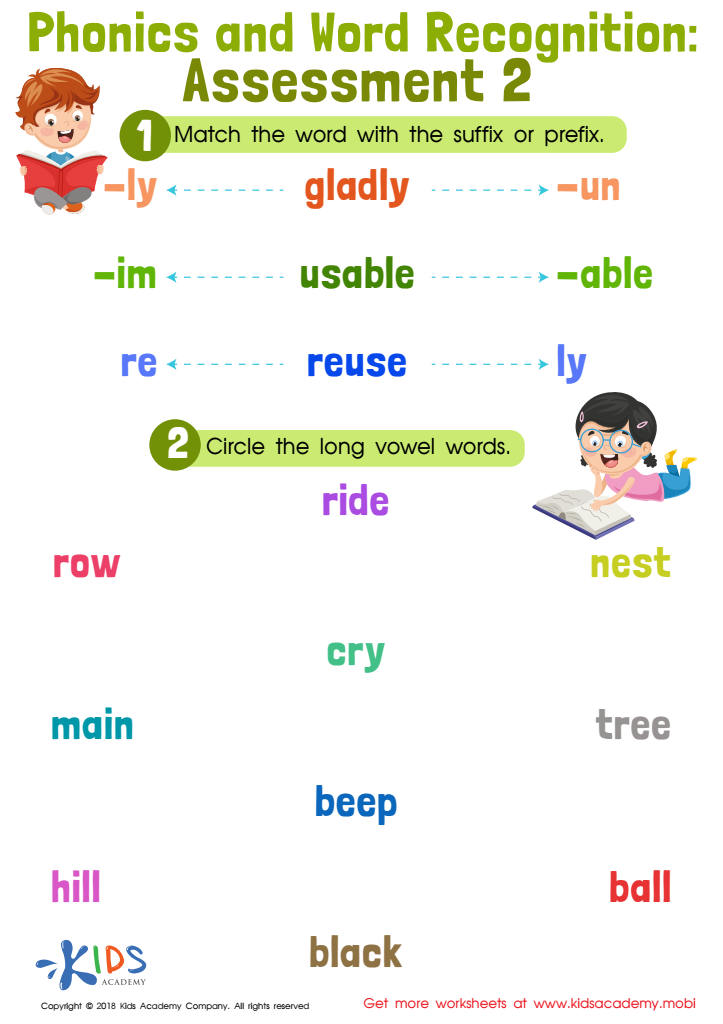
Phonics and Word Recognition: Assessment 2
Give kids common examples of suffixes and prefixes, such as "un-," "unhappy," "ness," "happyness." Ask them to match each word in the word recognition exercise to the correct suffix or prefix. Test phonetic understanding by having them circle the long vowel sounds.
Phonics and Word Recognition: Assessment 2
Worksheet
Join Kids Academy for Free
Who is primarily going to use this learning content?




.jpg)



Phonics recognition and vocabulary building are crucial for children aged 6-9 as they lay the foundation for reading and overall literacy skills. During these formative years, children are transitioning from learning to read to reading to learn. Mastering phonics helps them decode words, enhancing their fluency and confidence. This is significant because proficient readers are more likely to engage with various texts, fostering a love for reading and an appetite for knowledge.
Building vocabulary simultaneously is essential as it enriches comprehension and expression. A robust vocabulary enables children to convey their thoughts clearly and understand more complex concepts. When parents and teachers emphasize phonics and vocabulary, they equip children with critical tools for academic success across subjects, improving performance and motivation.
Equally important, these skills contribute to social development; children with strong language capabilities often form better relationships and communicate effectively, boosting their self-esteem. Therefore, prioritizing phonics recognition and vocabulary building is a proactive strategy that supports not only academic achievement but also social and emotional development. Engaging young learners in these areas creates a strong literacy foundation, promoting lifelong learning habits and ensuring they are prepared for future educational challenges.








