
Sentence construction Building Vocabulary Worksheets for Ages 6-9
6 filtered results
Difficulty Level
Grade
Age
-
From - To
Subject
Activity
Standards
Enhance your child's language skills with our Sentence Construction Building Vocabulary Worksheets for ages 6-9. These engaging activities are designed to boost reading and writing proficiency by focusing on sentence structure and word usage. Children will practice forming complete sentences, expanding their vocabulary, and understanding grammar rules in a fun, interactive manner. Perfect for both classroom and home use, these worksheets support critical thinking and communication skills, laying a strong foundation for future literacy. Watch as young learners grow more confident and skilled in their language abilities with these expertly crafted educational resources.
Favorites
With answer key
Interactive
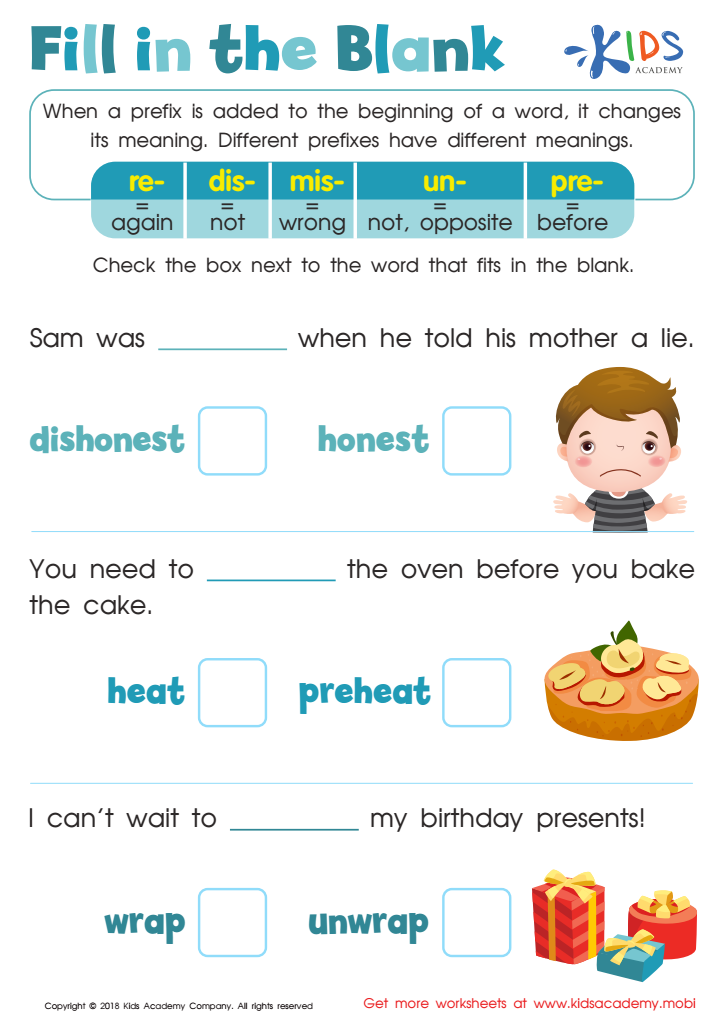
Reading: Fill in the Blank Worksheet
Students can practice understanding the meaning of common prefixes with this worksheet. They read sentences and pick the correct word with the appropriate prefix to complete it. Downloadable and a great addition to reading and vocabulary resources, this helps improve comprehension with mastery of the skill!
 Assign to My Students
Reading: Fill in the Blank Worksheet
Worksheet











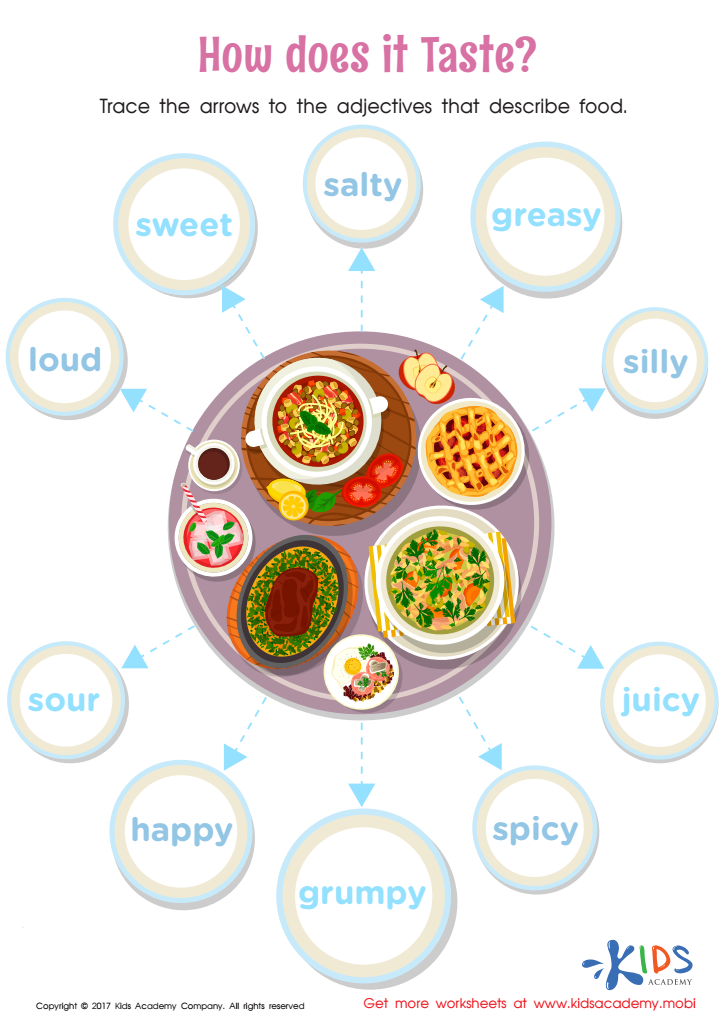
Food Adjectives Worksheet
Here’s a fun PDF worksheet to get your child’s taste buds tingling and help build descriptive language skills!
Food Adjectives Worksheet
Worksheet
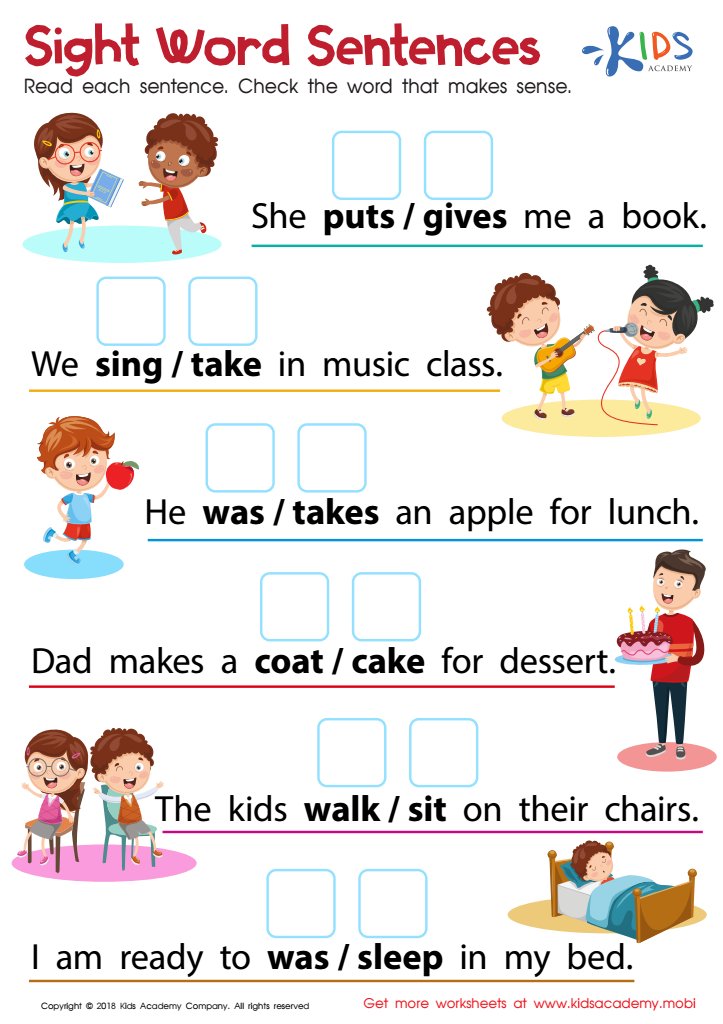
Sight Words Sentences Worksheet
It's important for kids to practice recognizing sight words in print. This PDF provides fun practice with sentences and engaging picture clues. As they work with sight words, they'll become more familiar and automatic. Help your kids build literacy skills!
Sight Words Sentences Worksheet
Worksheet
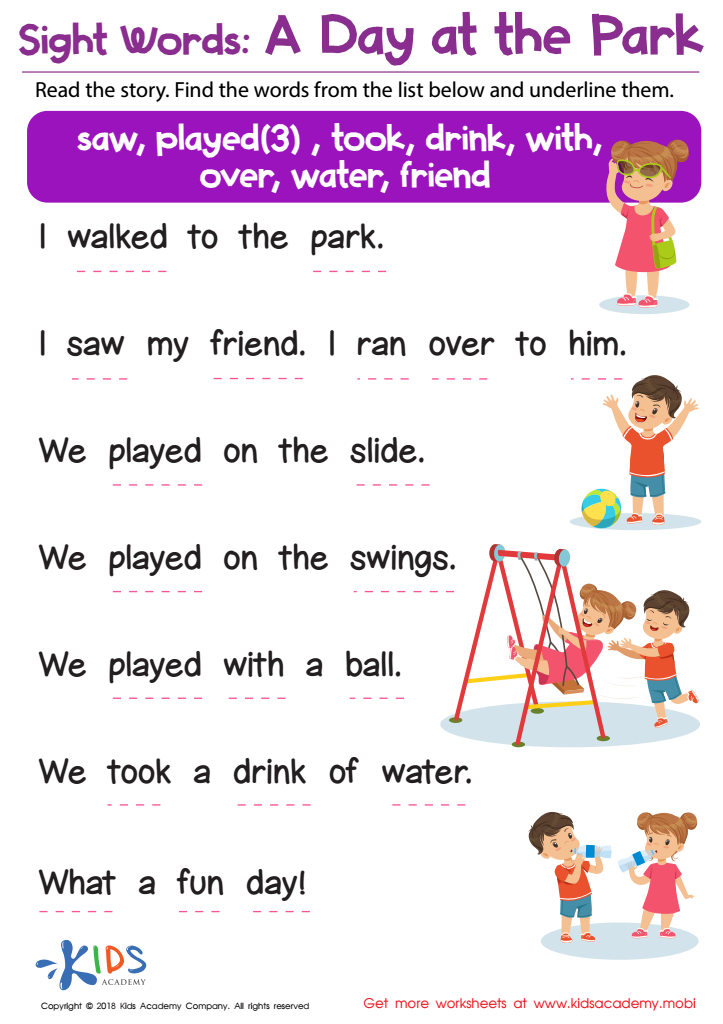
Sight Words: A Day at the Park Worksheet
This worksheet offers kids practice reading sight words in a story. With picture clues and repetitive wording, they'll work with words that can't be sounded out to reinforce their learning. This is an important step in the reading process that helps kids become more confident readers.
Sight Words: A Day at the Park Worksheet
Worksheet
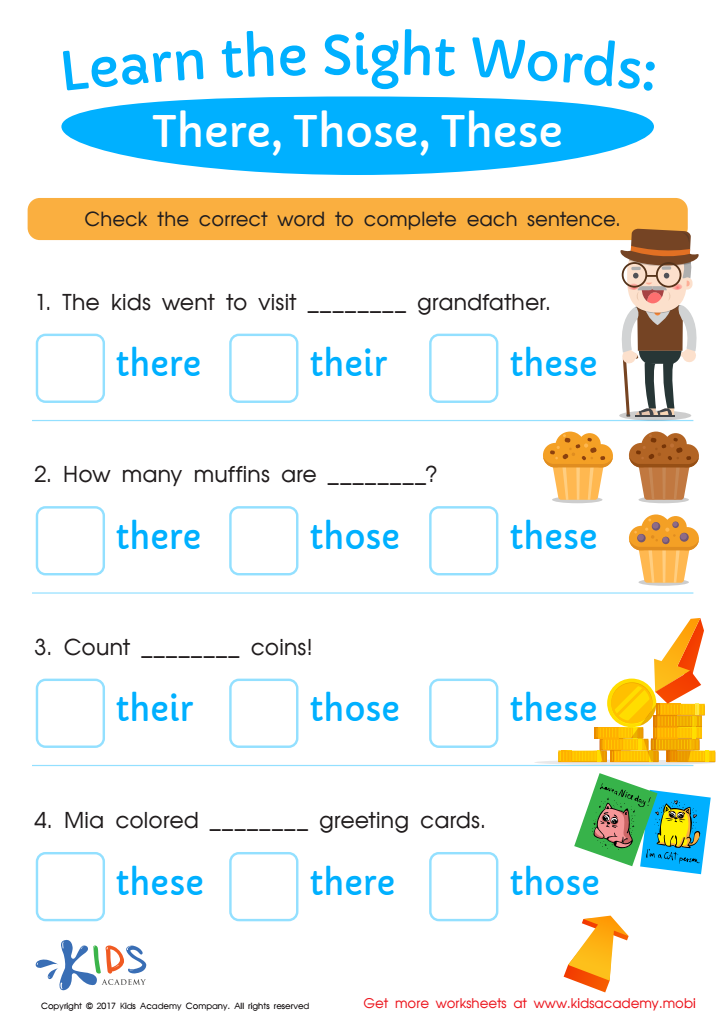
There, Those and These Sight Words Worksheet
Help teach your child to read and use tricky demonstrative pronouns. Use this 2nd grade sight words worksheet: there, those, these. Have them read each sentence and choose the right pronoun by looking at the pictures.
There, Those and These Sight Words Worksheet
Worksheet
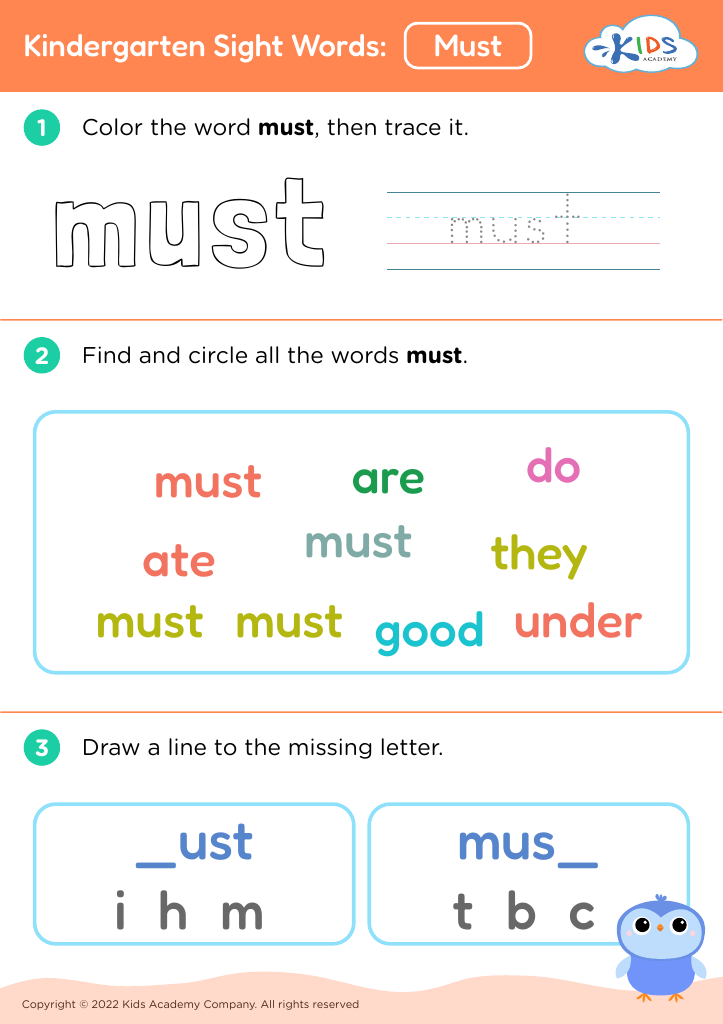
Join Kids Academy for Free
Who is primarily going to use this learning content?



.jpg)




Fostering proper sentence construction and vocabulary building in children aged 6-9 is essential because these foundational skills underpin their broader literacy development. At this stage, young learners are expanding their ability to communicate effectively and to comprehend what they read. Proper sentence construction helps them link words coherently, enhancing their ability to express complex ideas and narrate experiences vividly. This, in turn, supports their academic success across various subjects.
Building a strong vocabulary is equally crucial as it gives children the tools to understand text, follow instructions, and engage more fully in conversations. A robust vocabulary aids in reading comprehension, allowing children to make sense of the material they read, fostering a love for literature, and promoting lifelong learning. Children with a richer word bank are generally more confident in their communication abilities, which can positively impact their social interactions and self-esteem.
Moreover, early intervention by parents and teachers in teaching sentence construction and vocabulary can identify and mitigate any learning difficulties or language delays early on. Incorporating fun, engaging activities like read-alouds, storytelling, and word games can make this learning process enjoyable. Therefore, paying attention to these aspects equips children with the critical language skills necessary for future academic and personal success.








