Understanding prepositions Building Vocabulary Worksheets for Ages 6-9
4 filtered results
-
From - To
Enhance your child's vocabulary and grammar skills with our "Understanding Prepositions" worksheets designed for ages 6-9. These engaging activities help young learners grasp the role of prepositions in sentences, promoting clear and effective communication. Each worksheet is tailored to provide enjoyable exercises that encourage critical thinking, improve reading comprehension, and build a robust vocabulary. With colorful illustrations and interactive tasks, your child will explore prepositions in fun ways, making learning exciting! Perfect for homeschoolers or classroom use, these resources support foundational language skills, ensuring children confidently use prepositions in their everyday conversations and writing. Start building your child's vocabulary today!
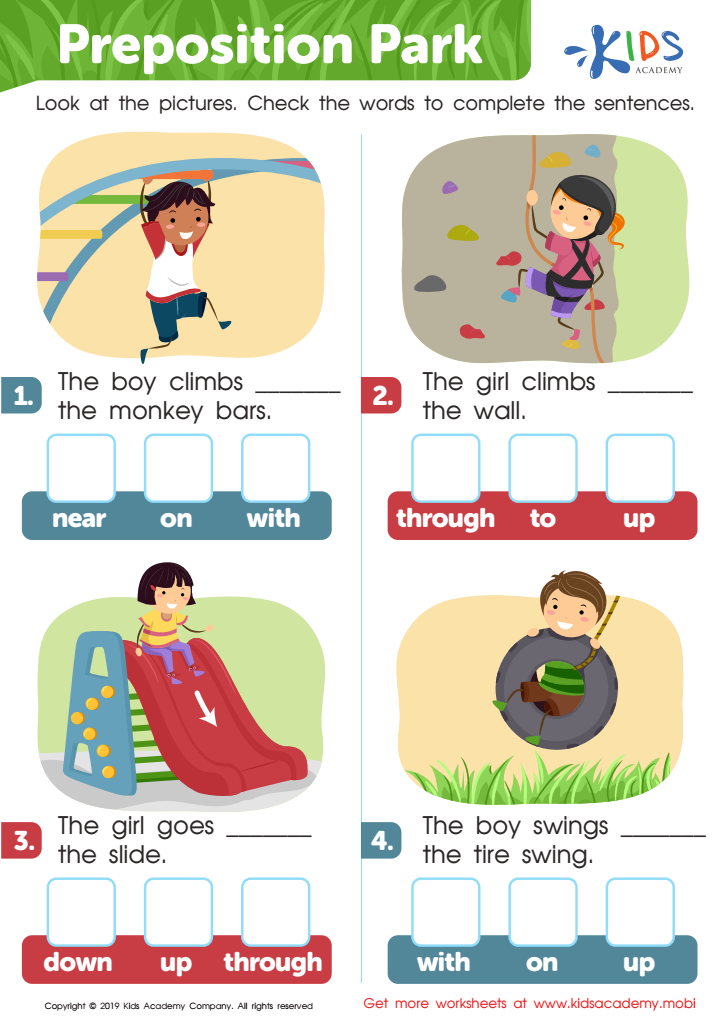
Preposition Park Worksheet
 Assign to My Students











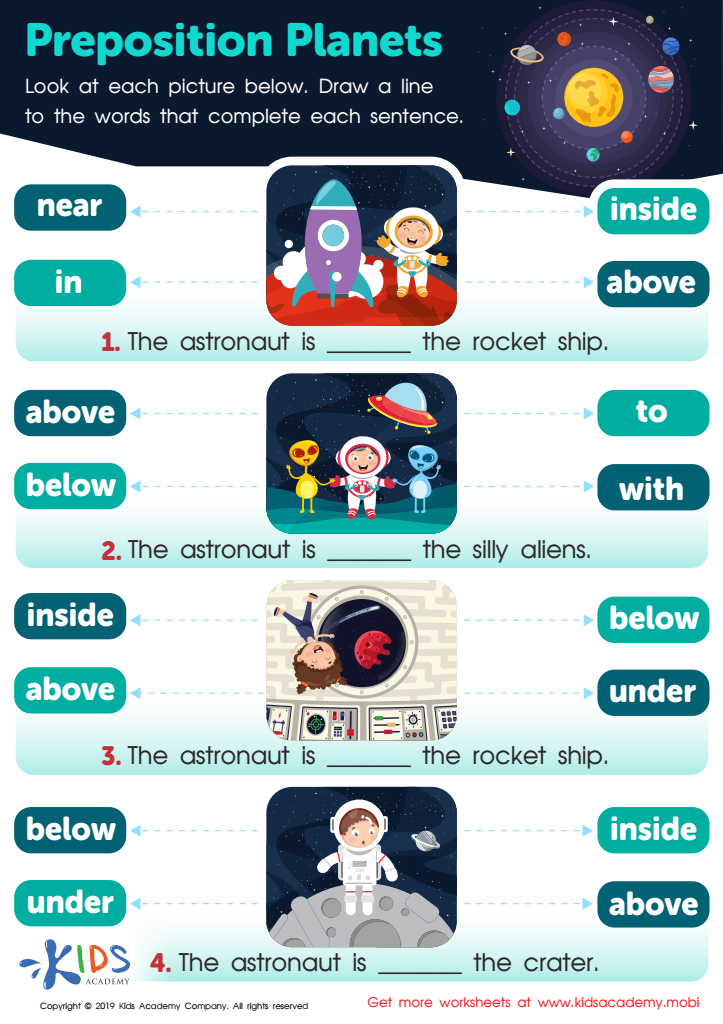
Preposition Planets Worksheet
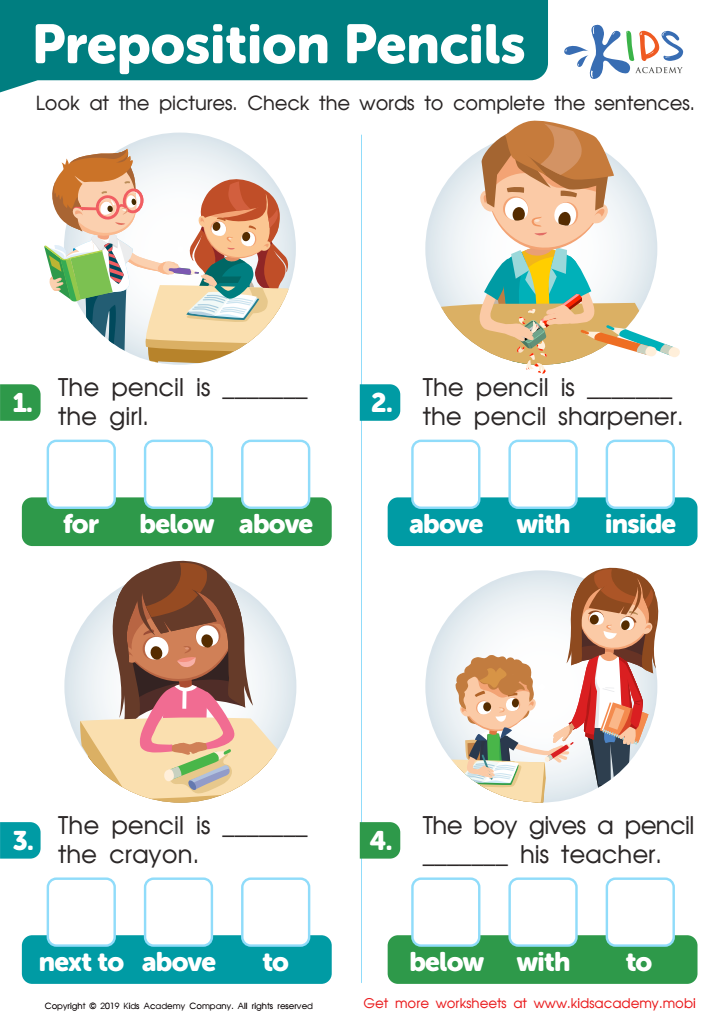
Preposition Pencils Worksheet
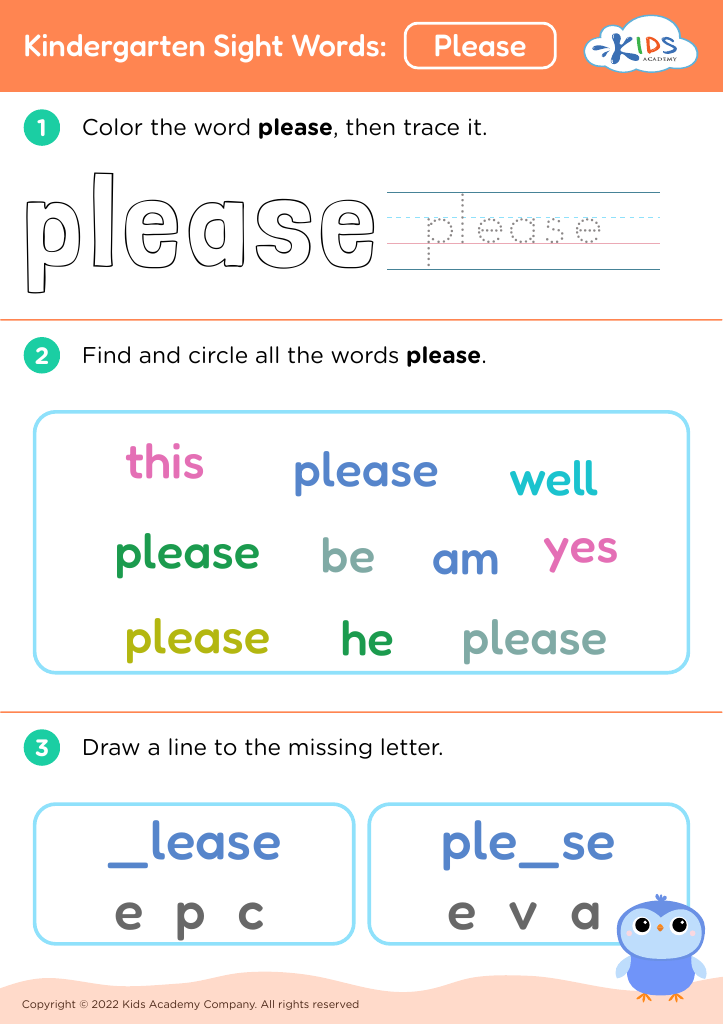







.jpg)
Understanding prepositions and building vocabulary are crucial for children aged 6-9, as these skills form the foundation for effective communication and literacy development. Prepositions help convey relationships between objects, people, and places, allowing children to articulate their thoughts with clarity. For instance, knowing how to use terms like "under," "over," "between," and "beside" enhances their ability to describe situations and narrate stories accurately.
Moreover, a rich vocabulary empowers children to express themselves more vividly and understand what they read. As they encounter new words, they gain confidence in their ability to engage in conversations and comprehend texts. This age group is particularly receptive to learning language skills, making it an ideal time for parents and teachers to introduce and reinforce prepositions in context.
By supporting vocabulary development and understanding of prepositions, adults play a critical role in nurturing children’s language skills. This investment translates into improved reading comprehension, writing proficiency, and overall academic success. Additionally, strong communication skills built during these formative years will benefit children throughout their education and into adulthood, making it essential for educators and parents to prioritize these aspects of language development.








