Verb identification Building Vocabulary Worksheets for Ages 6-9
3 filtered results
-
From - To
Enhance your child's language skills with our Verb Identification Building Vocabulary Worksheets tailored for ages 6-9. Designed to make learning engaging, these worksheets help young learners identify and understand verbs in sentences, boosting their reading and writing abilities. With a variety of fun activities, kids will develop a strong foundation in vocabulary and grammar, essential for their academic success. Perfect for both classroom and home use, our worksheets offer a comprehensive approach to building essential language skills while keeping children entertained and motivated. Check out our collection and start your child's journey to mastering verbs today!
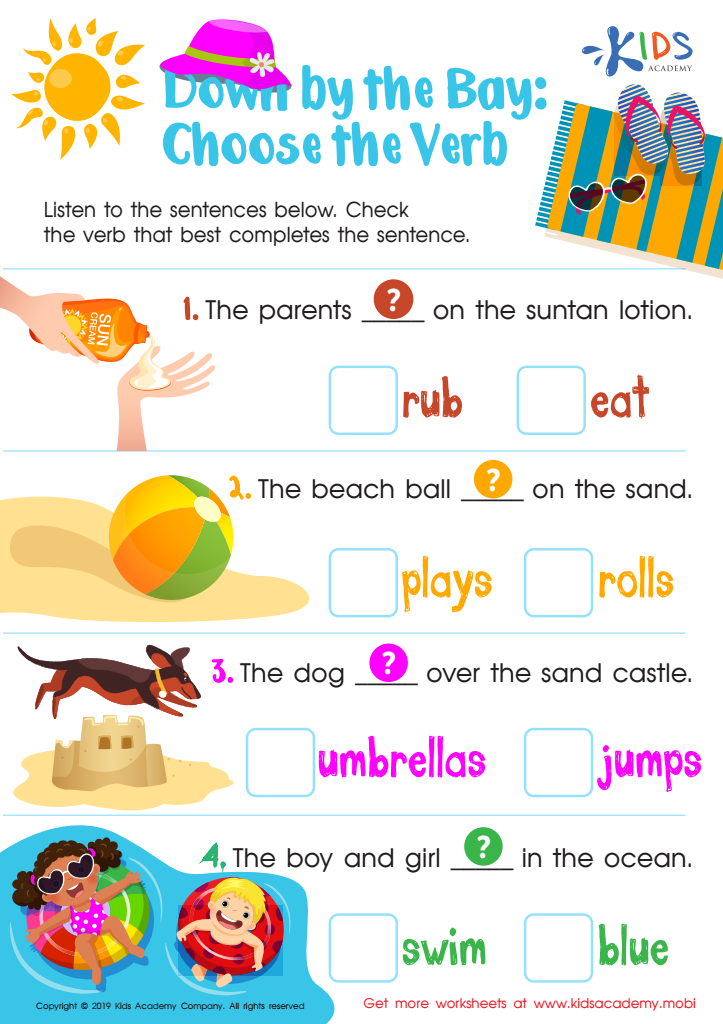
Down by the Bay: Choose the Verb Worksheet
 Assign to My Students











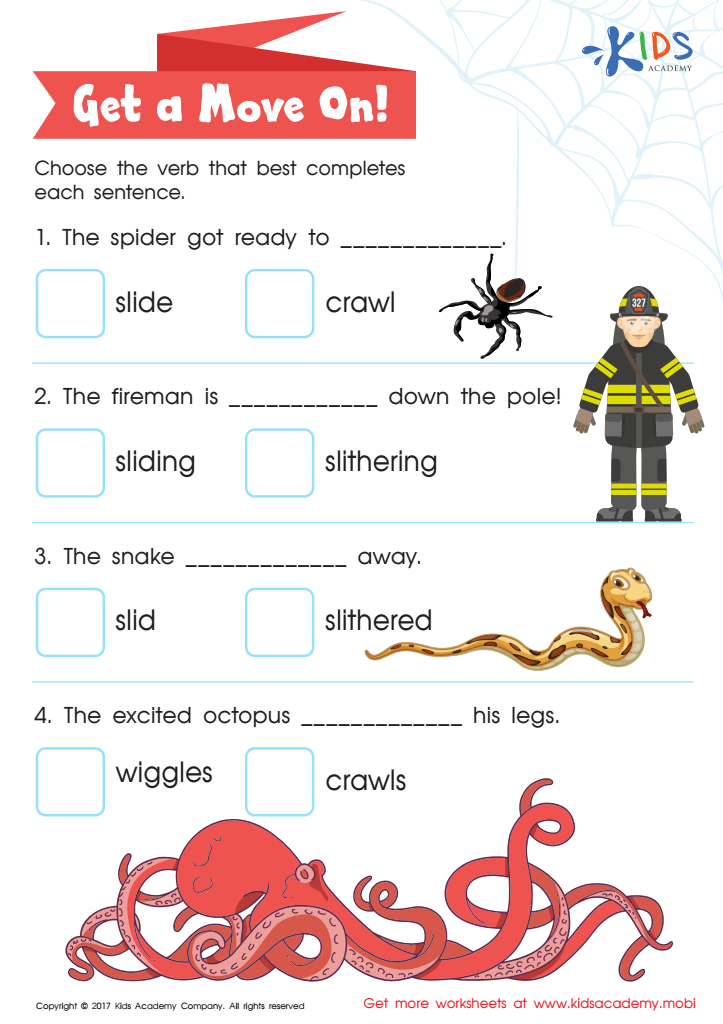
Verb Worksheet
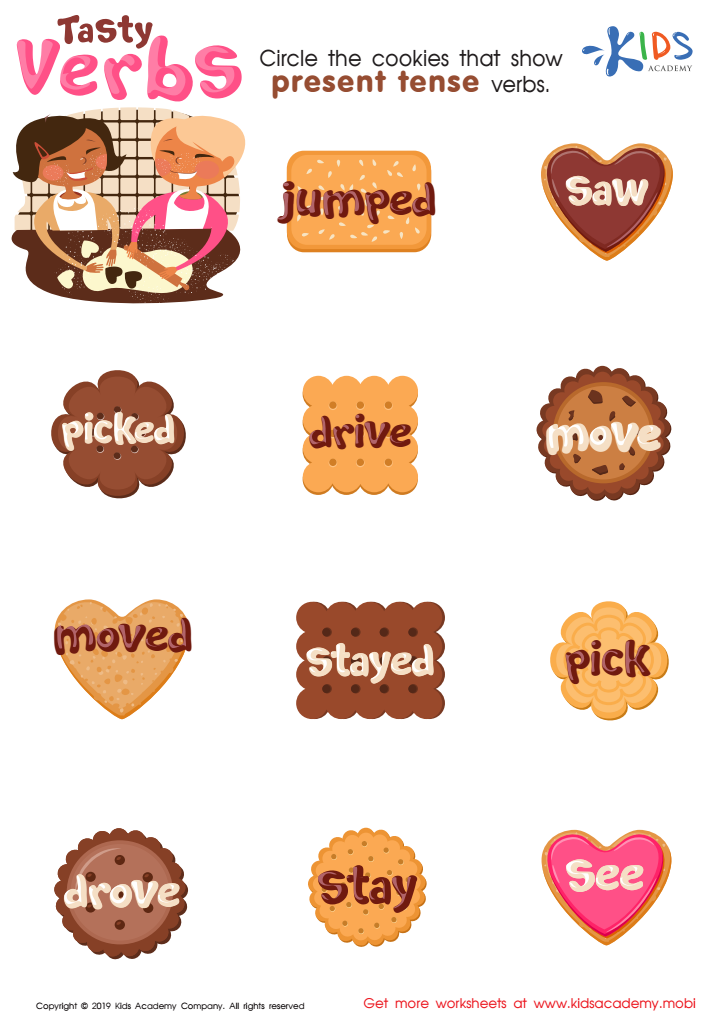
Tasty Verbs Worksheet








Verb identification and vocabulary building are fundamental components of early literacy and language development for children aged 6-9. Parents and teachers should place significant emphasis on these areas because they lay the groundwork for effective communication and reading comprehension.
Understanding verbs is crucial as they are action words that give sentences structure and meaning. When children can identify verbs, they can better understand the relationships between different parts of a sentence, which is essential for reading fluency and accuracy. This understanding also supports the development of strong writing skills, as children learn to construct more varied and expressive sentences.
Building a robust vocabulary enriches children's understanding of the world and enhances their ability to express themselves. A strong vocabulary is linked to improved academic performance across subjects, as language skills are intertwined with all learning processes. For example, in math, word problems require comprehension of both the vocabulary specific to the problem and the action verbs that guide the operations to be performed.
Moreover, a rich vocabulary fosters social-emotional development by enabling children to articulate their feelings and thoughts more clearly, enhancing peer interactions and reducing misunderstandings. Ultimately, focusing on verb identification and vocabulary building sets the foundation for lifelong learning, critical thinking, and effective communication, making it a priority for both parents and teachers.








