Character recognition Reading Worksheets for Ages 6-9
3 filtered results
-
From - To
Enhance your child's reading skills with engaging Character Recognition Reading Worksheets specially designed for ages 6-9. These worksheets from Kids Academy are perfect for young readers to practice and develop their understanding of literary characters through fun and interactive exercises. With a variety of activities tailored to fit their age and skill level, children will improve their ability to recognize, describe, and distinguish between different characters. Boost your child’s confidence in reading and comprehension while keeping learning entertaining and effective. Perfect for both classroom and home use, these resources make education an enjoyable journey.
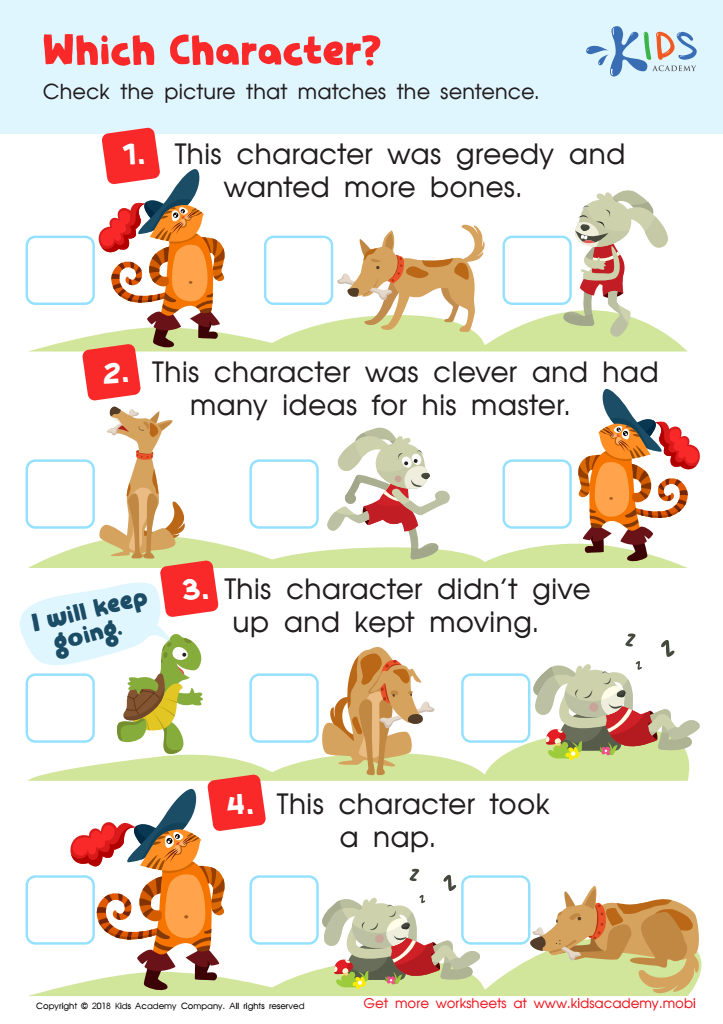
Which Character Worksheet
 Assign to My Students
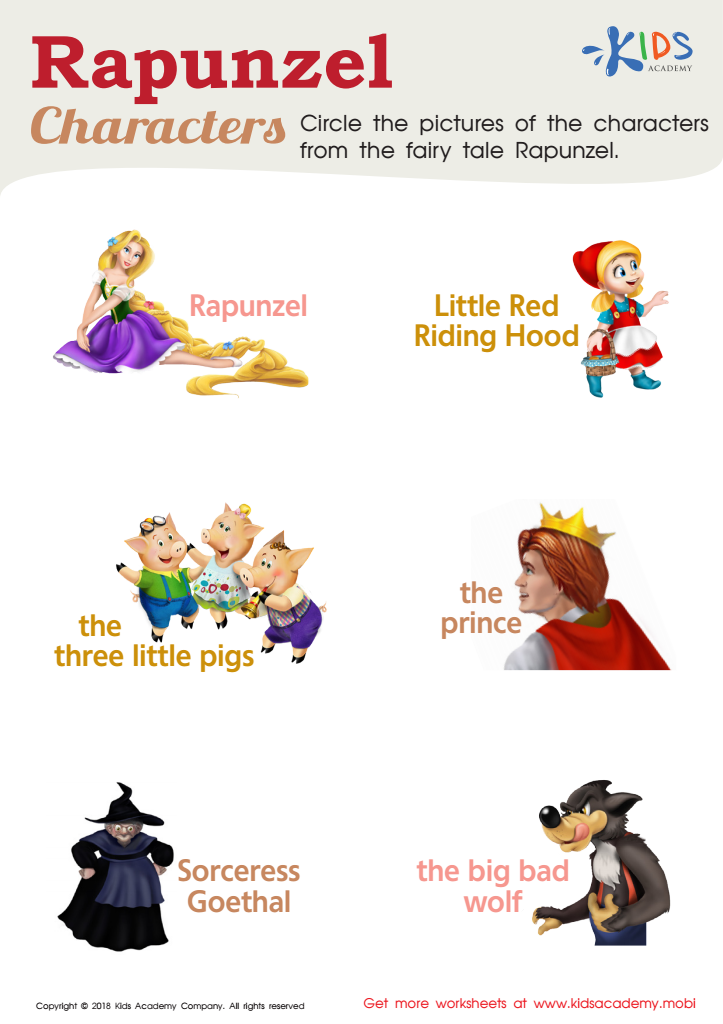
Rapunzel Characters Worksheet
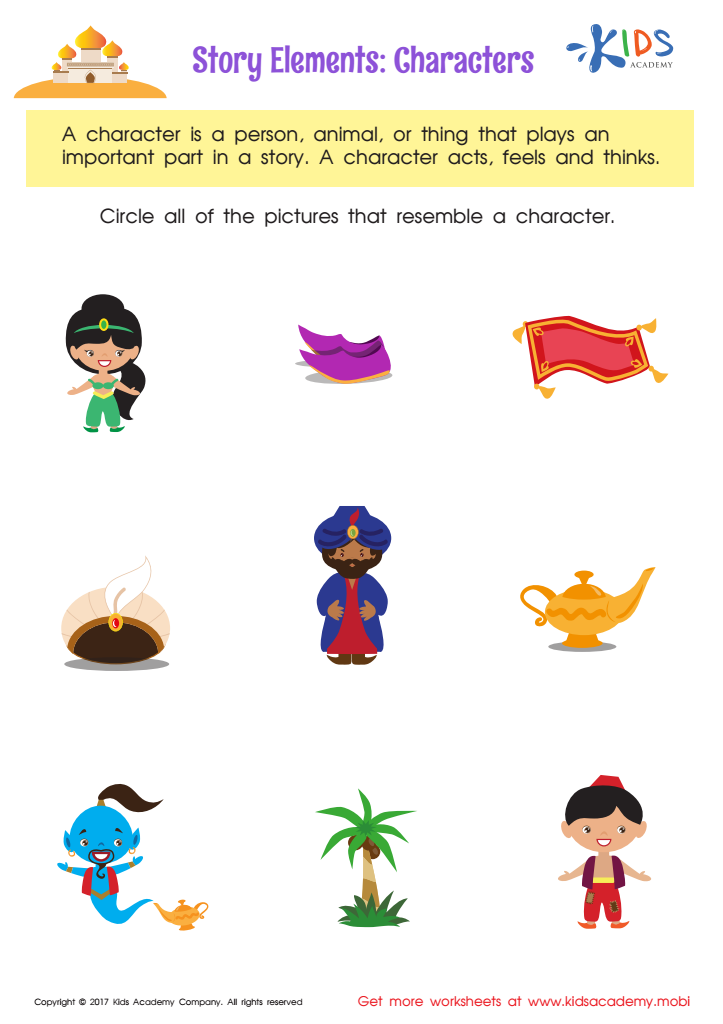
Story Elements Printable





Character recognition is a pivotal skill for children aged 6-9 as it lays the foundation for successful reading, a critical component in their academic journey. During this age, kids transition from recognizing basic letters to understanding more complex narratives, enhancing their cognitive and language development.
Firstly, strong character recognition skills help children decode words faster, boosting their reading fluency and comprehension. This akilledss enables kids to access and understand a wider range of texts, fostering a lifelong love for reading.
Secondly, reading enhances vocabulary and language skills. By recognizing characters efficiently, children encounter new words in context, which improves both their spoken and written communication.
Moreover, character recognition nurtures cognitive skills like attention to detail, pattern recognition, and memory. These abilities are crucial not just for reading, but for learning subjects like math and science as well.
For teachers and parents, focusing on character recognition can help identify early learning difficulties. Early intervention can prevent potential reading disabilities and ensure every child keeps pace with their peers.
Lastly, success in reading promotes confidence and motivation in young learners. When children feel competent, they're more likely to engage in classroom activities and pursue academic challenges, setting a positive trajectory for their future education.
In essence, character recognition is not just about reading words on a page—it's about opening doors to lifelong curiosity, learning, and achievement.








