Critical thinking development Reading Worksheets for Ages 6-9
3 filtered results
-
From - To
Unlock the power of critical thinking with our engaging reading worksheets designed for ages 6-9! These interactive worksheets focus on developing essential skills such as comprehension, analysis, and reasoning through captivating stories and fun activities. Children will enhance their ability to make connections, ask questions, and think creatively about what they read. With a variety of exercises tailored to diverse learning styles, our worksheets support both independent practice and guided learning. Perfect for classroom use or at-home enrichment, these critical thinking development tools will help young learners become confident readers and innovative thinkers. Explore our collection today and spark a love for learning!
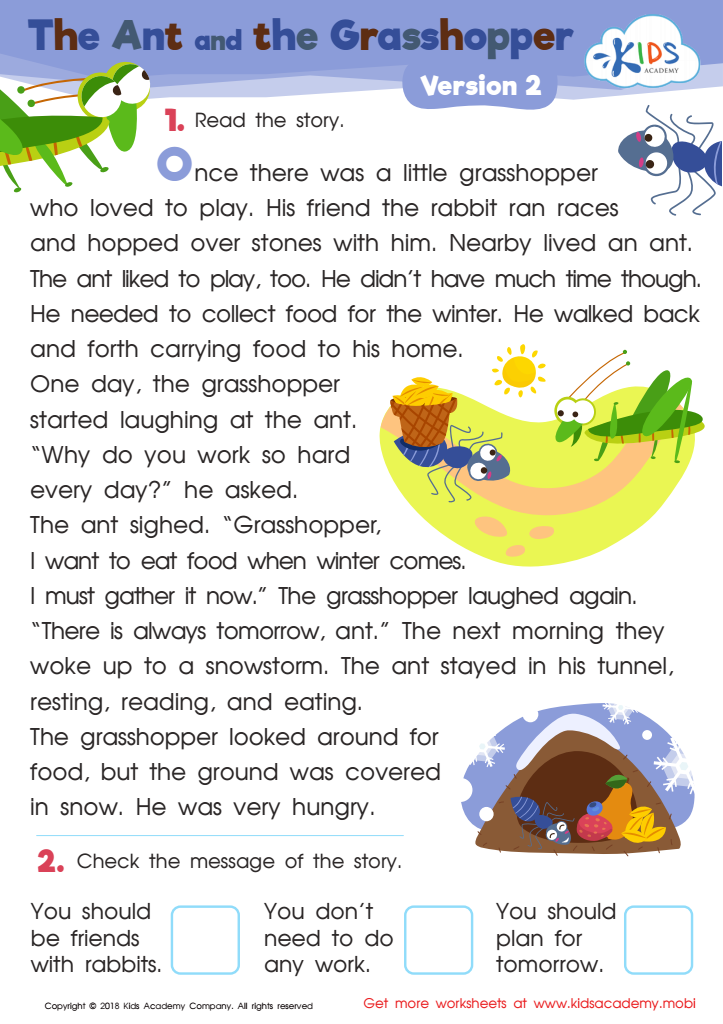
The Ant and The Grasshopper Version 2 Worksheet
 Assign to My Students
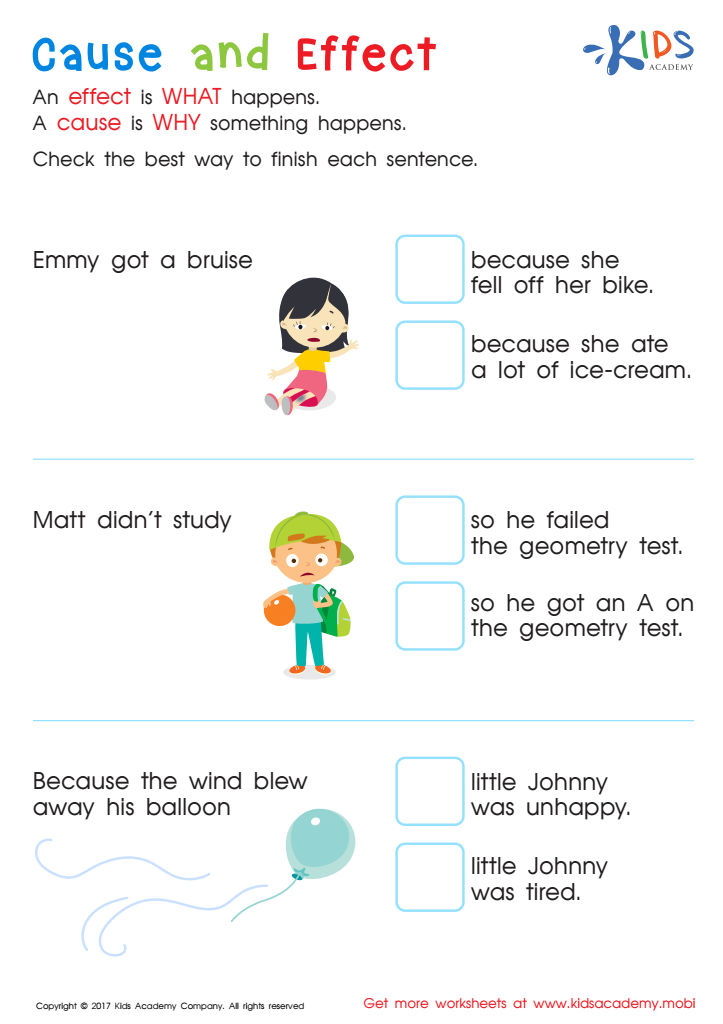
Cause and Effect Worksheet
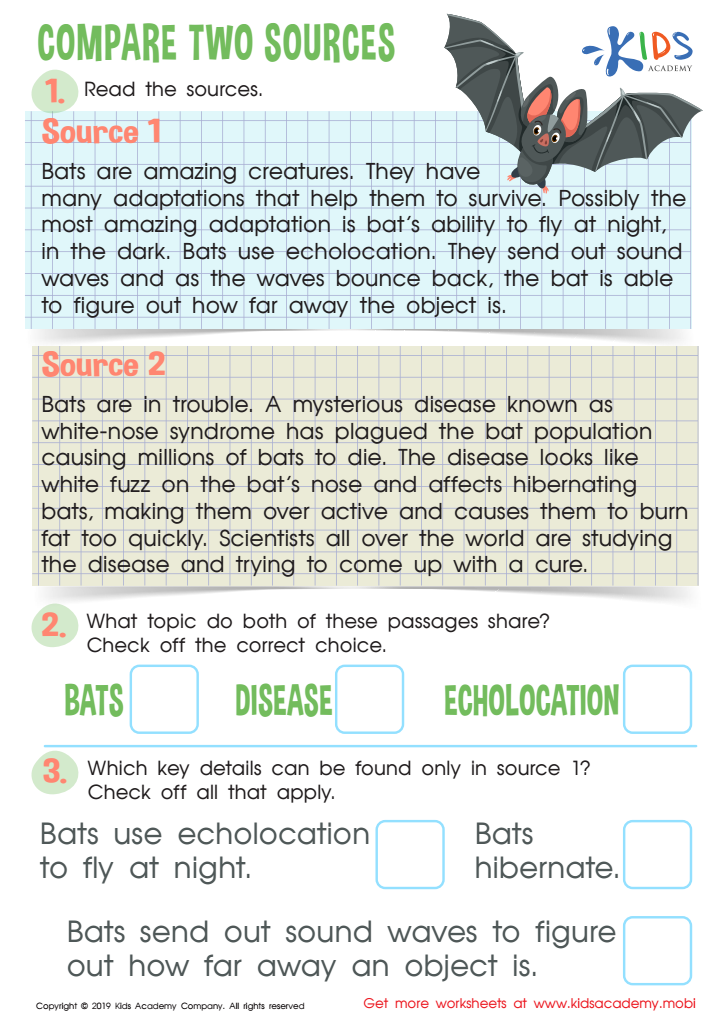
Compare Two Sources Worksheet








Critical thinking development in reading for children ages 6-9 is essential for several reasons. First, this stage in a child's growth is crucial for cognitive development, where they begin to form connections, question narratives, and analyze information critically. Engaging young readers in critical thinking encourages them to move beyond surface-level understanding and fosters deeper comprehension of texts.
When parents and teachers promote critical thinking, they equip children with the skills to interpret stories, differentiate between fact and fiction, and evaluate characters' motivations and morality. Such skills are pivotal in helping children become confident, independent thinkers who approach challenges with curiosity and logic. Additionally, critical thinking in reading aids in emotional and social development by allowing children to understand diverse perspectives and cultivate empathy.
Moreover, teaching critical thinking prepares students for success in later academic pursuits. As they advance in their education, these skills will prove invaluable in reading complex texts and engaging in discussions. Ultimately, emphasizing critical thinking in reading not only enhances literacy but also nurtures thoughtful, informed individuals who are equipped to navigate a complex world, making this a crucial focus for both parents and educators.








