Moral lesson understanding Reading Worksheets for Ages 6-9
5 filtered results
-
From - To
Discover our engaging "Moral Lesson Understanding Reading Worksheets" designed specifically for children ages 6-9. These worksheets aim to help young learners recognize and interpret important moral lessons embedded in stories, enhancing their comprehension skills. Each worksheet includes age-appropriate narratives that promote critical thinking about morals, instilling values such as kindness, honesty, and respect. With interactive activities like discussion questions and scenario-related tasks, students can connect story elements to real-life situations. Perfect for home or classroom use, these worksheets foster a love for reading while encouraging moral development, making learning both fun and meaningful! Explore our resources today for enriching educational experiences!
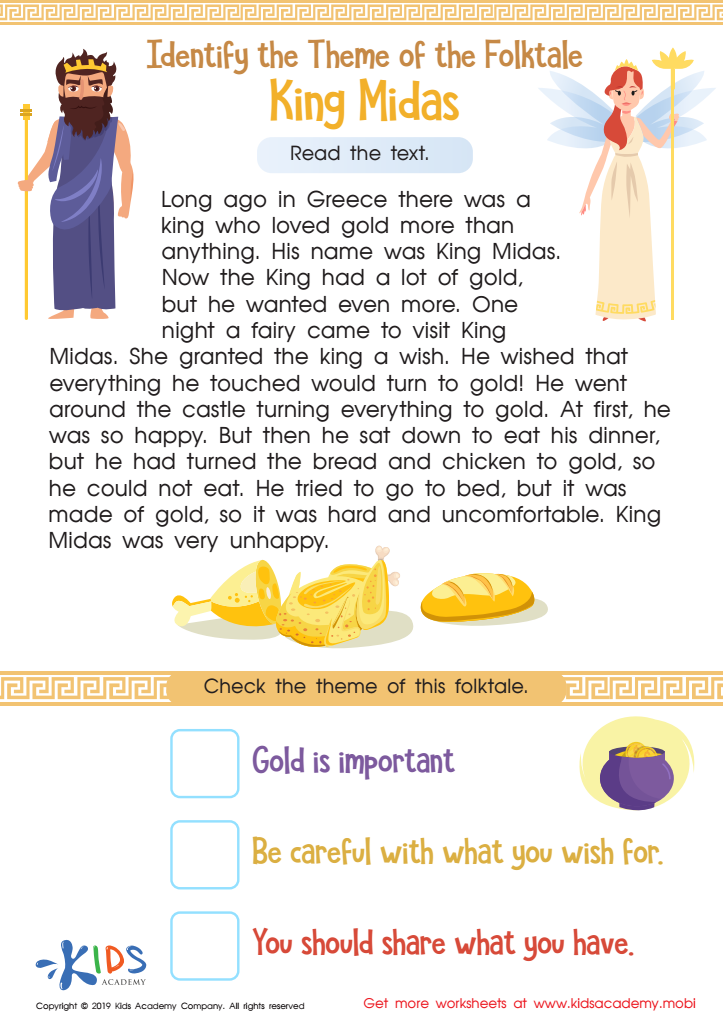
King Midas Worksheet
 Assign to My Students
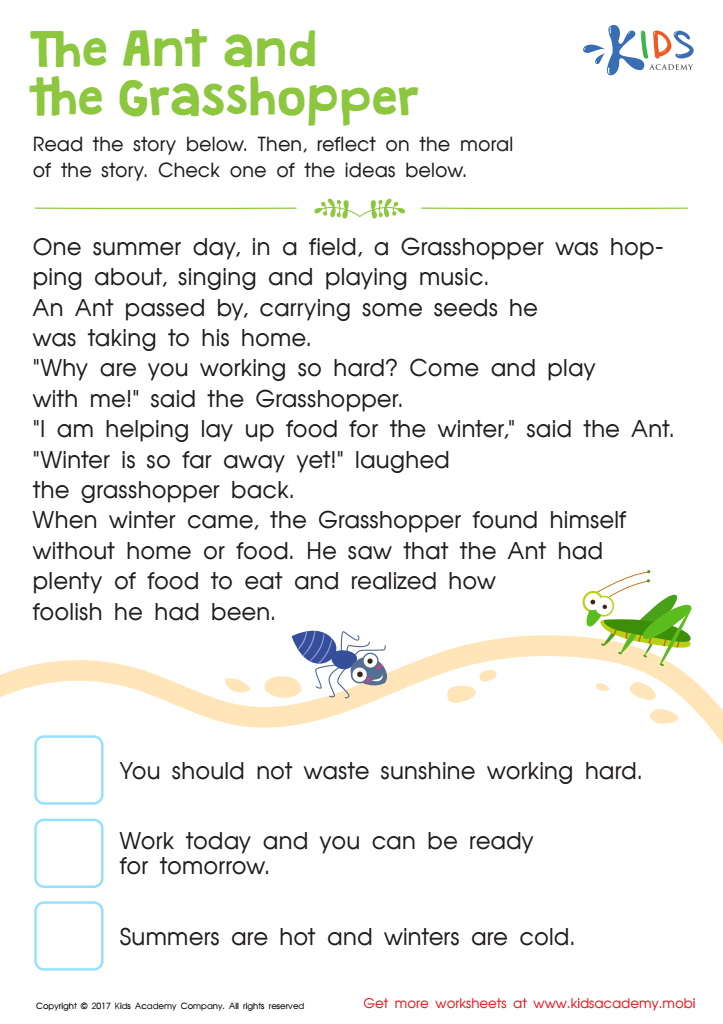
The Ant and The Grasshopper Printable
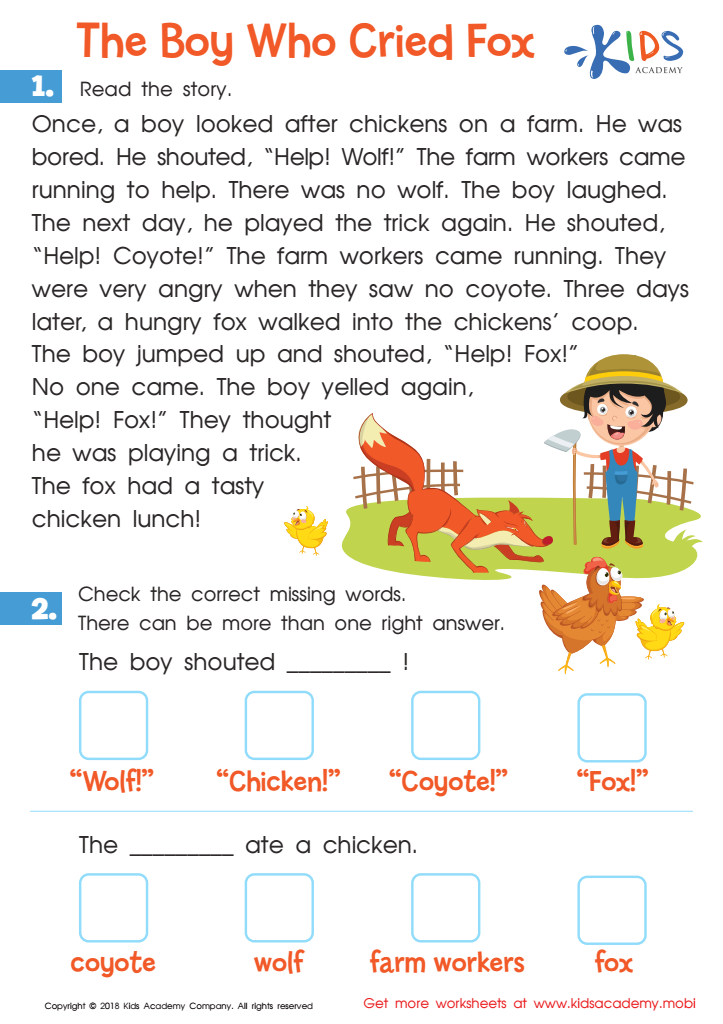
The Boy Who Cried Fox Worksheet
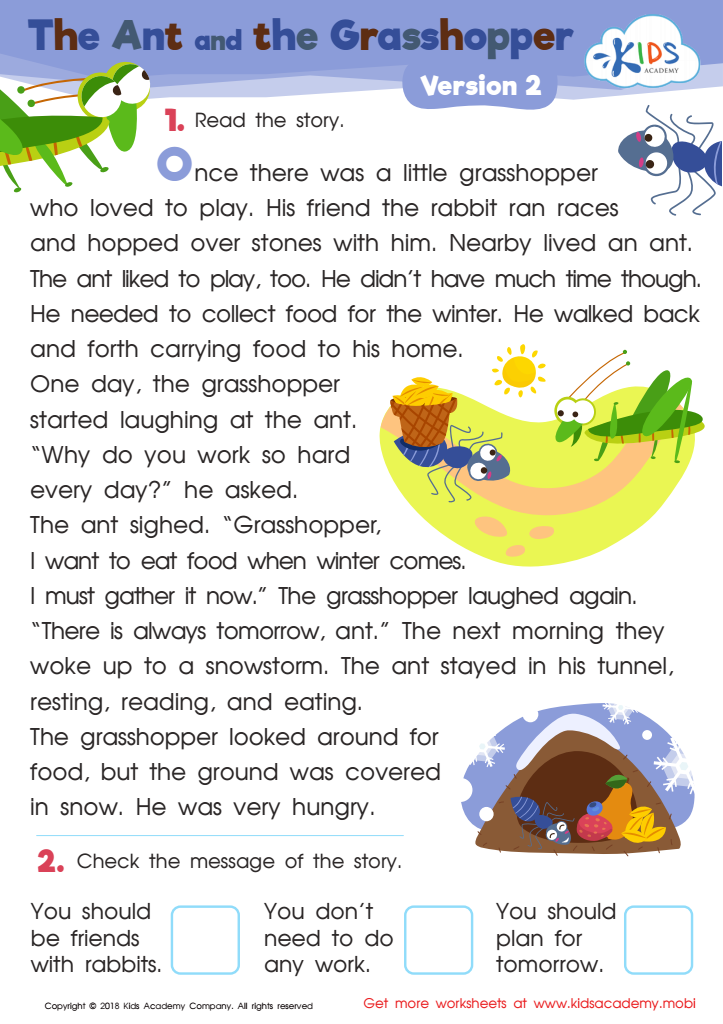
The Ant and The Grasshopper Version 2 Worksheet
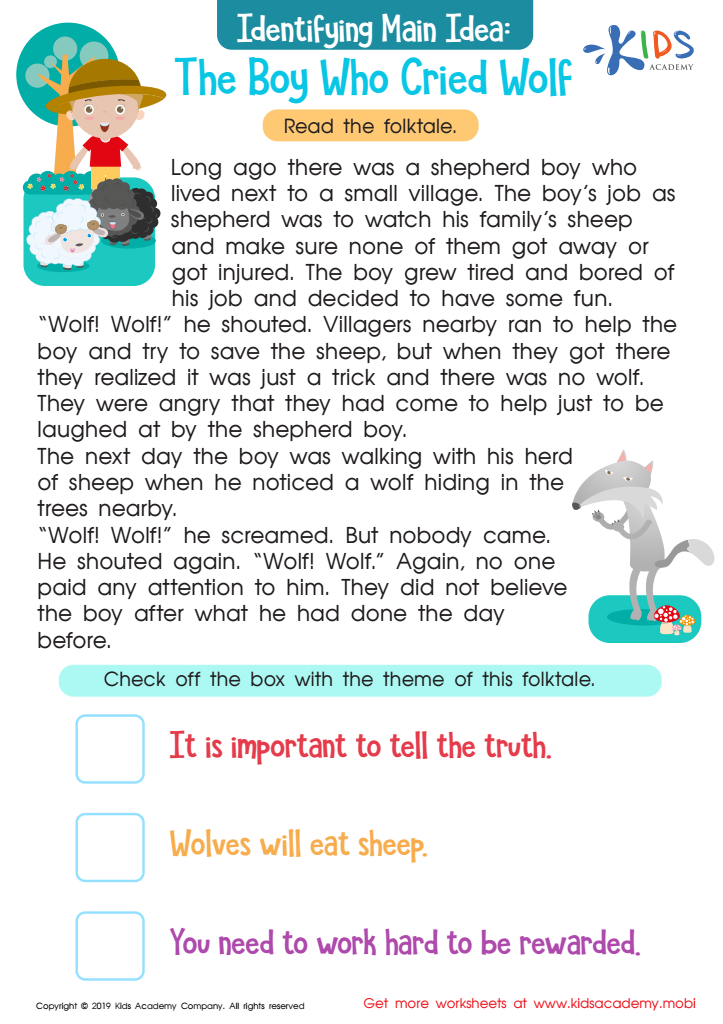
The Boy Who Cried Wolf Part 2 Worksheet






Understanding moral lessons in reading is crucial for children aged 6-9, as it plays a significant role in their emotional, social, and cognitive development. During this formative period, children begin to grasp concepts like fairness, empathy, and honesty. Stories often highlight these values, making it easier for children to comprehend and internalize them.
Parents and teachers should prioritize moral lesson understanding because it helps children navigate complex social situations. Through relatable characters in narratives, kids learn to identify with others’ feelings, promoting empathy. For instance, reading about a character making a difficult decision teaches kids about consequences and the importance of making ethical choices.
Additionally, these lessons can enhance critical thinking skills. Encouraging discussions about characters’ decisions helps children articulate their thoughts and learn to respect others' viewpoints. Furthermore, understanding moral lessons fosters character development, laying the groundwork for responsible behavior and citizenship.
By incorporating moral lessons into reading, parents and teachers provide children with tools to operate thoughtfully in an increasingly complex world, preparing them to become compassionate and ethical individuals. Ultimately, instilling these values through literature supports both academic success and personal growth, creating well-rounded, socially aware individuals.








