Reading skills development Reading Worksheets for Ages 6-9
4 filtered results
-
From - To
Unlock the world of reading for children ages 6-9 with our expertly-designed Reading Skills Development Worksheets. At Kids Academy, we focus on building and strengthening essential reading abilities that lay the foundation for academic success. Our interactive activities enhance vocabulary, comprehension, and critical thinking through fun and engaging exercises. Each worksheet caters to the developmental needs of young readers, offering a variety of tasks that make learning enjoyable. Perfect for both classroom and home use, our resources ensure every child can thrive and develop a lifelong love for reading. Help your child excel with our Reading Skills Development Worksheets today!
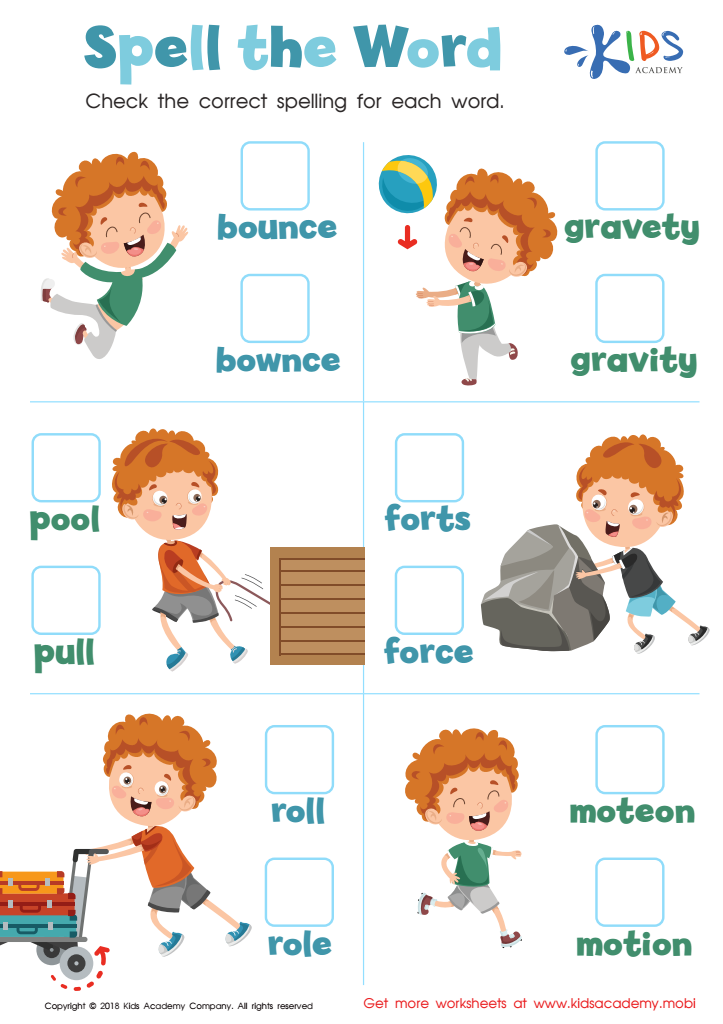
Spell the Word Worksheet
 Assign to My Students
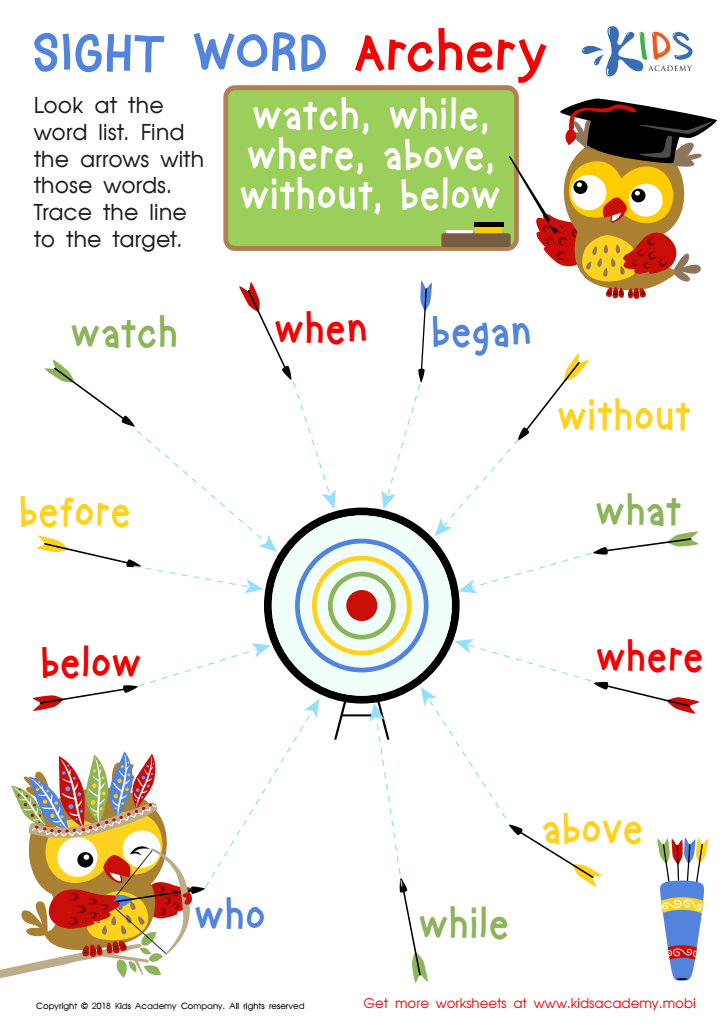
Sight Word Archery Worksheet
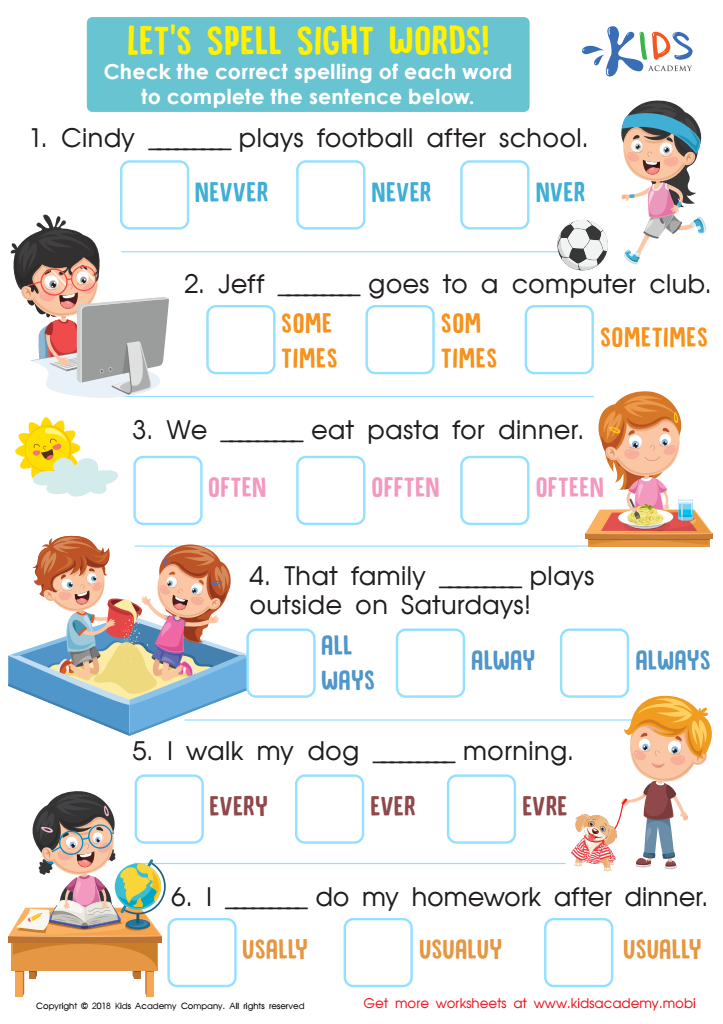
Let's Spell Sight Words Worksheet
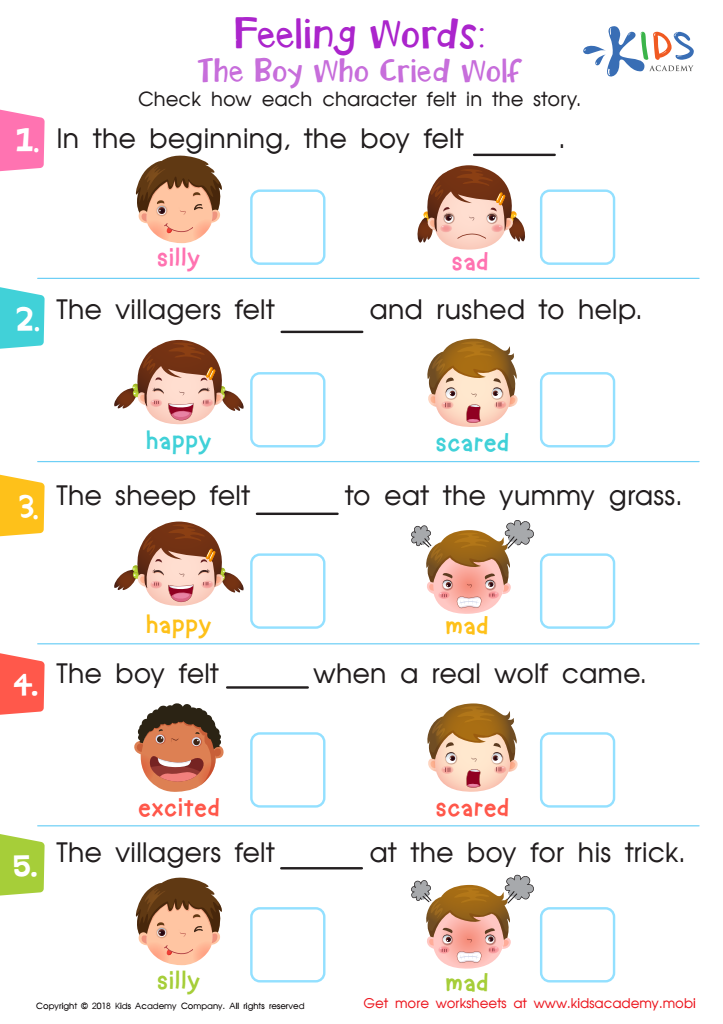
Feeling Words: The Boy Who Cried Wolf Worksheet








Reading skills development for children aged 6-9 is crucial for several reasons. At this age, children undergo rapid cognitive growth and become more attuned to linguistic concepts. Developing reading skills builds a strong foundation for academic success and personal growth. Proficiency in reading enhances vocabulary, comprehension, and critical thinking abilities, which are essential for understanding various subjects, including math, science, and social studies.
Furthermore, reading stimulates imagination and creativity, fostering a lifelong love for learning. It also helps children develop better concentration and focus. Early reading skills are directly linked to greater confidence and self-esteem as children are better equipped to participate actively in class discussions and activities.
From a social perspective, literacy skills enable children to communicate more effectively with peers and adults, improving their social interactions and emotional intelligence. For parents and teachers, investing in a child's reading development means offering them opportunities to thrive academically and socially, setting the stage for a successful future. Encouraging reading at this crucial age ensures that children are not left behind, promoting equality in educational attainment and empowering them to become competent, informed, and empathetic individuals. Thus, parents' and educators' role in nurturing early reading skills cannot be overstated.








