Sequencing events Reading Worksheets for Ages 6-9
3 filtered results
-
From - To
Boost your child's reading comprehension with our Sequencing Events Worksheets designed for ages 6-9. These engaging and interactive worksheets help students learn to organize story events in the correct order, enhancing their understanding of narratives. By practicing sequencing, children improve their critical thinking and storytelling skills. Our worksheets feature colorful illustrations and age-appropriate texts that capture young readers’ attention while making learning enjoyable. Perfect for classroom activities or at-home practice, these resources are ideal for reinforcing literacy concepts. Download our easy-to-use worksheets today and support your child's journey towards becoming a confident and capable reader!
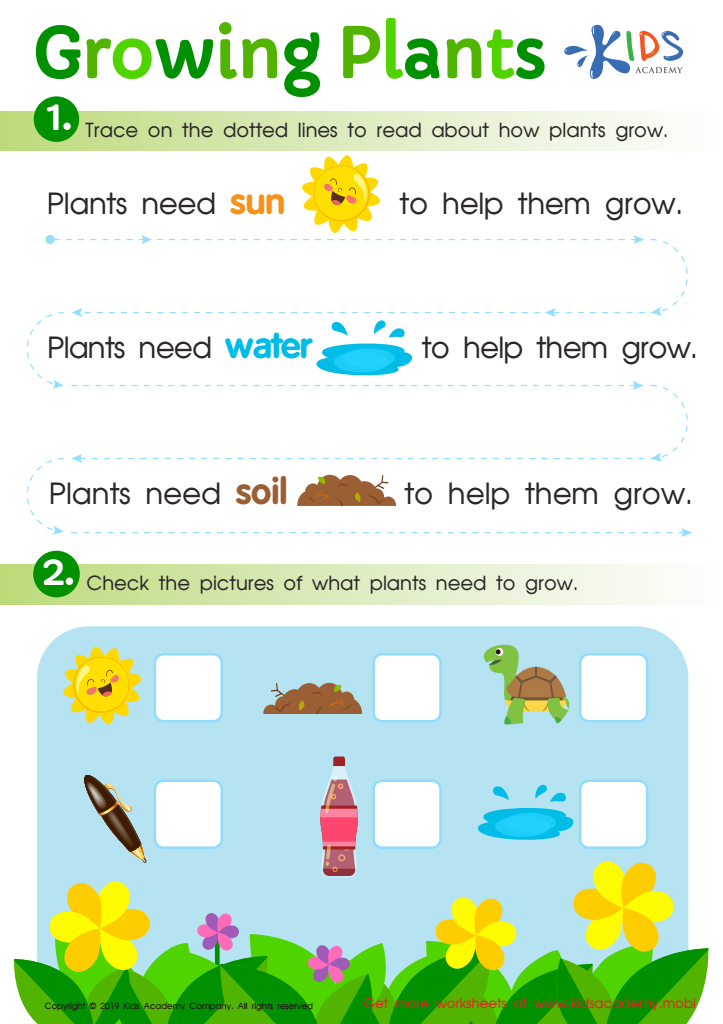
Growing Plants Worksheet
 Assign to My Students
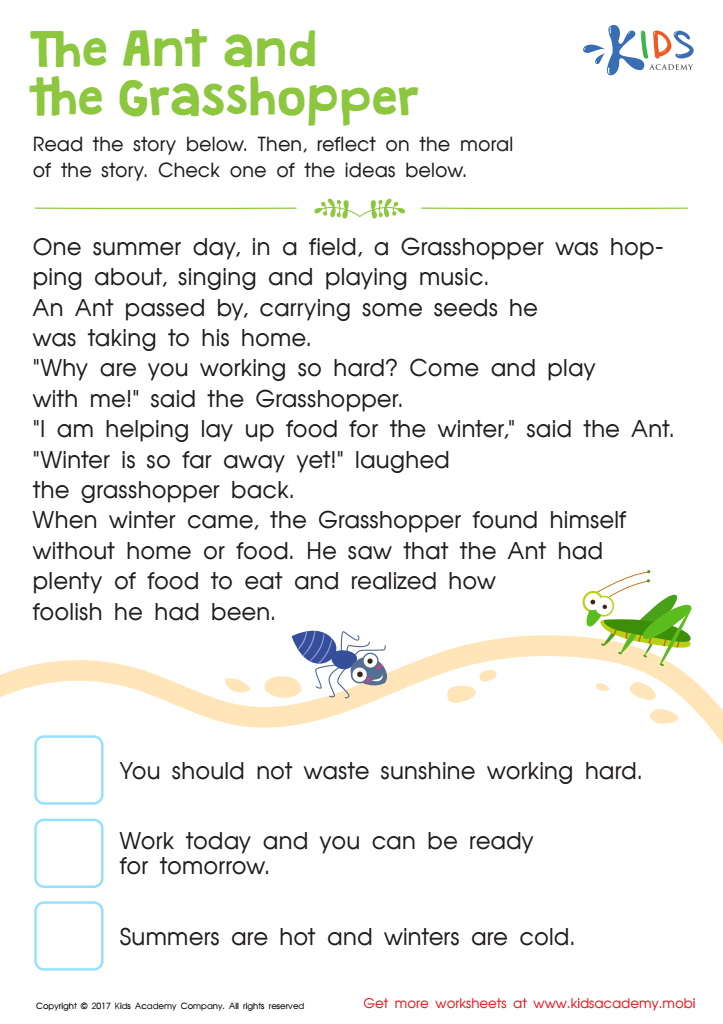
The Ant and The Grasshopper Printable
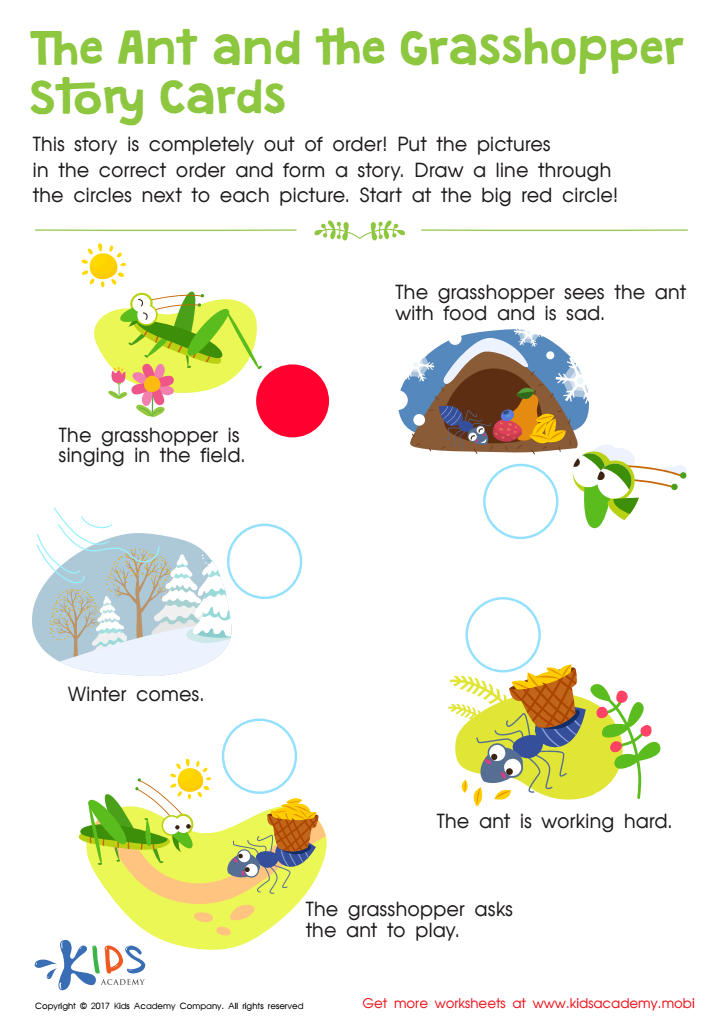
The Ant and The Grasshopper Worksheet






.jpg)

Sequencing events is a foundational skill in reading development, particularly for children ages 6-9. For parents and teachers, it is essential to understand why fostering this skill is crucial for a child's literacy and comprehension.
First, sequencing helps students grasp the logical order of a narrative, enhancing their understanding of stories. By identifying key events in a text, children learn to predict outcomes and make connections between ideas, which promotes critical thinking. This skill not only aids comprehension but also lays the groundwork for more advanced reading strategies as they progress.
Moreover, sequencing skill has real-world applications. It enables children to follow instructions, recount experiences, and organize their thoughts effectively. When discussing events, children who grasp sequencing can communicate more clearly, enhancing their conversational skills.
Furthermore, a strong command of sequencing can assist in improving writing abilities. When children understand how to structure stories with a clear beginning, middle, and end, their creative expression flourishes.
Finally, engaging children in sequencing activities—such as storytelling, summarizing texts, or arranging picture cards—can make learning enjoyable and interactive. For these reasons, prioritizing sequencing events in reading can significantly contribute to a child’s literacy journey and overall academic success.








