
Understanding vowel sounds Reading Worksheets for Ages 6-9
3 filtered results
Difficulty Level
Grade
Age
-
From - To
Subject
Activity
Standards
Unlock the world of reading with our "Understanding Vowel Sounds" worksheets, designed specifically for ages 6-9! These engaging and interactive worksheets provide young learners with the essential tools to grasp the intricacies of vowel sounds. Through fun exercises, children will develop phonemic awareness, improving their reading fluency and comprehension. Our carefully crafted activities include matching, fill-in-the-blanks, and sound recognition tasks, which make learning effective and enjoyable. Perfect for classroom and at-home practice, these resources foster a solid foundation in literacy. Watch your child's confidence soar as they master vowel sounds and embark on their reading journey! Explore our collection today!
Favorites
With answer key
Interactive
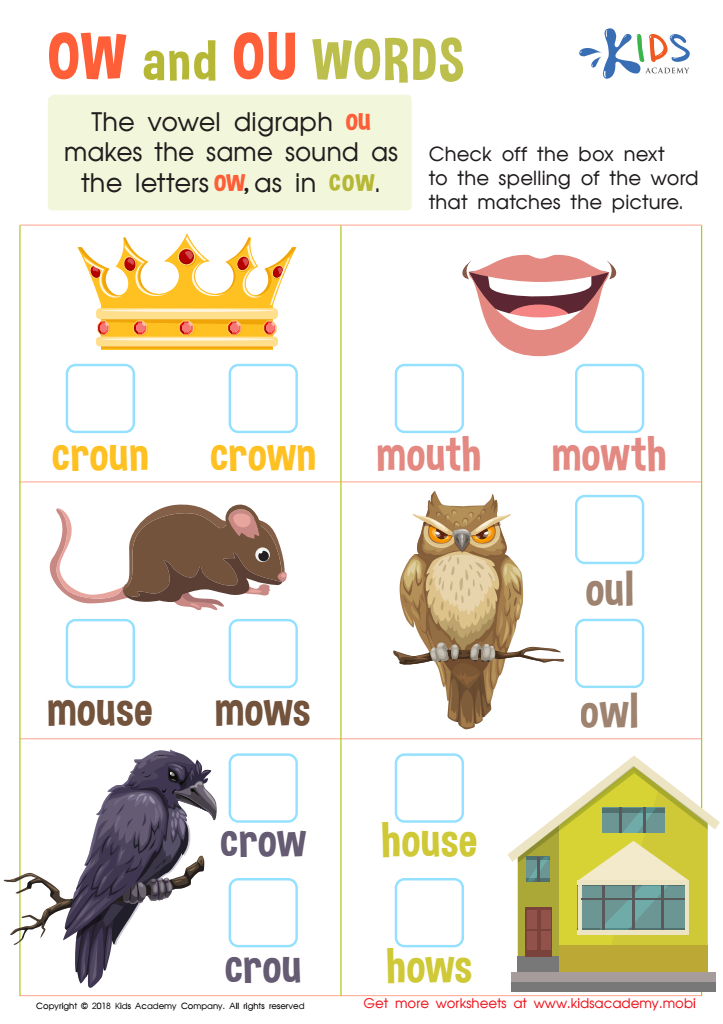
Reading: OW and OU Words Worksheet
Help your kids learn phonetics! Explain the different sounds and long/short variations. Emphasize that some vowel sounds are the same, e.g. ou = ow in cow. For practice, have them read aloud the words in the worksheet and check the box next to the spelling that matches the picture.
Reading: OW and OU Words Worksheet
Worksheet
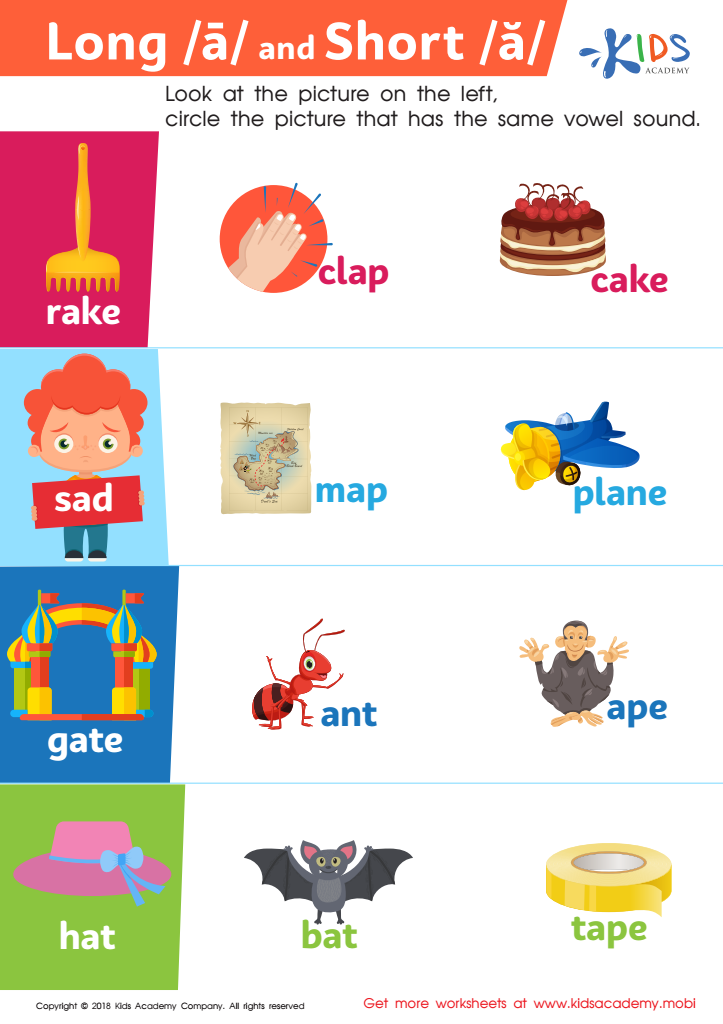
Reading: Long a and Short a Worksheet
This printable helps students practice distinguishing the long and short A sound. Pictures provide clues to read each word and students identify if it has a short or long sound. By completing this worksheet, children gain mastery of the phonics skill.
Reading: Long a and Short a Worksheet
Worksheet
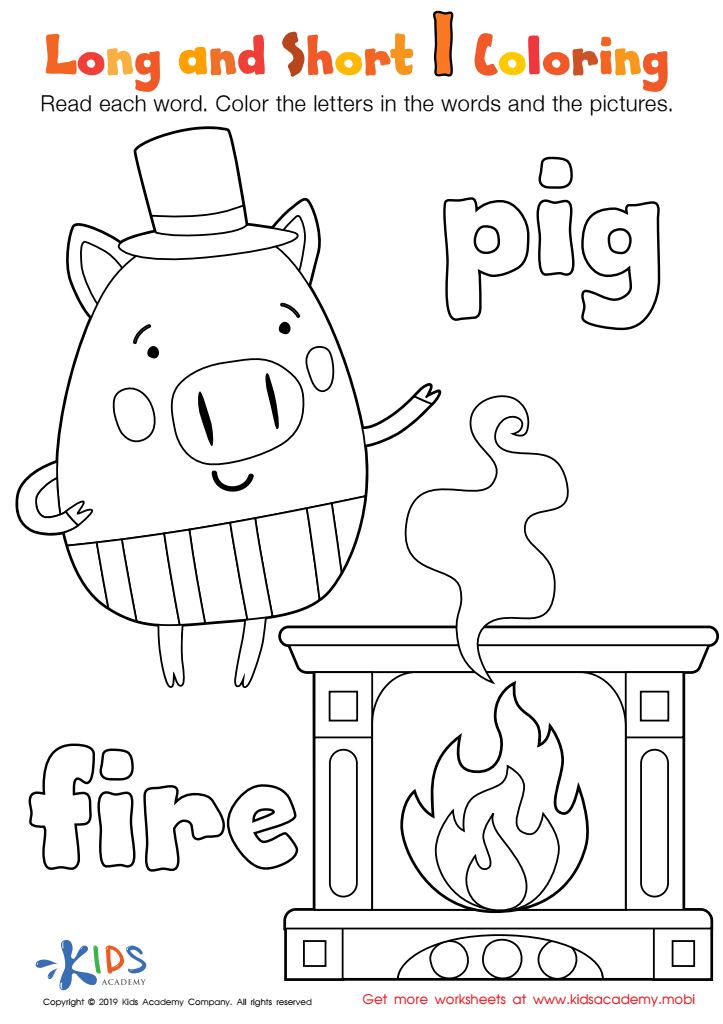
Long and Short I Worksheet
Print the worksheet and have the students read "pig" and "fire". Check for understanding the difference between long and short vowels. Color in words and pictures to make learning phonics fun! This exercise is perfect for introducing the topic to your students.
Download (PDF)
 Assign to My Students
Assign to My Students
Long and Short I Worksheet
Worksheet
Join Kids Academy for Free
Who is primarily going to use this learning content?







Understanding vowel sounds is crucial for children aged 6-9, as it forms the foundation for their reading and overall literacy development. Vowel sounds are integral to word formation and pronunciation; without recognizing and differentiating these sounds, children may struggle with decoding words and comprehending texts. Mastering vowel sounds enables young learners to read more fluently and accurately, which boosts their confidence and enjoyment in reading.
Moreover, an understanding of vowels enhances spelling skills. Many spelling patterns are vowel-dependent, and grasping their sounds can help children predict and decode unfamiliar words. This skill is essential in fostering independence in reading, as children begin to encounter more complex texts.
Beyond the mechanics of reading, a solid grasp of vowel sounds contributes to overall language development. It aids in improving listening and speaking skills, enabling children to articulate themselves better and engage in conversations.
Parents and teachers should prioritize teaching vowel sounds through interactive and engaging methods, such as games, songs, and hands-on activities. By emphasizing this essential component of literacy, they help to build a strong reading foundation that will benefit children throughout their academic journey and beyond.








