Visual interpretation Reading Worksheets for Ages 6-9
7 filtered results
-
From - To
Discover our engaging Visual Interpretation Reading Worksheets designed specifically for children aged 6-9! These interactive resources craft a fun learning experience, helping young learners develop essential reading skills through visual cues. Our worksheets incorporate vibrant illustrations and captivating scenarios, encouraging kids to analyze images and extract meaning, enhancing comprehension and critical thinking abilities. Ideal for both classroom and home use, these worksheets cater to various learning styles, making literacy enjoyable and effective. Start fostering your child's love for reading and improve their visual interpretation skills today with our thoughtfully designed materials that ensure built confidence and academic success!
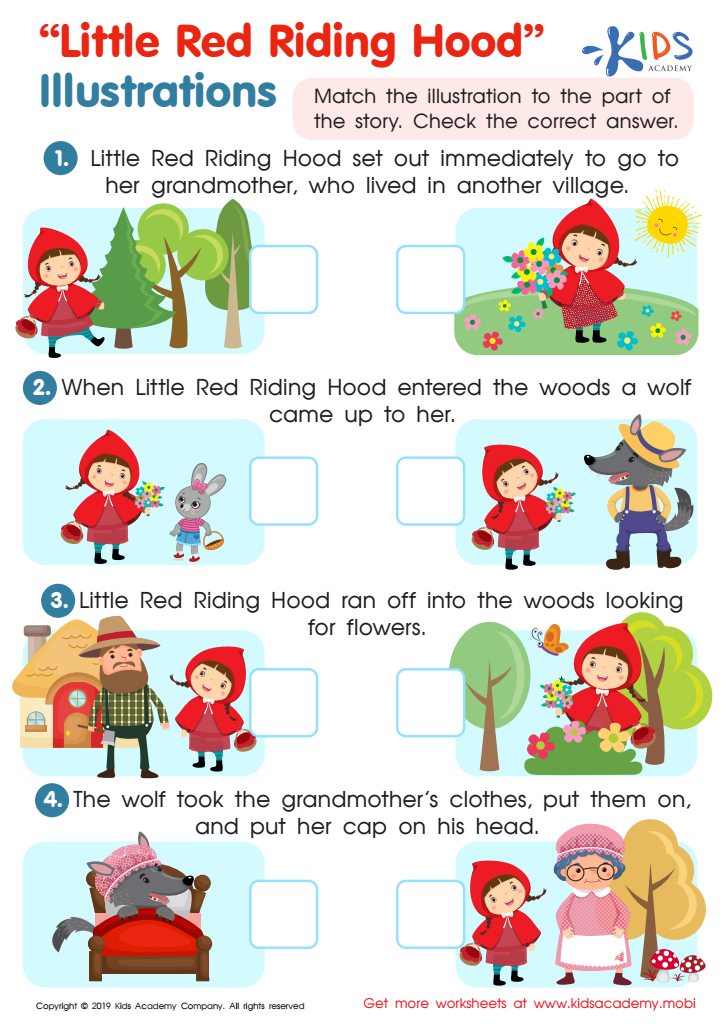
Little Red Riding Hood: Illustrations Worksheet
 Assign to My Students
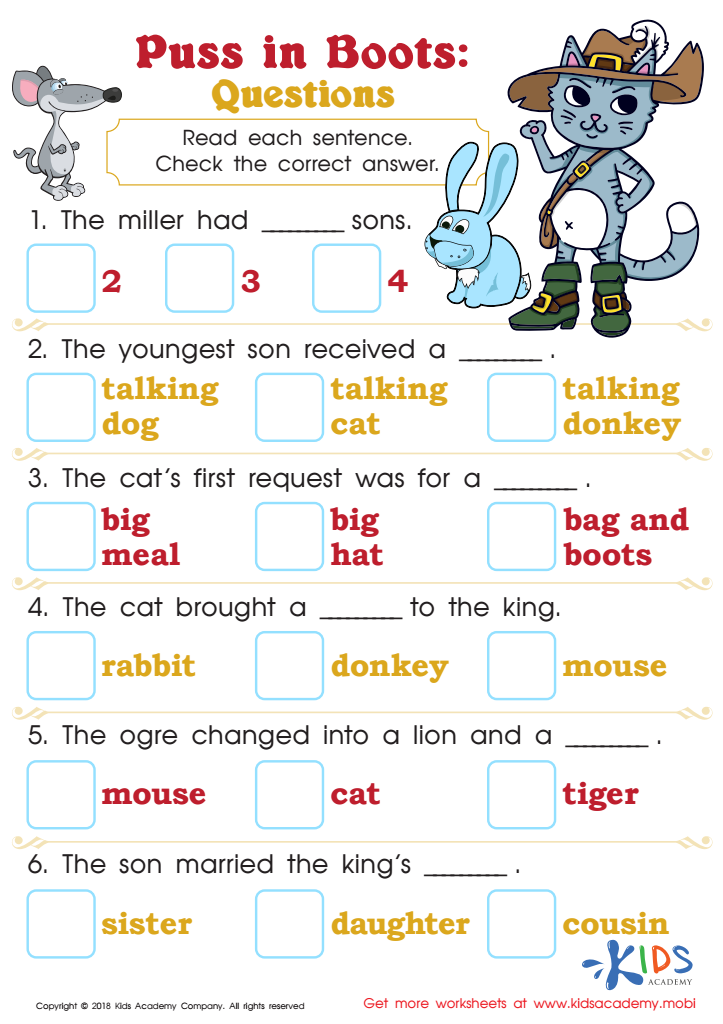
Puss in Boots: Questions Worksheet
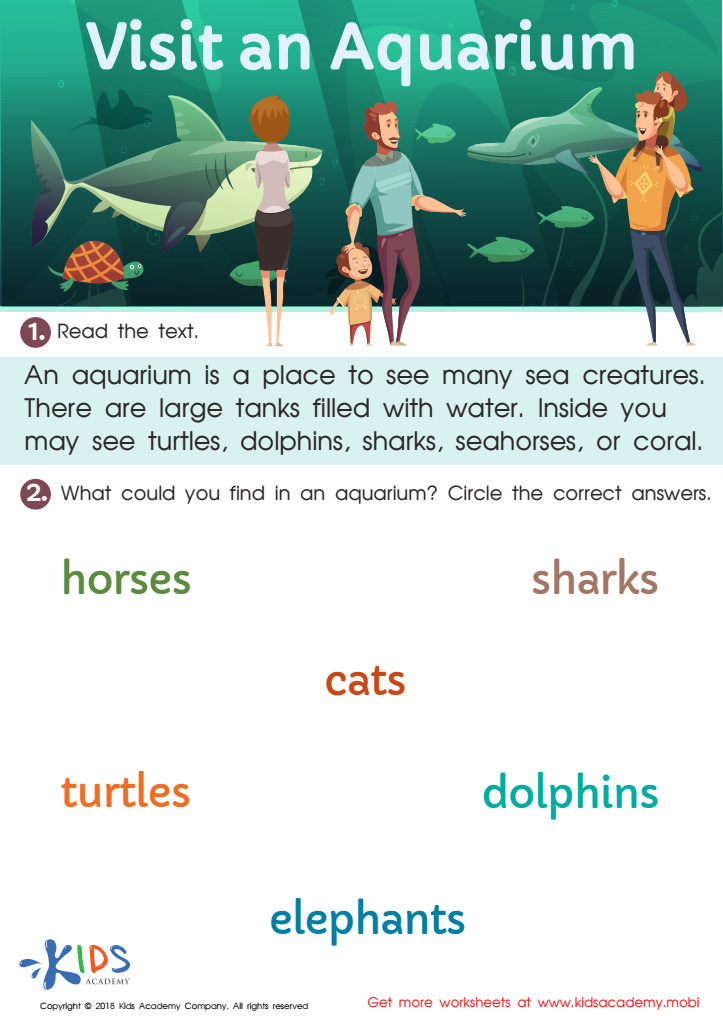
Visit an Aquarium Worksheet
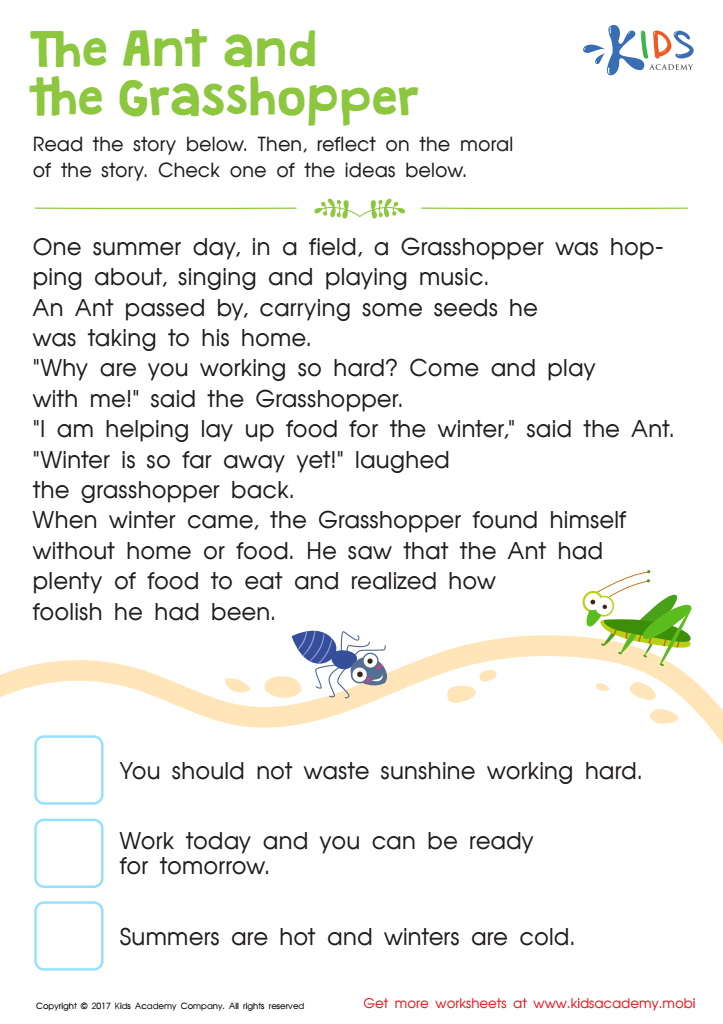
The Ant and The Grasshopper Printable
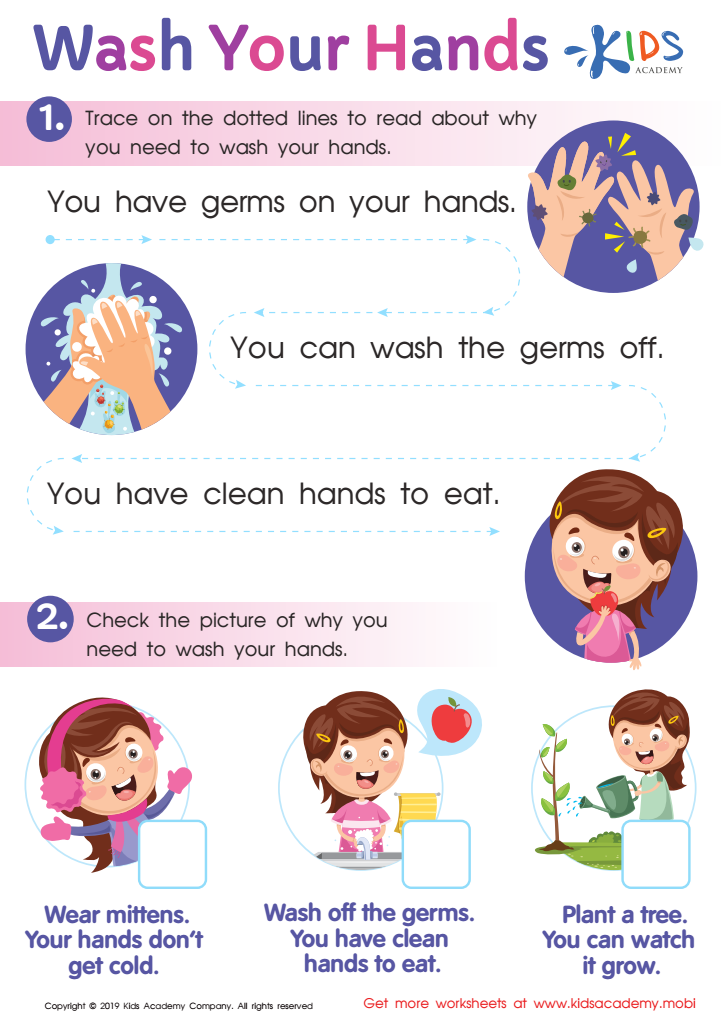
Wash Your Hands Worksheet
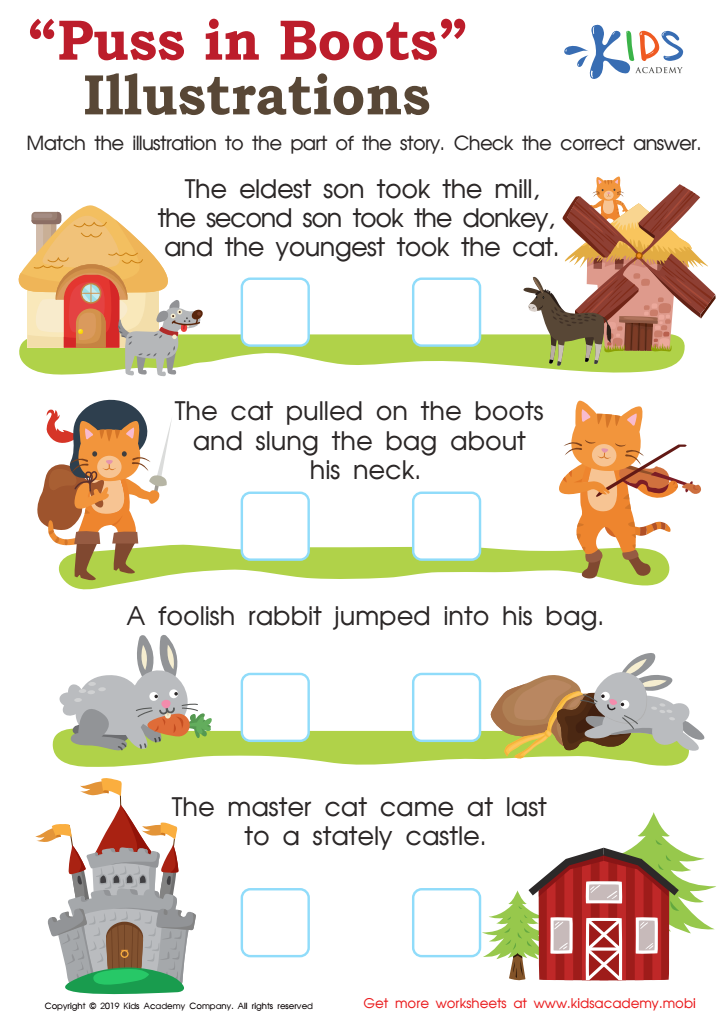
Puss in Boots Illustrations Worksheet








Visual interpretation reading is essential for children aged 6-9 as it combines literacy skills with critical thinking and creativity. At this developmental stage, children are not only learning to read but also beginning to interact with various forms of visual media. Understanding how to interpret images, diagrams, charts, and graphics complements traditional text-based reading by enhancing comprehension and engagement.
Parents and teachers should emphasize visual interpretation reading because it fosters a holistic educational experience. When children learn to decode visuals, they develop the ability to analyze information critically, draw connections between text and imagery, and communicate their ideas effectively. This skill is increasingly vital in an era dominated by digital content and multimedia, where visual literacy is intertwined with academic success.
Moreover, engaging with visual content can boost children’s interest in reading. Colorful illustrations and dynamic visuals can spark curiosity in reluctant readers, making stories more accessible and enjoyable. As children become adept at interpreting visual signals, they build confidence in their learning abilities, which is crucial for their overall intellectual and emotional development. By nurturing these skills, educators and caregivers ensure children are better prepared for future learning and real-world challenges.








