Unlock your child's potential with our Analytical Thinking Reading Comprehension Worksheets designed for ages 6-9. These engaging worksheets promote critical thinking by encouraging young readers to analyze, interpret, and draw conclusions from various texts. Each activity is tailored to enhance comprehension skills and foster a love for reading through thoughtful questions and scenarios. Perfect for home or classroom use, our resources support diverse learning styles and help develop essential analytical skills. Whether your child is a budding reader or looking to sharpen their abilities, our worksheets provide a fun and effective way to explore the fascinating world of reading comprehension!

Check out this FREE Trial Lesson on Reading Comprehension for age 6-9!

Read Texts with Understanding - Cause and Effect

Favorites
With answer key
Interactive
  • 6-9
  • Analytical thinking
  • Reading Comprehension
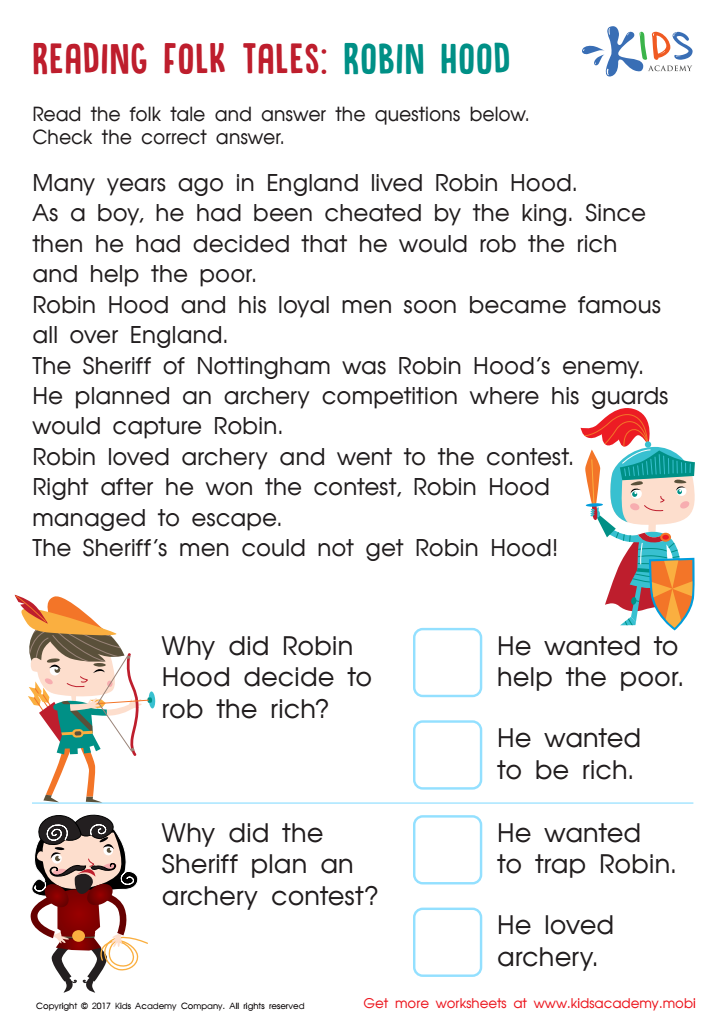
Robin Hood Folktale Worksheet

Robin Hood Folktale Worksheet

Have your child practice reading comprehension and inferencing with this Robin Hood folktale worksheet! Get them to read between the lines to find character motivation and answer important questions about the passage. It's a fun way to test their reading skills!
Robin Hood Folktale Worksheet
Worksheet
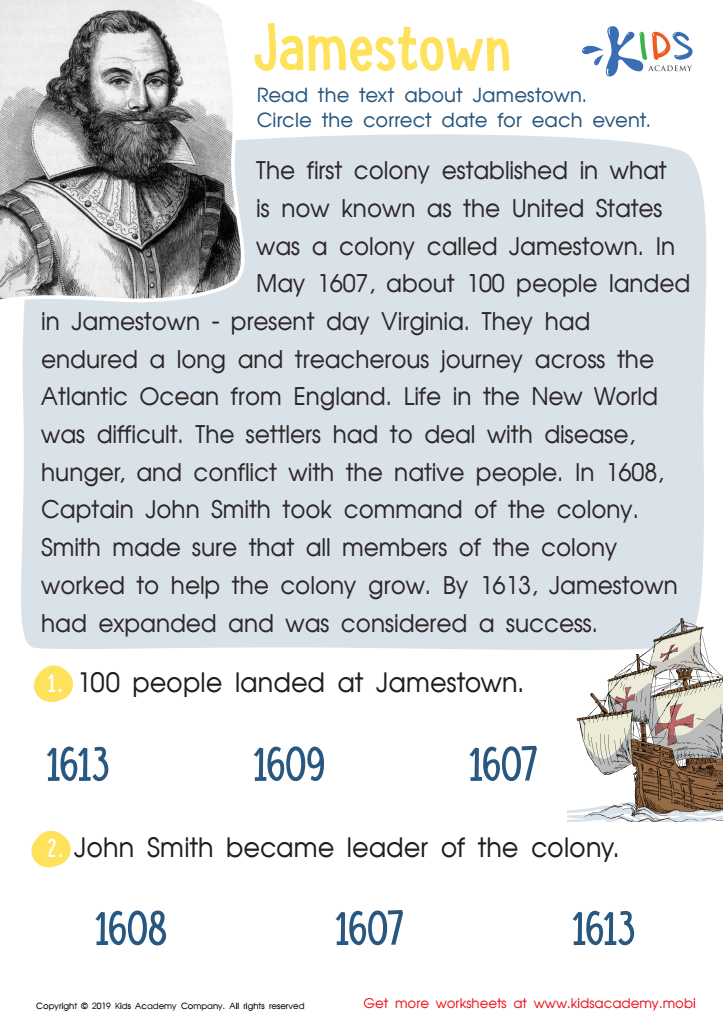
Jamestown Worksheet
Jamestown Worksheet

Jamestown Worksheet

Help your kids build vocabulary by reading simple texts and stories to them. This exercise helps them practice reading and grammar, and increases their knowledge of a topic. In this worksheet, kids learn about Jamestown: read text aloud and help them circle the correct date for each event.
Jamestown Worksheet
Worksheet
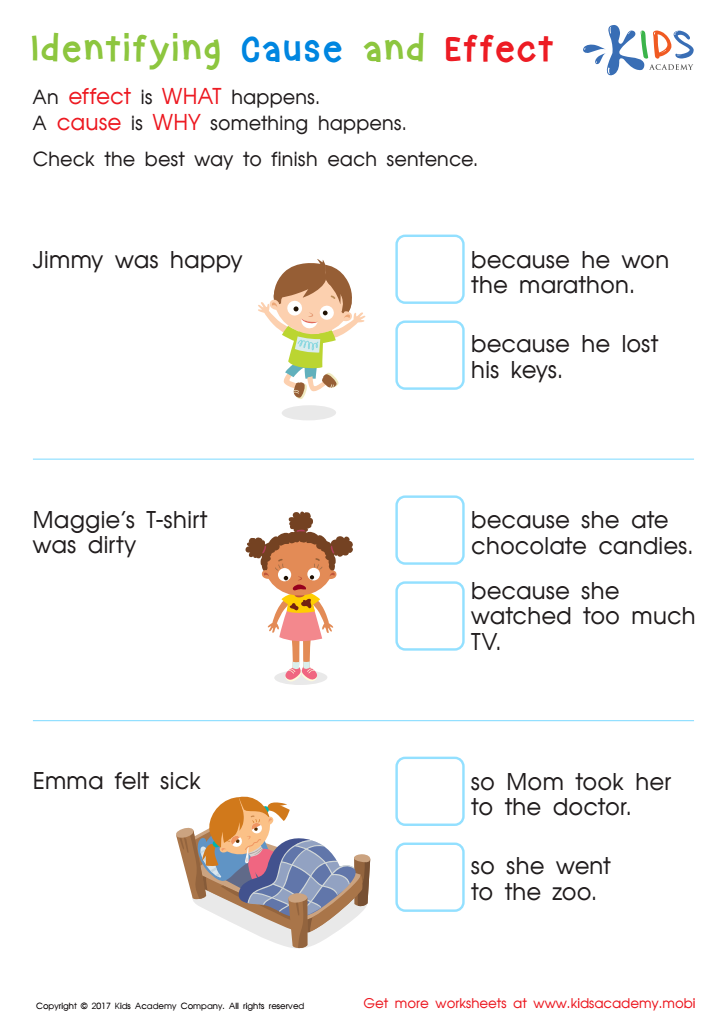
Cause and effect worksheets for 2nd grade

Indentifying Cause and Effect Worksheet
2nd grade cause & effect worksheets give your child practice making connections between events and their results. Fun activities help develop reading and critical thinking skills.
Indentifying Cause and Effect Worksheet
Worksheet
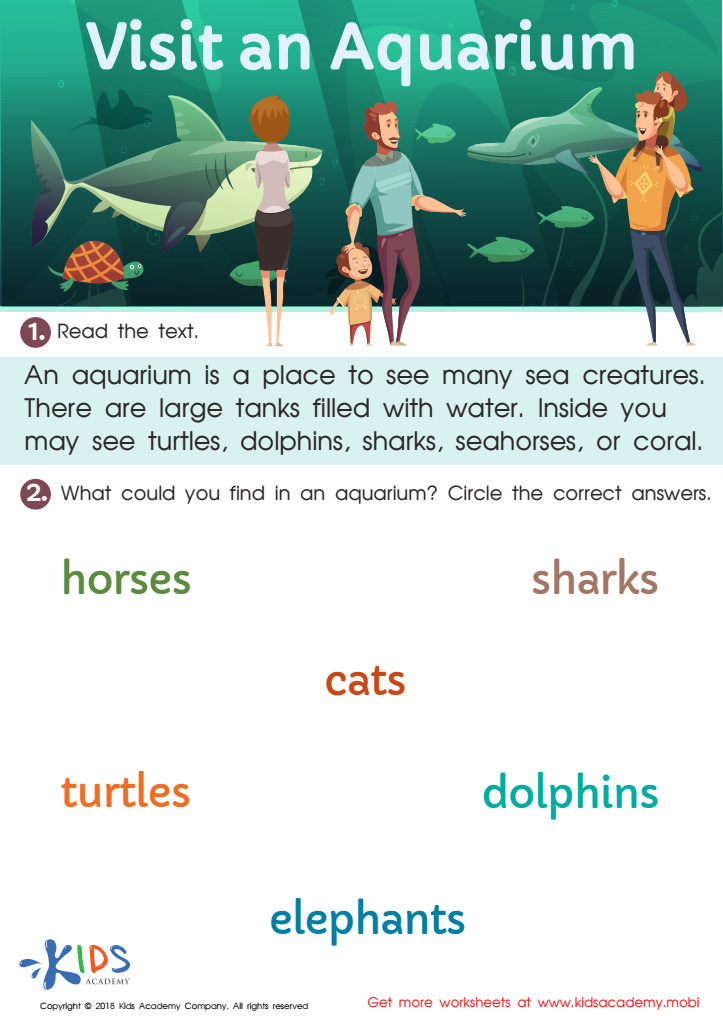
Visit an Aquarium Worksheet

Visit an Aquarium Worksheet

Have your kids ever been to an aquarium? It's a great place to see a variety of sea creatures, like turtles, dolphins, sharks and fish. If they're fascinated by sea life, this worksheet is perfect! Help them circle the aquarium animals among the words in the picture.
Visit an Aquarium Worksheet
Worksheet
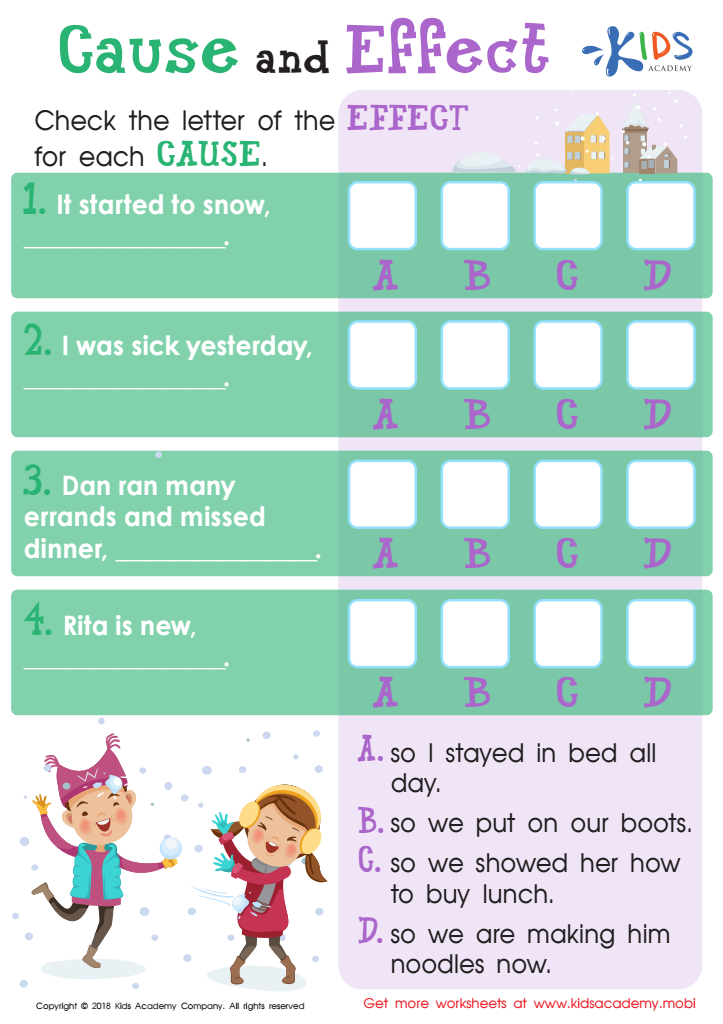
Cause and Effect Worksheet

Cause and Effect Worksheet

Help your kids understand the cause-effect relationship of sentences by having them complete this worksheet. There are four incomplete sentences at the top and four options at the bottom. Have them select the appropriate letter for the effect of each cause. This will be the first step to their future of composing grammatically correct and meaningful sentences.
Cause and Effect Worksheet
Worksheet
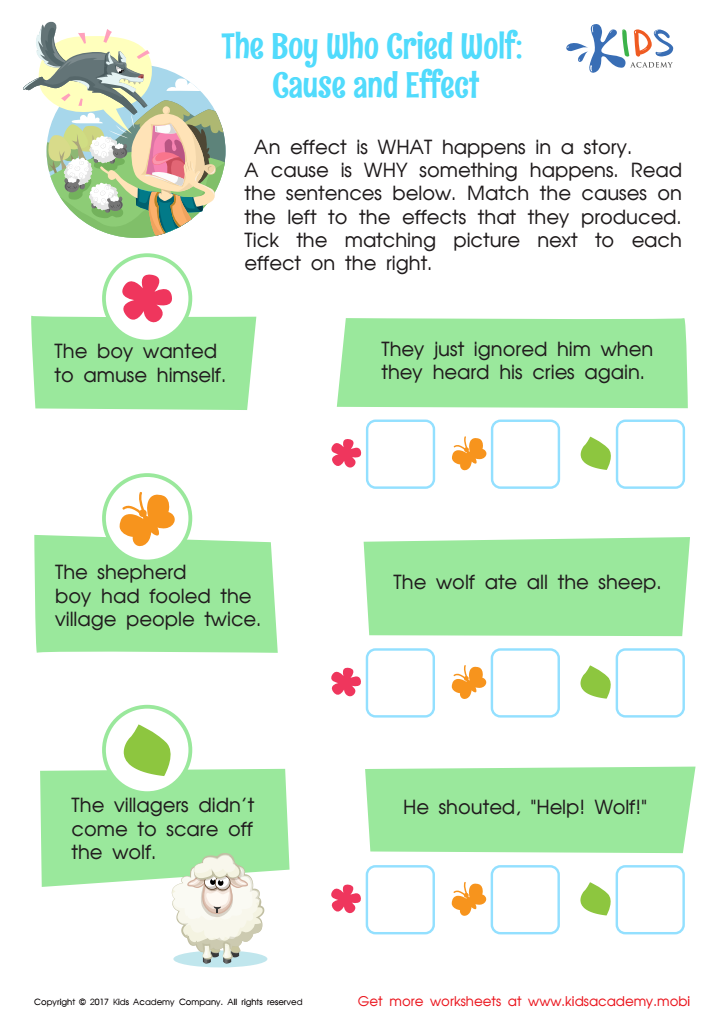
The Boy Who Cried Wolf: Cause and Effect

The Boy Who Cried Wolf: Cause and Effect Worksheet
With classic stories and fables, learning reading comprehension is easy - and fun!
The Boy Who Cried Wolf: Cause and Effect Worksheet
Worksheet
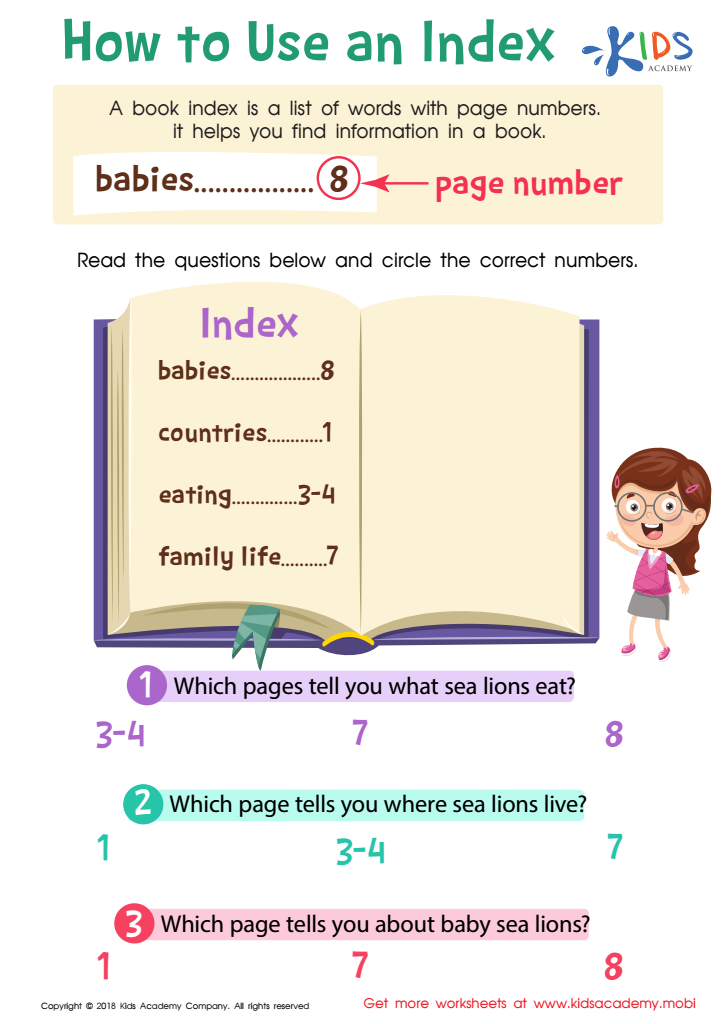
How Use Index Worksheet


How Use Index Worksheet

Hand your kids a book, point out the index and explain that it's a list of words with page numbers. Ask them to look at the index in the worksheet and circle the correct number to the questions. Every book must have an index to help readers find chapters or information they need.
How Use Index Worksheet
Worksheet


Parents and teachers should prioritize analytical thinking and reading comprehension for children aged 6-9 because these skills form the foundation for lifelong learning. At this age, children are beginning to develop critical thinking abilities that enable them to make connections, evaluate information, and understand complex ideas. Strong reading comprehension skills allow children to interpret texts beyond basic recall, fostering deeper understanding and engagement with stories and academic content.

By nurturing analytical thinking, educators and parents can help children learn to ask questions, draw conclusions, and develop opinions based on evidence. This ability not only supports their academic performance across subjects like science and social studies but also enhances their problem-solving skills in everyday life.

Moreover, early investment in these competencies contributes to social-emotional development as children learn to empathize with characters in narratives and appreciate diverse perspectives. In an increasingly information-rich world, enabling children to analyze what they read ensures they become discerning consumers of information, capable of navigating modern challenges. Ultimately, strong analytical thinking and reading comprehension set the stage for successful future learning and instills a lifelong love for reading and inquiry.