
Counting practice Reading Comprehension Worksheets for Ages 6-9
5 filtered results
Difficulty Level
Grade
Age
-
From - To
Subject
Activity
Standards
Our "Counting Practice Reading Comprehension Worksheets for Ages 6-9" are thoughtfully designed to combine foundational numeracy skills with reading comprehension. These interactive sheets engage young learners with fun counting exercises embedded within captivating stories and vibrant illustrations. Perfect for early grade teachers and parents, the worksheets enhance critical thinking, improve problem-solving abilities, and develop both math and reading skills. Each task encourages focus, helping children aged 6-9 to practice counting while understanding the context of a narrative, ultimately preparing them for more complex learning adventures. Help your child excel in their educational journey with our expertly crafted worksheets!
Favorites
With answer key
Interactive
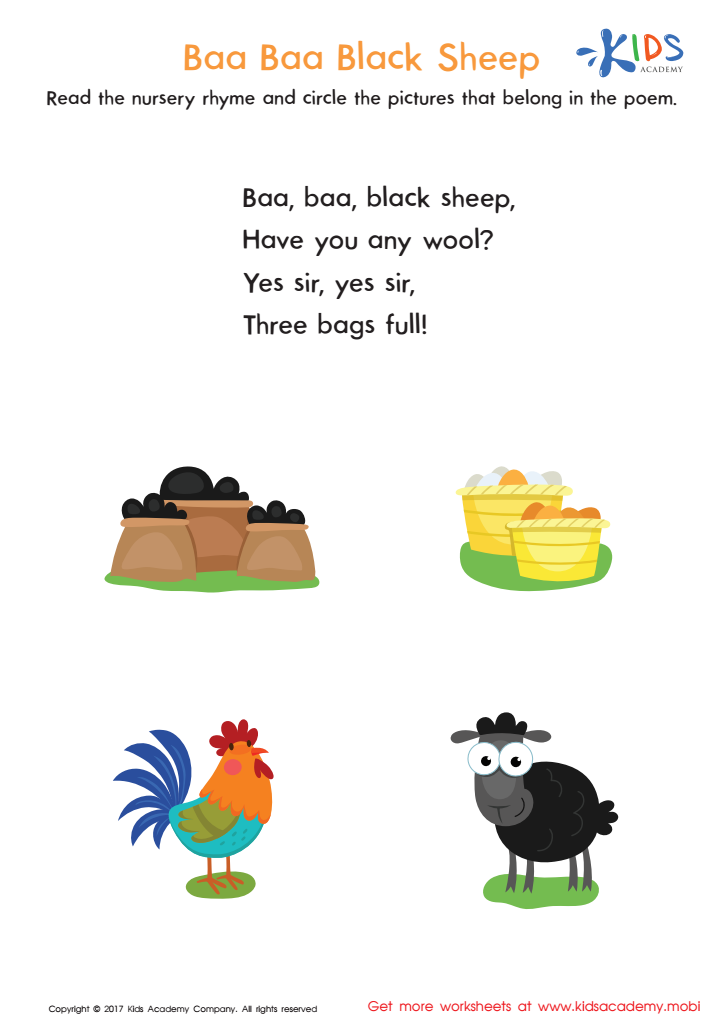
Baa Baa Black Sheep Printable
Jumpstart your child's reading skills with this printable Baa Baa Black Sheep worksheet! Recite the lines with them, then have them select the pictures associated with the poem to test comprehension. Fun and educational!
 Assign to My Students
Baa Baa Black Sheep Printable
Worksheet
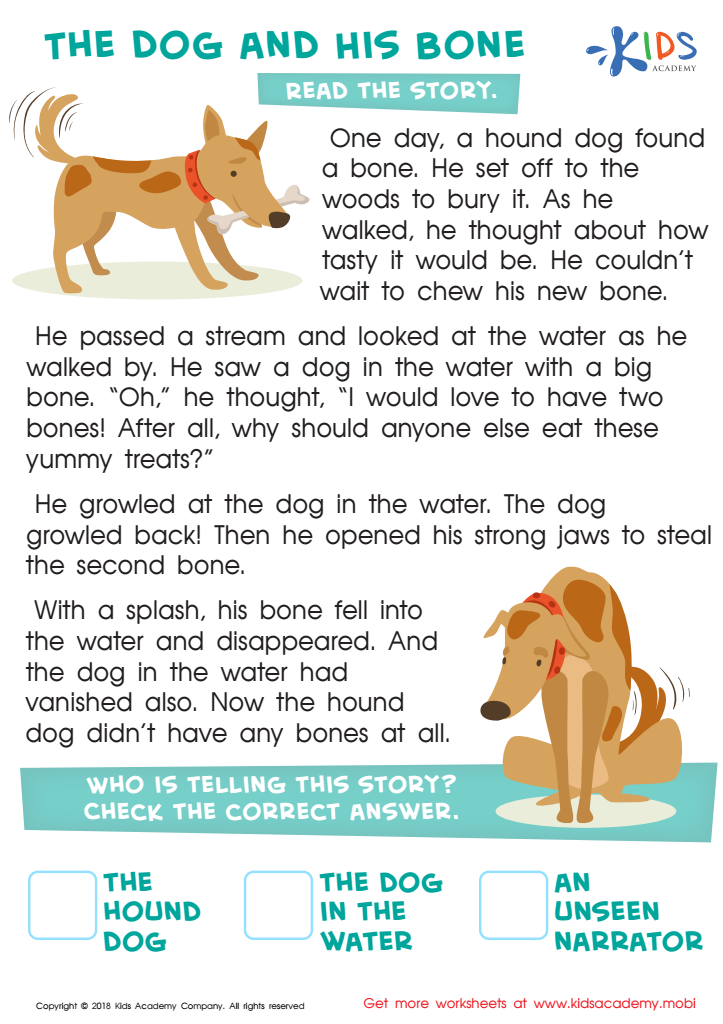
The Dog and His Bone Worksheet
Read the story of The Dog and His Bone to your kids, making sure they take in the details. Ask them the questions in this worksheet and help them check the answers. Encourage them to think carefully.
The Dog and His Bone Worksheet
Worksheet
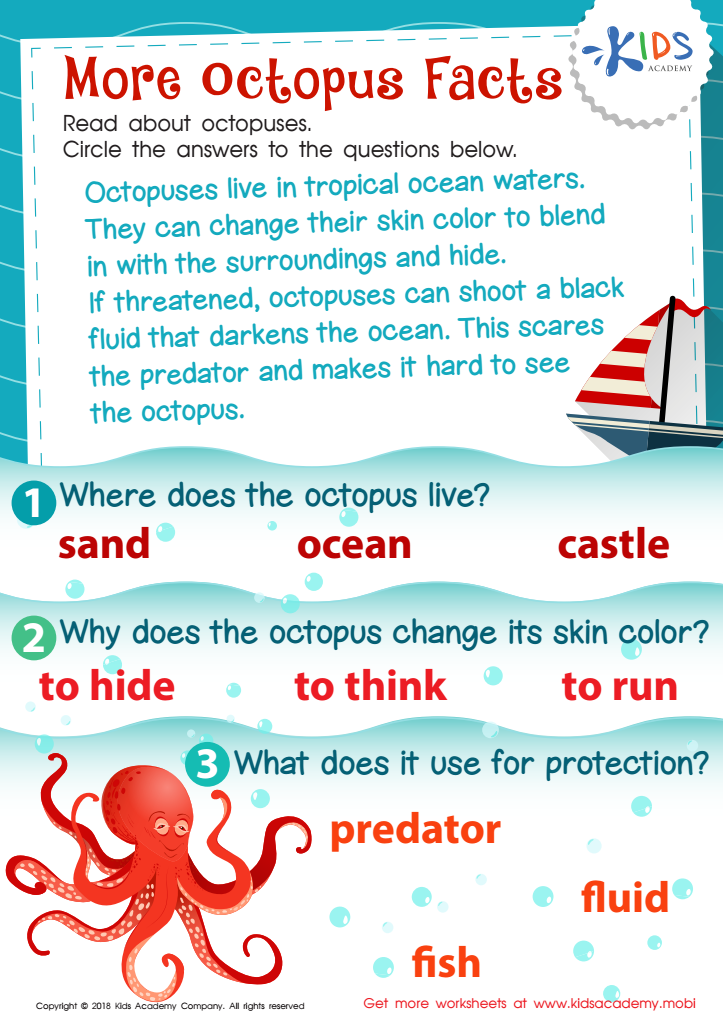
More Octopus Facts Worksheet
This worksheet will help your kids learn about the Octopus. Read the text carefully and have kids read with you. Now, ask them questions based on it and help them answer them by circling the right choices. Teaching your kids facts about animals will help them in the long run.
More Octopus Facts Worksheet
Worksheet
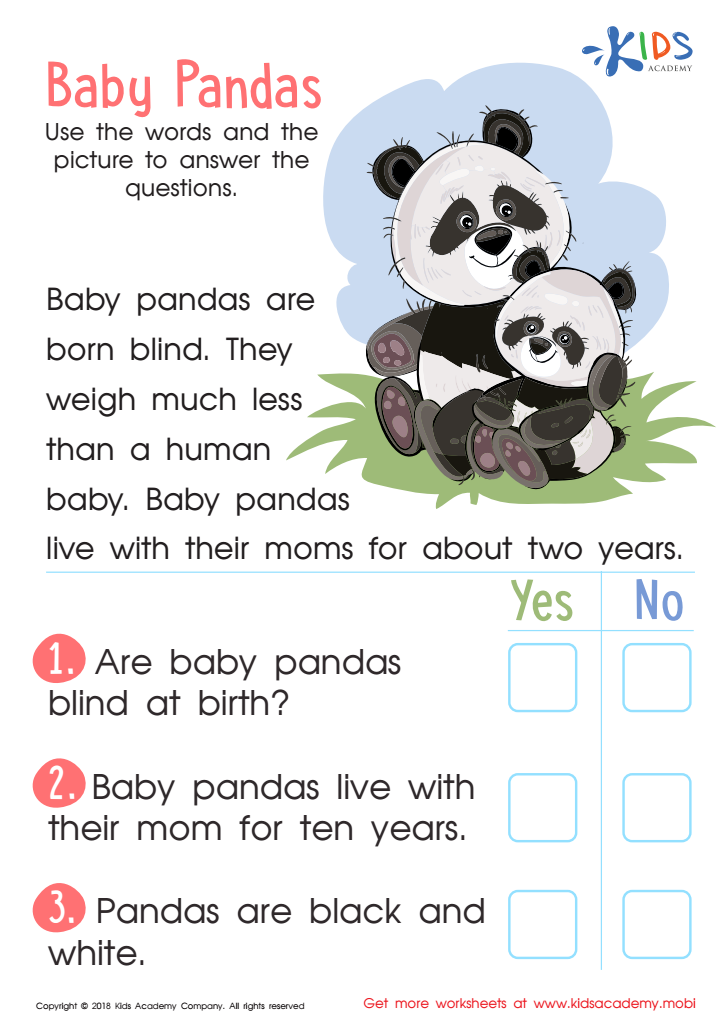
Baby Pandas Worksheet
Kids can't usually see pandas in person, but they can learn more about them with this fun worksheet! It includes a passage and picture, plus questions at the end to check kids' reading comprehension. Just ask them to read the text, check the "yes" and "no" boxes, and enjoy the fascinating facts about baby pandas!
Baby Pandas Worksheet
Worksheet
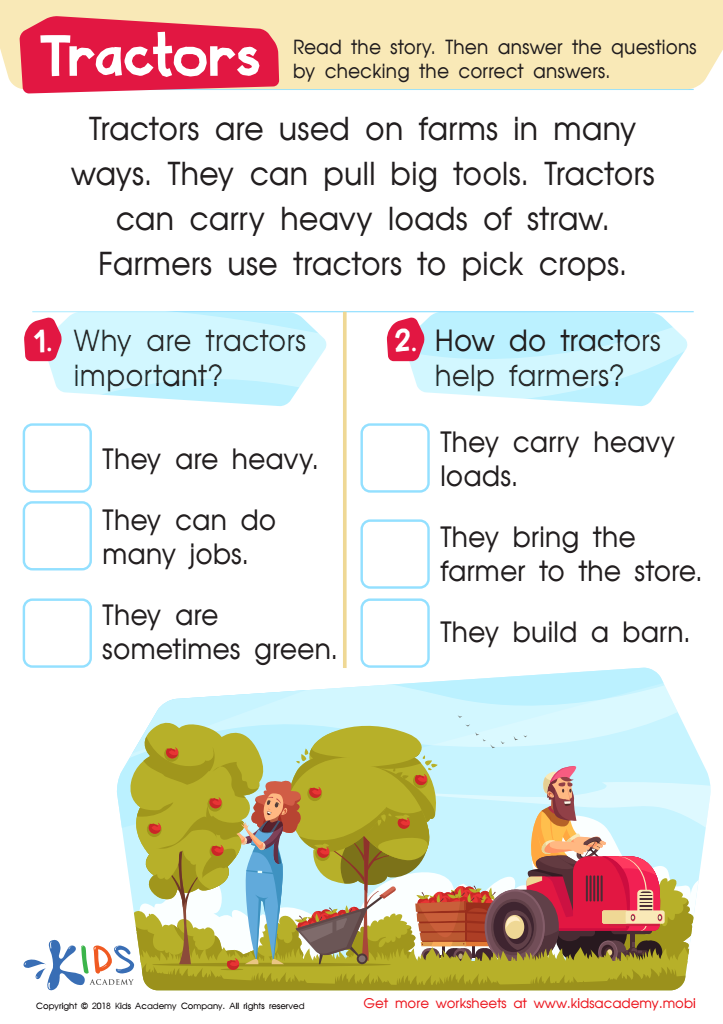
Tractors Worksheet
Kids love tractors! Let them read about what they do, what they use, and who uses them with this free worksheet. After reading, they can answer reading comprehension questions to test their knowledge; multiple choices make it easy! Little do they know, they're boosting their literacy skills along the way!
Tractors Worksheet
Worksheet
Join Kids Academy for Free
Who is primarily going to use this learning content?







.jpg)
Counting and reading comprehension are foundational skills that significantly impact a child's academic growth and everyday functioning. At ages 6-9, children are at a critical developmental stage where their brains are highly receptive to acquiring new skills. Counting is not just about learning numbers; it forms the basis for mathematical thinking, problem-solving, and logical reasoning. By practicing counting, children develop number sense, understand the sequencing of events, and grasp basic arithmetic.
Reading comprehension, on the other hand, is essential for language acquisition and cognitive development. It goes beyond recognizing words and sentences—it involves deriving meaning, making inferences, and understanding context. Effective reading comprehension skills enable children to follow instructions, absorb new information, and think critically.
Parents and teachers should prioritize these practices because they lay the groundwork for future academic success. A strong number sense and good reading comprehension can lead to better performance in all school subjects. Moreover, these skills are crucial for life-long learning and decision-making. By investing time in counting practice and reading comprehension, parents and teachers can foster a love for learning, build confidence, and equip children with the tools they need for a successful future.








