Logical thinking Reading Comprehension Worksheets for Ages 6-9
3 filtered results
-
From - To
Enhance your child's critical reasoning with our Logical Thinking Reading Comprehension Worksheets for Ages 6-9! At Kids Academy, we offer a variety of fun, engaging activities designed to develop reading comprehension and logical thinking skills simultaneously. Through captivating stories, puzzles, and thought-provoking questions, young learners will enhance their ability to draw inferences, understand sequences, and solve problems systematically. Perfect for classroom or at-home learning, these worksheets not only boost literacy but also foster analytical skills that are crucial for academic success. Empower your child's learning journey and watch them master the art of logical thinking with Kids Academy today.

The Dog and His Bone Worksheet
 Assign to My Students
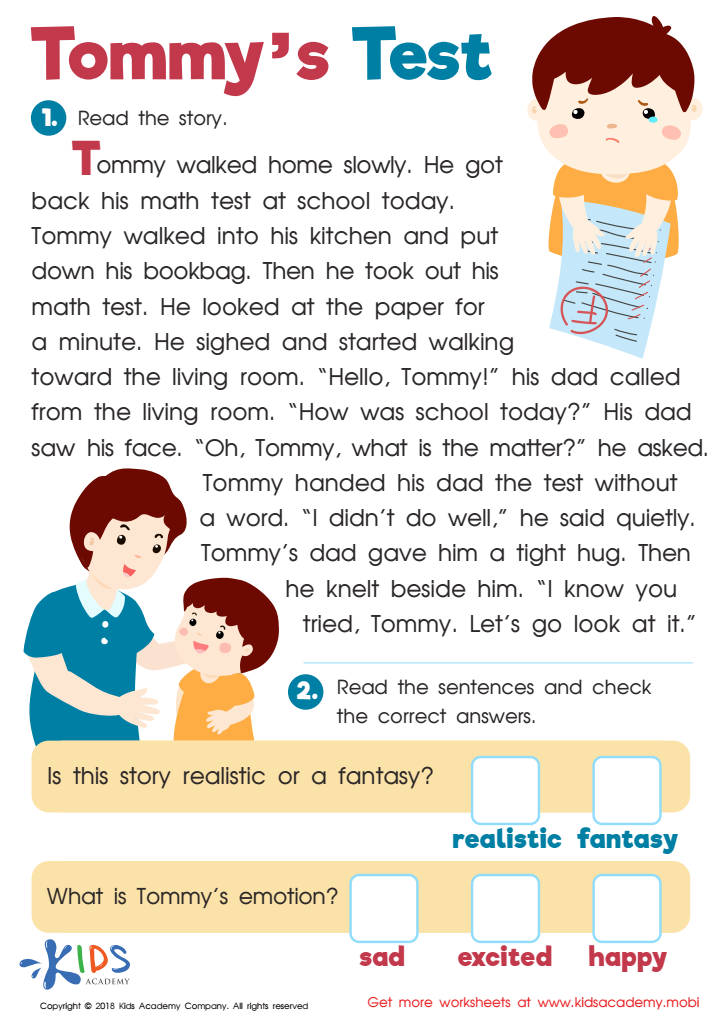
Tommys Test Worksheet
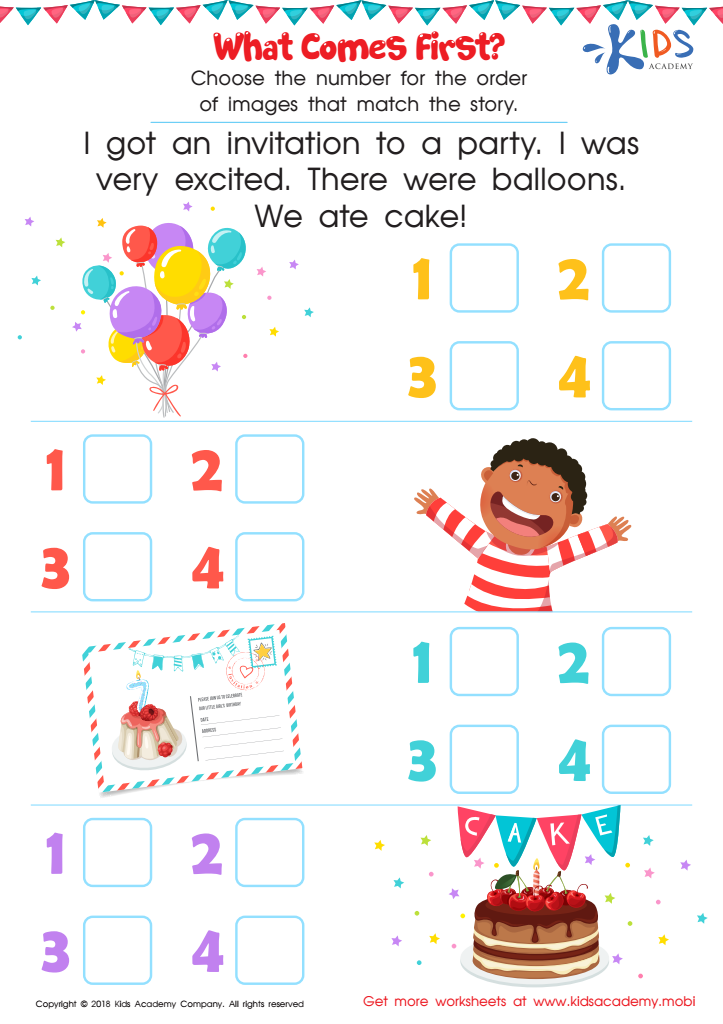
What Comes First Worksheet








Logical thinking and reading comprehension are foundational skills that are crucial for the cognitive and academic development of children aged 6-9. At this age, children's brains are highly receptive to learning new concepts, and fostering these skills early on provides significant benefits.
Logical thinking enables children to reason systematically, make sense of problems, and decide on the best solution. This critical skill is not only applicable in academics but also in day-to-day decision-making. When children learn to think logically, they are better prepared to understand and solve math problems, follow complex instructions, and apply reasoning to their social interactions. This sets the groundwork for future subjects in science, technology, engineering, and math (STEM).
Reading comprehension, on the other hand, goes beyond merely decoding words. It involves understanding, interpreting, and reflecting on what is read. Strong reading comprehension skills allow children to grasp storyline concepts, infer the meaning of new words, and engage critically with text. Proficiency in reading comprehension dramatically influences a child's ability to learn all subjects effectively, as it is integral to understanding information, following instructions, and enjoying literature.
By investing in the development of these skills, parents and teachers can ensure that children build a strong intellectual foundation, paving the way for academic success and encouraging a lifelong love of learning.








