Enhancing vocabulary Reading Fiction Worksheets for Ages 6-9
3 filtered results
-
From - To
Unlock the world of words with our "Enhancing Vocabulary Reading Fiction Worksheets" designed specifically for children ages 6-9! These engaging worksheets use delightful stories to broaden vocabulary, improve comprehension, and inspire a love for reading. Each activity encourages young learners to explore contextual meanings and enhances their word recognition skills through fun exercises. By connecting new vocabulary with fiction, kids develop critical thinking and enhance their creative expression. Ideal for classroom use or at-home learning, our worksheets make vocabulary building interactive and enjoyable. Transform your child's reading journey today and watch their confidence soar with every story they read!
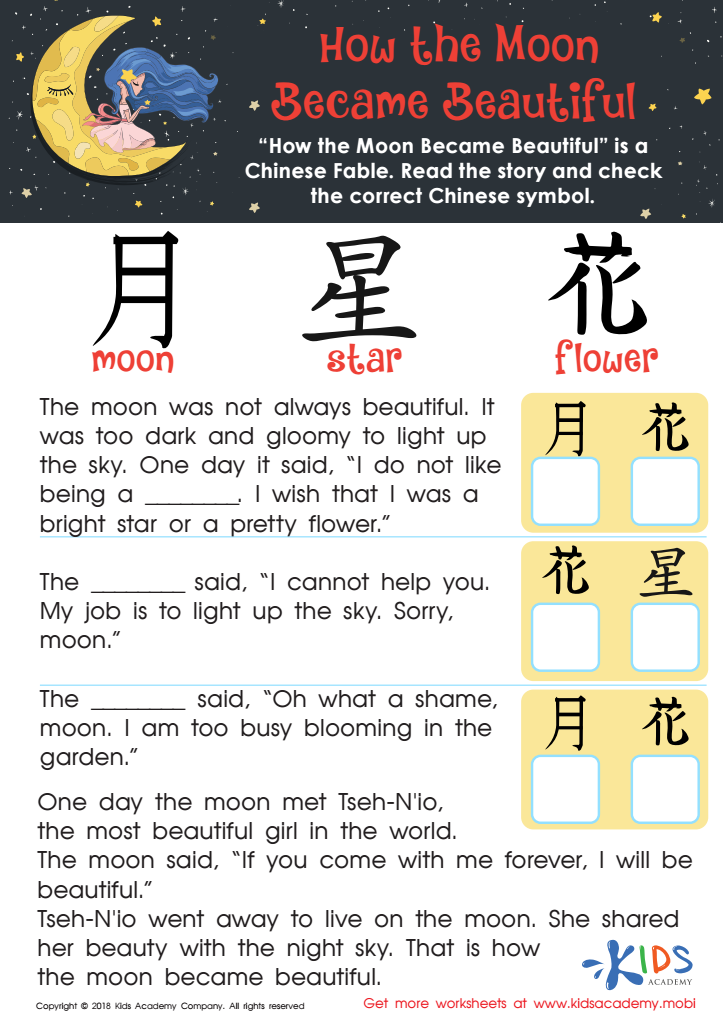
How the Moon Became Beautiful Worksheet
 Assign to My Students
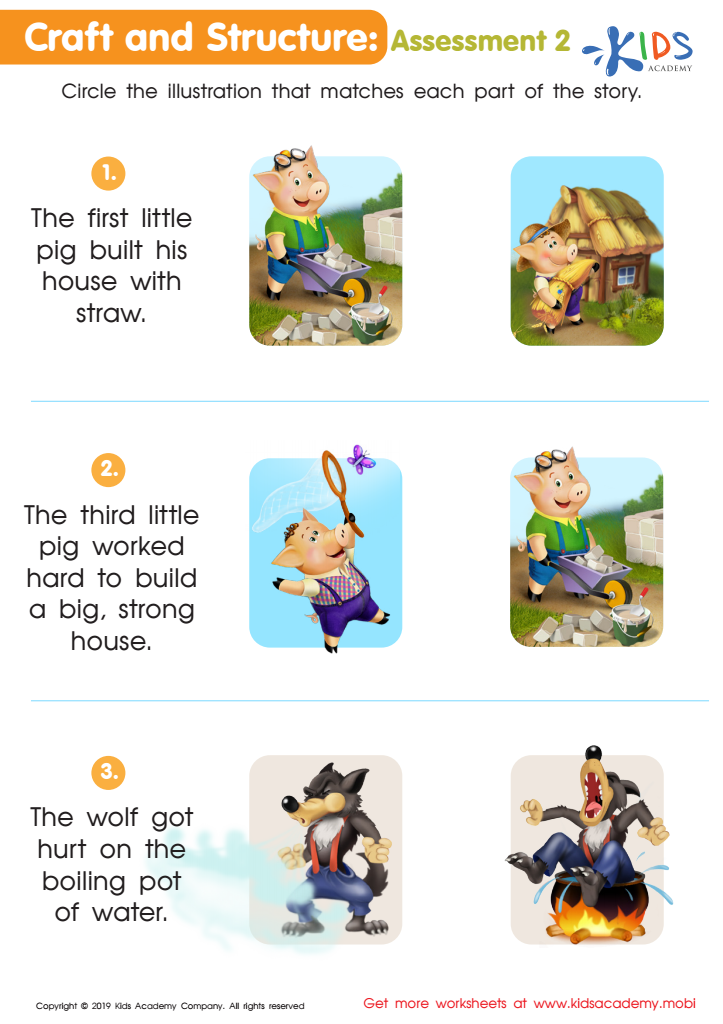
Craft and Structure: Assessment 2 Worksheet 2
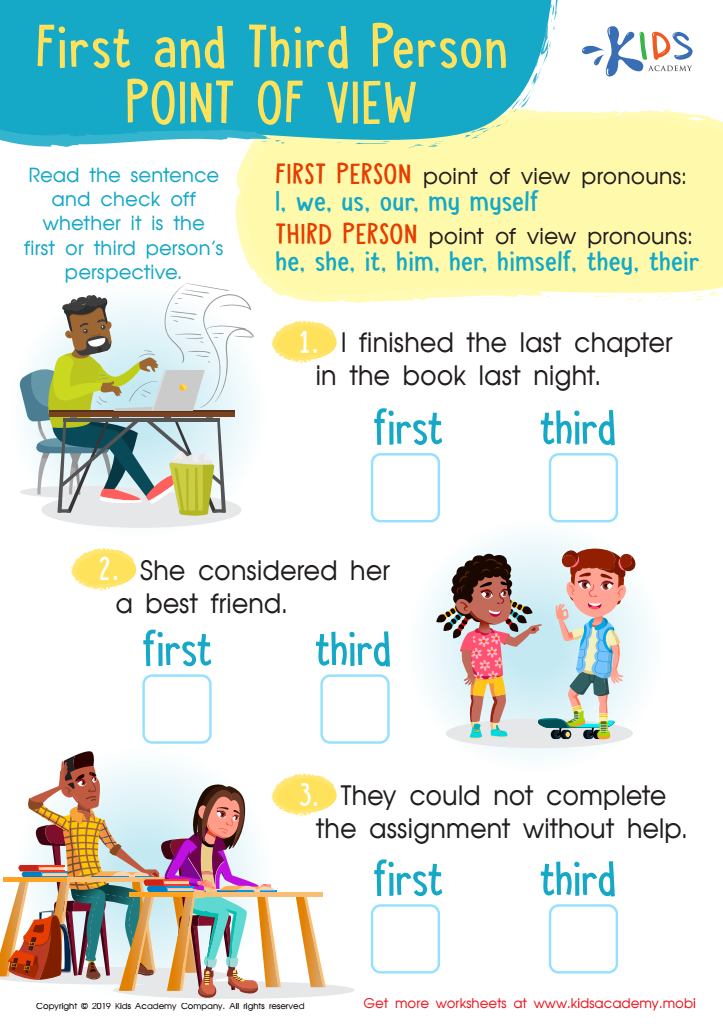
First and Third Person Point of View Worksheet




.jpg)



Enhancing vocabulary through reading fiction for children aged 6-9 is vital for several reasons. At this developmental stage, children are not only beginning to build their foundational reading skills, but they are also starting to understand complex ideas and express themselves more fluently. Engaging with fiction introduces them to a rich tapestry of language, diverse characters, and various scenarios that spark their imagination and curiosity.
A robust vocabulary is linked to better reading comprehension, allowing young readers to grasp stories and concepts more fully. Exposure to literary language helps children learn new words in context, making it easier for them to remember and use these words in their own speech and writing. Additionally, fiction can cultivate empathy, as children explore different perspectives and emotions through characters’ experiences.
Moreover, strong vocabulary skills contribute to overall academic success, as they translate into improved performance in all subjects. When parents and teachers make reading fiction a priority, they support intrinsic motivation and a lifelong love of reading. In today’s information-rich world, empowering children with a diverse vocabulary equips them with essential communication skills for their future personal and academic endeavors. Thus, enhancing vocabulary through fiction is both an educational and nurturing endeavor.








