Identifying story elements Reading Fiction Worksheets for Ages 6-9
4 filtered results
-
From - To
Discover our engaging "Identifying Story Elements" Reading Fiction Worksheets tailored for children aged 6-9! These worksheets are designed to help young readers recognize and understand key components of storytelling, including characters, setting, plot, conflict, and resolution. Through interactive activities and fun exercises, children will sharpen their reading comprehension skills while diving into exciting fictional tales. Ideal for both at-home learning and classroom use, these resources encourage creativity and critical thinking. Enhance your child's reading experience and analytical skills today with our thoughtfully crafted worksheets, designed to foster a love for reading and storytelling in your early learners!
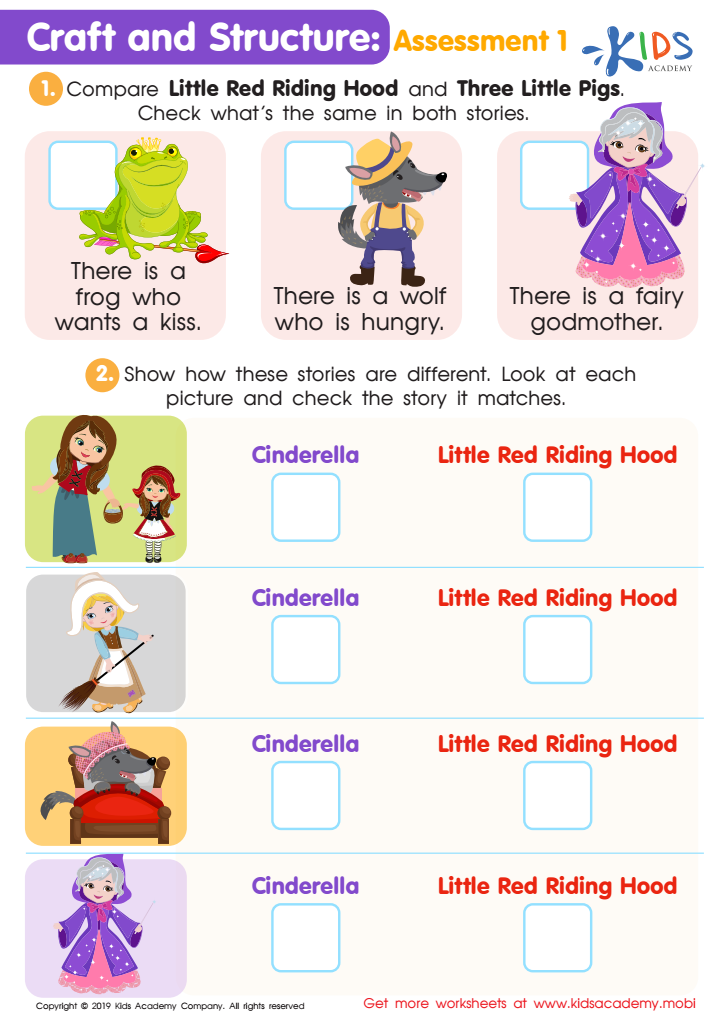
Craft and Structure: Assessment 1 Worksheet
 Assign to My Students
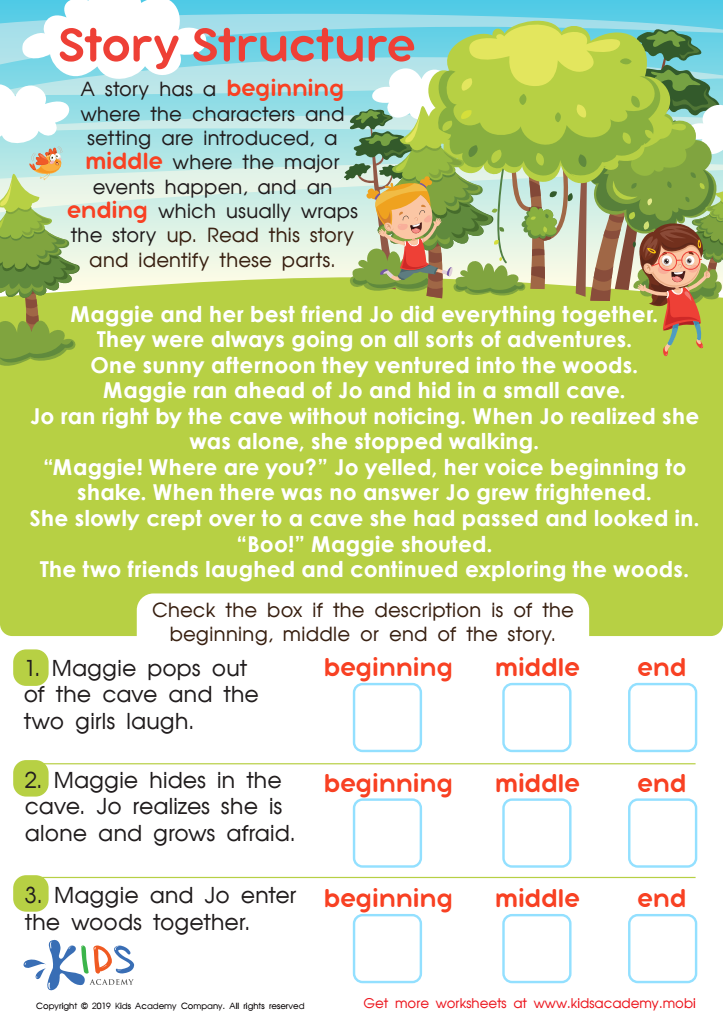
Story Structure Worksheet
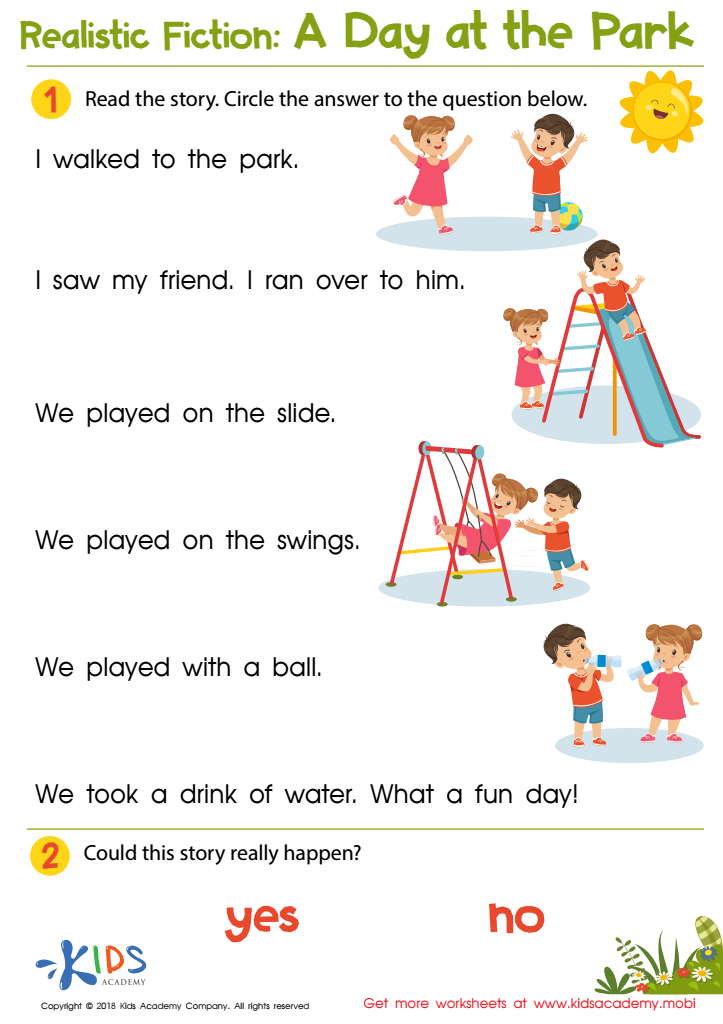
A Day at the Park Worksheet
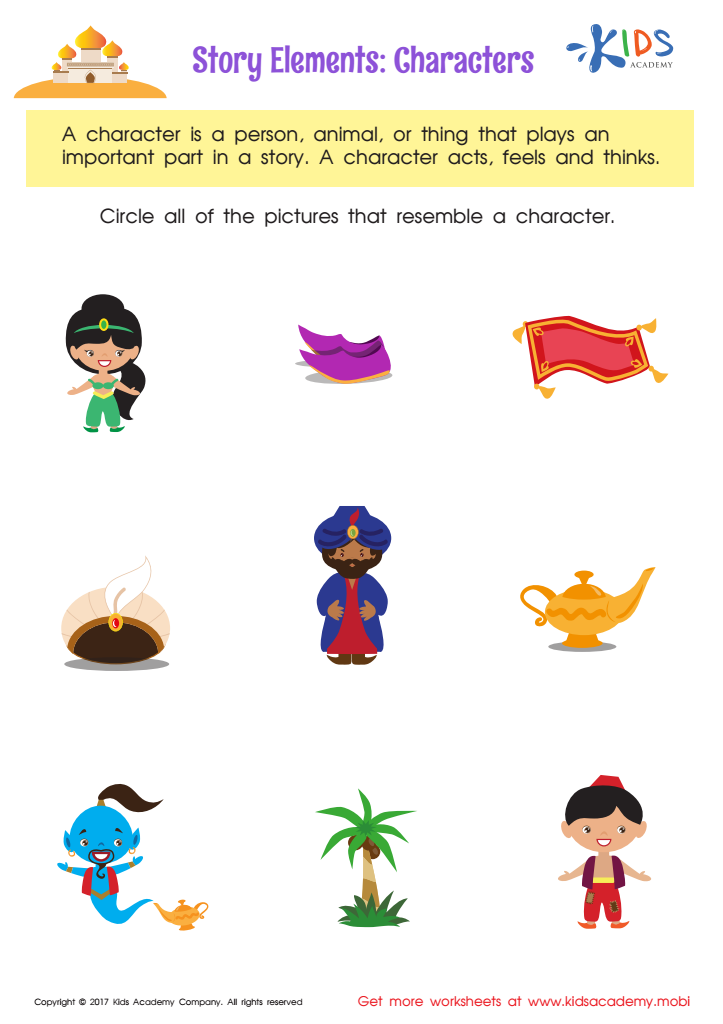
Story Elements Printable



.jpg)




Identifying story elements is crucial for young readers aged 6-9 as it forms the foundation of their comprehension and critical thinking skills. Parents and teachers should prioritize this skill because it enhances children's ability to grasp the fundamental components of a narrative—characters, setting, plot, conflict, and resolution. Understanding these elements helps children connect emotionally to stories, fostering a love for reading.
Moreover, recognizing story elements enhances vocabulary acquisition and language development. As children discuss characters’ motivations or the significance of a setting, they learn to articulate their thoughts, which reinforces their communication skills. Teachers can effectively gauge comprehension through discussions about story elements, guiding instruction tailored to each learner's needs.
Furthermore, storytelling helps cultivate imagination and empathy by allowing children to step into different perspectives. As they identify and analyze elements within a story, they develop the analytical skills required in everyday problem-solving and decision-making. For parents, engaging with their children over story elements not only supports literacy but also strengthens their bond through shared reading experiences. Thus, prioritizing the identification of story elements is key to creating confident, literate individuals prepared for more complex texts in the future.








