Moral understanding Reading Fiction Worksheets for Ages 6-9
5 filtered results
-
From - To
Enhance your child's reading skills while developing their moral understanding with our engaging "Moral Understanding Reading Fiction Worksheets" for ages 6-9. These thoughtfully designed worksheets encourage young readers to delve into captivating stories, promoting critical thinking and empathy. Each activity invites children to analyze characters' choices and motivations, helping them grasp essential moral lessons. Perfect for classroom or home use, these worksheets foster a love for reading while nurturing ethical decision-making skills. Dive into our resourceful materials to inspire meaningful discussions and reflections about values, friendship, honesty, and kindness. Equip your little ones with the tools to navigate their social world effectively!
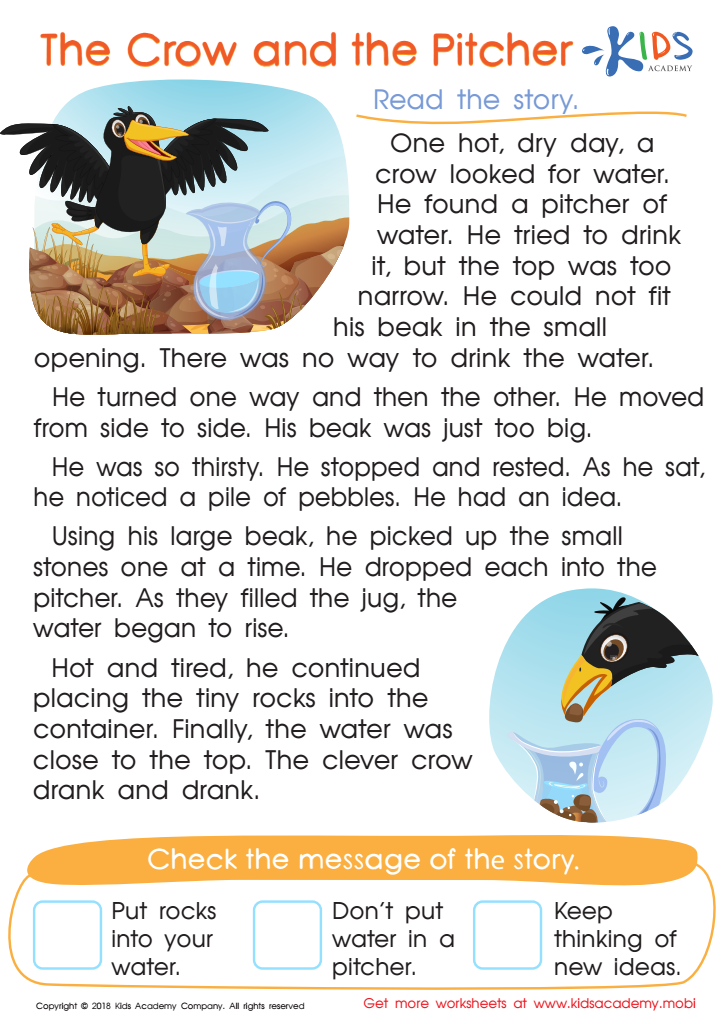
The Crow and the Pitcher Worksheet
 Assign to My Students
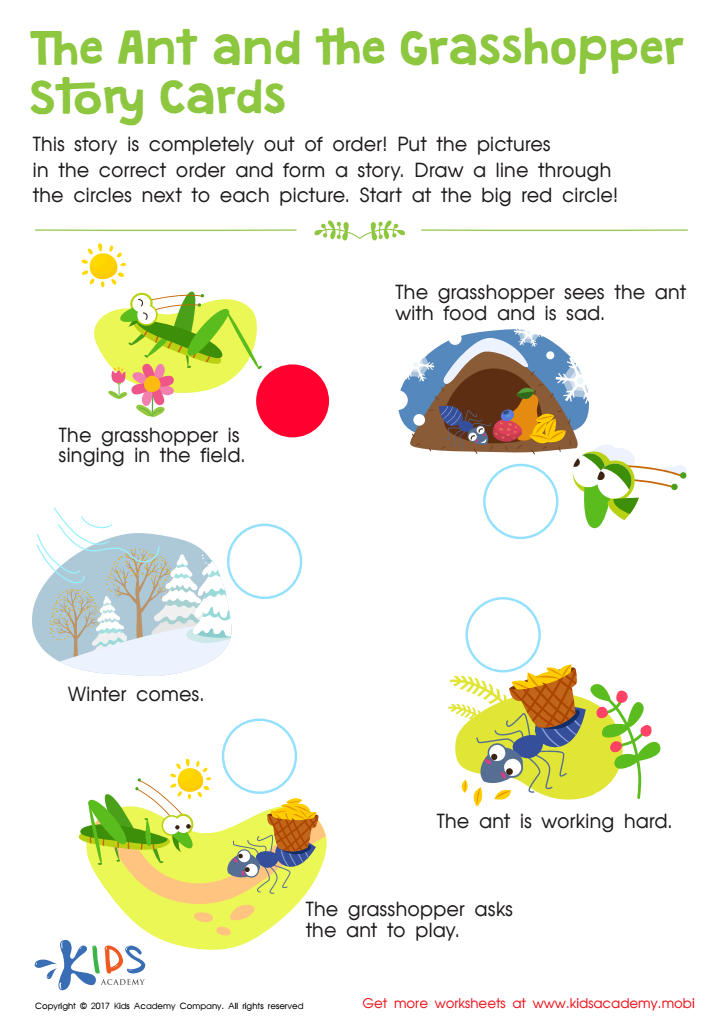
The Ant and The Grasshopper Worksheet
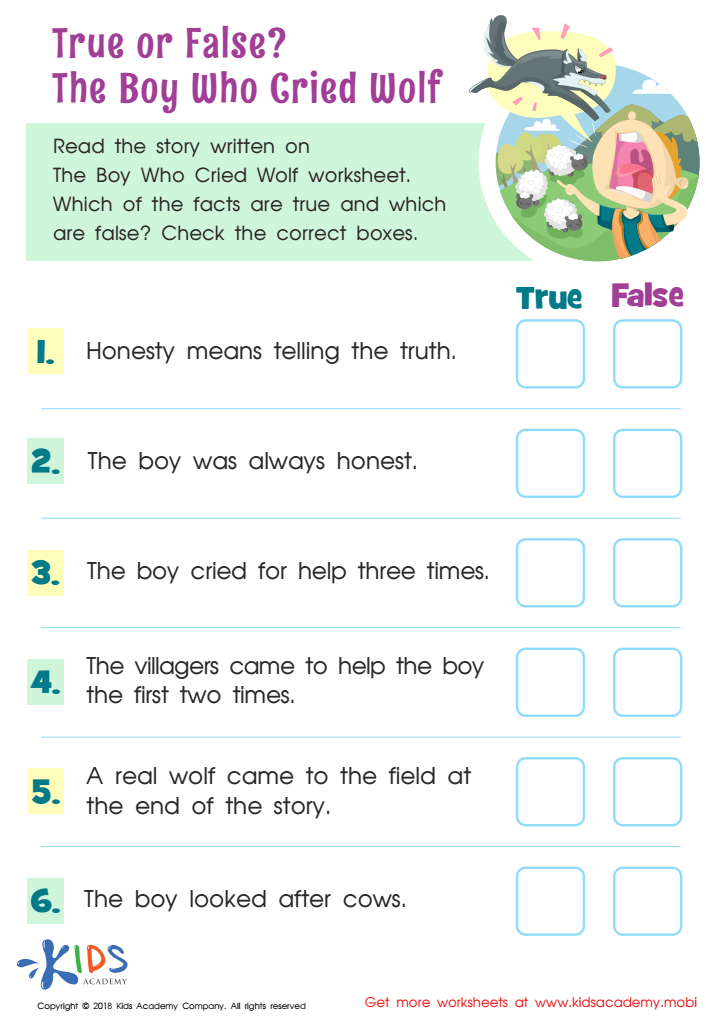
True or False? The Boy Who Cried Wolf Worksheet
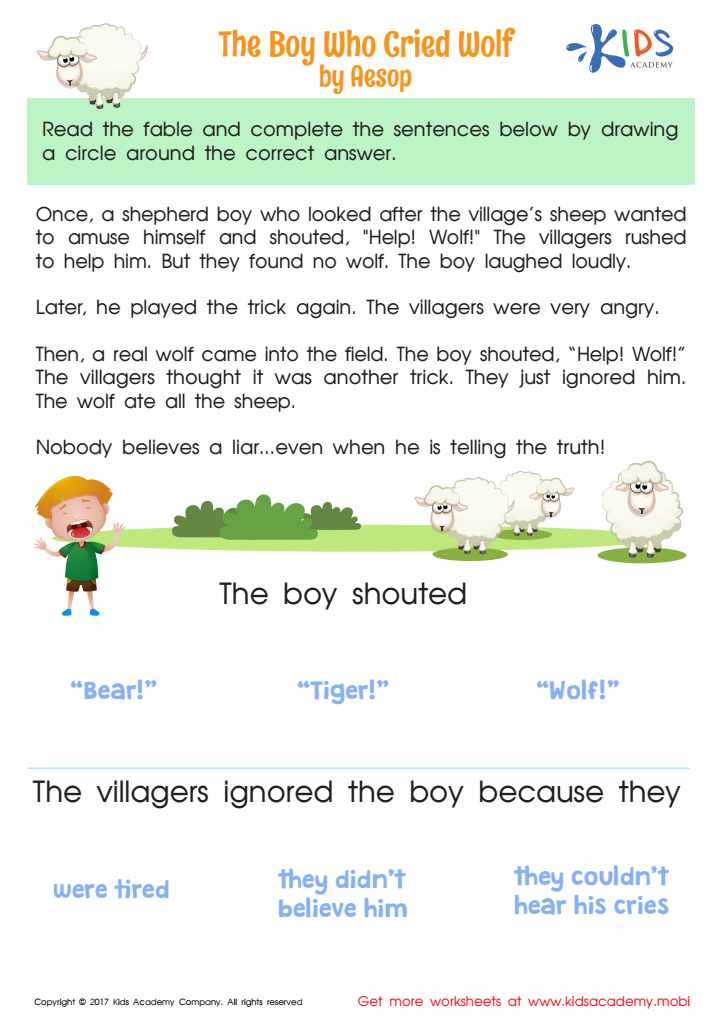
The Boy Who Cried Wolf Worksheet
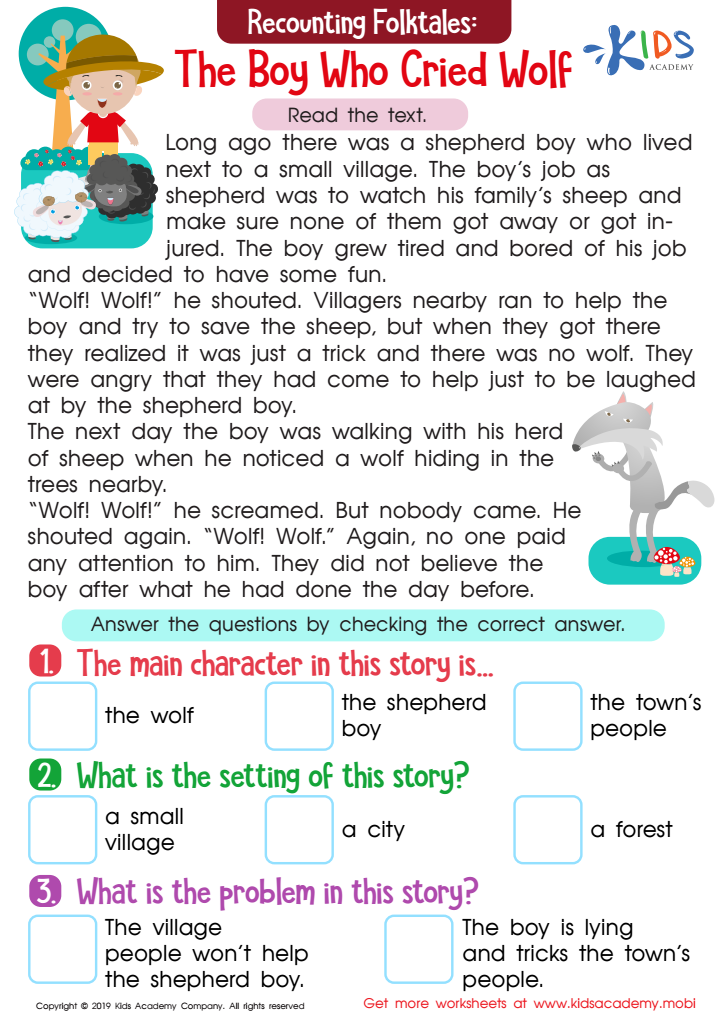
The Boy Who Cried Wolf Part 1 Worksheet


.jpg)


.jpg)

Parents and teachers should care about developing moral understanding through reading fiction for children aged 6 to 9 because it lays the groundwork for social and emotional development. At this young age, children are beginning to form their own moral compasses and understanding right from wrong. Engaging with fiction allows them to encounter diverse characters, viewpoints, and ethical dilemmas in a safe environment, helping them to empathize with others and consider the consequences of actions.
Reading fiction cultivates critical thinking as children assess characters’ motives and decisions, fostering a deeper comprehension of complex moral issues. Through relatable storytelling, children can explore themes of kindness, honesty, and resilience, which are essential for building their character and identity. These narratives also serve as discussion starters, prompting dialogues between parents, teachers, and children about values, empathy, and societal norms.
Furthermore, moral understanding developed through fiction helps equip children with the tools necessary for interpersonal relationships, as they learn to navigate feelings and values. Overall, instilling moral understanding through reading fiction not only enriches children’s literacy skills but also prepares them to become thoughtful, compassionate individuals in a diverse world.








