Rhyme recognition Reading Fiction Worksheets for Ages 6-9
3 filtered results
-
From - To
Enhance your child's reading skills with our engaging Rhyme Recognition Reading Fiction Worksheets, tailored for ages 6-9. These fun, interactive resources are designed to foster a love for reading while developing essential phonemic awareness through rhyming activities. Each worksheet includes captivating stories and imaginative prompts that encourage children to identify and create rhymes, boosting their vocabulary and reading comprehension. Perfect for home or classroom use, these worksheets make learning enjoyable and effective. Watch your young readers grow in confidence as they explore the delightful world of rhymes in an approachable, entertaining way. Unlock the joy of reading today!
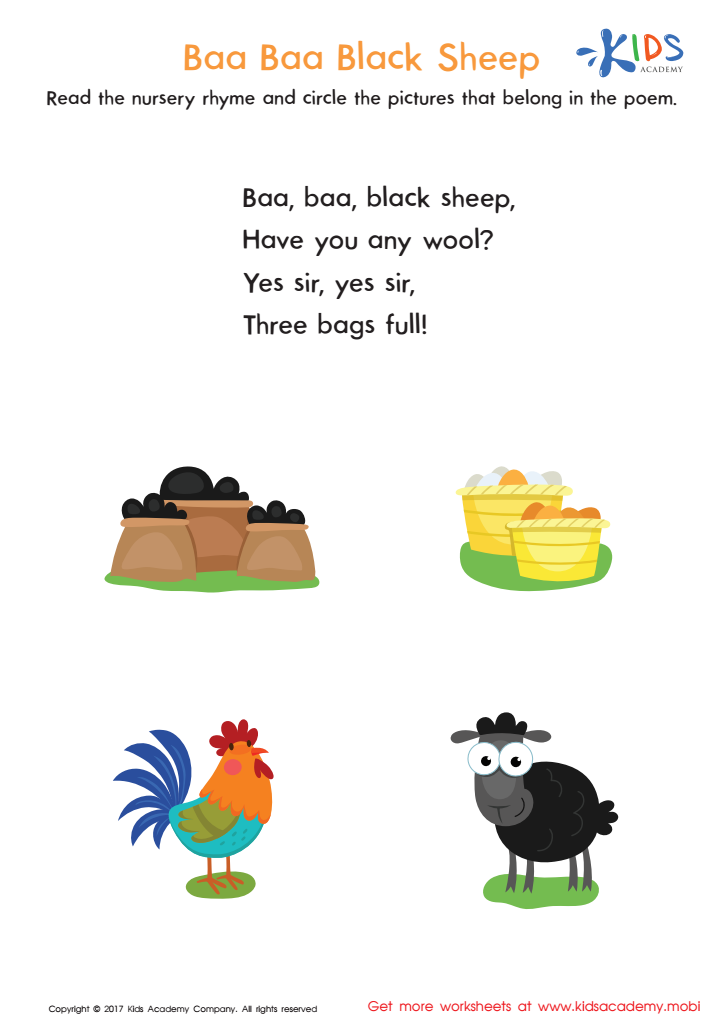
Baa Baa Black Sheep Printable
 Assign to My Students
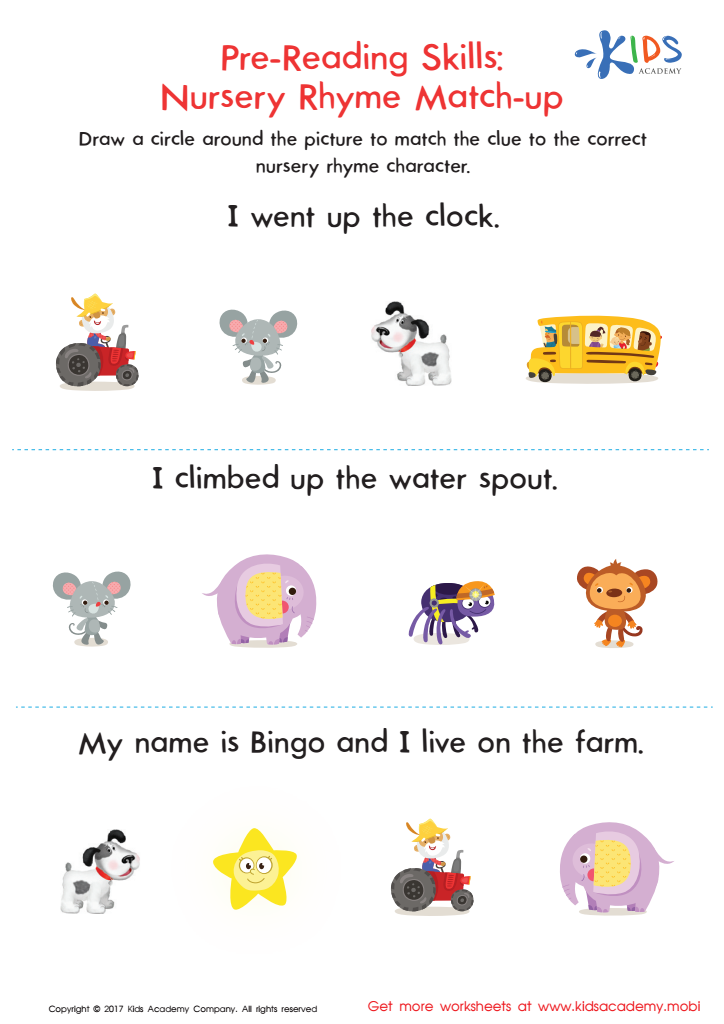
Nursery Rhyme Match–Up Worksheet
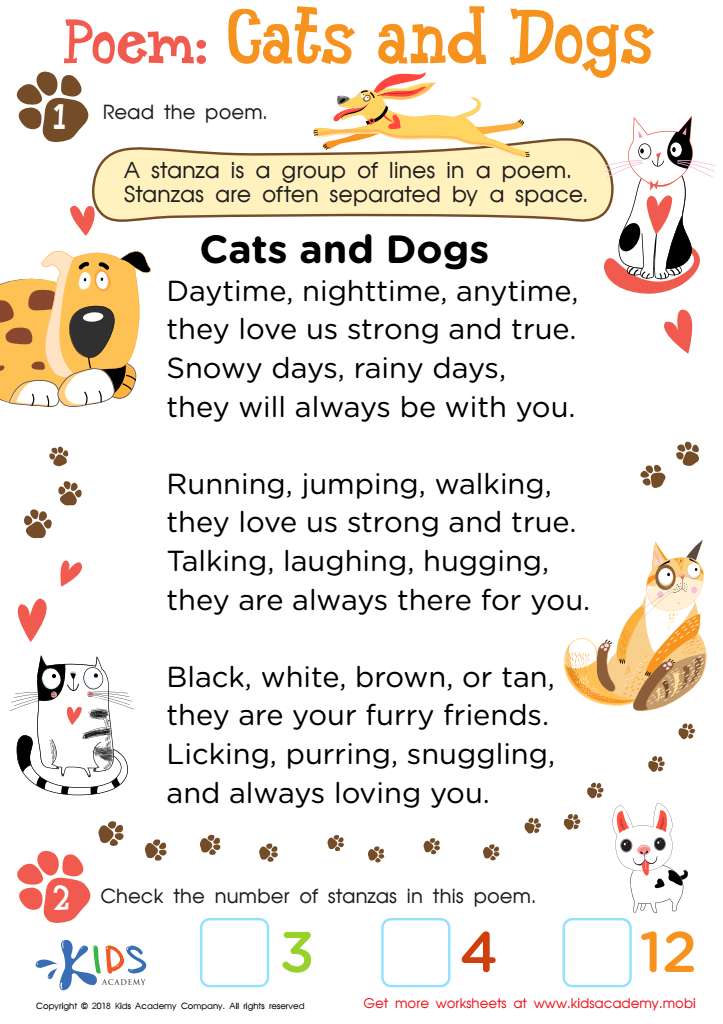
Poem: Cats and Dogs Worksheet







Rhyme recognition is a crucial component of early literacy development for children aged 6 to 9. This stage is pivotal as children transition from learning to read to reading to learn. Recognizing and generating rhymes enhances phonemic awareness, which is essential for spelling, vocabulary growth, and overall reading proficiency. When children can identify and play with sounds in words, they develop the skills needed to decode unfamiliar words, fostering confidence in their reading abilities.
Additionally, engaging with fiction that contains rhyme not only makes reading enjoyable but also helps in memory retention. The rhythmic patterns and musicality of rhyming texts capture young readers’ attention and can improve their understanding of narrative structures. This engagement encourages creativity as children learn to anticipate rhymes and predict story outcomes, which enhances comprehension skills.
By integrating rhyme recognition into reading sessions, parents and teachers cultivate a love for reading and build essential foundational skills. Recognizing rhyme can also facilitate phonological awareness, a predictor of later literacy success. Ultimately, fostering rhyme recognition allows children to approach reading with excitement, laying the groundwork for lifelong literacy and learning. Thus, it’s imperative that parents and teachers intentionally incorporate rhyming fiction into reading practices for this age group.








