Rhyming skills development Rhyming Words Worksheets for Ages 6-9
3 filtered results
-
From - To
Enhance your child's reading abilities with our engaging Rhyming Words Worksheets, specially designed for ages 6 to 9. These worksheets aim to develop essential rhyming skills through fun and interactive activities. With a variety of exercises, children will learn to identify, match, and create rhymes, boosting their phonemic awareness and vocabulary. Our user-friendly format makes it easy for educators and parents to incorporate these resources into teaching sessions or home practice. Encourage creativity and an enjoyment of language as your child explores the delightful world of rhymes. Start fostering a love of reading and language today!
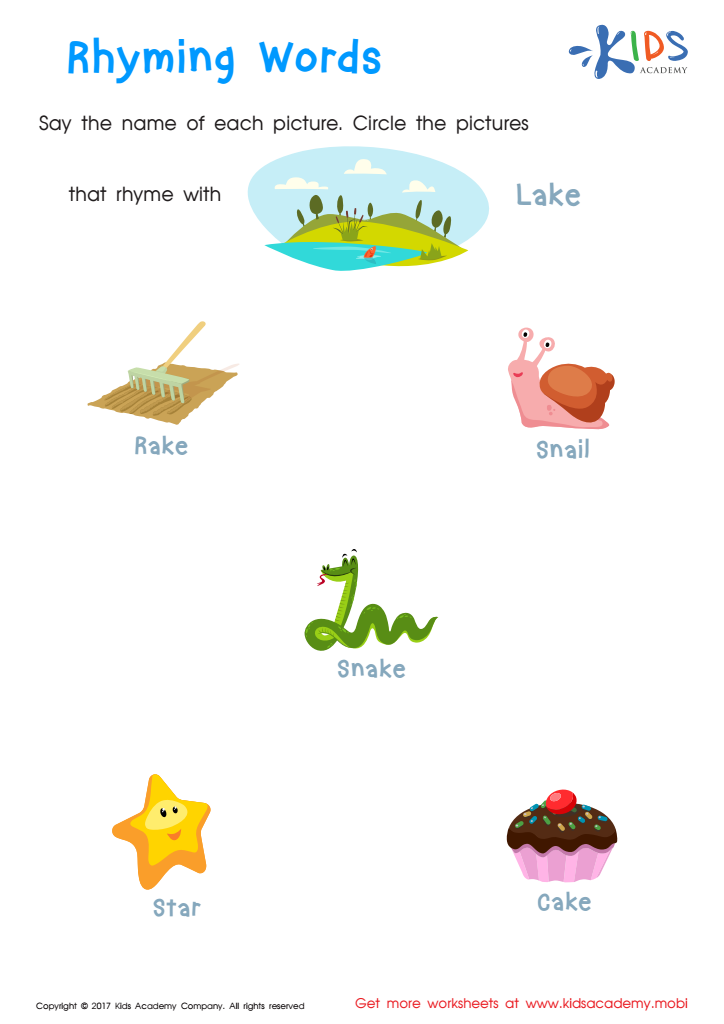
Rhyming Words Rhyming Worksheet
 Assign to My Students
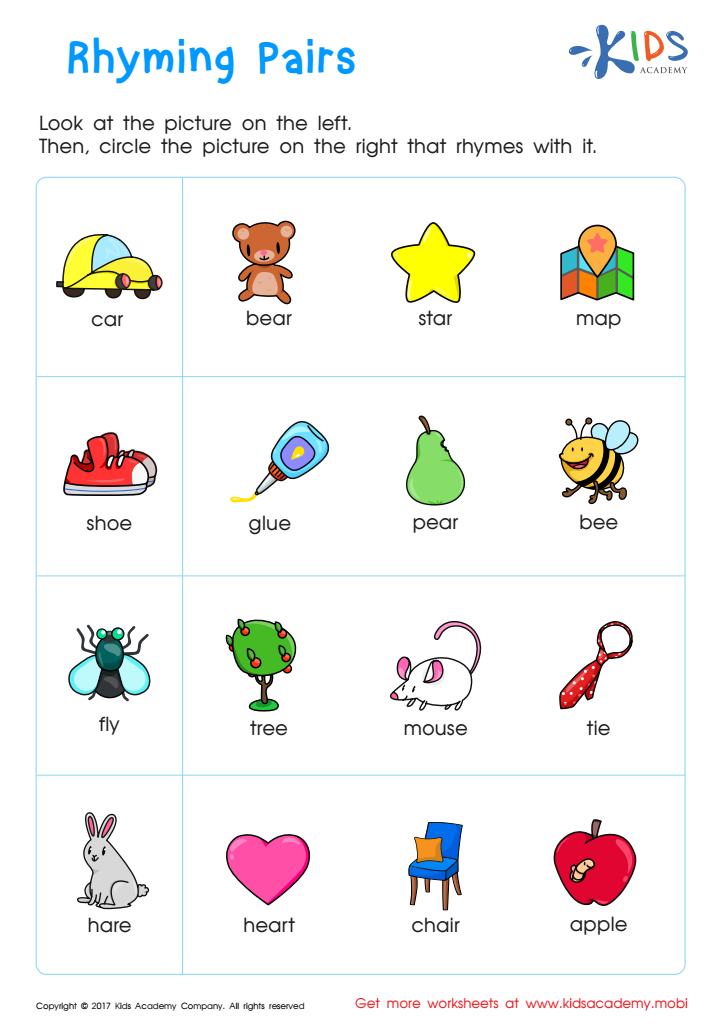
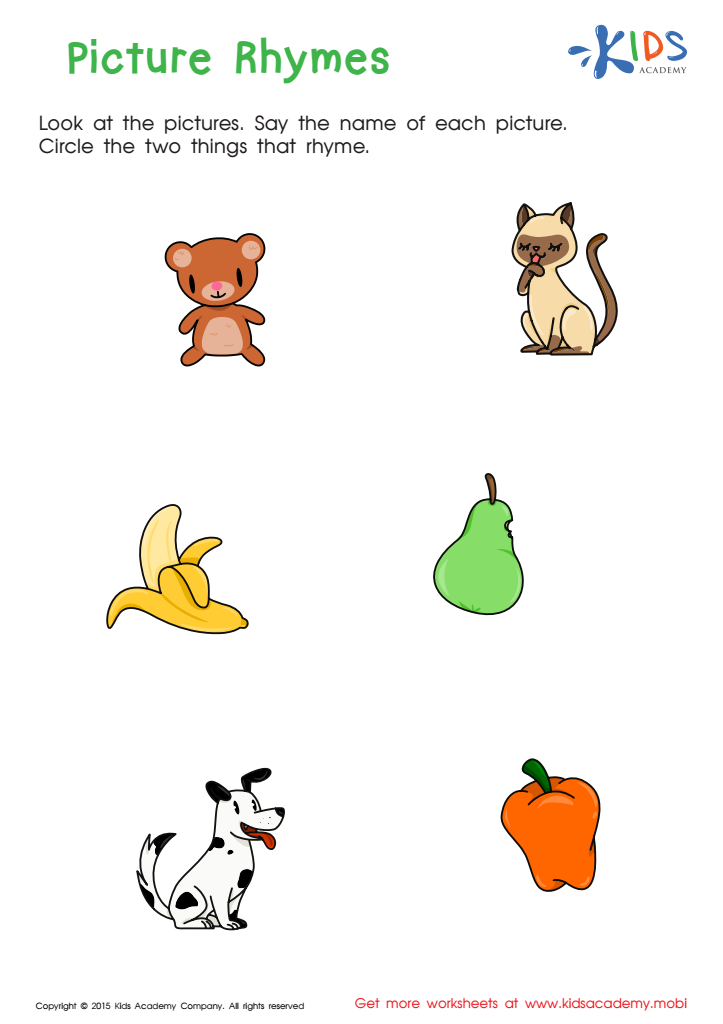
First Words: Picture Rhymes Worksheet








Rhyming skills are crucial in the early development of phonological awareness, which is fundamental for reading and writing proficiency. For children aged 6-9, understanding rhymes helps build their decoding skills, allowing them to recognize patterns in language. When children can identify and produce rhyming words, they develop an enhanced ability to hear and manipulate sounds, which aids in spelling and reading fluency.
Additionally, learning rhymes fosters vocabulary growth and comprehension. Through engaging with rhymes, children encounter new words in context, making them easier to remember. This not only enriches their vocabulary but also enhances their storytelling and expressive abilities.
Moreover, rhyming activities can be enjoyable, making learning a playful experience. When parents and teachers incorporate songs, games, and poetry that emphasize rhyme, they foster a love for language and literacy in children, leading to increased motivation and participation in learning.
Finally, rhyming skills are linked to later reading success. Research shows that children who develop better phonological awareness tend to achieve higher reading levels. By emphasizing rhyming words during this vital stage, parents and teachers invest in children's academic futures, providing them with the tools they need for lifelong learning.








