Learning about ecosystems Animals Worksheets for Ages 6-9
4 filtered results
-
From - To
Introduce your young learners to the wonders of ecosystems with our engaging "Learning about Ecosystems Animals Worksheets" designed for ages 6-9. These printable worksheets from Kids Academy pair crucial science concepts with fun activities, ensuring kids grasp the role of animals within various ecosystems. Through interactive puzzles, vibrant illustrations, and educational exercises, children explore habitats, food chains, adaptations, and more. Ideal for classroom use or homeschooling, these worksheets are crafted to foster curiosity and a deeper understanding of the natural world, aiding in the development of critical thinking and observation skills. Ignite a passion for science today!
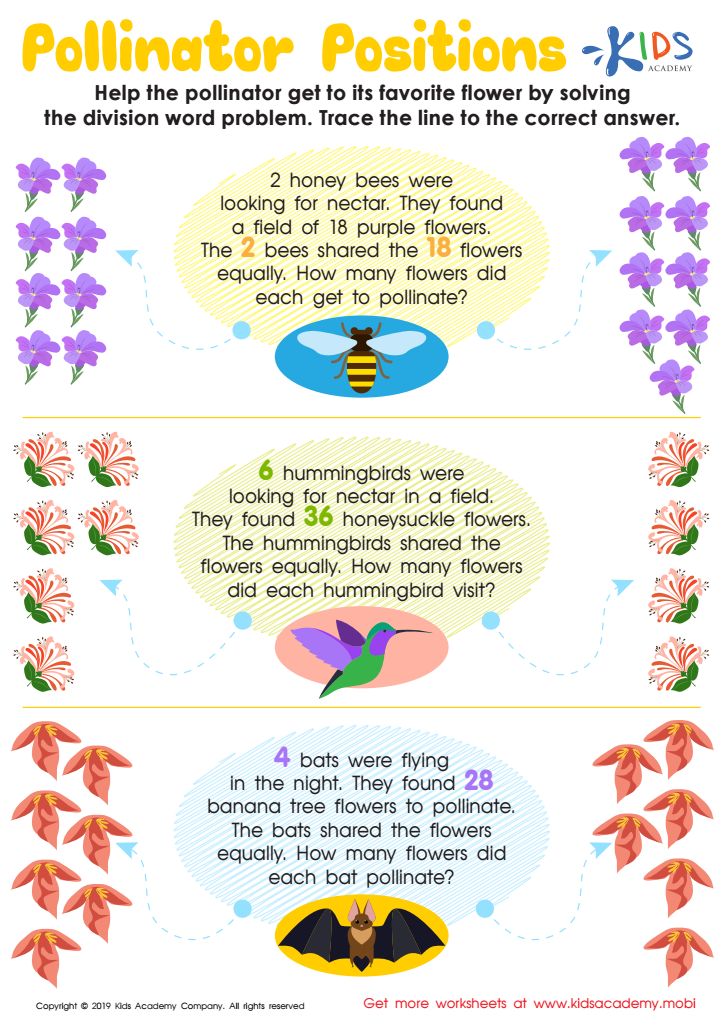
Pollinator Positions Worksheet
 Assign to My Students
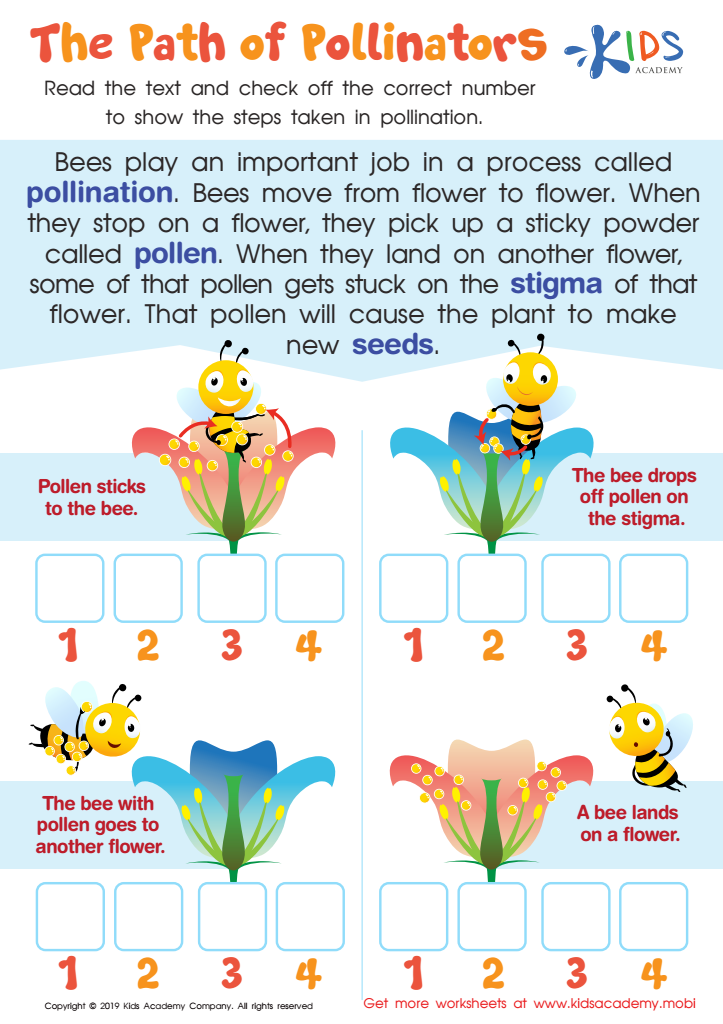
The Path of Pollinators Worksheet
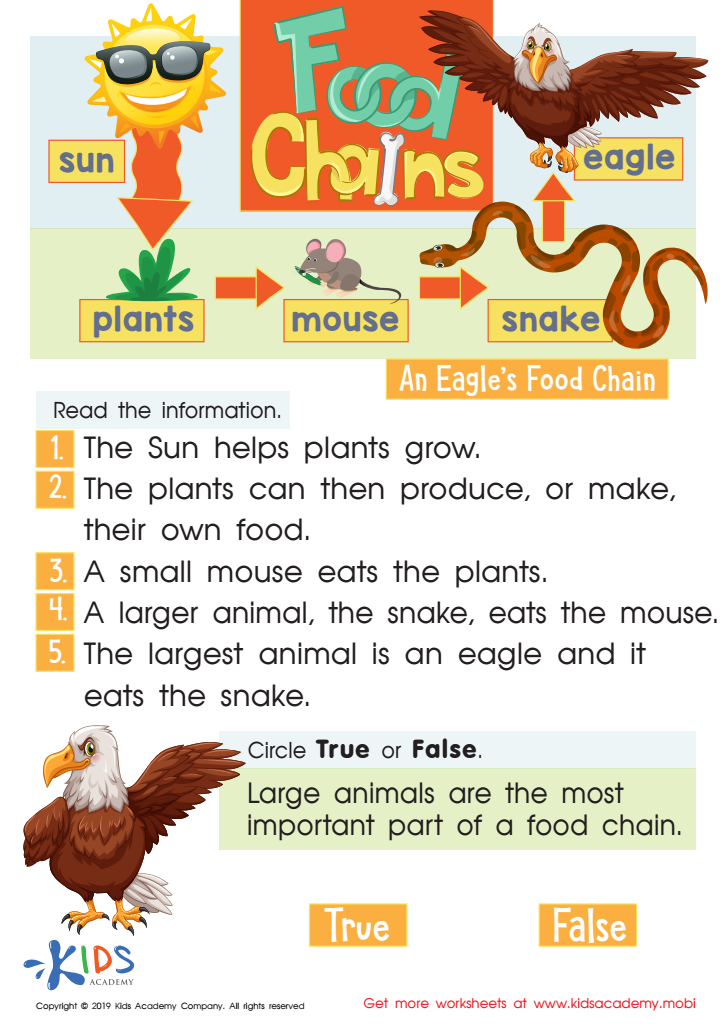
Food Chains Worksheet
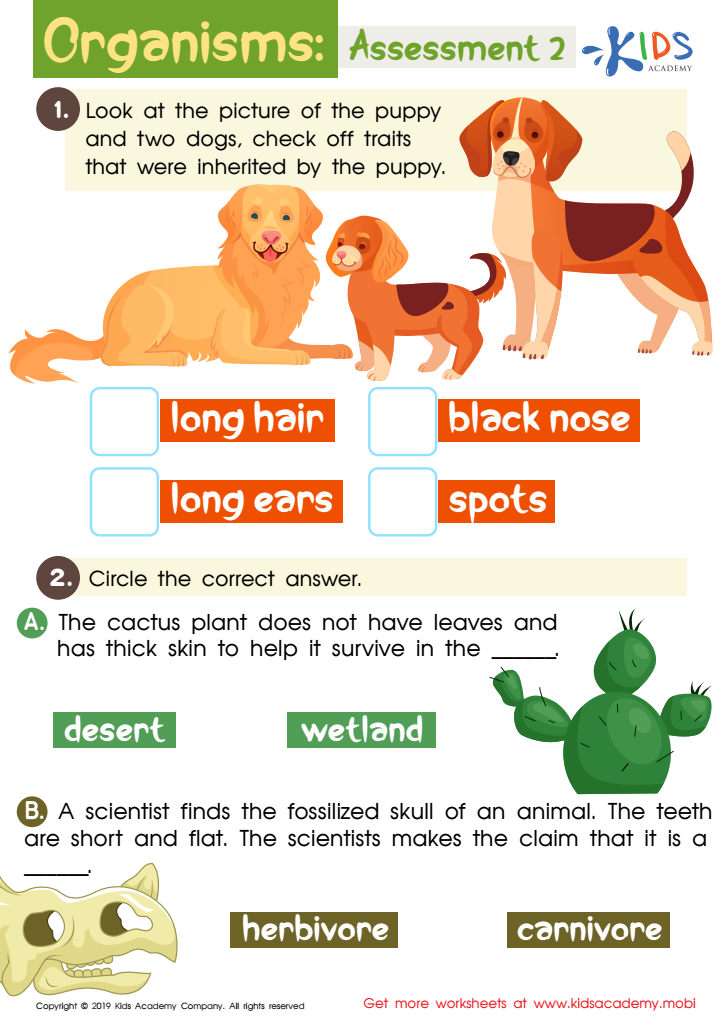
Organisms: Assessment 2 Worksheet








Learning about ecosystems and their animal inhabitants is crucial for children aged 6-9 because it fosters curiosity, empathy, and a sense of responsibility. At this age, kids are naturally curious and eager to understand the world around them. By exploring ecosystems, they gain critical insights into how different organisms coexist, interact, and rely on each other for survival.
First, learning about ecosystems enhances children's scientific literacy. It introduces them to basic biological concepts, such as food chains, habitats, and biodiversity, building a foundation for more complex scientific learning in later years. Second, it nurtures empathy by helping them develop an appreciation for the diversity of life. Understanding that all creatures—from tiny insects to large mammals—play essential roles in maintaining the balance of nature makes kids more compassionate and respectful toward living beings.
Moreover, early education on ecosystems generates environmental awareness and stewardship. With climate change and habitat destruction posing increasing threats, it’s vital for young minds to recognize the importance of preserving our planet. This knowledge equips them with the motivation and skills needed to adopt sustainable practices and advocate for conservation efforts, ensuring a healthier environment for future generations.
Incorporating ecosystem education into the curriculum thus molds well-rounded, environmentally conscious individuals who value and protect the natural world.