Categorization skills Science Worksheets for Ages 6-9
4 filtered results
-
From - To
Jumpstart your child's scientific thinking with our Categorization Skills Science Worksheets for Ages 6-9! These engaging and interactive worksheets are designed to help young learners develop critical categorization abilities, essential for understanding scientific concepts. Through fun activities like sorting, classifying, and matching, children enhance their ability to differentiate and group objects based on various attributes. Ideal for both classroom and home use, these worksheets support foundational skills crucial for STEM learning. Boost your child's confidence and curiosity in science with exercises that make learning both enjoyable and educational. Download today and watch your child’s categorization skills thrive!
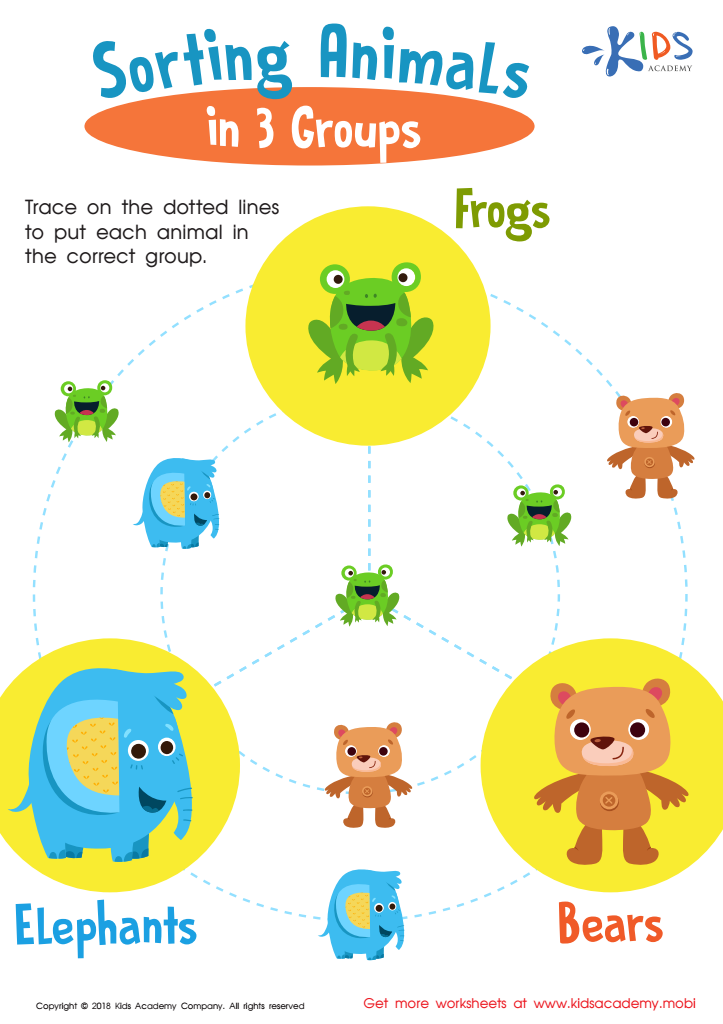
Sorting Animals in 3 Groups Worksheet
 Assign to My Students
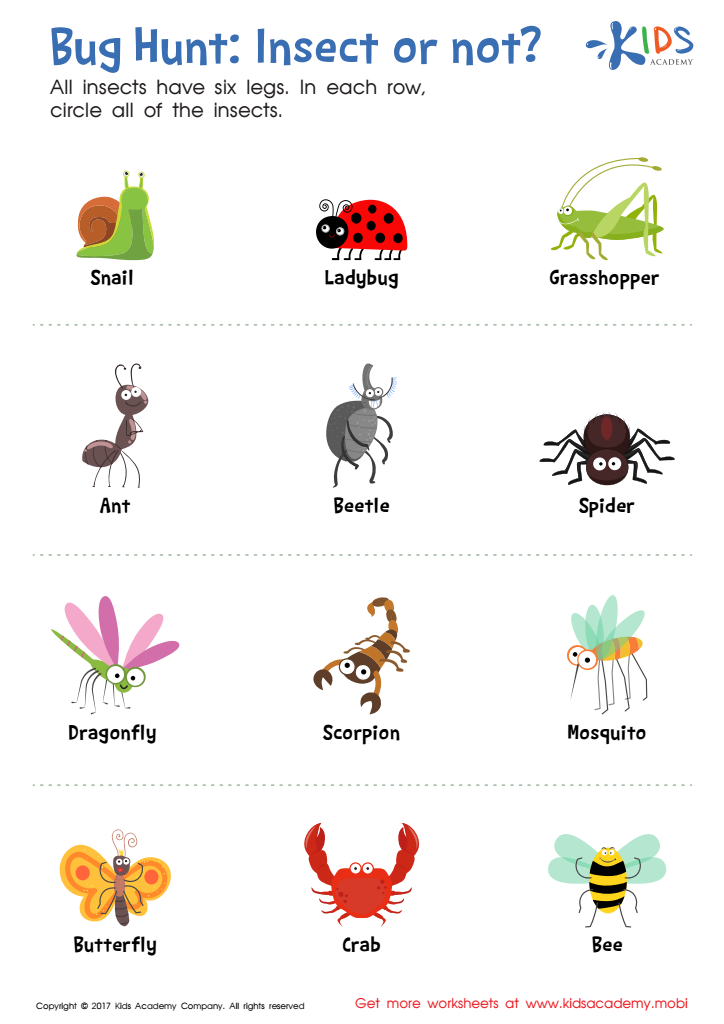
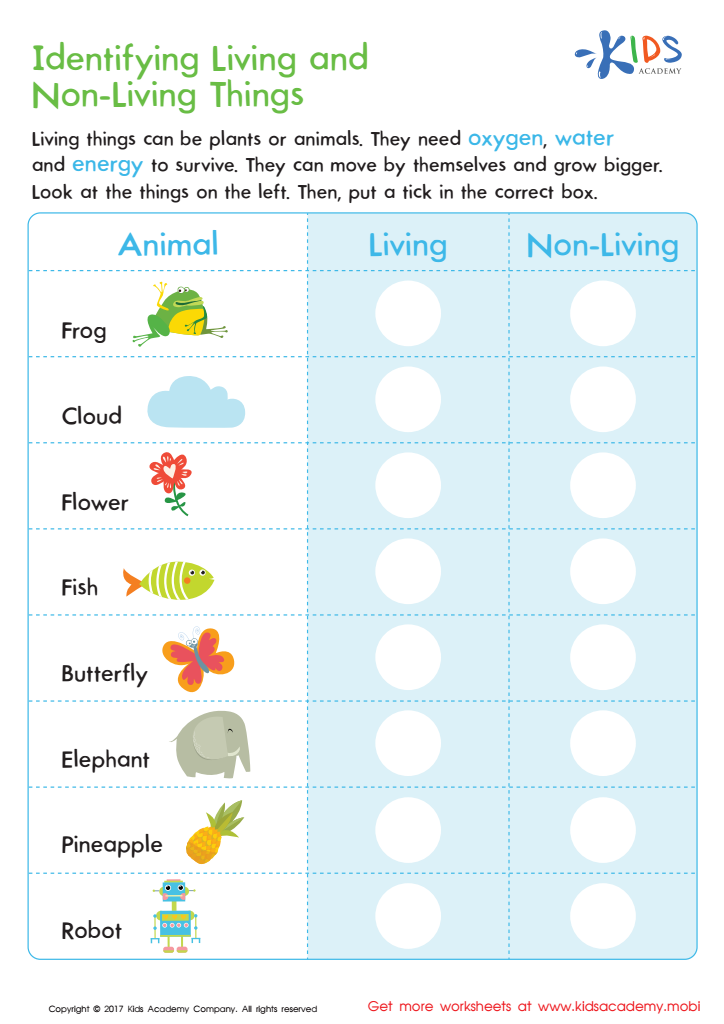
Identifying Living or Non–living Worksheet
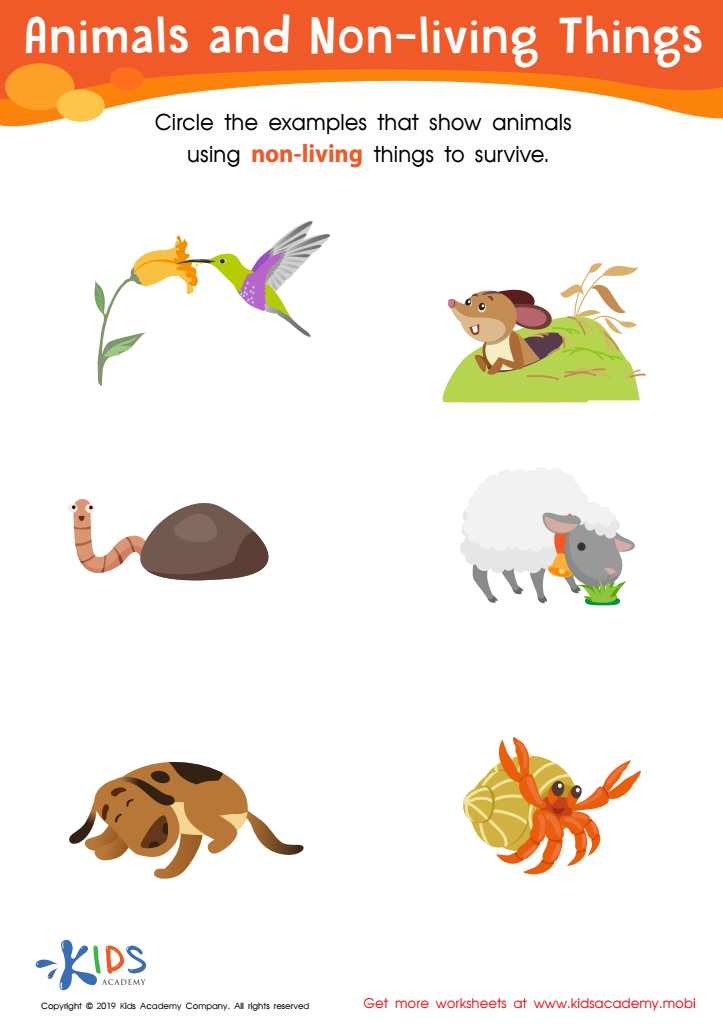
Animals and Non-Living Things Worksheet



.jpg)



Categorization skills are crucial for young children, specifically between ages 6-9, as they form the basis for scientific thinking and overall cognitive development. When children learn to categorize, they practice observing, comparing, and contrasting different objects or ideas, which enhances their critical thinking abilities. This fundamental skill helps them make sense of the world around them by grouping similar items and identifying patterns.
For teachers and parents, fostering categorization skills in science equips children with the tools to better understand and remember information. For instance, when studying living organisms, children who can categorize animals based on specific traits (mammals, reptiles, etc.) are more likely to grasp concepts of biology effectively. These skills also lay the groundwork for improved problem-solving capabilities. By recognizing patterns and organizing information systematically, children develop better strategies for approaching complex problems.
Moreover, categorization helps improve language and literacy. As children discuss their categories and explain their logic, they enhance their vocabulary and communication skills. Engaging in scientific activities that promote categorization not only spikes curiosity but also entails more hands-on learning experiences, fostering a deeper appreciation for science.
In essence, by supporting categorization skills, parents and teachers provide children with essential tools for academic success and practical everyday reasoning.







