
Identifying Animals Science Worksheets for Ages 6-9
3 filtered results
Difficulty Level
Grade
Age
-
From - To
Subject
Activity
Standards
Explore our engaging "Identifying Animals Science Worksheets" tailored for children ages 6-9! Designed to spark curiosity and enhance learning, these worksheets encourage kids to discover various animal species and their unique characteristics. Through fun activities such as matching, sorting, and identifying animals based on their habitats, your child will develop essential observation skills and knowledge of wildlife. Perfect for both classroom and at-home learning, these worksheets promote critical thinking and creativity. Foster a love for science while supporting early educational development. Dive into our collection today and help your child become an animal expert!
Favorites
With answer key
Interactive
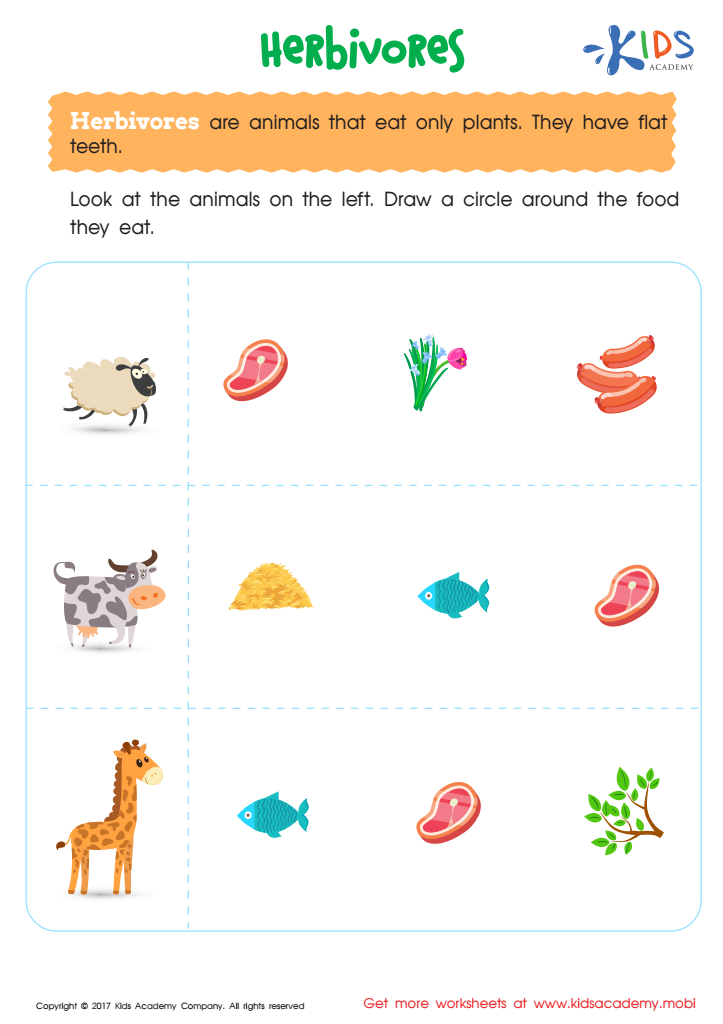
Herbivores Printable
Strengthen their vocab with these fascinating creatures, as they explore an intriguing aspect of beloved animals.
 Assign to My Students
Herbivores Printable
Worksheet
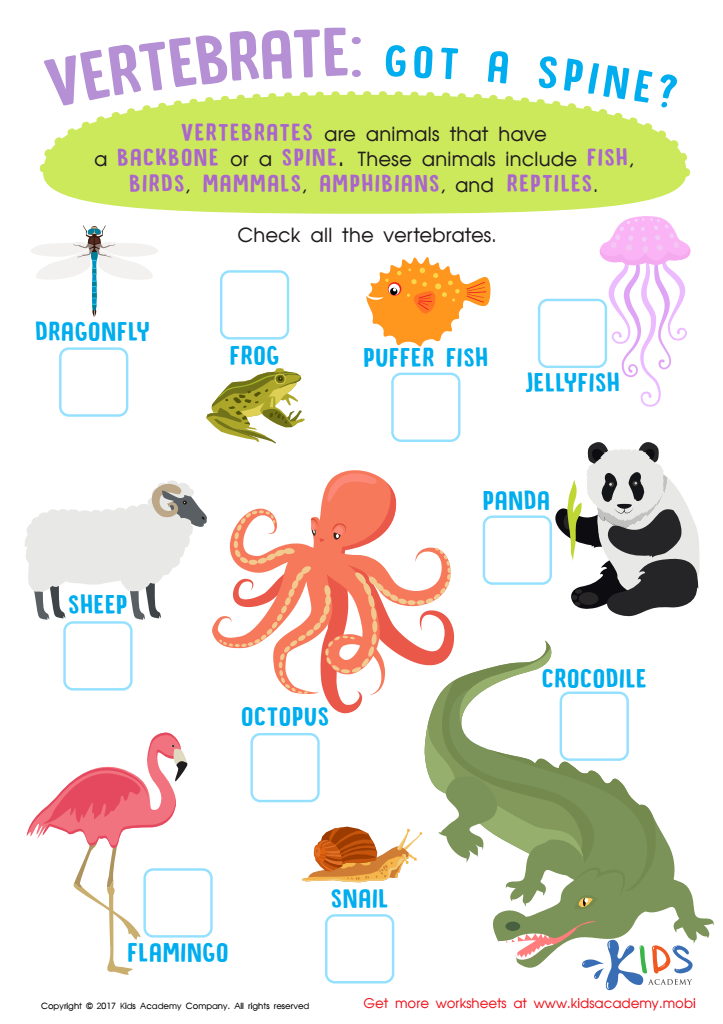
Vertebrates Animals Worksheet for 3rd Grade
This 3rd grade worksheet introduces your child to the wonders of vertebrate animals. They will have fun sorting them from those without a spine, while learning more about the animal kingdom!
Vertebrates Animals Worksheet for 3rd Grade
Worksheet
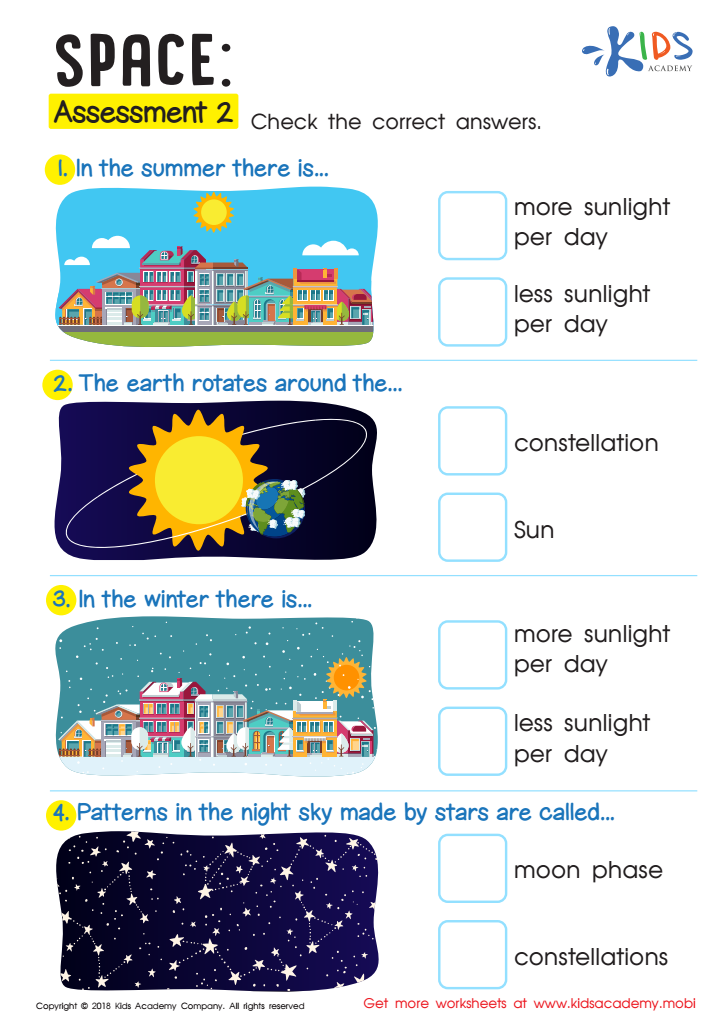
Space: Assessment 2 Worksheet
Test your kids' knowledge of the weather, constellations and Earth with this worksheet. Show them the 4 images and ask what's happening; then read the questions and options and help them pick the right answers. This printout is a helpful and fun way to learn!
Space: Assessment 2 Worksheet
Worksheet
Join Kids Academy for Free
Who is primarily going to use this learning content?







Identifying animals is crucial for children aged 6-9 as it lays the foundation for their understanding of the natural world. During these formative years, children are naturally curious and eager to explore their environment. Teaching them about different animals fosters a love for nature, encourages critical thinking, and enhances observational skills. Through identification, children learn to categorize, compare, and contrast various species, which enhances cognitive development.
Furthermore, understanding animals promotes empathy and responsibility towards living creatures and their habitats. It instills an awareness of biodiversity and the importance of conservation. Recognizing the characteristics of animals helps children appreciate ecological balance and the role each species plays in their environment.
Additionally, animal identification can serve as a gateway to broader science concepts, such as ecosystems, adaptations, and food chains. It promotes active learning through outdoor exploration, hands-on activities, and engaging discussions, keeping children excited about science.
Incorporating this knowledge into classrooms or family activities not only nurtures a child's intellect but also creates lasting memories and experiences that shape their view of the world. Thus, parents and teachers should prioritize animal identification as a key aspect of early education.







