
Weather identification Science Worksheets for Ages 6-9
4 filtered results
Difficulty Level
Grade
Age
-
From - To
Subject
Activity
Standards
Discover our engaging Weather Identification Science Worksheets designed specifically for children ages 6-9. Ideal for young learners, these worksheets introduce essential concepts about different weather patterns, types, and seasonal changes through fun activities and colorful illustrations. Students will practice identifying various weather elements such as rain, sunshine, snow, and storms while developing critical thinking skills and enhancing their understanding of the natural world. With a blend of creative exercises and educational content, these worksheets make learning about weather enjoyable and informative. Perfect for both classroom and home use, they support kids in exploring their environment and fostering a lifelong love for science!
Favorites
With answer key
Interactive
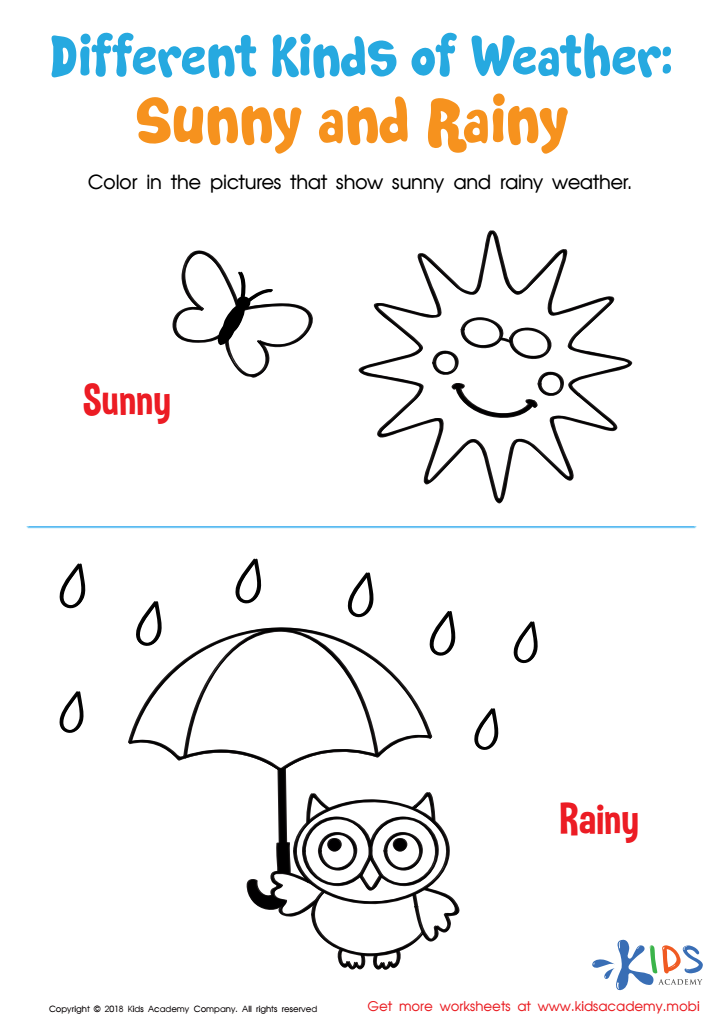
Different Kinds of Weather: Sunny and Rainy Worksheet
Kids will love coloring this fun worksheet that helps them learn about different types of weather. They'll hone their fine motor skills while reinforcing the cyclical nature of natural events. Download this free PDF to give kids a basic understanding of weather concepts and lay the groundwork for further learning.
Download (PDF)
 Assign to My Students
Assign to My Students
Different Kinds of Weather: Sunny and Rainy Worksheet
Worksheet
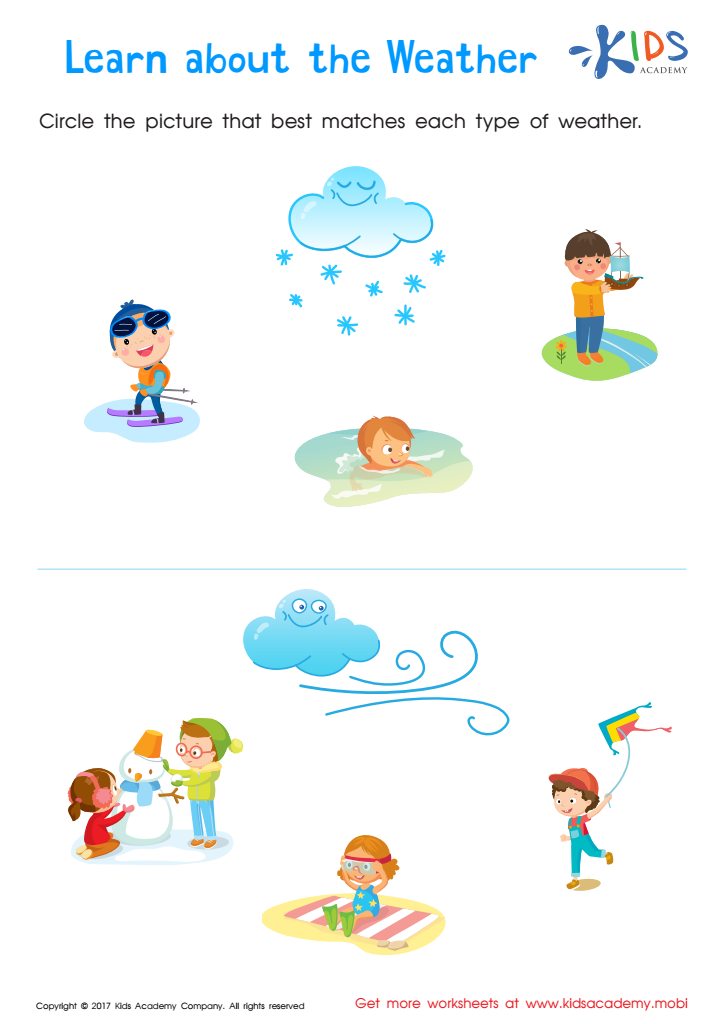
About the Weather Printable
This worksheet is perfect for reinforcing knowledge about changing weather and activities that suit each season. Help your child use their life experiences to observe the weather and complete the worksheet. Fun and colorful, it's a great way to learn about weather and seasons. Let's get started!
About the Weather Printable
Worksheet
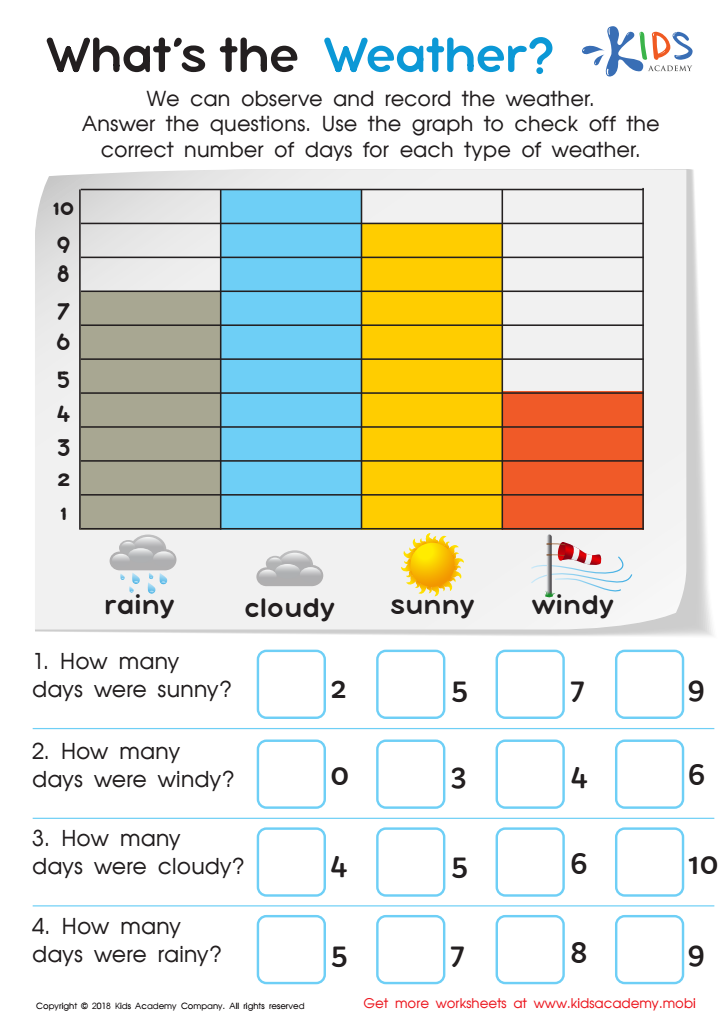
What's the Weather? Worksheet
Check the weather outside. Help kids learn and practice science and math by tracking different types of days using this printable worksheet. Have them count bars next to weather types like cloudy, sunny, windy, and rainy. Answer the questions and take the lesson further by creating a bar graph to show the monthly weather.
What's the Weather? Worksheet
Worksheet
Join Kids Academy for Free
Who is primarily going to use this learning content?



.jpg)




Understanding weather identification is crucial for children aged 6-9, as it equips them with fundamental life skills and enhances their cognitive development. At this age, children are naturally curious about their environment, and studying weather fosters that curiosity through observation and investigation. Learning to identify different weather conditions, such as sunny, rainy, windy, or snowy, helps children connect with the world around them and provides a basis for critical thinking.
Moreover, weather education promotes safety and responsibility. Recognizing weather patterns enables children to make informed decisions about outdoor activities, ensuring they dress appropriately and take precautions during adverse conditions. This knowledge not only helps in their day-to-day lives but also lays the groundwork for understanding broader environmental issues like climate change.
For parents and teachers, integrating weather identification into learning enhances interdisciplinary studies, merging science with mathematics, art, and language. By engaging with weather-themed projects, such as creating weather charts or conducting simple experiments, children develop observational and analytical skills — key components for future academic success. Ultimately, emphasizing weather identification fosters a sense of responsibility toward the environment and nurtures a generation equipped to think critically about the world’s changing dynamics.







