Knowledge application Physical Science Worksheets for Ages 6-9
4 filtered results
-
From - To
Discover our vibrant Knowledge Application Physical Science Worksheets, specially designed for children aged 6-9! These engaging activities help young learners apply their understanding of essential physical science concepts through fun exercises on motion, simple machines, and the properties of matter. Each worksheet fosters critical thinking, promotes curiosity, and reinforces learning in a hands-on way. Whether at home or in the classroom, our resources support skill development while making science exciting and accessible. Perfect for budding scientists, these worksheets transform lessons into enjoyable challenges that stimulate creativity and problem-solving abilities. Explore our collection and ignite a passion for discovery today!
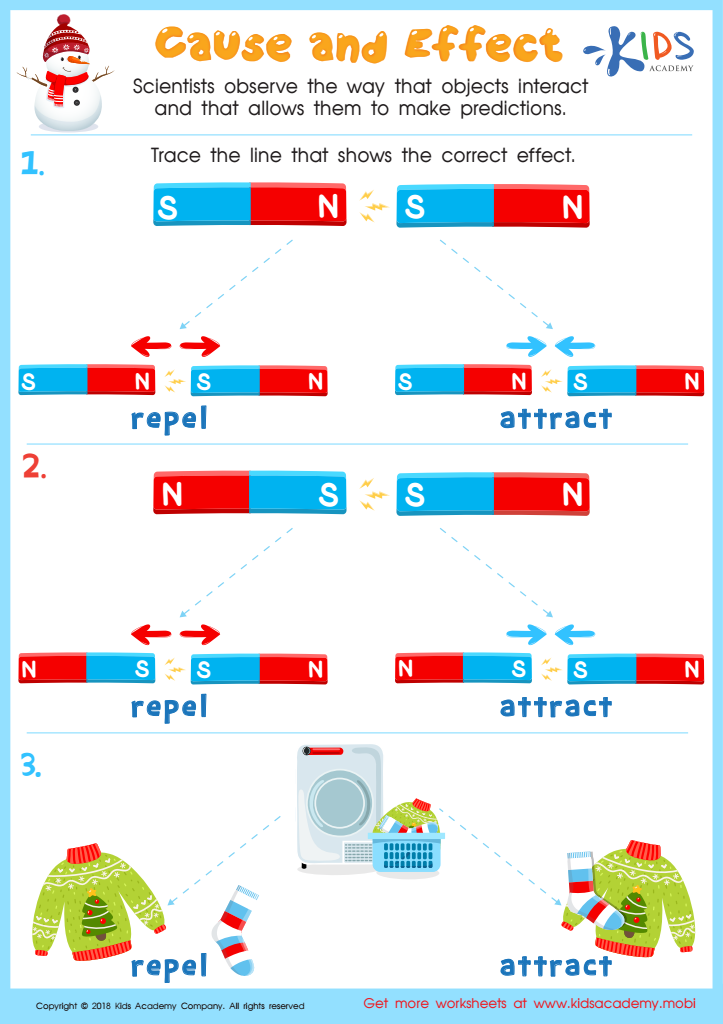
Repel and Attract Magnet Worksheet
 Assign to My Students
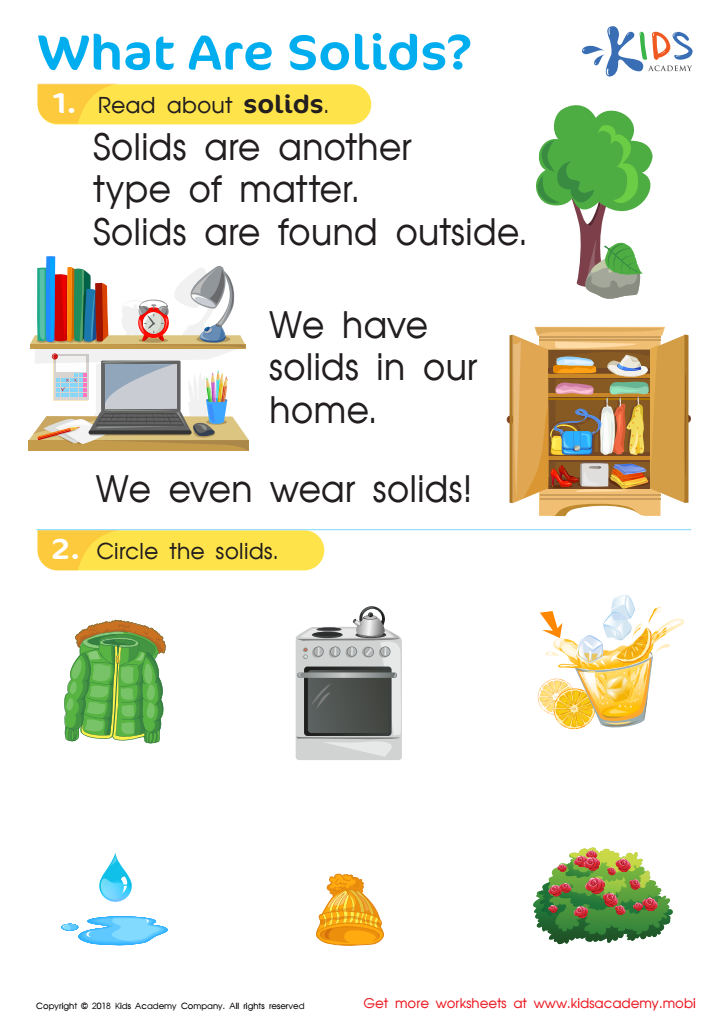
What Are Solids? Worksheet
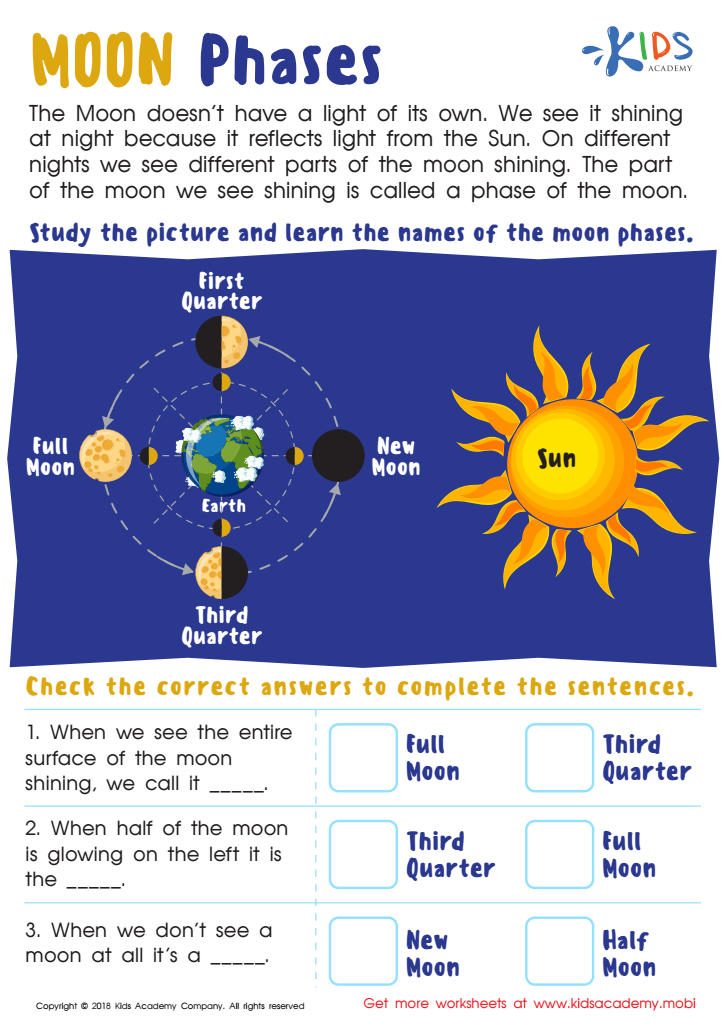
Moon Phases Worksheet
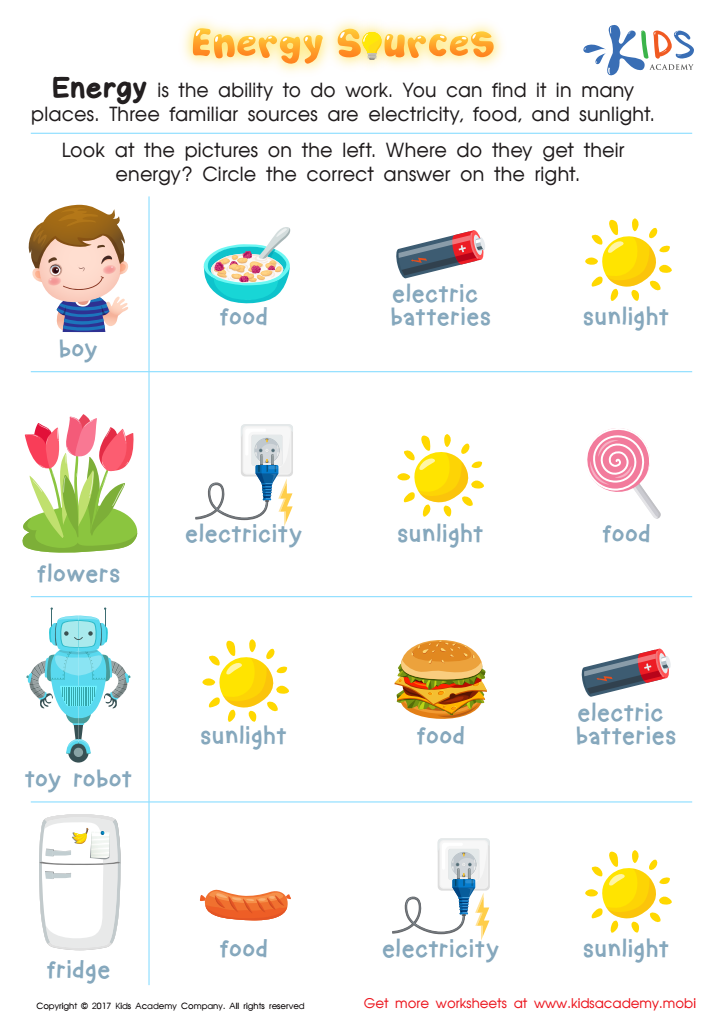
Energy Sources Printable








Knowledge application in Physical Science is essential for children aged 6-9, as it lays the foundation for critical thinking and problem-solving skills. At this age, children are naturally curious about the world around them, and engaging them in hands-on science activities helps to transform that curiosity into meaningful understanding. By applying physical science concepts like force, motion, and energy, children learn to observe, hypothesize, experiment, and analyze results, promoting an inquiry-based mindset.
Parents and teachers should prioritize this knowledge application because it fosters resilience and adaptability. As children experiment with scientific principles, they learn that failure can lead to new discoveries, instilling a growth mindset that extends beyond the classroom. Moreover, science is integrative; it connects with math, art, and even social studies, enhancing interdisciplinary learning and showing children how interconnected knowledge is.
Furthermore, early exposure to physical science nurtures a love for learning and may inspire a future career in STEM (Science, Technology, Engineering, Mathematics) fields. With the world increasingly reliant on scientific understanding, emphasizing knowledge application in Physical Science equips young learners with skills they will need to navigate and impact their futures positively. Thus, fostering this learning early can set children on a path toward success and inquiry-driven exploration.







