Understanding light sources Physical Science Worksheets for Ages 6-9
6 filtered results
-
From - To
Discover our engaging "Understanding Light Sources" physical science worksheets designed for ages 6 to 9! These worksheets provide young learners with an opportunity to explore the fascinating world of light and its various sources. Through fun activities and illustrations, children will investigate natural and artificial light sources, enhancing their comprehension of fundamental scientific concepts. Each worksheet includes age-appropriate questions and engaging exercises that promote critical thinking and curiosity. Perfect for both classroom and home learning, these resources aim to inspire a love for science while building essential skills. Download now to light up your child's learning journey!
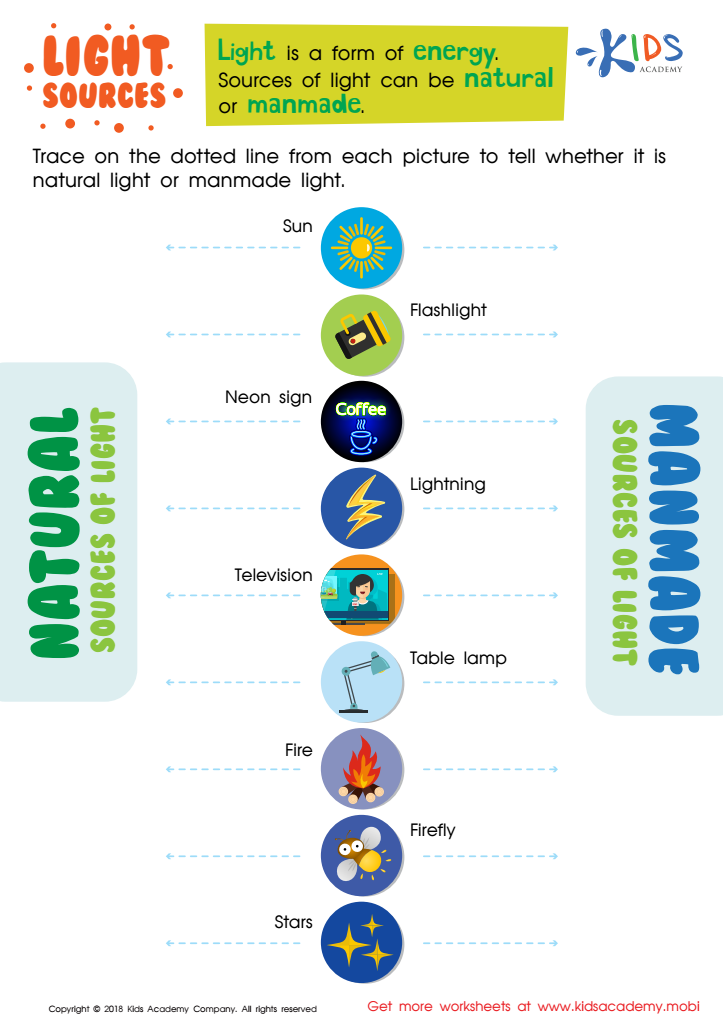
Natural and Manmade Light Sources Worksheet
 Assign to My Students
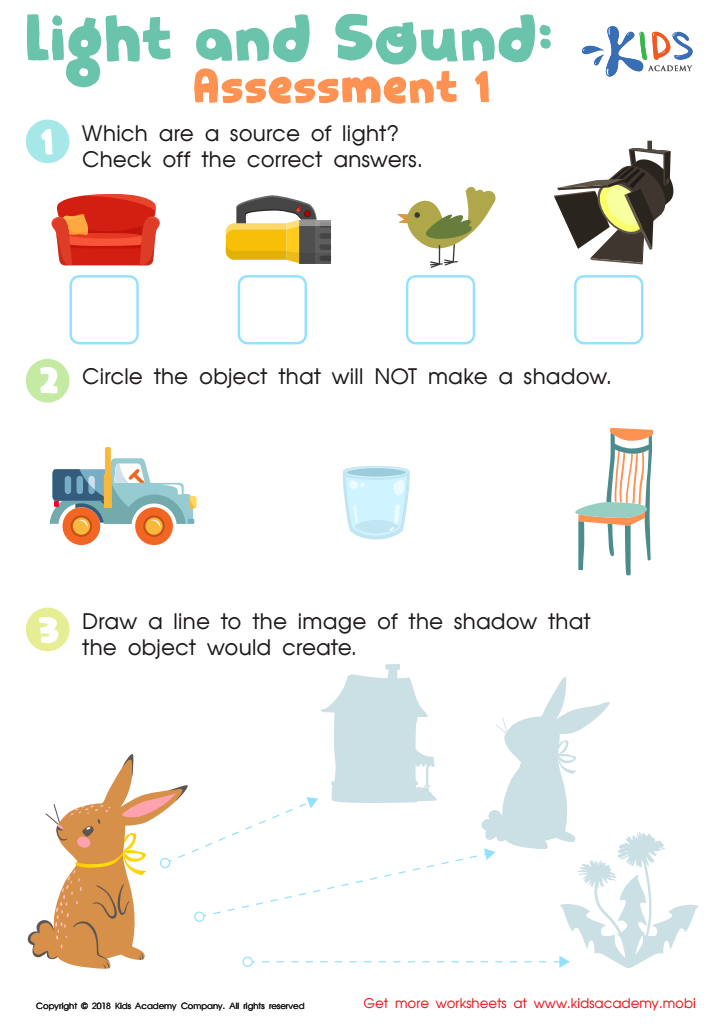
Light and Sound: Assessment 1 Worksheet
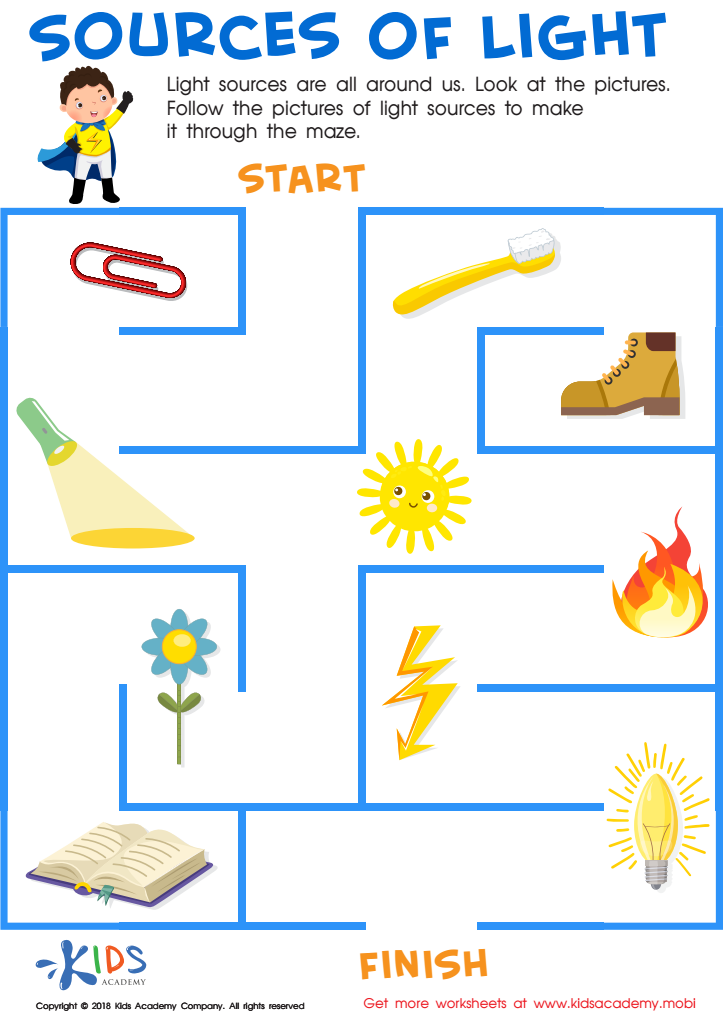
Sources of Light Worksheet
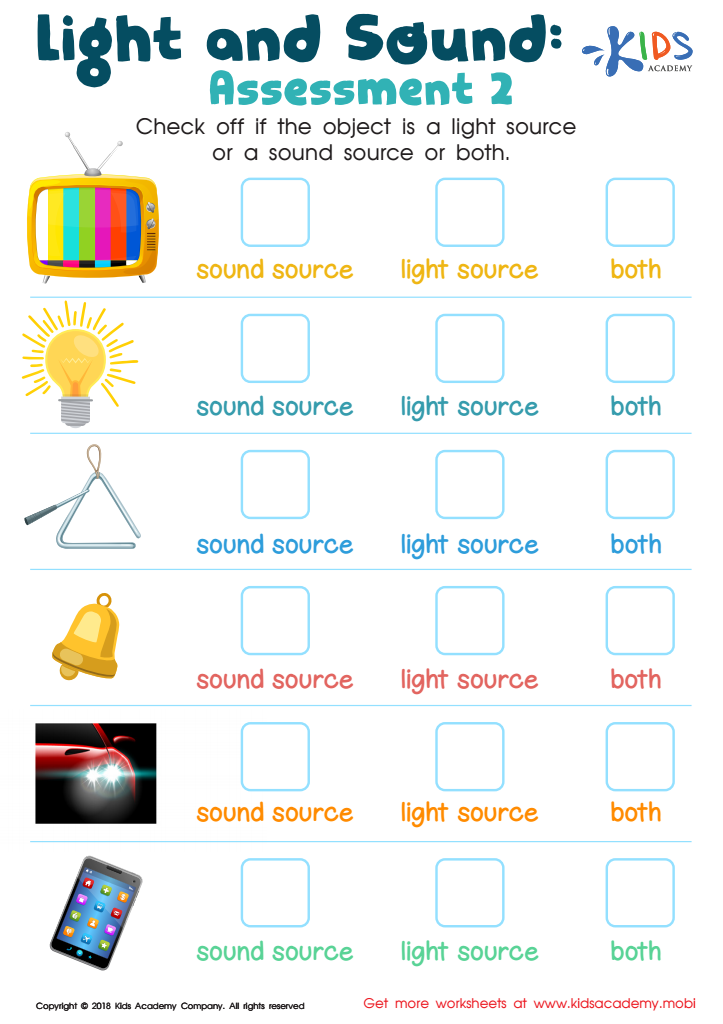
Light and Sound: Assessment 2 Worksheet
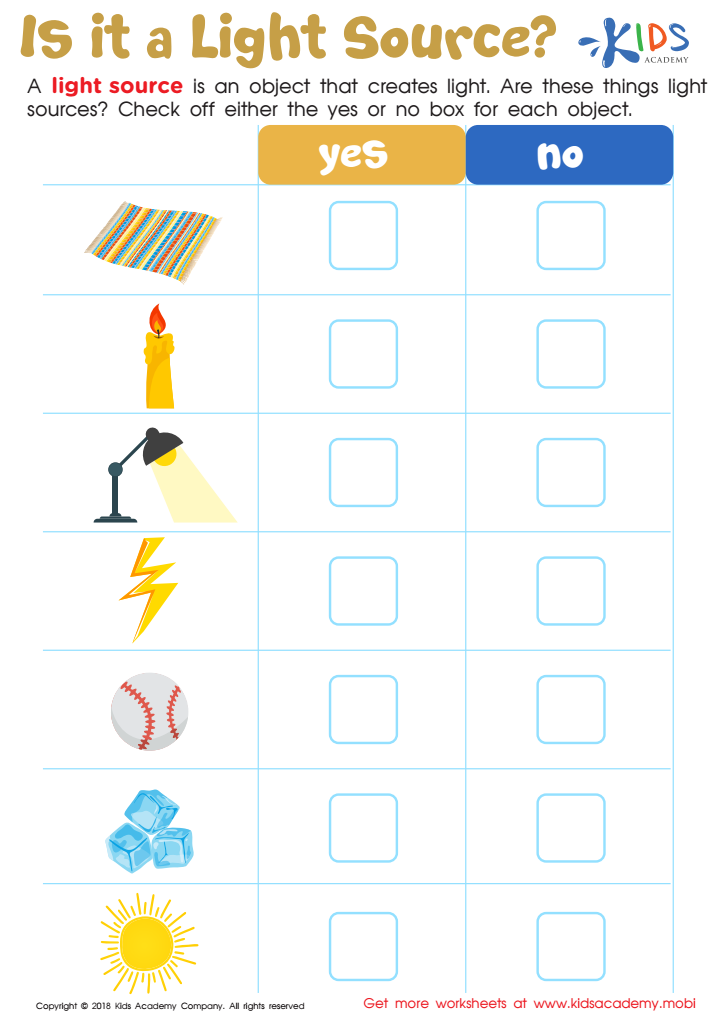
Is It a Light Source? Worksheet
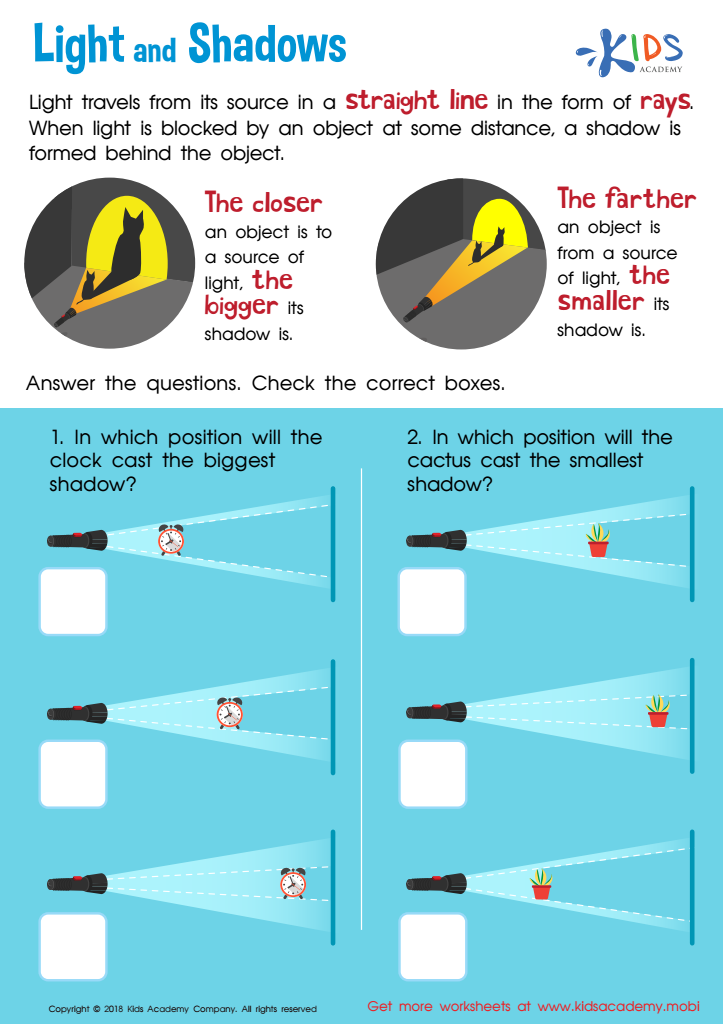
Light and Shadow Worksheet for Grade 3








Understanding light sources is crucial for children aged 6-9 as it lays the foundation for their scientific knowledge and curiosity. At this age, children are naturally inquisitive and eager to explore their environment, making it the perfect time to introduce basic concepts of physical science. Teaching them about light sources—such as the sun, lamps, and reflective surfaces—helps students grasp fundamental principles of how light works and its importance in everyday life.
By exploring different types of light sources, children can develop critical thinking and observation skills. They learn about natural vs. artificial light and how light enables us to see the world around us. This understanding fosters a sense of wonder and exploration, encouraging children to ask questions and seek answers through scientific inquiry.
Furthermore, grasping the concepts of light lays the groundwork for advanced topics in physics and earth sciences. Demonstrating hands-on experiments, such as observing shadows or creating rainbows, makes learning engaging and memorable. Parents and teachers who prioritize this topic encourage a lifelong love for science and empower children to make sense of the world, merging curiosity with knowledge and fostering essential skills like experimentation, observation, and reasoning.







