
Basic Addition Plants and Animals Worksheets for Ages 6-9
4 filtered results
Difficulty Level
Grade
Age
-
From - To
Subject
Activity
Standards
Introduce young learners to the world of nature and math with our engaging "Basic Addition Plants and Animals Worksheets for Ages 6-9." These interactive worksheets combine fundamental addition skills with fascinating facts about plants and animals. Perfect for children aged 6 to 9, each worksheet not only enhances math proficiency but also nurtures a love for science. With colorful illustrations and fun exercises, kids will enjoy solving addition problems while learning about diverse species and ecosystems. Ideal for classroom use or at-home practice, these worksheets make learning a delightful adventure!
Favorites
With answer key
Interactive
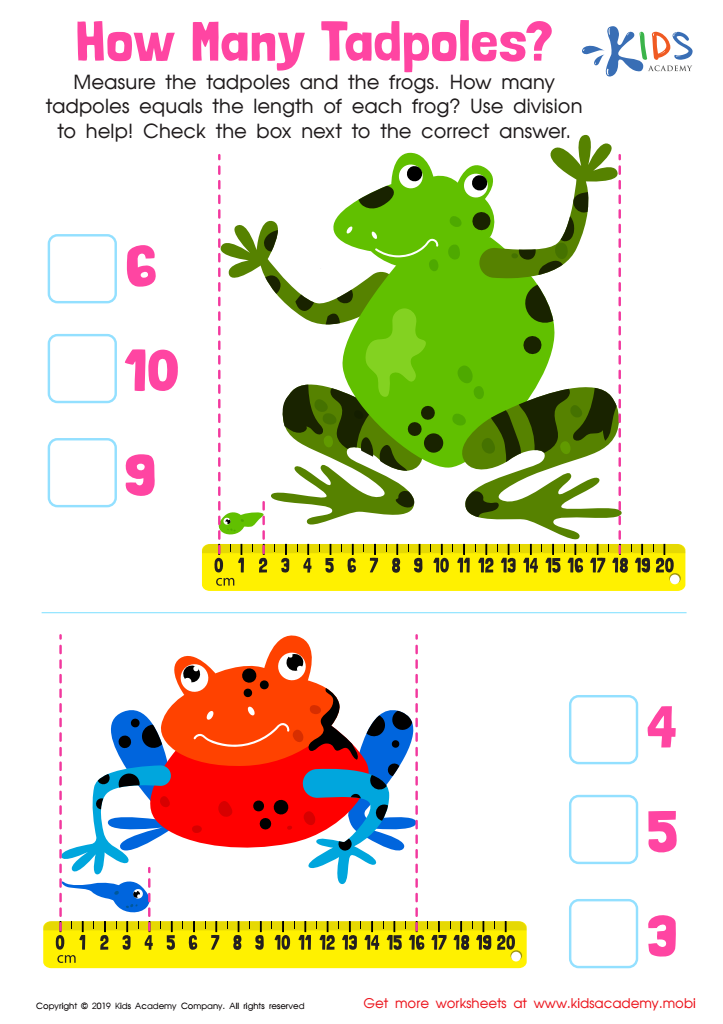
How Many Tadpoles Worksheet
Kids love tadpoles! They'll have fun using them to work out the measurements of their frog friends. By dividing the length of the frogs by the length of the tadpoles, children can deduce how many tadpoles it takes to equal a frog. With the use of 'how many' and 'each' they'll solve math problems without realizing it!
 Assign to My Students
How Many Tadpoles Worksheet
Worksheet











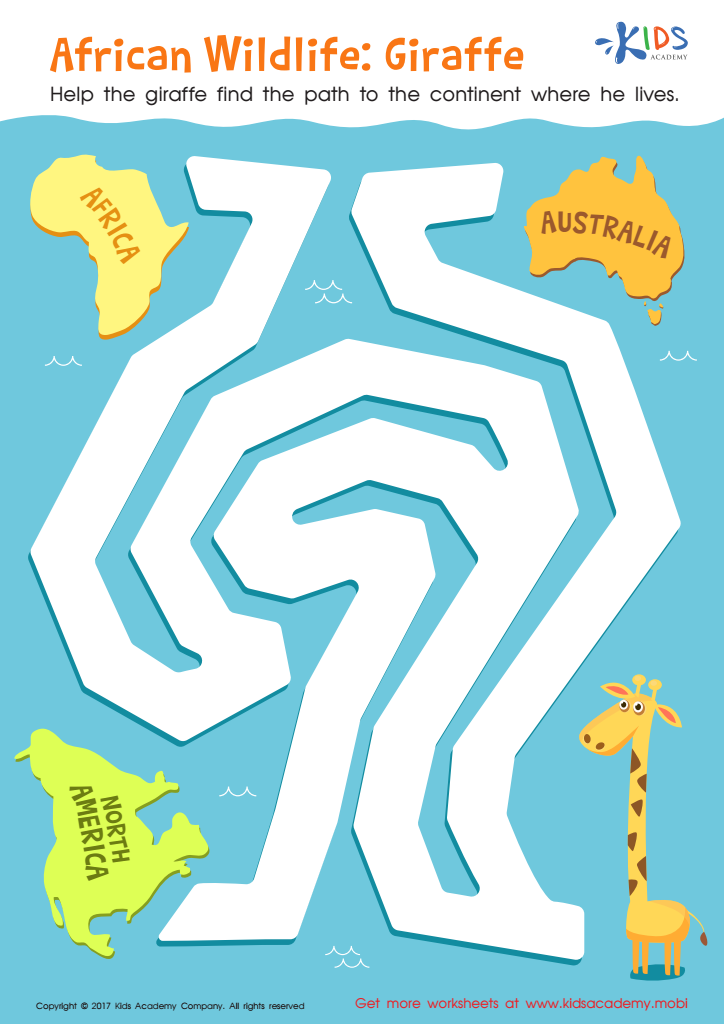
African Wildlife: Giraffe Worksheet
Help the giraffe get home! This African wildlife giraffe worksheet will boost your child's logical reasoning skills while they complete a maze to help the giraffe navigate choppy waters. Learn about different continents and their unique climates, practice problem solving and expand knowledge of the world and its habitats. Perfect for inspiring little learners!
African Wildlife: Giraffe Worksheet
Worksheet
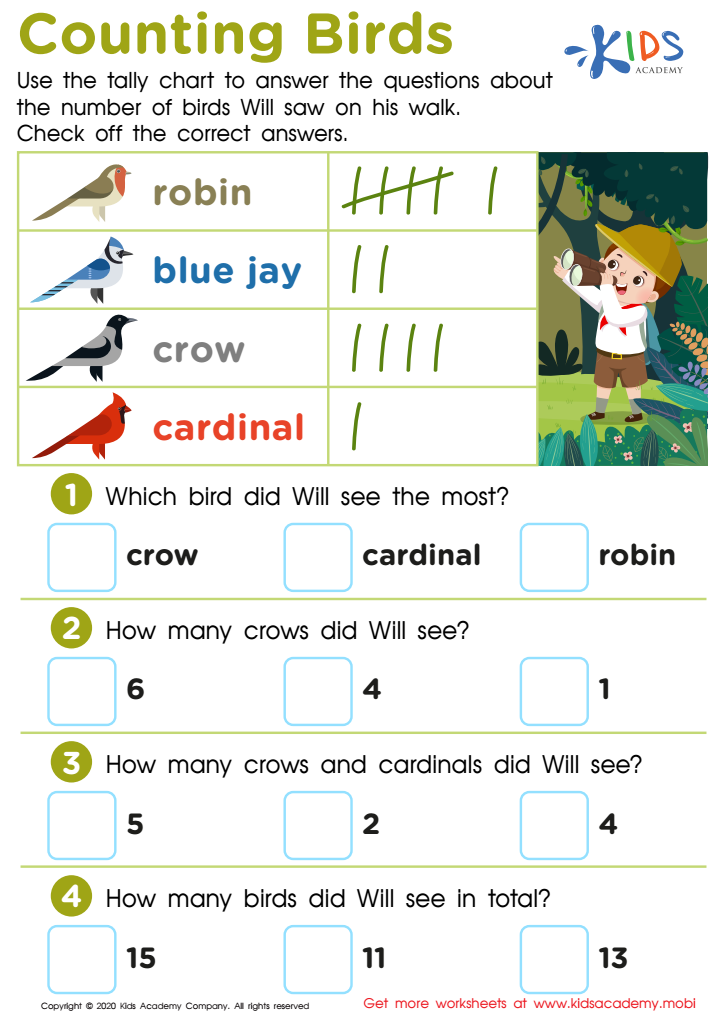
Counting Birds Worksheet
Introduce your child to the exciting activity of bird watching! This PDF worksheet features a tally chart of the different types of birds Will saw on his walk. Have your kid use the tally chart to organize information and use it to answer the questions that follow, thus boosting early science and math skills.
Counting Birds Worksheet
Worksheet
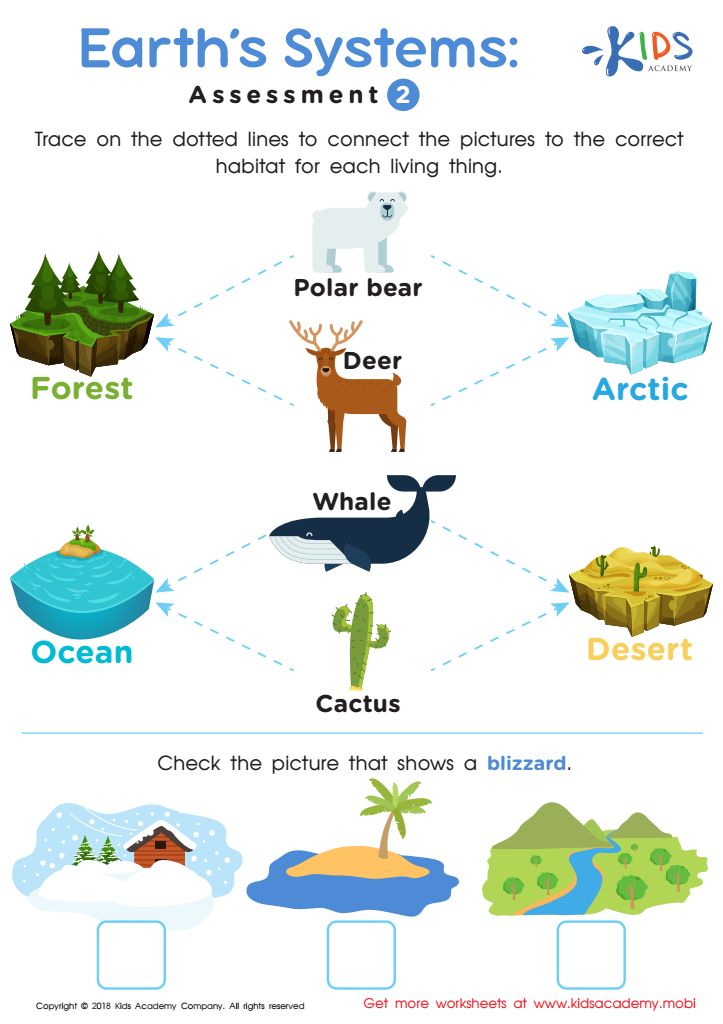
Earth's Systems: Assessment 2
Kids will love this free printable worksheet to assess their knowledge of habitats and the living creatures found in them. They'll trace the dotted lines to connect the pictures of plants and animals to their respective habitat and identify the type of weather depicted. No, polar bears don't live in the ocean, but they do like to swim in icy waters! With this fun activity, your little learner will master earth science basics.
Earth's Systems: Assessment 2
Worksheet
Join Kids Academy for Free
Who is primarily going to use this learning content?








Parents and teachers should pay close attention to engaging students aged 6-9 in basic addition and introductory concepts about plants and animals because these foundational skills and knowledge play a crucial role in early cognitive development, curiosity, and overall educational success. At this developmental stage, children's brains are primed for exploring new ideas and mastering fundamental skills that will serve as building blocks for more advanced learning.
Understanding basic addition is pivotal in establishing strong numerical literacy, a critical component of mathematics which is used throughout life. By integrating these arithmetic skills early, children develop problem-solving abilities, critical thinking, and a sense of accomplishment which translates to a positive attitude toward learning.
Simultaneously, introducing children to plants and animals taps into their natural curiosity and fosters an appreciation for the natural world. This knowledge forms the basis for sciences such as biology and environmental studies, creating awareness and responsibility towards nature. Combining factual learning with hands-on activities, like observing local wildlife or tending a class garden, can provide practical applications for what they are learning and keep students engaged.
Incorporate both subjects through interactive and engaging activities, sparking a love for learning that sets the stage for lifelong educational journeys. Parents and teachers nurturing these interests are actively shaping well-rounded, curious, and knowledgeable future citizens.








