Vocabulary Building Plants and Animals Worksheets for Ages 6-9
5 filtered results
-
From - To
Enhance your child's vocabulary with our engaging Vocabulary Building Plants and Animals Worksheets, designed specifically for ages 6-9! These worksheets combine the wonders of nature with interactive learning, making vocabulary acquisition fun and effective. Kids will explore various plants and animals, while learning important terms and concepts related to biology and ecology. Each worksheet encourages creative thinking and discovery, helping children improve their language skills in a playful context. Perfect for classroom use or at home, these resources foster a love for learning about the environment and its incredible inhabitants. Download now to boost your child's vocabulary with ease!
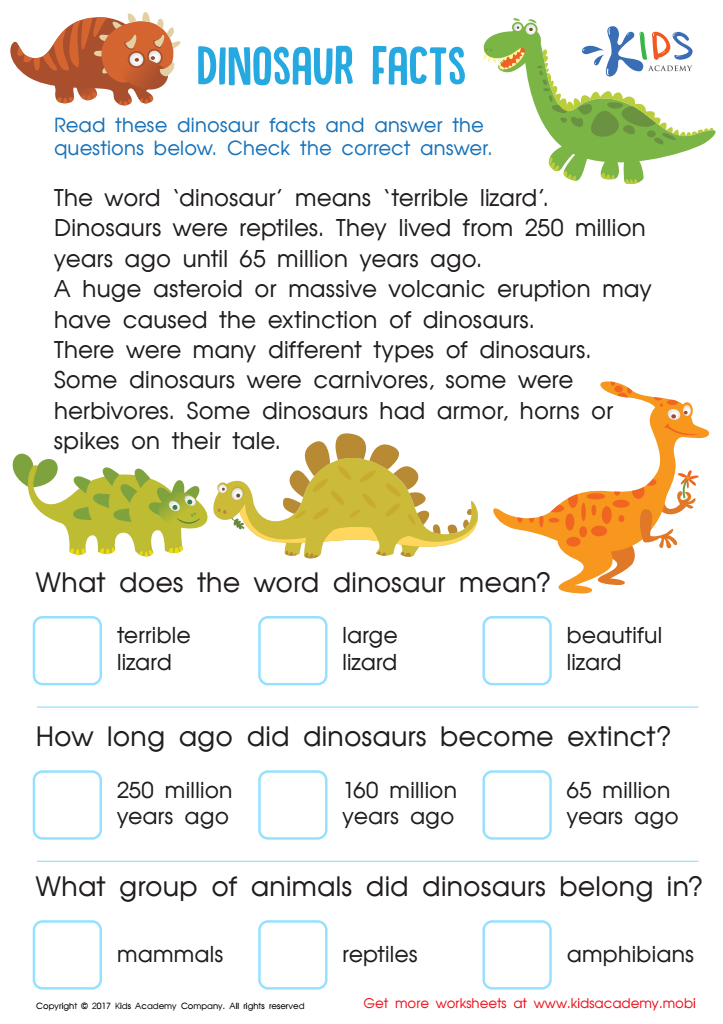
Dinosaur Facts Worksheet
 Assign to My Students











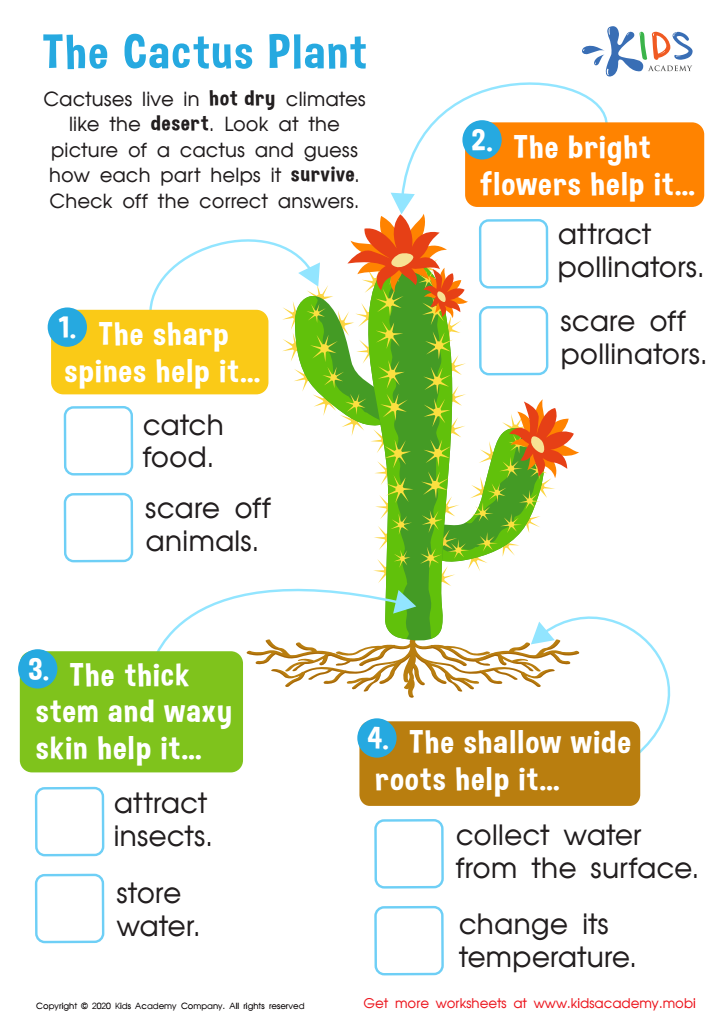
The Cactus Plant Worksheet
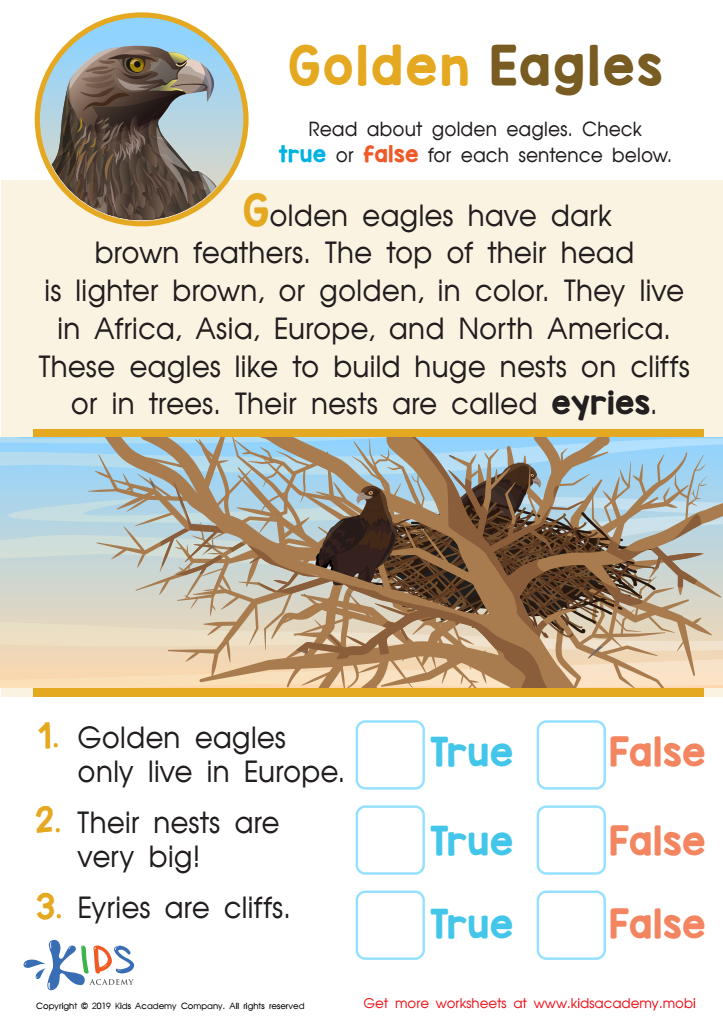
Golden Eagles Worksheet
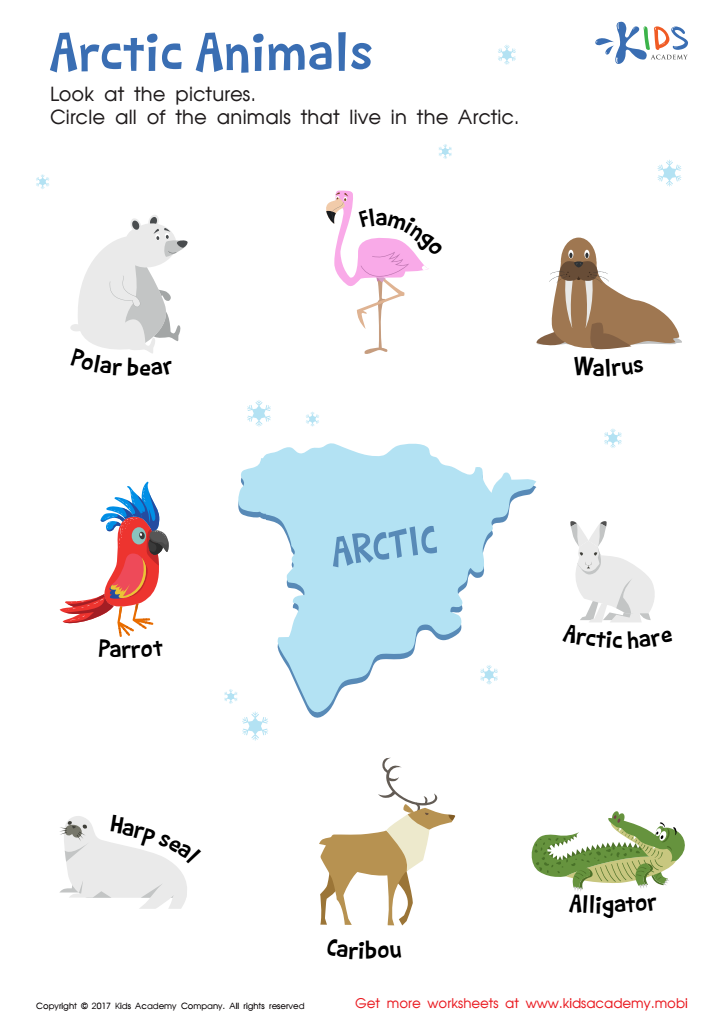
Arctic Animals Worksheet
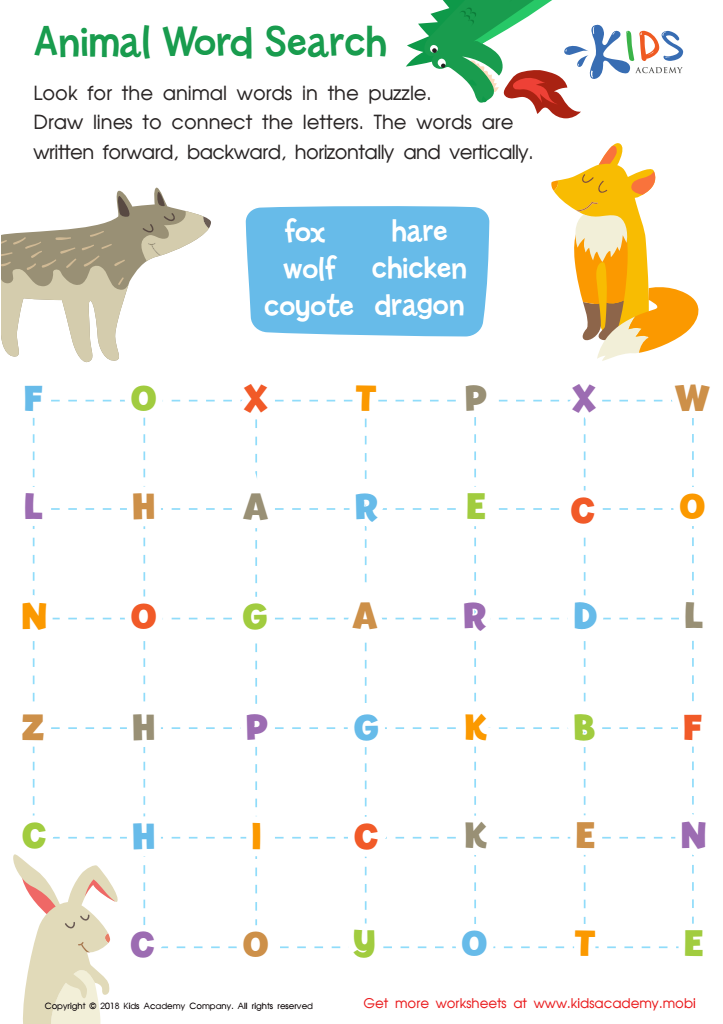
Animal Word Search Worksheet








Vocabulary building centered around plants and animals is crucial for children ages 6-9 for several reasons. First, this age group is naturally curious about their environment, making it an ideal time to introduce them to fundamental concepts. By learning vocabulary related to plants and animals, children gain a deeper understanding of the natural world, enhancing their observational skills and critical thinking.
Furthermore, vocabulary development is directly linked to literacy and overall academic success. A robust vocabulary aids in reading comprehension, enabling children to grasp not only texts related to flora and fauna but also a wide range of subjects. Knowledge of plant and animal vocabulary can foster scientific inquiry, prompting students to ask questions about ecosystems, life cycles, and conservation.
Engaging with this vocabulary also supports social-emotional growth. Sharing discoveries about plants and animals can foster collaboration and communication among peers and adults. Moreover, as children discuss their findings, they build confidence in articulating their thoughts and experiences.
For teachers and parents, prioritizing vocabulary building in this area lays the foundation for environmental awareness and responsible citizenship, cultivating a generation that appreciates and strives to protect the Earth’s diverse ecosystems. Overall, vocabulary development during these formative years is vital for academic, social, and emotional growth.








