Shape Recognition Community Worksheets for Ages 6-9
3 filtered results
-
From - To
Explore our engaging Shape Recognition Community Worksheets designed for children aged 6-9! These worksheets offer a fun and interactive way for young learners to identify and understand different shapes within their community. Through a variety of activities, kids will practice recognizing shapes in everyday objects, enhancing their observational skills and geometric knowledge. Perfect for classrooms or home learning, these resources foster critical thinking and creativity while connecting mathematics to real-world contexts. Dive into the colorful world of shapes and empower your child’s learning journey with our expertly crafted worksheets! Ideal for educators and parents alike!
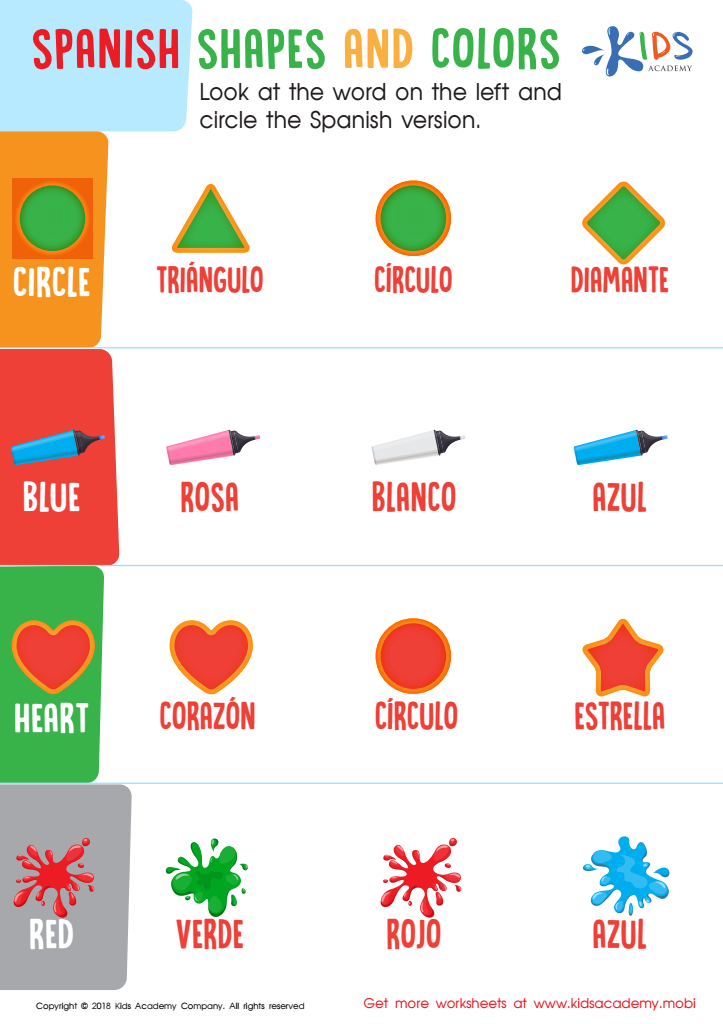
Spanish Shapes and Colors Worksheet
 Assign to My Students
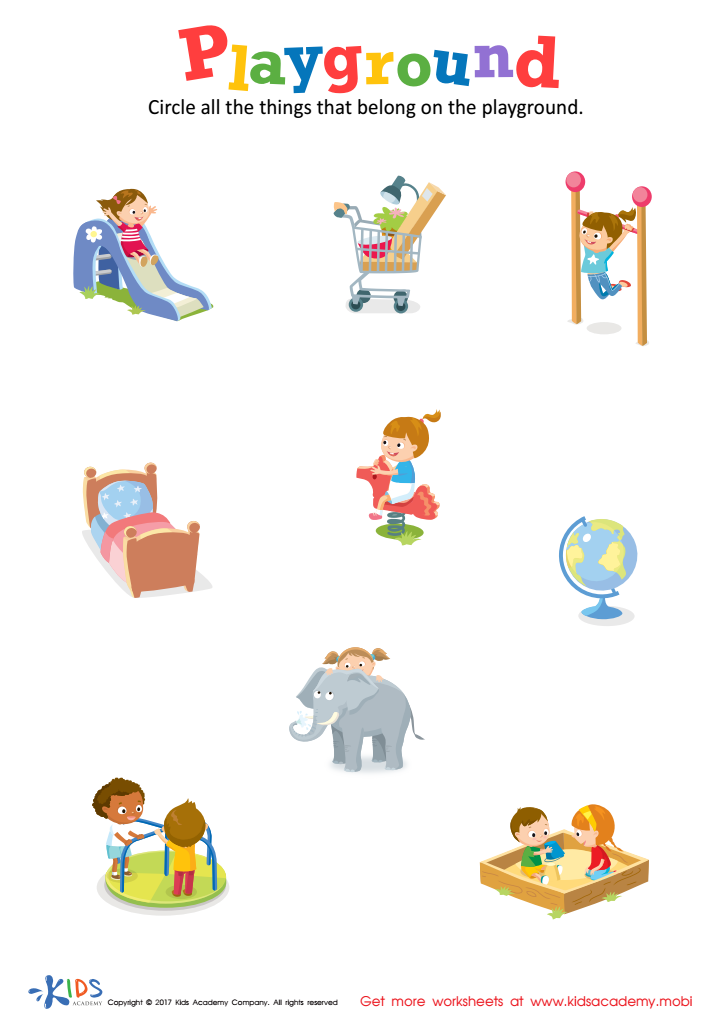
Playground Worksheet
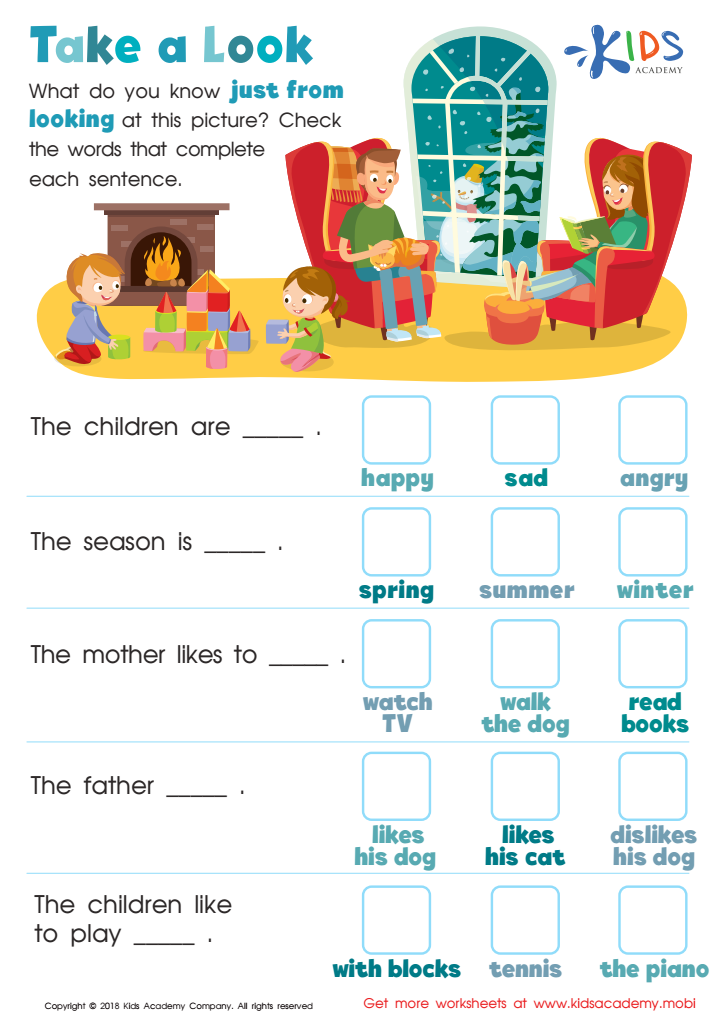
Take a Look - Part 1 Worksheet







Shape recognition is a fundamental skill for children aged 6-9, serving as a cornerstone for their overall cognitive development and daily life applications. Parents and teachers should prioritize this skill due to its impact on critical thinking, problem-solving, and spatial awareness. Engaging with a Shape Recognition Community fosters collaboration among educators and families, sharing resources, activities, and strategies that enhance children's learning experiences.
Participating in this community can provide parents and teachers with innovative approaches to teaching shapes, making learning fun and interactive. Hands-on activities, such as shape scavenger hunts or art projects, can help solidify children's understanding and appreciation of geometry in a meaningful way. Additionally, a strong foundation in shape recognition supports future learning in more complex subjects like math and engineering.
Furthermore, a robust understanding of shapes helps children relate concepts in real-world contexts, from recognizing patterns in nature to understanding architectural designs. By advocating for and participating in a Shape Recognition Community, parents and teachers can cultivate a collaborative ecosystem that benefits children's growth, ensuring they are well-prepared for higher learning objectives and everyday problem-solving. Ultimately, this focus on shape recognition benefits not only academic achievement but also personal development and confidence in young learners.








